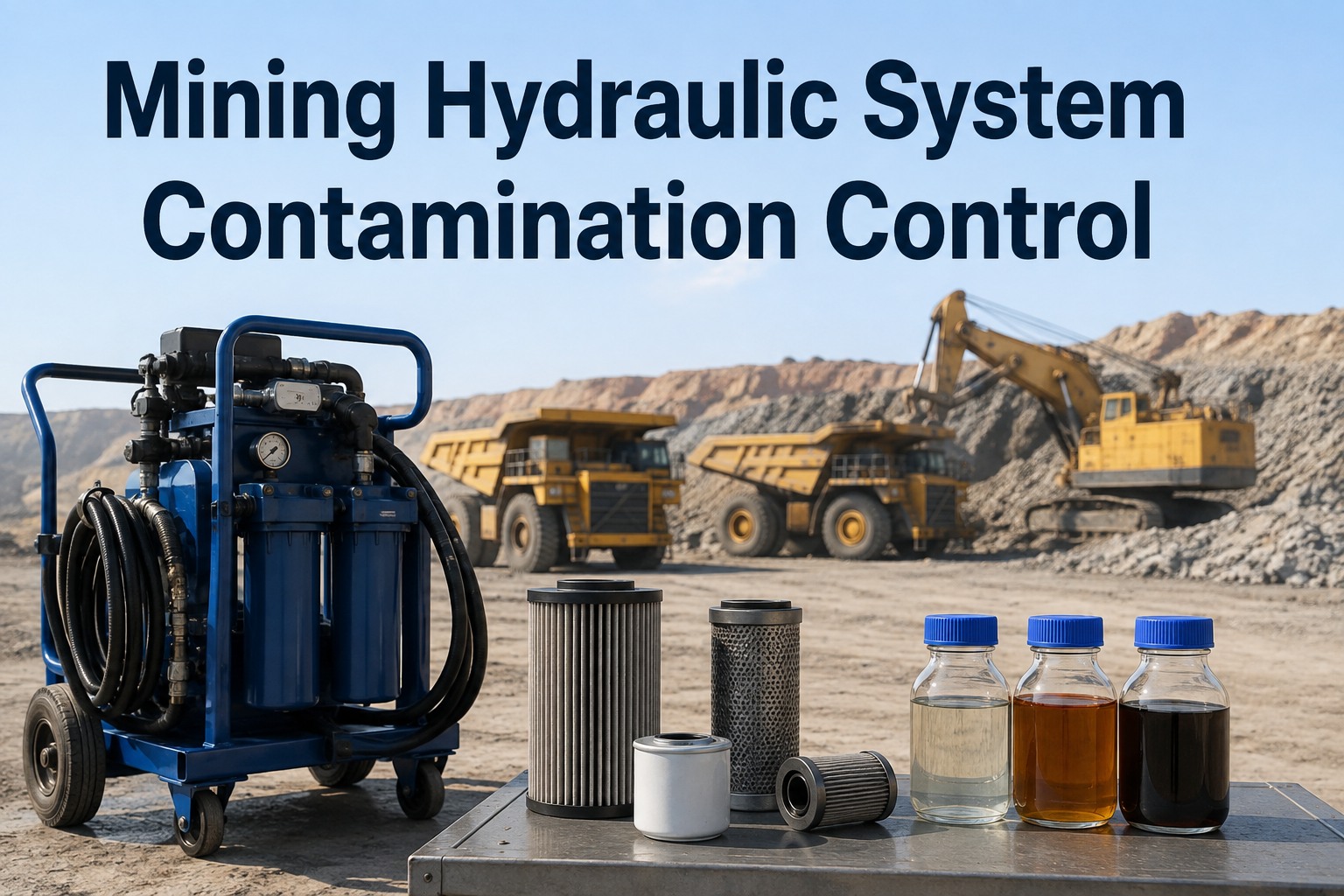
You pull a hydraulic pump off a 100-tonne haul truck after 4,000 hours when it should have run 12,000, and the oil sample that comes back tells the story: dirt, not wear, killed it. Hydraulic contamination control in mining is the single biggest lever you have on component life, because dust and water do more damage in a month than friction does in a year. The frustrating part is that most of that contamination never enters during operation — it walks in through your own workshop, on the end of a transfer hose, through a $12 breather nobody changed, or in the five minutes a fill cap sat open while the lube tech answered the radio. This page breaks down where contamination actually comes from, how to read ISO 4406 cleanliness codes without a chemistry degree, and the filtration, breather, clean-fill and sampling practices that decide whether your pumps reach design life. If you want to see how mines track all of this per asset without paper logbooks, book a 30-minute walkthrough of HVI on your own fleet and bring your ugliest oil sample report.
What if 8 out of 10 hydraulic failures on your site were self-inflicted?
Industry fluid analysis consistently shows the majority of hydraulic component failures trace back to contaminated oil — and most of that contamination enters during maintenance, not operation. That means the fix is discipline, not budget.
The real price of poor hydraulic cleanliness on a mine site
A single contamination-driven pump failure is never just a pump. It is the crane, the fitter's overtime, the lost production hours and the flush you should have done last quarter. These are the numbers maintenance managers end up defending in budget meetings.
Where hydraulic contamination actually comes from on a mine
Ask most crews where dirt gets in and they will point at the pit. The sampling data points somewhere else: your own maintenance practice. There are four doors contamination uses, and three of them are in your workshop.
Ingress during operation
Dust-loaded air is drawn in through breathers every time cylinders cycle and oil level drops. Cylinder rod seals drag fine silica back past the wiper on every retract stroke. On a dry, windy site this is constant, low-grade feeding of the system.
Top-up and transfer oil
New oil from a drum is typically not clean oil — it often tests 2–3 ISO codes dirtier than a mining hydraulic target. Every top-up through an open funnel or unfiltered cart pours particles straight past filters that took months to clean the system down.
Maintenance events
Filter changes, hose replacements, valve swaps and open fill caps are contamination events. A hose cut in the field without capping, or a filter bowl wiped with a rag, can undo a year of good filtration in an afternoon.
Internally generated wear
Once particles circulate, they machine new particles off pump plates, valve spools and cylinder walls. Wear debris breeds wear debris — which is why a system that slips one ISO code tends to keep sliding unless you intervene.
How to set an ISO cleanliness code target for mining hydraulics
An ISO 4406 code like 18/16/13 is just three particle counts — at 4, 6 and 14 microns — turned into numbers. The rule of thumb that matters on a budget: every one-code drop roughly doubles component life. Set the target to the tightest component in the system, not the average.
| Component type | Typical target (ISO 4406) | Why it matters |
|---|---|---|
| Servo and proportional valves | 15/13/10 | Micron-scale spool clearances silt up and stick; erratic control follows |
| Variable piston pumps and motors | 16/14/11 | High-pressure sliding surfaces score quickly on fine particles |
| Standard pressure-compensated pumps | 17/15/12 | The realistic target for most haul truck and loader systems |
| Low-pressure gear pumps, older systems | 19/17/14 | Tolerant, but still fails early if water or silica is present |
The practical move is to write the target into the PM itself: "sample monthly, hold 17/15/12 or better, escalate at 19/17/14." When that target lives inside a free HVI asset record you can set up today, the alert fires automatically instead of waiting for someone to re-read a lab PDF.
A five-step hydraulic contamination control workflow that holds up in the pit
Sites that hold their ISO targets do the same five things, in the same order, on every machine. None of them are expensive. All of them fail the moment they depend on memory instead of a schedule.
Filter every drop of oil going in
All top-up and transfer oil passes through a filter cart with a beta-rated element matched to your target — never a funnel, never an open drum pump. Quick-connects on fill points keep the circuit closed.
Upgrade and schedule breathers
Swap standard cap breathers for desiccant breathers rated for fine dust, and cut the change interval to suit pit conditions — often 500 hours, not the 2,000 on the box. A saturated breather is an open hole.
Run clean-fill as a workshop discipline
Cap every hose the moment it comes off, clean fittings before breaking them, ban rag-wiping of filter bowls, and flush after any major component change. Write it down as a checklist, not a culture.
Polish with offline filtration
A kidney-loop or offline filtration unit runs while the machine works, scrubbing the reservoir continuously. It is the fastest way to recover a system that has slipped a code after a failure or a hose burst.
Sample on meter hours and trend it
Pull samples from the same live-line point every 250–500 hours, test particle count plus water, and trend the results per asset. One clean sample proves nothing; a rising trend at 300 hours tells you a breather or seal failed weeks ago.
Steps 2 and 5 are where most sites quietly fail, because both depend on someone remembering a date. If you want to see meter-based filter and breather PMs running with automatic due alerts, walk through it on a live demo with your own intervals.
Why water contamination damages hydraulics differently than dirt
Dirt grinds. Water corrodes, strips additives and destroys the oil film — and at 0.1% concentration you cannot see it. By the time oil looks milky you are past 0.3% and the damage is well advanced.
What particles do
- Score pump plates and valve spools through three-body abrasion
- Silt up tight servo clearances until valves stick
- Generate more wear debris in a self-feeding cycle
- Show up clearly in a standard particle count
What water does
- Collapses the lubricating film so metal meets metal under load
- Rusts bearing surfaces and bores even while the machine sits
- Reacts with additives, forming acids and sludge that clog filters
- Needs a Karl Fischer or crackle test — invisible in a particle count
Water gets in through breathers in humid or washdown conditions, through rod seals on machines that sit in pit water, and through condensation in half-full reservoirs overnight. Desiccant breathers, regular drain checks on reservoir sumps and a water test on every sample close the loop — and when results are logged per asset, you can see in a demo how trending catches a water problem two samples before the pump complains.
See your fleet's cleanliness trend on one screen
Book a 30-minute demo and we will load one of your machines live — sample history, breather PMs, filter changes and all.
Turn contamination control from a memory test into a system
Every practice on this page fails the same way: someone forgets, once, in week nine. HVI holds the schedule so the discipline survives shift changes, contractors and busy seasons.
Fluid analysis per asset
Attach every oil sample report to the machine it came from. ISO code, water content and lab notes sit in the asset history — no more lab PDFs buried in a fitter's inbox.
Meter-based PM triggers
Breather, filter and sampling intervals fire on engine hours or kilometres, with due and overdue alerts to the right phone. The 500-hour breather change actually happens at 500 hours.
Logbook that proves the work
Every filter change, flush and top-up is timestamped with photos and the tech's name. When a warranty claim or audit lands, the evidence is a search away, not a binder away.
Analytics that trend cleanliness
Watch ISO codes and water content move per asset and per fleet over months. Spot the machine drifting a code before it eats a pump — that is the whole game.
What one prevented pump failure pays for
Run the arithmetic on a single 90-tonne excavator and the case makes itself. This is the kind of worked example you can take into a budget meeting unchanged.
Against that: a filter cart service, desiccant breathers across the fleet and a monthly sampling programme runs a fraction of one failure per year. Sites that hold their ISO target commonly report pump life stretching from 4,000–5,000 hours toward the 10,000–12,000 the component was designed for. If your current records cannot tell you which machines are drifting, start logging cleanliness per asset free and you will have a defensible trend within one quarter.
Hydraulic contamination control in mining, in five lines
Cleanliness sets life
Component life follows the ISO code, not the calendar. Every code you drop roughly doubles how long pumps and valves last.
Your workshop is the main source
Top-up oil, open caps and uncapped hoses introduce more contamination than the pit does. Clean-fill discipline is the cheapest reliability you will ever buy.
Breathers are consumables
In high dust, treat breathers like filters with a 500-hour life, not like caps. A $12 part protects a $28,000 pump.
Water needs its own test
Particle counts do not see water. Add a water test to every sample, because 0.1% is already doing damage you cannot see.
Trends beat snapshots
One clean sample is luck. A per-asset trend in a CMMS is a programme — and it is what turns hydraulic reliability in mining from hope into evidence.
My gripe was never the failures — it was that the oil reports sat in an email chain while the machine kept running dirty. Now I track one number per asset: the ISO trend over the last four samples. When it moves one code, we find the breather or the seal before the pump finds it. We have not lost a main pump to dirt in two years, and I can show that line on a graph when the site manager asks.
Darren Kells — Maintenance Manager, open-pit aggregates operation
Hydraulic contamination control FAQs
What is a good ISO 4406 cleanliness target for mining hydraulics?
Is new oil clean enough to put straight into a hydraulic system?
How often should I change breathers in high-dust conditions?
How do I know if water is getting into my hydraulic oil?
How does software actually help with hydraulic contamination control?
Stop buying pumps your oil is killing
Put every breather, filter, flush and oil sample on one schedule your whole crew can see — from the pit, the workshop or the office.
Free to start — Works on any phone — No card needed