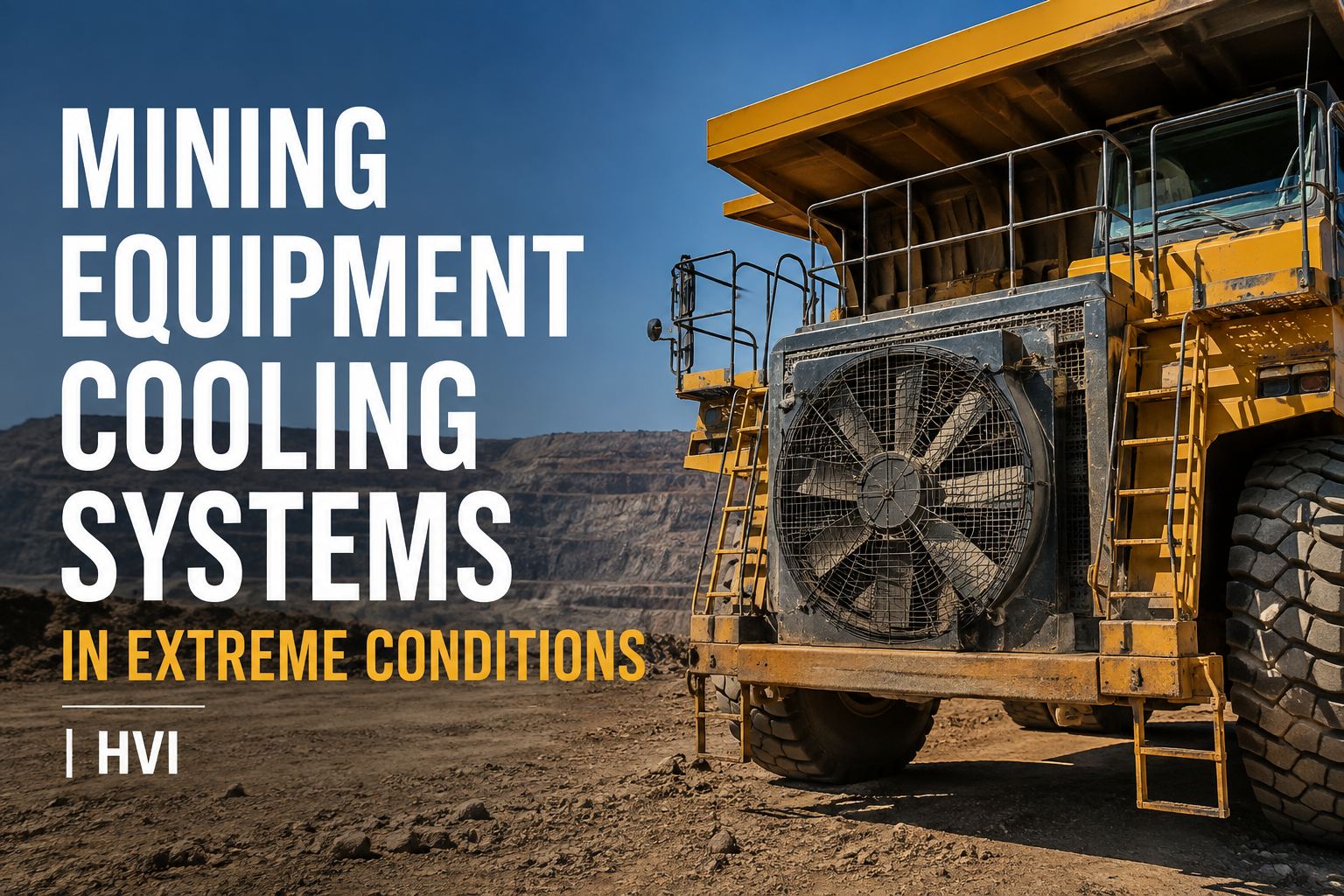
It is 2:15 on a Tuesday afternoon, the pit is sitting at 46°C in the shade, and your 90-tonne haul truck has just derated on the ramp for the third time this month. The operator reports a high coolant temperature warning, the truck limps back to the pad, and your crew pulls a radiator pack that is so packed with dust and fines it looks like it was dipped in concrete. This is the reality of a mining cooling system: high ambient temperature, extreme dust load and continuous full-load duty combine to defeat cooling capacity that looked perfectly adequate on the OEM spec sheet. The good news is that most heat-related failures are not component failures at all — they are cleaning and inspection failures, and a disciplined cadence beats expensive component replacement almost every time. If you want to see how that cadence runs on real units, you can walk through a severe-duty cooling schedule on a live demo before you change a single radiator.
Mining Thermal Management
Is your cooling system rated for the brochure — or for your pit?
High ambient temperature, choking dust and full-load duty stack together until a cooling system with 20% margin on paper has none in practice. Cleaning cadence, coolant condition and fan drive checks decide whether your trucks run or derate.
What Heat Costs You
The real numbers behind equipment overheating in mining
Every one of these figures lands somewhere in your budget — downtime, parts, fuel or tyre and engine life.
Failure Mechanism #1
Cooler core blockage: the failure that hides in plain sight
A radiator can look clean from the grille side and be 60% blocked between the charge-air cooler and the hydraulic oil cooler. Dust packs into the centre of the sandwich where you cannot see it and where airflow is weakest.
Clean it without bending fins
- Blow from the engine side out, so debris exits the way it entered — never drive it deeper into the stack.
- Keep air pressure at or below 90 psi at the nozzle and hold the lance 150–200mm off the core face.
- Keep the nozzle moving in overlapping passes; a stationary jet folds fins flat in seconds.
- Use low-pressure water with a fan tip for oily or clay-bound dust, and let the core dry before restart.
- Shine a light through the core from one side and check from the other — if you cannot see light, air cannot pass either.
What kills cores early
- Pressure washers at close range: they flatten fins, and a flattened fin is a permanently blocked passage.
- Blowing from the fan side, which compacts dust into the middle of the cooler sandwich.
- Cleaning only the radiator face you can see and ignoring the CAC and oil cooler behind it.
- Skipping the clean because the gauge reads normal at idle — blockage shows under load, not on the pad.
- No record of when each unit was last cleaned, so cadence is guesswork instead of data.
Cleaning cadence: the question that decides everything
OEM baselines assume average conditions. Your pit is not average. Set the interval from your own temperature trend data: if a unit climbs more than 5°C across a shift under the same load, the core is loading up and the interval is too long. Many high-dust operations land on a blow-down every shift or every second shift — 25 to 50 times more frequent than the book figure. With HVI you can start logging cooler cleans free and let the trend, not the calendar, set the cadence.
Fluid Health
Coolant condition: concentration, inhibitors and contamination
Coolant is a wear part, not a fill-and-forget fluid. Three checks catch nearly every coolant-related failure before it reaches the block.
Concentration
Test glycol with a refractometer, not a hydrometer. Too lean and you lose boil-over margin and liner cavitation protection; too rich (above ~68%) and heat transfer actually gets worse. Target the OEM band, typically 50/50 in extreme heat.
Inhibitor depletion
SCAs and OAT inhibitors deplete with hours and heat cycles. Test strips or lab coolant analysis on a meter-based interval catch depletion before liner pitting starts. A pitted liner is an in-frame, not a top-up.
Contamination
Oil sheen means a cooler or head gasket leak; diesel smell means an injector cup; rust colour means the inhibitor package is gone. Coolant analysis at each PM flags combustion gas, metals and additive fallout while the fix is still cheap.
| Check | Method | Severe-duty interval | Failure it prevents |
|---|---|---|---|
| Glycol concentration | Refractometer | Weekly / each clean | Boil-over, liner cavitation |
| Inhibitor level (SCA/OAT) | Test strips | Every 250h PM | Liner pitting, water pump seal wear |
| Full coolant analysis | Lab sample | Every 500h | Head gasket, EGR cooler, internal corrosion |
| System pressure test | Hand pump at cap neck | Quarterly + after any overheat | Slow leaks, cap failure, hose weep |
| Fan drive function | Engage/disengage test, temp response | Every 250h PM | Chronic overheat, wasted fuel on a locked fan |
Two Circuits, One Problem
Fan drives and hydraulic oil temperature: the overlooked half of thermal management
The engine gets the attention, but hydraulic oil temperature is the second cooling circuit that quietly cooks pumps, valves and seals while everyone watches the coolant gauge.
Fan drive: viscous and hydraulic
A viscous clutch that will not engage gives you chronic overheating under load; one that will not disengage costs 3–5% in fuel every hour it spins locked. Hydraulic fan drives fail differently — slow response, weak reversal for debris purging, or a sticking solenoid. Test engagement temperature and reversal function at every PM, and log the result so a drifting clutch is caught on trend, not on a breakdown. When you book a walkthrough of HVI's PM scheduling, you will see how a failed fan check auto-creates a work order instead of a note in a binder.
Hydraulic oil temperature
Sustained oil above 82°C oxidises fast — every 8–10°C over spec roughly halves oil life, and varnish follows. On shovels, excavators and drills the hydraulic cooler shares the same dust-choked stack as the radiator, so the cleaning cadence that saves your engine saves your pumps too. Add an oil temperature reading to the operator's pre-shift check; a 10-minute habit is cheaper than a set of main pumps.
What sustained overheating does downstream
Hoses and O-rings harden, clamps loosen, the first slow weeps appear at joints.
Head gasket stress, turbo bearing coking, EGR cooler fatigue, oil oxidation accelerates.
Liner cavitation from depleted coolant, warped heads, scored bores — the in-frame nobody budgeted for.
Book a demo and see a severe-duty cooling schedule on your own units
Meter-based PM intervals, pre-shift cooling checks and thermal defect trends — set up for one truck in under an hour.
Field Routine
A cooling system inspection routine that actually survives the shift
Five steps, none longer than ten minutes, split between the operator and the shop. This is the routine that turns thermal management from breakdown response into a controlled process.
Pre-shift walk-around (operator, 5 min)
Coolant level in the sight glass, cap seal condition, visible core face, fan shroud intact, no weep at hoses or the water pump tell-tale. Logged on the phone with a photo of anything suspect — the engine and fluids section of the HVI pre-shift check covers exactly this.
Core blow-down (operator or lube tech, 10 min)
Engine-side-out, 90 psi max, moving lance. In high-dust months this happens every shift; the app timestamps each clean so you can prove the cadence and correlate it with temperature trends.
Temperature trend check (supervisor, 2 min)
Review telematics or operator-reported running temps by unit. Any unit trending up week-on-week under the same load gets pulled forward for a full core clean and pressure test before it derates on the ramp.
PM fluid and fan checks (shop, at interval)
Refractometer, inhibitor strips, coolant sample, fan engagement test, pressure test to cap rating to find the slow leak that never leaves a puddle. Results attach to the asset record, not a clipboard.
Monthly trend review (maintenance manager, 30 min)
Defect analytics on repeat thermal events: which units, which circuits, which operators, which benches. Adjust cleaning cadence by area of the pit, not by fleet average. If you want this review to build itself, see the analytics dashboard in a 30-minute demo.
How HVI Helps
Built for the dust, the heat and the audit
HVI (Heavy Vehicle Inspection & Maintenance, by JRS Innovation Inc.) is the cloud + mobile inspection and work order CMMS that runs this whole routine from any phone on site.
Pre-shift cooling checks
The engine and fluids section of the digital DVIR captures coolant level, core condition, fan and leaks with photos. A defect becomes a work order instantly — no paper, no text-message photos lost in a group chat.
Severe-duty PM intervals
Schedule by engine hours, not just calendar, with separate short-interval tasks for core cleaning. Due and overdue alerts mean the 48-hour blow-down never slips because someone was on leave.
Thermal defect analytics
Repeat overheat and derate events roll up by asset, circuit and location. You see which trucks are chronic, prove the cleaning cadence is working, and defend the budget with data instead of anecdotes.
Audit-ready records
Every check, clean and coolant sample is timestamped, photo-backed and tied to the asset. Client, insurer or regulator asks for maintenance history and you produce it in seconds, not a weekend of binder digging.
Key Takeaways
What to change on Monday morning
- Set cleaning cadence from your own temperature trend, not the OEM baseline — in high dust that often means every shift, and the data will prove it to whoever signs the labour hours.
- Treat coolant as a wear part: refractometer weekly, inhibitor strips at every PM, lab analysis on hours, and a pressure test after any overheat event.
- Watch the second circuit. Hydraulic oil temperature kills pumps as surely as coolant temperature kills engines, and both coolers choke on the same dust.
- Make every check a record. A mining cooling system managed on paper is managed on memory; a digital trail turns thermal events into trends you can act on — and signing up free gets your first unit logging today.
"My gripe was never the radiators — it was that nobody could tell me when a truck was last blown down. Now I track one number: degrees of temp creep per unit per week. Anything climbing more than five degrees gets cleaned before it gets a work order, and our derates on the ramp have basically disappeared. The cleaning labour is a rounding error next to one cooked engine."
Dan Whitfield — Maintenance Manager, open-pit aggregates operation
Common Questions
Mining cooling system questions, answered
How often should you clean radiators on mining equipment?
In high-dust, high-heat conditions, plan on a blow-down every shift or every second shift — dramatically more often than the OEM baseline of around 250 hours. Set the real interval from your temperature trend: if a unit climbs more than about 5°C across a shift under steady load, the cores are loading up and the cadence is too long. Logging each clean in a system like HVI lets you prove the interval with data.
What is the safest way to clean a blocked cooler core without damaging it?
Blow from the engine side out at 90 psi or less, holding the lance 150–200mm off the core face and keeping it moving in overlapping passes. Never use a pressure washer at close range — folded fins block airflow permanently. For oily or clay-bound dust, use low-pressure water with a fan tip and let the stack dry before restart.
Why does my equipment overheat even though the coolant level is fine?
Level is only one variable. The usual culprits are core blockage inside the cooler sandwich where you cannot see it, a viscous or hydraulic fan drive that is not engaging at temperature, depleted coolant inhibitors, or a slow leak that only shows under pressure. A pressure test at cap rating plus a fan engagement check at the next PM will find most of them.
Does hydraulic oil temperature really matter as much as coolant temperature?
Yes — it is the overlooked second cooling circuit. Sustained oil temperature above roughly 82°C oxidises oil quickly, and every 8–10°C over spec approximately halves oil life, with varnish and pump wear following. The hydraulic cooler usually shares the same dust-choked stack as the radiator, so one cleaning cadence protects both. You can see how HVI tracks both circuits in a demo.
How do I justify more frequent cooling maintenance to management?
Frame it as cost avoidance with your own numbers: a primary haul unit down mid-shift can exceed $1,800 an hour in lost production, while a shift blow-down costs minutes of labour. Trend data showing temperature creep, derate events and repeat thermal defects makes the case far better than opinion — start a free HVI account and the trend report builds itself from your daily checks.
Stop managing heat from memory — run your cooling program on HVI
Pre-shift cooling checks, meter-based cleaning intervals and thermal defect trends, all from any phone on site. See it on your own fleet before you spend a dollar.
Free to start — Works on any phone — No card needed