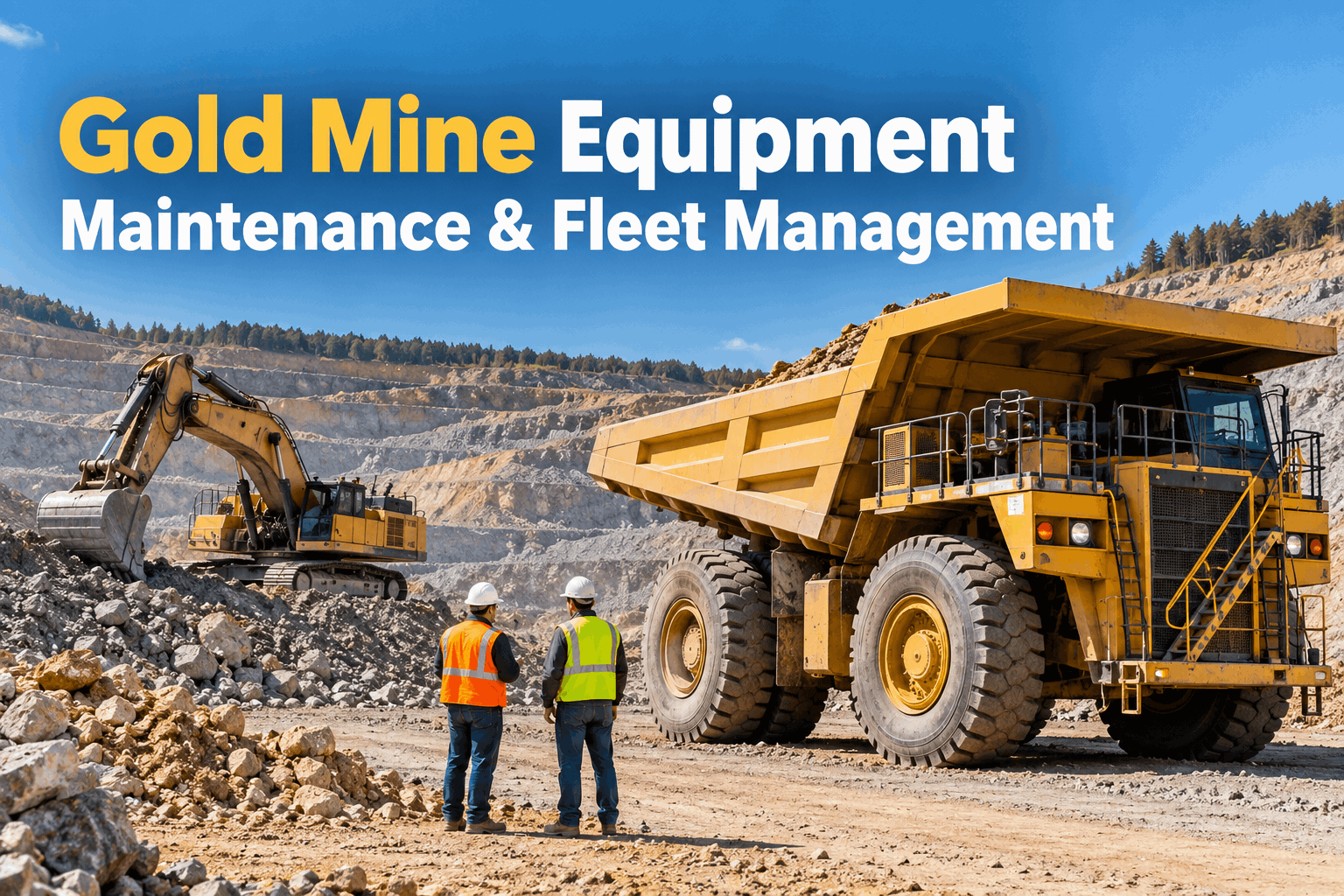
Gold mine equipment maintenance is a different challenge depending on whether your crews work across an open pit, underground headings, or a processing plant. Haul trucks and loaders face heavy-duty cycles, while underground mobile equipment brings access, ventilation, and shift-handover constraints. This guide shows how to organize inspections, preventive maintenance, and repair work orders around the machines that keep gold production moving. Book a Demo of HVI Mining Maintenance to see how the records fit together.
Keep Gold Mine Equipment Ready, From Pit to Plant
Bring equipment inspections, preventive service schedules, and repair histories into one practical maintenance process—without treating every gold mine like the same operation.
One Gold Mine, Three Maintenance Environments
Equipment risks change as material moves from extraction to processing. Organize work by operating environment, not only by vehicle type.
Haul trucks & loading fleet
Track tire and brake condition, cooling performance, hydraulic leaks, undercarriage wear, and service intervals for trucks, excavators, and wheel loaders.
LHDs & underground trucks
Prioritize steering, brakes, fire protection, electrical condition, fluid leaks, and service access. Apply site rules before returning equipment to use.
Crushers, conveyors & pumps
Coordinate checks on liners, bearings, belt tracking, lubrication, seals, and vibration-related defects with production shutdown windows.
An effective gold mine equipment maintenance program needs a common record for each asset, even when inspection requirements differ. HVI can help teams connect equipment records with inspections, preventive maintenance, and repair activity. Book a Demo of HVI Equipment Inspections.
Inspect the Failure Points That Stop Production
Use equipment-specific inspection forms instead of a single generic checklist. The visual below highlights example checks—not an exhaustive safety inspection.
What to record at each check
Build Service Plans Around Hours, Condition and Access
Hour-based schedules are useful, but severe duty cycles, repeated defects and limited access windows should inform the plan. The example below illustrates planning logic, not OEM intervals.
For gold mining fleets, a preventive maintenance plan works best when service history and reported defects stay tied to the asset. This makes repeat failures easier to spot and gives planners better information when deciding what can wait for the next shutdown. Sign Up Free to Organize Fleet Maintenance.
Turn Inspection Findings Into Traceable Repairs
A flagged defect should have an owner, a priority, a repair record and a documented outcome—not disappear into shift notes.
HT-21 · Brake performance concern
Defect captured during pre-shift inspection. Vehicle held pending assessment under site procedures.
The value of gold mine equipment repair tracking is continuity: the next shift can see what failed, what was done, and whether the asset has been released. Book a Demo of HVI Repair Work Orders to explore this workflow.
Measure Reliability Without Hiding the Backlog
Use a small group of practical indicators to evaluate whether inspections and service planning are reducing recurring repair problems.
PM completion
Scheduled services completed on time, with exceptions reviewed.
Repeat defects
Recurring faults on the same equipment or subsystem.
Open work orders
Backlog by risk, age and operational importance.
Repair downtime
Time lost to maintenance, separated from other delays.
Which assets create the most repeat work, and are those repairs connected to missed inspections, poor parts availability or a service-plan gap?
A Practical 30-Day Starting Plan
Start with one fleet group and expand only when records and ownership are working consistently.
Register assets
Confirm IDs, equipment type, hour readings and responsible teams.
Standardize inspections
Set equipment-specific checks and defect escalation rules.
Link service & repairs
Connect PM schedules, open defects and maintenance work orders.
Review outcomes
Check overdue service, recurring faults and unresolved high-risk work.
The best gold mining fleet management system is the one crews actually use at shift change and in the workshop. Keep forms specific, responsibilities clear, and the repair record easy to follow.
Connect Inspections, Preventive Maintenance and Repair Tracking
Give your team a consistent way to record equipment condition, plan maintenance and follow repairs across gold mining operations. See the HVI workflow in a focused demo.
Gold Mine Equipment Maintenance: FAQs
What equipment is used in gold mining?
Equipment varies by mining method. Open-pit operations commonly use haul trucks, excavators, loaders and drills. Underground operations may use load-haul-dump machines and underground trucks. Processing plants can include crushers, conveyors, pumps, screens and grinding equipment. Maintenance needs should be tailored to the actual site and OEM requirements.
How should gold mine equipment maintenance be scheduled?
Start with manufacturer recommendations, hour-meter readings, statutory and site requirements, and equipment duty cycle. Adjust planning based on inspection findings, failure history, production windows and the condition of critical components. Do not extend required safety inspections solely to improve availability.
Which inspections are most important for haul trucks?
Brakes, steering, tires, fluid leaks, cooling systems, structural condition and safety systems deserve careful attention. Exact checks and rejection criteria must follow the equipment manufacturer and mine safety procedures.
How can maintenance teams reduce unplanned downtime?
Use consistent equipment inspections, realistic preventive maintenance schedules, timely defect escalation, repair work orders and reviews of repeat failures. Tracking parts usage and maintenance history can also help teams prepare for planned service windows.
How does HVI support gold mine fleet maintenance?
HVI provides tools for equipment records, inspections, preventive maintenance and maintenance work orders. These help teams keep condition reports and repair history connected, while site-specific safety procedures and return-to-service authorization remain the mine operator's responsibility.