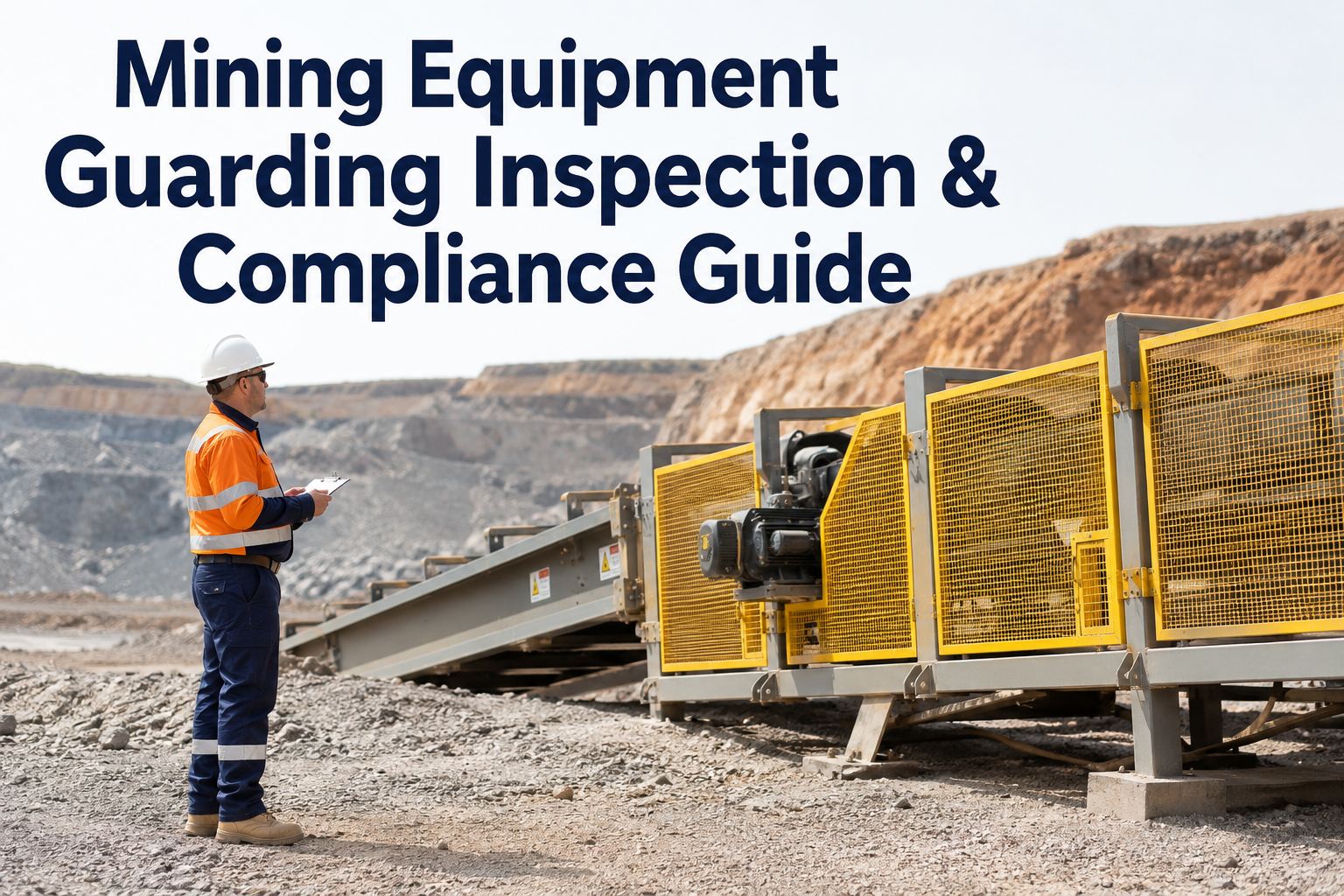
When the MSHA inspector pulls into the yard, you usually get a few minutes' notice at best. Underground mines are inspected four times a year and surface mines twice, which means audit readiness is a permanent state of operation rather than an event you scramble to prepare for. If your pre-shift examination records, defect closure evidence, and tag-out logs are spread across paper binders, spreadsheets, and group chat photos, producing a clean MSHA compliance software record set in minutes — not days — is the difference between a smooth inspection and a citation that compounds. You can walk through the audit export on your own units to see exactly how fast that retrieval becomes.
Mine inspections happen twice a year. Records requests happen in minutes.
Underground mines face four MSHA inspections a year and surface mines face two. Every visit can trigger a records request for pre-shift exams, defect closures, and task training files. HVI keeps them timestamped, photo-backed, and exportable in one click.
What disjointed compliance records actually cost your operation
The MSHA record set you must produce on demand
| MSHA Requirement | What Inspectors Want to See | HVI Record Produced |
|---|---|---|
| Pre-shift / On-shift Exams | Dated, signed examinations of working areas and equipment before operation | Mobile digital inspections with timestamp and operator ID |
| Defect Reporting & Closure | Documented hazard found, tagged out, repaired, and returned to service | Defect-to-work-order chain with repair photos and sign-off |
| Tag-out / Lock-out Records | Evidence that equipment was de-energized and locked out during repair | Forced tag-out step in the work order before closure is allowed |
| Part 46 / Part 48 Training | Task training files, new miner training, and annual refresher logs | Training records linked to personnel and equipment assignments |
| Workplace Examinations | Recorded examinations of conditions at fixed intervals with hazards noted | Scheduled exam templates with location data and deficiency flags |
Having these records is step one. Producing them in minutes when an inspector is standing in your office is the actual test. If you are tired of burning a day assembling binders, you can see the one-click audit export in a live demo and judge the time savings yourself.
How a single citation escalates into a pattern-of-violation status
Citation Issued
A standard citation is written for a violation of 30 CFR standards. The operator receives a penalty and a timeframe to abate the hazard.
Unwarrantable Failure
If the inspector determines the operator knew or should have known about the violation and failed to act, the finding is escalated. Penalties increase sharply and negligence is flagged.
Repeat Findings Compound
Similar violations at the same mine across inspections stack up. The regulator tracks recurrence, and abatement periods shrink while scrutiny intensifies.
Pattern of Violation
If repeat serious violations persist, the mine can be placed on Pattern of Violation status. This triggers enhanced inspection frequency and potential withdrawal orders that halt production.
The jump from a routine citation to a POV status is driven by repeat findings — exactly the kind of recurrence that proper MSHA record keeping and defect closure evidence prevents. When you can prove a defect was found, tagged out, repaired, and signed off, you break the chain of unwarrantable failure. If you want to understand how the defect-to-work-order chain closes that loop, book a 30-minute walkthrough and we will show you on a real workflow.
From paper scramble to audit-ready by default
One-Click MSHA Audit Export
Filter inspection records by equipment, date range, or operator and export a clean, timestamped bundle in minutes. Reported audit-prep time drops from days to minutes.
Defect-to-Work-Order Chain
Every defect captured during a pre-shift exam instantly generates a work order with photo evidence. Nothing falls through the cracks and closure is documented end to end.
Audit Checklist Manager
Pre-build MSHA-ready checklists for workplace exams, equipment inspections, and tag-out procedures so every operator follows the same 30 CFR-compliant process on the floor.
Indefinite Record Retention
Inspection records, photos, and sign-offs are retained indefinitely in the cloud. No more hunting through old binders or lost paper logs when a historical request lands.
Having records and producing them in minutes are two different things
Paper binders and group chats
- Pre-shift exams filed in paper binders by date and equipment
- Defect photos buried in personal text messages and camera rolls
- Tag-out evidence on paper tags discarded after return to service
- Audit preparation takes days of manual assembly and verification
- Training files split across HR folders, spreadsheets, and cabinets
One system, one click, minutes
- All inspections digital, timestamped, and operator-stamped
- Defect photos attached to the work order automatically
- Tag-out step forced in the workflow before closure is possible
- Audit export filtered by equipment, date, or operator in one click
- Training records linked to personnel and available on mobile
The practical difference is not the existence of records — it is retrieval speed. When an inspector asks for three months of pre-shift exams on a specific haul truck, you can either flip through binders or tap export. You can start logging inspections free and feel that difference on your next shift.
See HVI running on your mine fleet — book a 30-minute demo
Watch the MSHA audit export pull months of inspection and defect records in under a minute.
Your MSHA inspection readiness checklist
Pre-shift exams on file
Every shift, every piece of equipment, signed and timestamped with no gaps in the record.
Defect closure evidence
Photo of the defect, work order for the repair, photo of the fix, and supervisor sign-off.
Tag-out records complete
Lock applied, work performed, lock removed, and return-to-service authorized — all logged.
Training files current
Part 46 or Part 48 task training, new miner training, and annual refresher all up to date and linked.
Workplace exams logged
Examinations of working areas recorded at required intervals with conditions and hazards noted.
Export tested and ready
You have run a mock records request and confirmed the output is clean, filtered, and complete.
If any of those six items made you pause, that is the gap MSHA will find. You can map your current process against HVI in a quick demo call and see exactly where the holes are before the next inspection cycle.
A 40-truck mining fleet losing days to paper audit prep
A 40-truck mixed surface fleet running paper pre-shift exams, paper defect tags, and spreadsheet training logs. Four MSHA inspections a year, each triggering a full records request.
Two days per inspection spent pulling, sorting, and verifying paper records. That is eight person-days a year on audit prep alone — plus the risk of missing or incomplete records escalating a citation into an unwarrantable failure finding.
Audit prep drops from two days to under thirty minutes per inspection. Records are filtered by truck, date range, and operator, then exported. Defects are already chained to work orders with photos, so closure evidence is instant.
Seven-plus person-days a year recovered, eliminated citation escalation risk from incomplete records, and a permanent state of MSHA inspection readiness that requires zero scramble. You can model this on your own fleet numbers in a demo.
MSHA compliance software makes audit readiness a default state
Inspections are recurring, not annual. With underground mines inspected four times a year and surface mines twice, MSHA inspection readiness is a permanent operational state, not a project you start when notice comes.
Retrieval speed is the real test. Having records and producing them in minutes are different things. One-click MSHA audit export filtered by equipment, date, or operator turns days of prep into minutes.
Defect chains prevent escalation. Citation to unwarrantable failure to pattern-of-violation is driven by repeat findings. Documented defect-to-work-order closure with photo evidence breaks that chain.
HVI is built for this. Digital inspections, forced tag-out steps, indefinite retention, and audit checklist manager make 30 CFR compliance documentation something your team produces by doing the work, not by preparing for the audit.
"The worst part of a paper system was never the daily logging — it was the panic when the inspector asked for three months of pre-shift exams on one truck and we had to dig through binders while he stood there watching. Now I hit export, hand over a clean PDF, and get back to work. Audit prep went from two days to twenty minutes."
MSHA compliance software questions, answered
What records does MSHA compliance software need to produce for an inspection?
MSHA inspectors typically ask for pre-shift and on-shift examination records, defect reporting and closure evidence, tag-out and lock-out records, task training files under Part 46 or Part 48, and workplace examination logs. HVI captures all of these digitally with timestamps, operator IDs, and photo evidence, and lets you export them filtered by equipment, date range, or operator in one click. You can see the full export format in a demo.
How does HVI help prevent MSHA citations from escalating?
Repeat findings are what compound a standard citation into an unwarrantable failure and eventually a pattern-of-violation status. HVI prevents this by chaining every defect found during an inspection directly to a work order with photo evidence, a forced tag-out step, and a documented repair sign-off. You can prove the hazard was found, addressed, and closed — breaking the recurrence pattern.
Can HVI export records filtered by specific equipment and date range?
Yes. The MSHA audit export lets you filter by individual asset, equipment group, date range, or operator. Whether an inspector asks for a single truck's last three months of pre-shift exams or a full fleet snapshot, the output is a clean, timestamped bundle ready to hand over. Audit prep that used to take days drops to minutes.
Does HVI support both Part 46 and Part 48 training record keeping?
HVI tracks task training, new miner training, and annual refresher records for both Part 46 and Part 48 operations. Training files are linked to individual personnel and the equipment they are certified to operate, so when an inspector asks who is trained on a specific haul truck, the answer is one query away.
How long are inspection records retained in HVI?
Inspection records, defect photos, work order chains, and sign-offs are retained indefinitely in the cloud. There is no manual archiving or binder storage to manage. Whether an inspector asks for last week's records or last year's, the data is searchable and exportable on demand. You can start logging inspections free and build that history from day one.
Be ready for your next MSHA inspection by default
Digital inspections, defect-to-work-order chains, and one-click audit exports. Book a 30-minute demo and see it on your fleet.
Free to start — Works on any phone — No card needed