The mixer's running fine. The pump sounds normal. Then thirty meters down the pipeline, an elbow that's been quietly thinning for weeks finally gives out mid-pour, and the whole backfill cycle stops while a crew digs out a burst fitting instead of placing paste. Nobody skipped an inspection on purpose — the elbow just wasn't the part anyone was watching. Paste backfill plant reliability isn't about any one piece of equipment. It's about catching wear in the one component that was never the obvious suspect.
The Plant Keeps Mining Moving. Who's Watching the Plant?
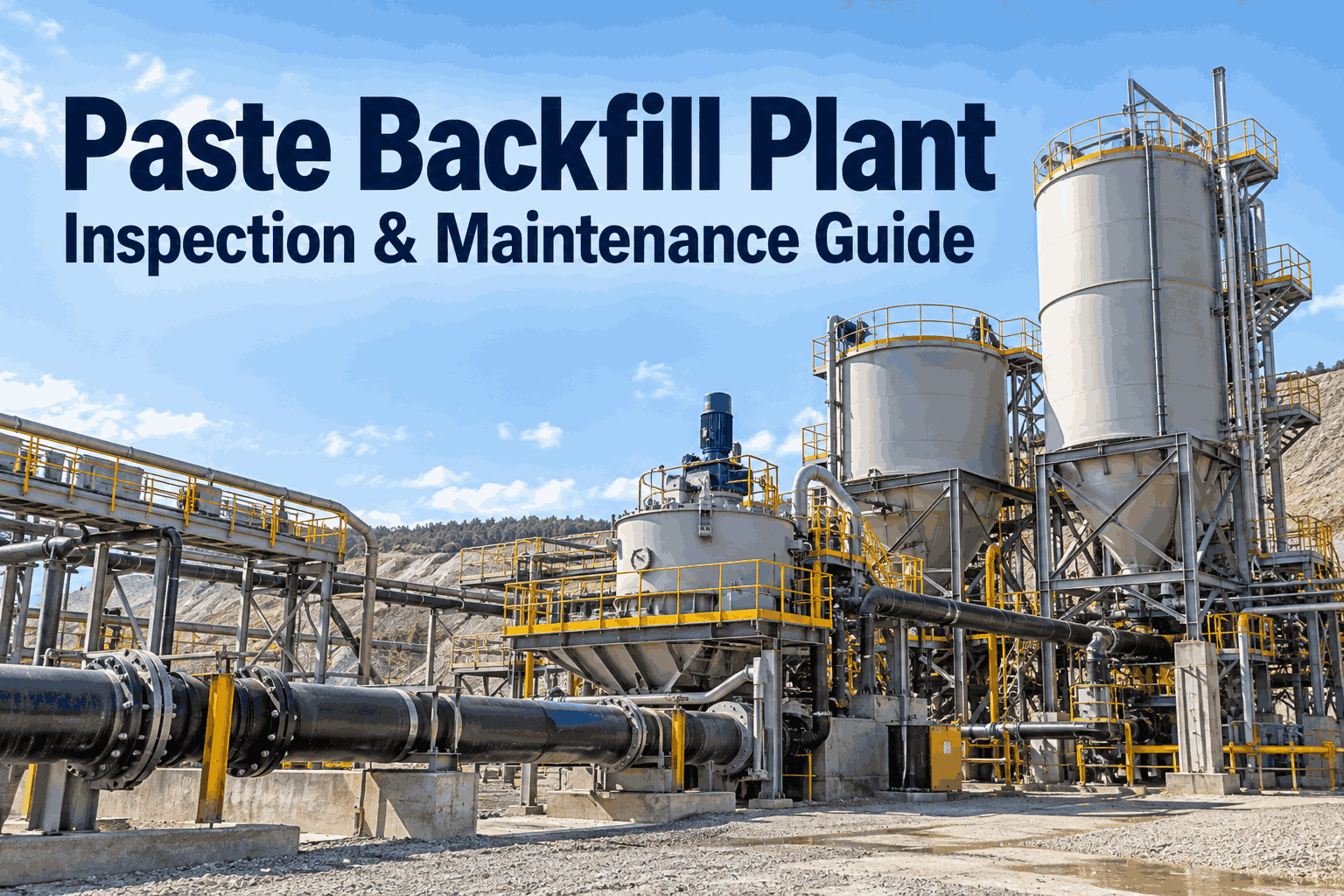
A paste backfill plant is only as reliable as its weakest interconnected system — mixing, pumping, and pipeline all have to hold up at once, every cycle, for stopes to keep filling on schedule.
That elbow story isn't unusual — it's close to the default outcome for high-wear pipe sections nobody's tracking closely. Book a demo to see how HVI tracks wear by equipment and pipeline section, so the part quietly thinning out doesn't stay invisible until it fails mid-pour.
The Backfill Path, End to End
Paste doesn't move through one machine — it moves through a sequence, and a weak link anywhere in that sequence stops the whole cycle, not just the station where it failed.
Hopper & feeder
Tailings fed into the system at a controlled rate
Mixer & agitator
Binder blended in to the consistency the pour needs
Pump
Pressure to push paste the full distance underground
Pipeline
Straight runs, bends and valves carrying paste down
Underground placement
Paste fills the stope — the whole point of the cycle
Every station in that path has its own failure modes, which is exactly why one generic "plant inspection" form can't cover all of it well — sign up free and build a separate inspection form for each station instead of stretching one checklist across equipment that fails in completely different ways.
What to Check, By Component
Four systems, four different wear patterns — book a demo to see each one captured on its own form, with findings tied to the specific asset, not a shared plant-wide log.
Pumps
- Leakage at seals or glands
- Abnormal vibration or noise
- Unexpected pressure changes
- Seal and wear-component condition
Mixers & agitators
- Blade and liner wear
- Material buildup on internals
- Drive and motor condition
- Abnormal operating behavior
Pipelines & valves
- Leakage at joints and couplings
- Movement or support failure
- Abrasion at bends and elbows
- Corrosion and valve seat wear
Hoppers, feeders & conveyors
- Blockage or bridging of material
- Belt and roller condition
- Feed rate consistency
- Structural and support wear
High-Wear Zones Get Closer Attention
Paste doesn't wear a pipeline evenly. Straight runs can go months without issue while a single bend a few meters away thins out fast enough to fail in weeks — the abrasive solids in paste slam into the outer wall of every turn, and that's where the damage concentrates.
One documented case put a number on just how fast that risk shows up: an unprotected backfill pipe elbow needed replacing roughly every three to five days before a wear-resistant lining was applied — after which it ran for more than a month. Same pipeline, same paste, a completely different inspection and maintenance outcome once the elbow got treated as the high-risk section it actually was, not just another piece of pipe. Book a demo to see wear risk tracked per pipeline section, so the next high-wear elbow gets caught on a schedule, not by accident.
Preventive Maintenance: Three Ways to Trigger It
Service on a fixed date regardless of actual throughput. Simple to schedule, but blind to a plant running far harder — or far lighter — than usual.
Service tied to operating hours and tonnage processed — closer to real wear, especially useful for pumps and mixers running variable loads.
Service triggered by what an inspection actually finds — vibration, pressure change, measured wear — catching the outlier component before it becomes the outage.
Most reliable programs blend all three: a calendar backstop so nothing goes untouched too long, hours-based scheduling for the equipment that runs variable loads, and condition findings able to override either one when something looks wrong ahead of schedule.
Records That Support Shutdown Planning & Spares Decisions
Past the immediate inspection, this data has a second job: telling you what to stock and when to schedule the next planned shutdown — book a demo to see maintenance history rolled up by component across every pump, mixer and pipeline section on the plant.
Defects logged by asset
Tied to the specific pump, mixer, or pipeline section — not a generic "plant" entry.Corrective work verified
Closed only once the fix is confirmed, not just assigned.Recurring problems flagged
The same elbow or seal failing repeatedly surfaces as a pattern worth fixing properly.Photo documentation attached
Wear and damage shown, not just described in a one-line note.Captured offline where needed
No gap in the record because the plant area had no signal that day.Service history by component
Feeding both spare-parts planning and the next shutdown schedule.From a Backfill Superintendent Who Stopped Guessing on Pipe Life
We replaced elbows on a rough schedule — whenever someone noticed one looked thin, basically. Some ran fine for two months. One split after eleven days and we lost most of a shift cleaning up paste that never made it to the stope.
Now we actually track wear by section instead of by gut feel. The high-wear bends get checked far more often than the straight runs, and the straight runs stopped getting the same attention they never needed. It's the same crew and the same plant — the difference is we're not waiting for an elbow to tell us it's done.
Frequently Asked Questions
What equipment should a paste backfill plant inspection program cover?
A complete program covers every system in the backfill path: hoppers and feeders, mixers and agitators, pumps, pipelines and valves, and the conveyors or supporting equipment connecting them. Each system has different failure modes, so inspections are most effective when forms are built around what each specific component actually fails from, rather than one generic plant-wide checklist.
Why do pipeline bends and elbows wear faster than straight sections?
Paste carries abrasive solids that travel in a straight line through most of the pipe but slam directly into the outer wall every time the flow changes direction at a bend or elbow. That concentrated impact wears the outer bend far faster than a straight run sees anywhere along its length, which is why high-wear zones like elbows typically need closer inspection and more frequent replacement or protective lining than the rest of the pipeline.
Should backfill plant maintenance be scheduled by calendar date or operating hours?
Operating hours and throughput generally give a more accurate picture of actual wear than a fixed calendar date, especially for pumps and mixers running variable loads. Many reliable programs combine calendar-based scheduling as a backstop with hours-based triggers for routine service, and let condition-based findings from inspections override either one when a component shows wear ahead of its normal schedule.
What are the common warning signs of pump problems in a backfill plant?
Common early indicators include leakage at seals or glands, abnormal vibration or noise, unexpected changes in discharge pressure, and visible wear on seals or other wear components. Catching these signs during routine inspection, rather than waiting for a full pump failure, is typically far less disruptive to the backfill cycle and less costly to correct.
How does inspection data support backfill plant shutdown planning?
Inspection findings and maintenance history, tracked by individual component over time, show which pumps, mixers, or pipeline sections are wearing fastest and which parts are likely to need replacement at the next opportunity. That same history supports spare-parts stocking decisions and helps justify the scope of a planned shutdown, rather than discovering the full extent of needed repairs only once the plant is already down.
Manage Backfill Plant Maintenance With HVI
HVI gives your team equipment-specific inspection forms, preventive maintenance scheduled from real operating data, and defect tracking that closes the loop from found to verified — across every pump, mixer and pipeline section keeping your backfill plant running.
No credit card · Equipment-level maintenance history · Offline-ready inspections