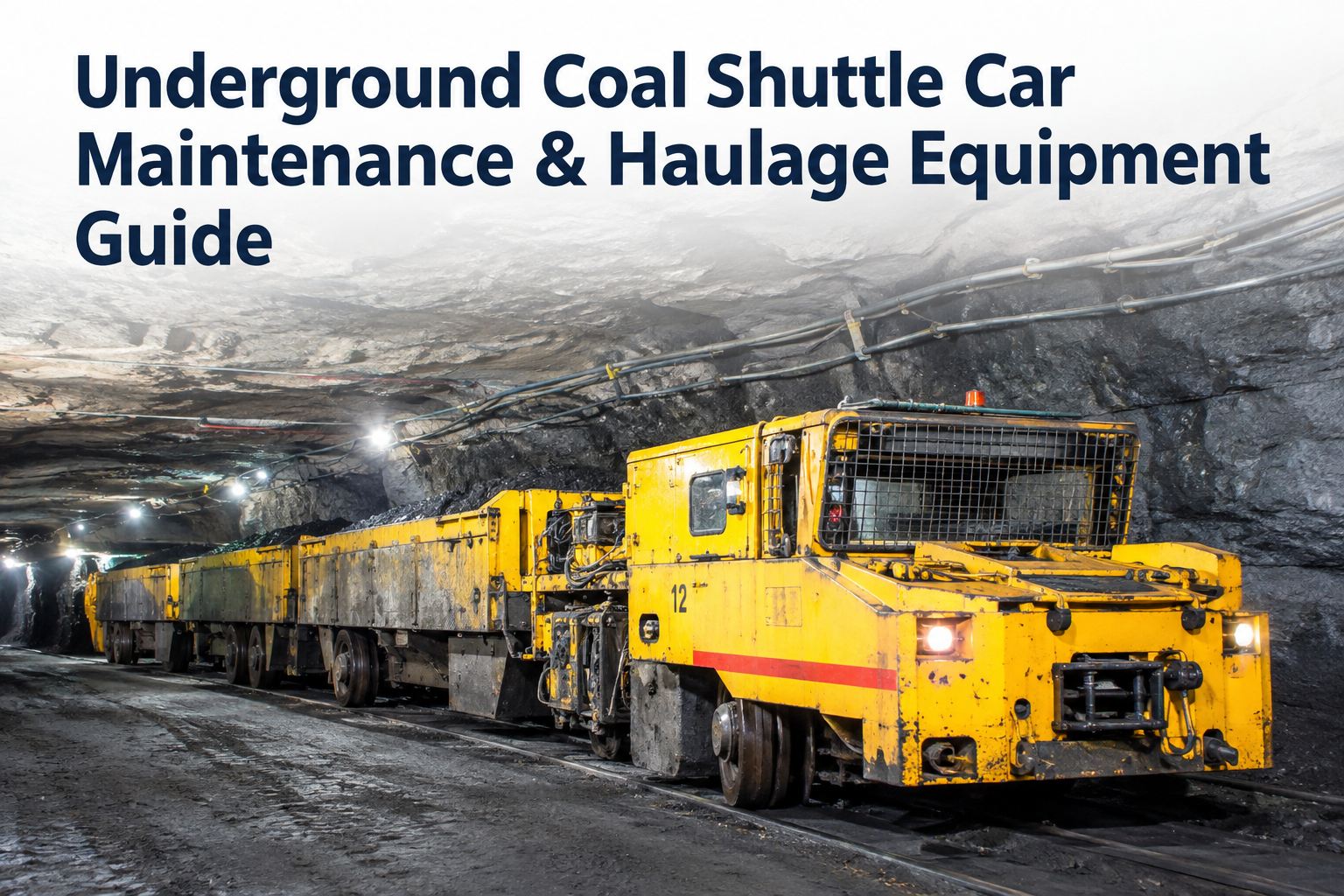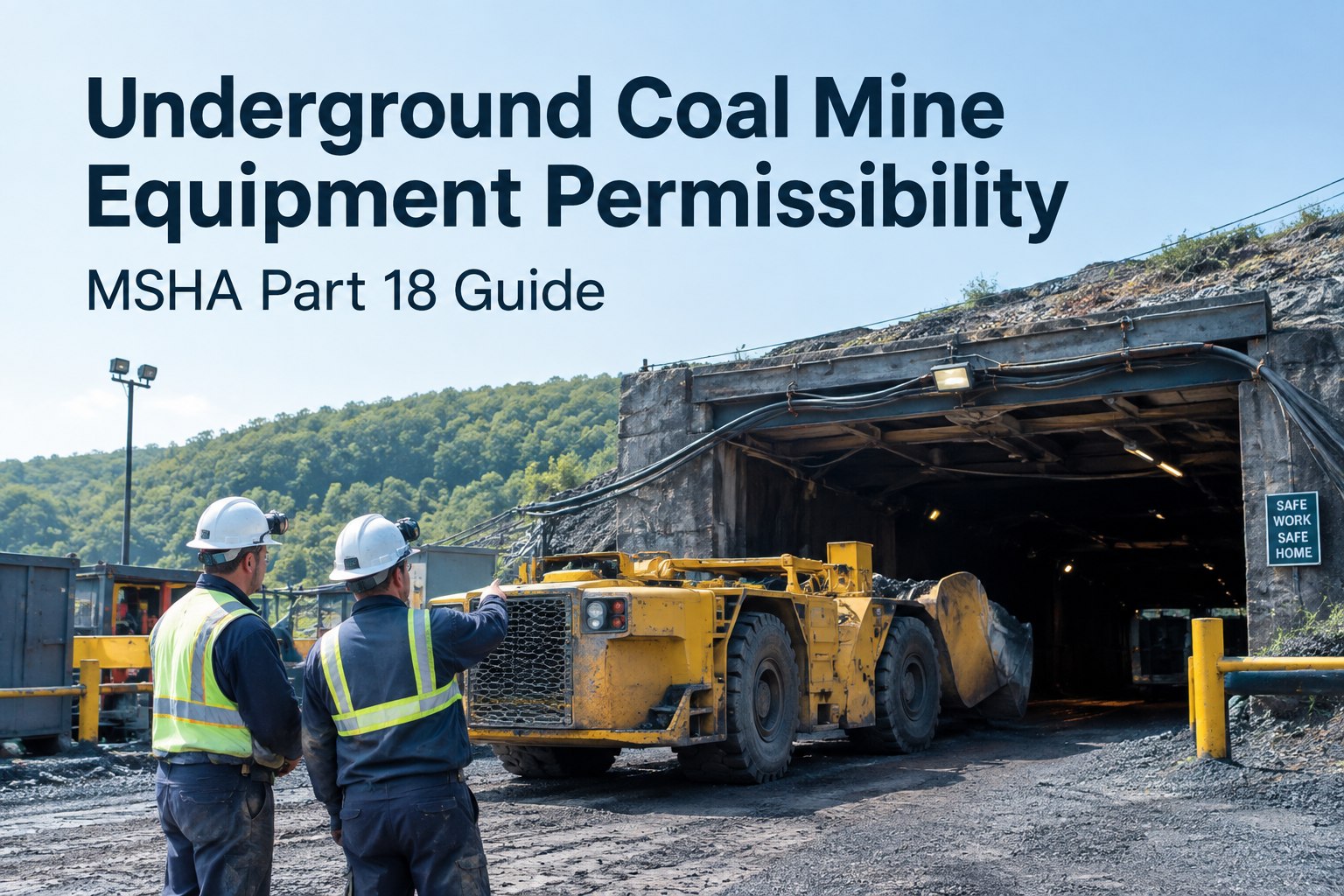
A continuous miner comes out of the shop after a motor swap. It runs fine, draws normal current, passes the operator's walkaround. But one flame-path joint went back together with a nick left in the mating surface, and two of the enclosure bolts are the wrong grade. Mechanically, nothing is wrong. On underground coal mine equipment, that machine is no longer permissible — and in a gassy entry, permissibility is the barrier standing between an internal arc and a mine explosion. This guide explains what permissibility under MSHA Part 18 actually means, how it gets quietly lost, and how to document that it's intact. Book a demo to see permissibility checks captured per machine.
What makes an enclosure permissible — and what loses it
Toggle the condition. Watch the flame path, the joint gap, and the fasteners change on the exact same enclosure.
The flame-arresting joint is clean and within tolerance, so an internal arc igniting methane inside the enclosure is cooled and quenched as gases escape through the long, tight path — flame never reaches the surrounding atmosphere. Every fastener essential to that joint is present and the correct grade. This is the approved configuration Part 18 tested and certified.
A nicked mating surface and two missing or wrong-grade bolts widen the joint gap. Now an internal ignition can push flame through the compromised path into a gassy entry. The machine looks and runs identically — but the barrier Part 18 approval depends on is gone, and no amount of "it works fine" restores it.
Permissibility isn't about whether the machine runs. It's about whether the enclosure still does the one job it was approved to do: contain an internal explosion. Book a demo to see enclosure checkpoints built into the template
Underground coal is a gassy environment, and that single fact reshapes how equipment inspection works. Above ground you're mostly checking that a machine is safe to run. Below ground, on permissible equipment, you're also checking that it can't become the ignition source for the methane around it. That's a different discipline, tied to a different part of the code — and it's where generic inspection programs fall short.
Permissibility, in plain terms
Permissible equipment is machinery MSHA has approved under 30 CFR Part 18 for use in gassy underground coal mines, carrying an approval plate to prove it. The approval isn't a one-time blessing on a category of machine — it's tied to a specific, tested configuration. Explosion-proof enclosures on that equipment are built and certified to do three things: withstand an internal methane-air explosion without damage, keep that explosion from igniting the atmosphere outside, and stop flame from escaping the enclosure at all.
The mechanism is the flame-arresting path — the long, precisely machined joint where an enclosure's mating surfaces meet. Part 18 holds those surfaces to a fine finish and tight gap so that hot gases from an internal ignition are cooled below the temperature that would light the methane outside as they travel the path. Fasteners that hold that joint together aren't ordinary hardware; they're part of the approved barrier. Change the gap, roughen the surface, or swap the bolts, and the physics the approval relied on no longer holds. Start a free trial and each enclosure's approved checkpoints become a reusable template instead of tribal knowledge.
How permissibility gets quietly compromised
Almost none of these failures announce themselves. The machine keeps running, which is exactly why they're dangerous — the loss of permissibility is invisible to anyone not looking at the enclosure the right way. These are the ways it slips, and every one is a real finding underground.
Damaged flame-path surfaces
A nick, gouge, or corrosion pit on a mating surface opens the joint gap and shortens the effective flame path. Often caused during disassembly for repair, then reassembled without anyone measuring what changed.
Missing or wrong fasteners
A bolt that secures a flame-arresting joint is part of the approval. Leave one out after a repair, or substitute a different grade or length because it's what was in the parts bin, and the enclosure no longer matches its tested configuration.
Corrosion and buildup
Rust, coal fines, or debris packed into a joint changes its geometry as surely as damage does. The enclosure that sealed cleanly last quarter can fail its check this quarter with nothing "broken."
Unauthorized modifications
Drilling an extra cable entry, adding a bracket, or fitting a part that wasn't on the approved drawing changes the machine MSHA approved into one it didn't. Well-intentioned field fixes are a common culprit.
Repairs that don't restore original safety
Part 18 is explicit: after disassembly for repair or rebuilding, an explosion-proof enclosure must be restored to its original safety with respect to all flame-arresting paths and lead entrances. A repair that fixes the fault but leaves the joint out of spec undoes permissibility.
The through-line is that most of these happen in the shop, not on the shift — which means the record that matters is the one made after a repair, verifying the enclosure went back to its approved state. Photo evidence of the joint, the fasteners, and the completed restoration is worth more than a checkbox here. Book a demo to see post-repair verification with attached photos
Two different jobs: the permissibility examination vs. the shift exams
This is where programs get muddled. The pre-shift examination and the workplace examination look at hazardous conditions across the area and the equipment broadly. The permissibility examination is a narrower, deeper, electrical-specific look at whether permissible equipment is still in permissible condition. They serve different purposes, and doing one well doesn't cover the other.
- Scope: hazardous conditions across the area and equipment generally
- Asks: is this safe to work around and operate this shift?
- Frequency: tied to the working shift
- Catches: obvious defects, hazards, unsafe conditions
- Scope: the explosion-proof integrity of permissible equipment
- Asks: is this machine still in its approved, permissible condition?
- Frequency: on a periodic electrical-examination cadence
- Catches: joint gaps, damaged flame paths, missing fasteners, unauthorized changes
On the operator side, 30 CFR Part 75 carries the ongoing obligations. Section 75.512 requires that electric equipment be frequently examined, tested, and properly maintained by a qualified person, with equipment removed from service when a potentially dangerous condition is found and a record of the examinations kept. Section 75.512-2 sets the floor at weekly — and specifically states that permissible equipment must be examined to see that it is in permissible condition. The examinations must be made by a qualified person as defined for coal-mine electrical work. Confirm the exact requirements and frequencies that apply to your equipment and mine with MSHA, since electrical examination rules span several sections beyond 75.512. Book a demo to separate permissibility exams from shift exams in one system
What a defensible permissibility record looks like
The examination happening isn't the same as the examination being provable. Section 75.512 requires the record be kept and made available — and an electrical inspector evaluating your program wants to see that permissible equipment is genuinely maintained in permissible condition over time, not just that a box got ticked last Tuesday. That's a chain of evidence, per machine, and it's exactly the kind of thing paper handles badly.
When that chain lives on one platform per asset, the machine's whole permissibility story — every examination, every defect, every restoration — is one searchable record you can hand over on request. When it lives on clipboards and in a shop supervisor's memory, proving a two-month-old repair restored the joint correctly becomes the hard part, and "we did it, we just can't show it" doesn't hold up in an electrical inspection.
From a mine electrical foreman who's pulled the plates
The one that sticks with me was a feeder-breaker that came back from a rebuild running perfectly. On the weekly permissibility check my guy caught the gap on one enclosure joint was open past spec — shop had reassembled it with a burr they never dressed out. Nothing electrical was wrong. It just wasn't permissible anymore, sitting in a gassy section.
What changed for us wasn't finding more problems. It was being able to prove the fix. Now the joint photo, the reading, and the sign-off after the repair are all on the machine's record. When the electrical inspector comes through, I pull up the unit and it's all right there instead of me swearing we did it right.
Underground coal equipment permissibility FAQs
What does permissible equipment mean in an underground coal mine?
Permissible equipment is electrically operated machinery that MSHA has approved under 30 CFR Part 18 for use in gassy underground coal mines, identified by an approval plate. The approval certifies that the equipment—particularly its explosion-proof enclosures—is built to a tested configuration that can withstand an internal methane-air explosion, prevent that explosion from igniting the surrounding atmosphere, and stop flame from escaping the enclosure. Permissibility is not a general safety rating; it is tied to that specific approved design. Part 75 also governs where permissible equipment is required underground—for example, electric equipment used in return air outby the last open crosscut generally must be permissible under §75.507-1. Because coverage depends on the equipment, its approval, and where it operates, operators should verify the specific approval and applicable requirements for each machine with MSHA rather than assuming all electrical equipment is treated identically.
How does an explosion-proof enclosure keep a coal mine safe?
An explosion-proof enclosure works on containment and flame-arresting, not on keeping methane out. If methane-air enters the enclosure and an internal arc or spark ignites it, the enclosure is built to contain that internal explosion without damage and to cool the escaping gases as they travel a long, tightly machined joint called the flame-arresting path. Under 30 CFR Part 18, the metal surfaces forming that path are finished to a fine tolerance so the gases drop below the temperature that would ignite the methane in the surrounding atmosphere before they exit. The result is that an ignition inside the enclosure stays inside and never propagates into the gassy mine environment. This is why the condition of the joint, its gap, and the fasteners that hold it are so critical—they are the mechanism, not incidental hardware.
What is the difference between a pre-shift exam and a permissibility examination?
They answer different questions. A pre-shift or workplace examination looks broadly at hazardous conditions across the working area and equipment to determine whether it is safe to work and operate that shift. A permissibility examination is a narrower, electrical-specific check of whether permissible equipment remains in its approved, permissible condition—examining flame-arresting joints, enclosure integrity, fasteners, and cable entries for anything that would compromise explosion-proof protection. Under 30 CFR §75.512, electric equipment must be frequently examined, tested, and maintained by a qualified person, and §75.512-2 sets that examination at least weekly and specifically requires that permissible equipment be examined to confirm it is in permissible condition. Doing a thorough pre-shift exam does not satisfy the permissibility examination, and vice versa; a complete program documents both.
Does repairing permissible equipment affect its permissibility?
It can, and this is one of the most common ways permissibility is lost. Part 18 requires that after an explosion-proof enclosure is disassembled for repair or rebuilding—whether by the owner or an independent shop—it must be restored to its original safety with respect to all flame-arresting paths, lead entrances, and related features. A repair that resolves the electrical or mechanical fault but leaves a flame-path surface nicked, a joint gap out of tolerance, or a securing fastener missing or substituted will fix the machine while leaving it no longer permissible. Because the machine typically runs normally afterward, the loss is invisible without a proper post-repair permissibility check. Best practice is to verify and document the restored condition—ideally with photo evidence of the joint and fasteners—before the equipment returns to a gassy section.
Who is allowed to examine permissible equipment for permissibility?
Under 30 CFR §75.512, examinations, tests, and maintenance of electric equipment in underground coal mines must be performed by a qualified person. Section 75.153 defines who qualifies to perform coal-mine electrical work—generally an individual qualified as a coal-mine electrician through an approved state program, or one with the required experience plus an approved coal-mine electrical training program, with an annual retraining certification to remain qualified. The nature of a permissibility examination—assessing flame-path integrity, enclosure condition, and electrical safety—requires that level of qualification rather than a general equipment operator. Operators should confirm that the individuals performing these examinations meet the qualified-person requirements that apply to their operation, and keep records demonstrating both the qualification and the examinations performed, as §75.512 requires the examination records to be kept and made available.
Document underground coal mine equipment permissibility without the paper chase
HVI puts machine-specific templates, configurable permissibility checkpoints, photo evidence on every item, defect-to-work-order routing, and full asset maintenance history on one platform — so each permissible machine's examination, defect, repair, and post-repair verification live together as one record. When the electrical inspector asks, you open the unit and it's all there.
No credit card · Machine templates ready on day one · Records exportable on demand