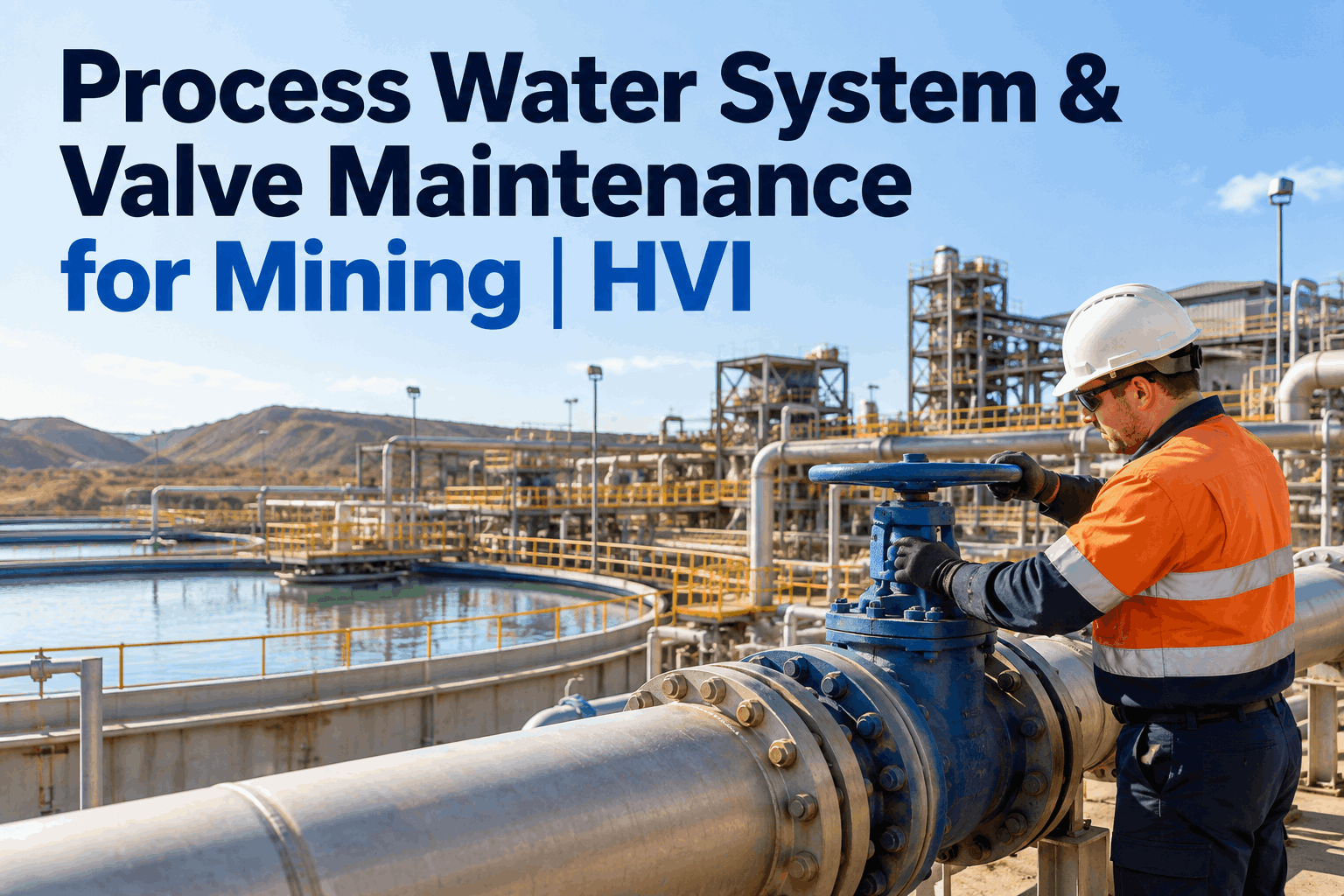
A mining plant's process water system is hundreds of valves and pumps the operation can't run without — and the quietest failures in the whole plant. A valve passing when it should shut, a packing gland weeping, a gate valve seized because nobody cycled it in two years: none trip an alarm, but each costs control and uptime. Process water system maintenance is really about tracking every valve as the asset it is. See every valve and pump tracked as an asset.
Process water system maintenance that starts at the valve
Pumps, pipelines, pressure and the valves that control it all — tracked as assets, exercised and leak-tested on schedule, so a passing seat or a seized valve never quietly steals control of the circuit.
Pumps and pipelines get the attention because they fail loudly. Valves fail quietly — passing a little, leaking a little, stiffening a little — until the day the plant can't isolate a line or hold a pressure, and nobody can say when that valve was last touched.
Where process water system maintenance really starts: the valve fails three ways
Valves don't usually break — they drift out of spec in one of three ways, and all three are silent until they cost you control.
The seat passes
Erosion or pitting on the seat and disc means the valve leaks through even fully shut. You can't isolate the line, and pressure or flow you think is stopped isn't.
The packing leaks
A worn or loose packing gland weeps process water down the stem. It wastes water, corrodes the valve and the structure, and only gets worse until the packing is adjusted or replaced.
The valve seizes
A valve that sits in one position for months corrodes and seizes. The day you need to throw it in an emergency, it won't budge — which is why idle valves have to be exercised.
All three are caught by handling the valve, not watching a gauge — see valve exercising and leak checks on a schedule.
Every valve type fails its own way
A process water system runs a mix of valve types, and each has a signature failure. Knowing it tells your crew what to look for on each one.
One asset register, each valve typed and tracked by what it's prone to — see each valve typed and tracked in HVI.
The valve maintenance cadence that keeps a circuit tight
Valve work runs on intervals, not hunches. These are the checkpoints a reliable process water system keeps on every critical valve.
Walk every valve for corrosion, packing weeps and flange leaks, and exercise idle valves so they don't seize.
Adjust or renew packing glands, and stroke-test actuated valves end to end to confirm they fully open and close.
Prove critical valves actually seal shut, so an isolation you rely on in an emergency is real, not assumed.
Full rebuild based on the valve's history and test trend, not a guess — planned into an outage, never an emergency.
Deferring this cadence is a leading cause of process-safety incidents, not just leaks — put the valve cadence on a tracked schedule free.
How HVI runs process water system maintenance end to end
The asset register, the inspection round, the test cadence and the work orders live on one platform, so a valve's whole life is one record instead of scattered notes.
Every valve and pump as an asset
Each valve typed, located and carrying its own service history, test results and trend — so you always know what it is and when it was last touched.
Exercise & test cadence scheduled
Valve exercising, packing, stroke and seat-leak tests scheduled per asset and raised automatically, so idle valves get cycled and critical ones get proven.
Defects into work orders & parts
A passing seat or a weeping gland becomes an assigned work order with the part attached, and a valve's repeat issues point to a rebuild, not another adjustment.
It runs on the same platform as your wider preventive maintenance scheduling and your crusher and conveyor maintenance, so the water system sits in the same record as the rest of the plant.
We had an incident where we couldn't isolate a line during a repair because a gate valve we trusted was passing — it hadn't sealed in who knows how long, and there was no record it had ever been leak-tested. That turned a two-hour job into most of a shift.
Now every valve is an asset with an exercise and test schedule, and the critical ones get proven on a seat-leak test. When we shut a valve now, we know it's actually shut. For a water system, that's everything.
Frequently asked questions
What does process water system maintenance involve?
Maintaining the pumps, pipelines, pressure controls and especially the valves that run the circuit. For valves that means visual and leak checks, exercising idle valves, packing adjustment, stroke tests on actuated valves and seat-leak tests on critical ones — each tracked as an asset with its own history.
Why do valves fail without any warning?
Valves drift rather than break. A seat erodes so it passes when shut, a packing gland starts weeping, or an idle valve corrodes and seizes — none of which trips an alarm. You only find out when you can't isolate a line or hold a pressure, which is why valve maintenance is scheduled, not reactive.
Why do idle valves need to be exercised?
A valve left in one position for months corrodes and seizes. The one time you need it — an emergency isolation — it won't move. Exercising valves on a schedule keeps them free and confirms they still stroke fully, so a critical valve works when it matters.
How often should process water valves be maintained?
A common cadence is external visual and leak checks every six months, packing maintenance and full stroke tests annually, seat-leak tests every two to three years, and condition-based overhaul every five to ten years. Critical and safety-related valves follow the tighter end of that range.
How does HVI help with process water and valve maintenance?
HVI registers every valve and pump as an asset with its own history, schedules exercising and leak tests by asset, runs the inspection round with photos, and turns a passing seat or weeping gland into a work order. The whole water circuit becomes a tracked record instead of guesswork.
Make process water system maintenance start with the valve
Every valve and pump tracked as an asset, exercising and leak tests on a cadence, and defects routed to work orders with a history. Keep control of the circuit the whole plant runs on.