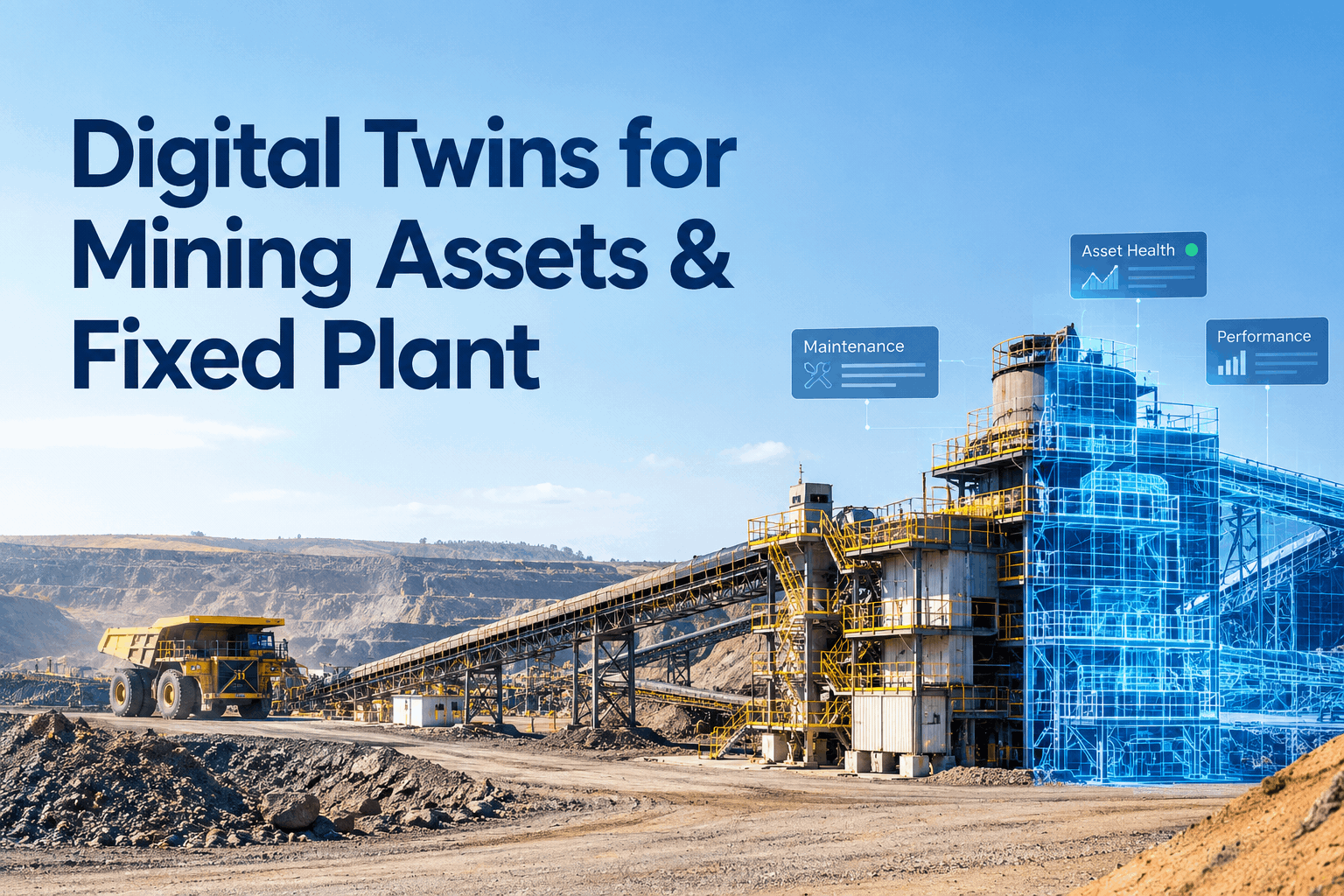
A digital twin is a living mirror of a physical asset — a virtual copy of a crusher, conveyor, or haul truck that updates as the real thing runs. In mining the promise is huge, but a mirror is only as clear as what it reflects: a digital twin is only as good as the maintenance and condition data feeding it. This page covers what a twin really is, where it helps, and why the data decides it. Book a demo to see the data layer a twin runs on.
A Digital Twin in Mining Is Only as Good as the Data Behind It
A twin mirrors your assets and fixed plant in real time — but it reflects whatever data you feed it. Reliable maintenance, inspection, and condition records are the foundation that makes the reflection worth trusting.
Before the budget conversation, it helps to be clear on what a digital twin actually is — because the word gets stretched to cover everything from a 3D picture to a full physics simulation. The reflection is only useful if you know what it's reflecting.
What a digital twin in mining actually is — and isn't
A true digital twin is a virtual model of a physical asset that is continuously updated with real data, so it reflects the asset's current state and can be used to analyze and predict. That continuous data link is the whole point — without it, you have a drawing, not a twin.
- A live virtual model fed by real asset data
- Updated continuously as the asset operates
- Used to analyze condition and test "what if"
- Only as accurate as the data behind it
- A static 3D drawing or CAD model
- A one-time snapshot or dashboard screenshot
- Something that works without a data pipeline
- A substitute for clean maintenance records
The distinction matters because the gap between the two is almost always data. A beautiful model fed by patchy, paper-based maintenance records mirrors a fiction. That's why the first real step toward a twin isn't the model — it's getting the asset, inspection, and maintenance data into a reliable digital form, which is exactly what a system like HVI's analytics and reporting is built to hold. Book a demo to see that data layer.
The data foundation a mining digital twin stands on
A twin isn't one data source — it's a stack. At the top is the model everyone sees; underneath are the layers that make it real. Weaken any lower layer and the whole thing gets less trustworthy. This is where most mining twin projects quietly succeed or fail.
Notice where the model sits: at the very top, carried by everything below it. The layers HVI builds — digital inspections, asset records, and maintenance history — are the base a twin stands on, and OEM and telematics integration brings the real-time condition layer alongside them. Sign up free and start building the base.
What a digital twin is used for across a mine
Twins aren't one tool; they're applied differently to mobile fleet, fixed plant, and the wider operation. For owners weighing the investment, these are the areas where a twin earns its keep — each one leaning on the same maintenance and condition data underneath.
Fixed plant monitoring
A twin of a crusher, mill, or conveyor line surfaces wear and performance drift before a stoppage takes out the whole circuit.
Asset performance
Comparing a unit against its twin shows when real output and health diverge from the expected baseline.
Simulation & "what-if"
Test a maintenance interval, a load change, or a config tweak on the model before risking the real asset.
Maintenance planning
A twin informed by real history helps plan interventions in windows instead of reacting to failures.
Every one of these runs on the condition and maintenance record underneath — which is why the practical payoff often starts before a full twin, with the analytics that same data already unlocks, such as anomaly detection on mining equipment data. Book a demo to see what your data already enables.
Digital twins arrive in stages, not all at once
The mistake owners are warned against most often is treating a twin as a single big-bang purchase. Industry practice points the other way: a phased climb, where each level needs the one below it working first. You can't model what you can't measure, and you can't predict on data you don't have.
Levels 1 and 2 are a data-and-records problem, not a modelling one — and they're the levels every operation can start on now, whatever its twin ambitions. That groundwork is where HVI lives. Read how mining predictive maintenance builds on that data for the levels above, or book a demo to start at level one.
Checklist: is your data ready for a digital twin?
A twin project succeeds or stalls on the state of your data long before any model is built. Run this check on your operation — the gaps are the work to do first, and the work that pays off with or without a twin.
Mostly ticked, and you're twin-ready when you choose to be; mostly gaps, and a twin would just mirror the mess. Either way the fix is the same foundation. See how mining operations build this with HVI, or book a demo to check your data readiness.
From an operations director weighing a twin program
We got pitched a digital twin for our processing plant and nearly signed before our reliability lead asked the obvious question: what are we feeding it? Our maintenance data was half on paper and coded three different ways. We'd have been modelling guesswork. We paused the twin, spent a year getting the inspection and maintenance data clean and connected, and honestly got most of the value we wanted from the data alone. When we do build the twin, it'll actually reflect reality.
Digital twin mining FAQs
Is HVI a digital twin platform?
What is a digital twin in mining, simply put?
Do I need a digital twin to get value from my asset data?
Where should a mining operation start?
How does HVI fit a digital twin strategy?
Make your mining data worthy of a digital twin
Get your asset, inspection, and maintenance records clean, connected, and reliable — the foundation a digital twin stands on, and the layer that pays off from day one. Whether or not you build the twin, the data is the asset.
No credit card · Works with your telematics & OEM feeds · Twin-grade records from day one
- Digital asset & component records
- Timestamped digital inspections
- Consistent maintenance history
- OEM & telematics integration
- Analytics on the same data