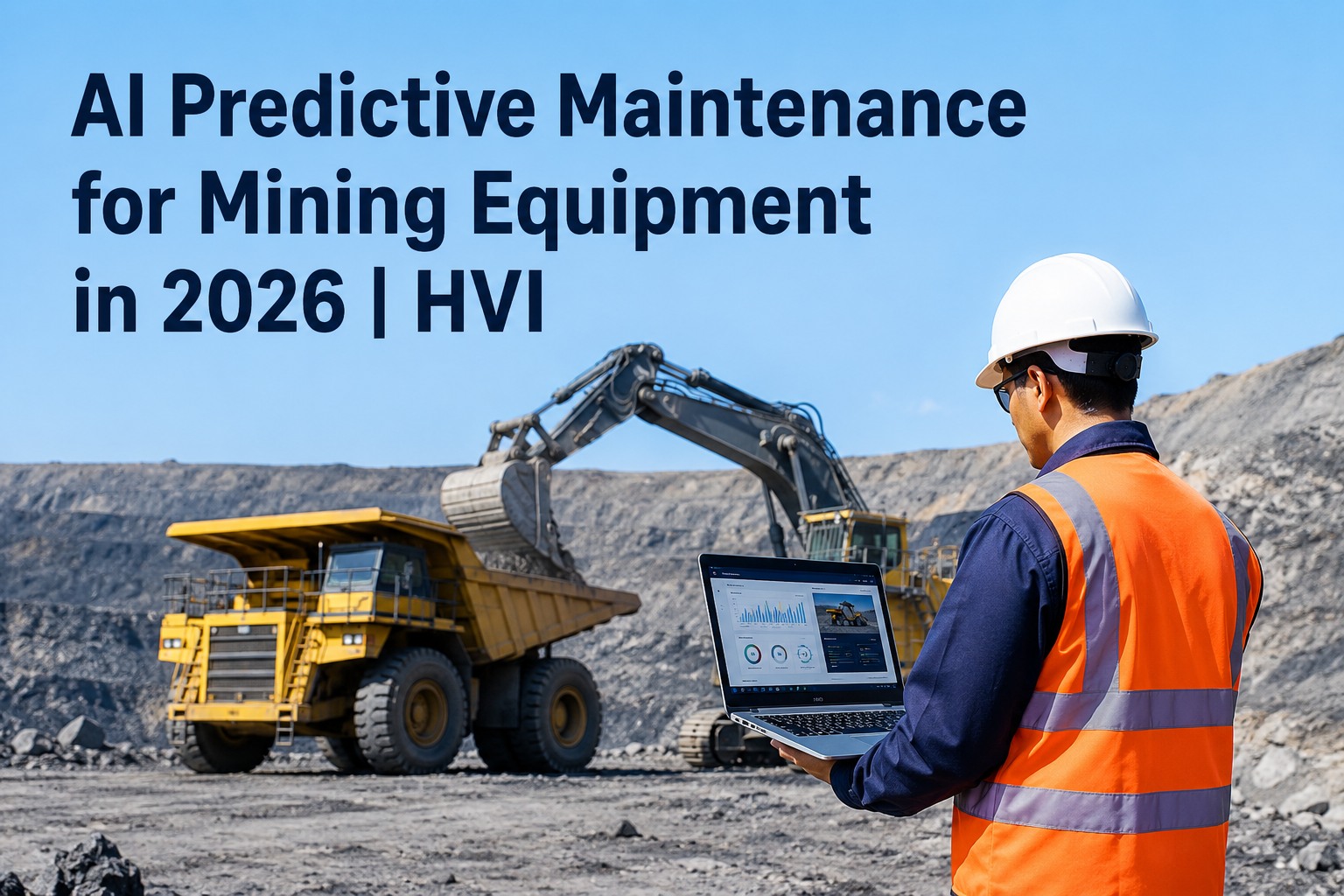
You know the moment: a haul truck throws a hydraulic fault code mid-shift, the pit goes quiet, and the maintenance phone starts ringing. By the time the unit is towed to the shop, you've lost a full production window and the parts you need aren't on the shelf. AI predictive maintenance for mining equipment exists to break exactly that cycle — models trained on failure patterns flag deviation from each asset's baseline under comparable load, weeks before the failure becomes a breakdown. The catch, and it's a big one, is that the algorithms are rarely the problem. The constraint is data quality: clean maintenance history, consistent failure coding, and sensor feeds that actually reach the people who can act on them. If you want to see what that looks like on your own units, you can walk through it on a 30-minute demo before committing to anything.
The failure was visible six weeks before the breakdown. Your data just wasn't talking to the right people.
Mining has the data density and the failure cost that make predictive maintenance genuinely worth it. The constraint is data quality, not algorithms.
The Real Cost of Reactive Maintenance in Mining
Every unplanned stop on a haul truck or excavator carries a cost that goes far beyond the repair bill. These four figures frame why predictive maintenance pays for itself faster in mining than almost any other sector.
What AI Predictive Maintenance Actually Does on a Mine Site
Strip away the jargon and the concept is straightforward: a model learns what "normal" looks like for each asset under comparable load, then flags when the machine starts behaving differently. It is not magic. It is pattern recognition applied to data your equipment is already generating.
Baseline learning
The model ingests historical sensor data — hydraulic pressure, temperature, fuel burn, vibration — and builds a baseline for each asset under specific load conditions. A loaded haul truck climbing a ramp has a different "normal" than the same truck empty on the flat, and the model accounts for that.
Deviation detection
Once the baseline is set, the model watches live telemetry for drift. A hydraulic pump drawing more pressure to do the same work, or a bearing running 4°C hotter under identical load, triggers an anomaly flag — not an alarm, a flag with context.
Failure pattern matching
The flagged deviation is compared against known failure signatures from the training data. If the pattern matches early-stage bearing degradation or a hydraulic seal starting to weep, the model assigns a probability and a timeframe.
Alert with lead time
The output is not a red light on a dashboard. It is a notification that says: this component is trending toward failure, here is the confidence level, and here is the window you have to plan the repair. That window is typically three to six weeks — enough to order parts, schedule labour, and slot the work into a planned downtime window.
Four Sensor Signals That Predict Mining Equipment Failures
Not all sensor data is equally useful. In mining, four signal types consistently deliver the earliest and most reliable failure warnings. If your predictive programme is not tracking these, it is leaving value on the table.
Hydraulic pressure behaviour
A pump that needs more pressure to move the same load is telling you something is wearing — seals, valves, or the pump itself. Pressure drift under comparable load is one of the earliest indicators of hydraulic system degradation on excavators, loaders, and drill rigs.
Temperature trending under load
A component running hotter than its own baseline under the same conditions is a classic early warning. Final drives, wheel motors, and transmission housings all show measurable temperature drift weeks before failure — if you are comparing like-for-like load data.
Fuel consumption relative to load
When an engine burns more fuel to move the same tonnes, something is wrong — injectors, turbo, air intake, or drivetrain drag. Fuel-per-tonne drift is a slow, quiet signal that often precedes a more expensive failure by months.
Vibration and bearing degradation
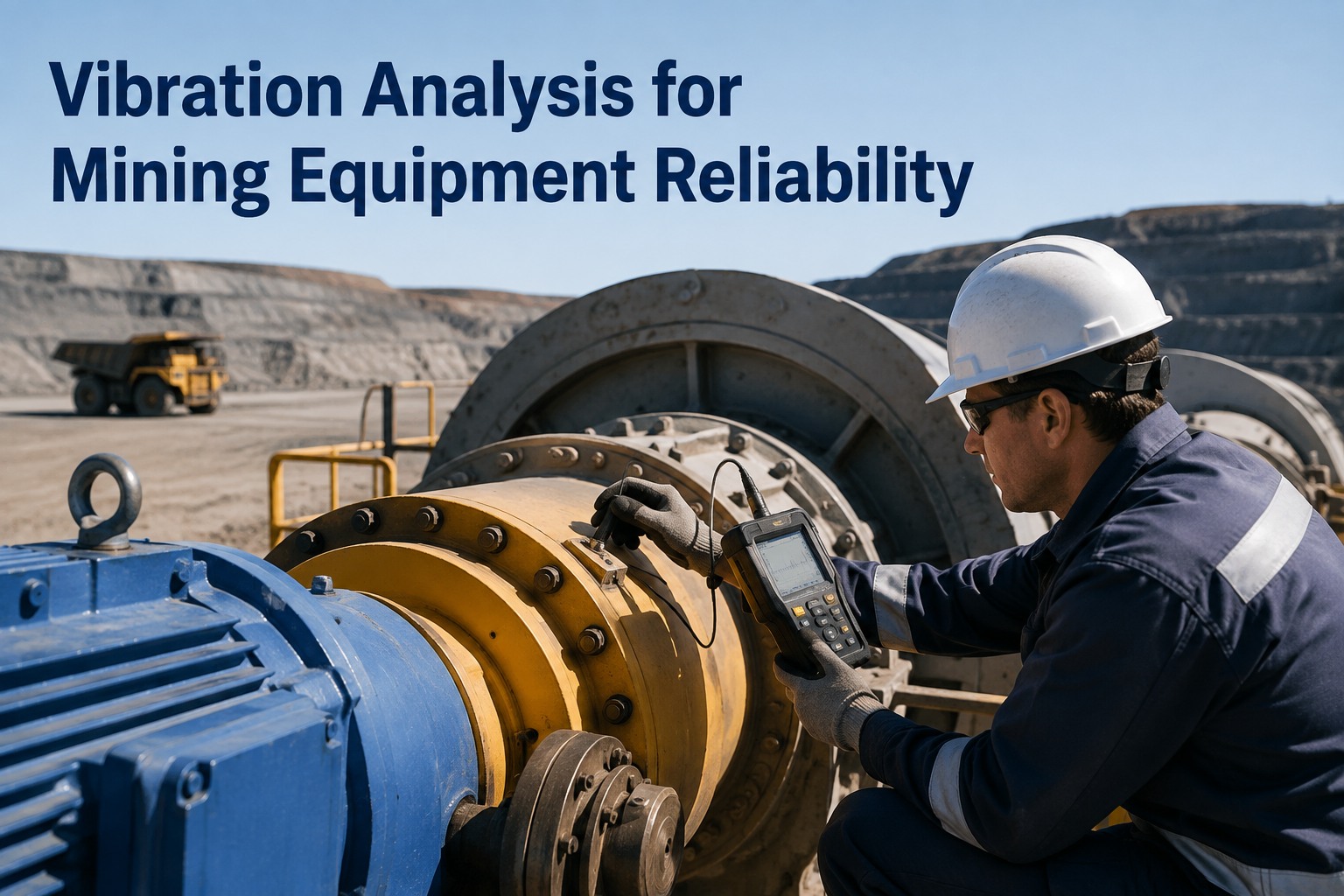
Vibration analysis is the oldest predictive technique in heavy industry, and it still works. Early-stage bearing wear produces a distinct frequency signature long before you can hear or feel it. On crushers, conveyors, and rotating plant, vibration is often the first signal to move.
Your Equipment Is Already Generating the Data. Is Anyone Acting on It?
HVI connects telematics feeds to structured maintenance history so anomaly alerts land on a work order, not in a spreadsheet nobody opens.
Why Most Mining Predictive Maintenance Programmes Underdeliver
The models work. The sensors work. What breaks down is the data pipeline between the machine and the maintenance planner. Here is where programmes actually fail — and it has nothing to do with the algorithm.
What Goes Wrong
- Inconsistent failure coding. One technician writes "hydraulic leak," another writes "hose replaced," a third leaves the field blank. The model cannot learn from data it cannot categorise.
- Missing maintenance history. If half your work orders live in a paper binder or a spreadsheet on someone's laptop, the model is training on a fraction of the picture.
- Sensor data siloed from work orders. The telematics platform sees the anomaly. The CMMS sees the repair. Nobody connects the two, so the model never learns whether its prediction was right.
- No feedback loop. The alert fires, the repair happens, but nobody logs what was actually found. Without that confirmation, the model cannot improve its accuracy.
What Fixes It
- Structured failure codes. A standardised dropdown of failure modes — not free text — so every repair is categorised the same way regardless of who logs it.
- Complete digital work order history. Every inspection, every repair, every part replaced, timestamped and linked to the asset. This is the training data the model needs.
- Telematics integration. Sensor feeds flow directly into the maintenance platform, so an anomaly flag can trigger a work order automatically.
- Closed-loop confirmation. The technician logs what was actually found during the repair. The model compares prediction to outcome and gets sharper over time.
This is why the foundation matters more than the algorithm. If your maintenance history is clean, structured, and complete, even a basic model will deliver value. If it is messy, the best model in the world will underperform. You can see how HVI structures this data on a demo call and judge for yourself whether your current records would support predictive analytics.
What "92% Accurate at 3–6 Weeks" Actually Means for Your Operation
That figure gets quoted a lot. Here is what it means in practice, and what it does not mean.
What it means
A mature model — one trained on months of clean, coded failure data from your specific fleet — will correctly flag roughly nine out of ten developing failures three to six weeks before they cause an unplanned stop. That is enough time to order the part, schedule the technician, and plan the repair around production.
What it does not mean
It does not mean the model catches everything on day one. Accuracy starts lower and improves as the model ingests more of your data. It also does not mean you can skip preventive maintenance. Predictive alerts complement a PM schedule — they do not replace it.
The 8% that slips through
Roughly one in twelve failures will not be flagged in time, usually because the failure mode is sudden (a hose burst from impact damage, an electrical short) rather than gradual. This is why daily inspections and operator pre-start checks still matter — they catch what sensors cannot.
A Worked Example
Say you run a fleet of 20 haul trucks. Without predictive alerts, you average four unplanned breakdowns a month, each costing two days of downtime. That is eight truck-days lost. With a model catching failures at 92% accuracy, three of those four breakdowns become planned repairs slotted into scheduled maintenance windows. You have cut unplanned downtime by 75% — well above the McKinsey range of 30–50% — and the parts were on the shelf before the truck stopped. If each truck-day of unplanned downtime costs you $3,000 in lost production and emergency repair premiums, that is $18,000 a month recovered. The model did not do that. The data pipeline did. If you want to start building that pipeline free, HVI gives you the structured maintenance history and telematics integration that make it possible.
HVI: The Data Foundation Predictive Maintenance Actually Needs
HVI is not an AI company. It is the CMMS that makes AI possible by giving you clean, structured, complete maintenance data — the thing every predictive model depends on and most mining operations lack.
Structured maintenance history
Every work order in HVI is timestamped, categorised with standardised failure codes, and linked to the specific asset. No free-text ambiguity, no paper binders, no spreadsheets on personal laptops. This is the training data a predictive model needs to learn your fleet's failure patterns.
Telematics and GPS integration
HVI connects to your existing telematics feeds so sensor data — engine hours, fault codes, fuel burn, location — flows into the same platform as your work orders. When an anomaly flag fires, it can trigger a work order automatically instead of sitting in a dashboard nobody checks.
Digital inspections and DVIR
Operator pre-start checks and daily inspections feed directly into the maintenance record with photos and defect capture. A defect flagged during a pre-start becomes a work order instantly — no text-message photos, no paper forms lost in the cab. This catches the sudden failures that predictive models miss.
Preventive maintenance scheduling
PM schedules by date, mileage, or engine hours with due and overdue alerts keep the baseline maintenance running while predictive alerts handle the exceptions. The two work together: PM prevents the failures you can schedule, predictive catches the ones you cannot.
If you are evaluating whether your current data would support predictive analytics, the fastest way to find out is to book a demo and walk through your own fleet's data structure with someone who has done this before.
How to Build the Data Foundation for Predictive Maintenance in Mining
You do not need to buy an AI platform first. You need to fix your data. Here is the sequence that works.
Digitise every work order
Move all maintenance records — inspections, repairs, parts, PM completions — into a single CMMS. If it is not in the system, it did not happen. This is non-negotiable. A model trained on 60% of your maintenance history will deliver 60% of the value.
Standardise failure codes
Create a dropdown list of failure modes and require every technician to use it. "Hydraulic hose failure — burst" is useful. "Fixed hyd issue" is not. Consistency here is what allows the model to learn patterns across assets and time.
Connect telematics to your CMMS
Engine hours, fault codes, fuel data, and location should flow into the same platform as your work orders. HVI's telematics integration handles this without custom development. When sensor data and maintenance history live in the same place, anomaly detection becomes possible.
Close the feedback loop
When a predictive alert fires and the repair is done, the technician logs what was actually found. Did the model get it right? Was the failure mode what it predicted? This confirmation data is what pushes accuracy from 70% toward 92% over time.
Layer in predictive analytics
Once you have six to twelve months of clean, coded, complete data, you are ready for predictive models — whether built in-house, from a telematics provider, or from a third-party analytics platform. The model is the last step, not the first.
Most mining operations are closer to this than they realise. The sensors are already on the machines. The gap is the maintenance data layer. You can start closing that gap free with HVI and have structured work orders running within days, not months.
What to Remember About AI Predictive Maintenance for Mining Equipment
The technology works. Mature models report around 92% accuracy at three to six weeks lead time. That is enough to plan parts, labour, and downtime windows instead of reacting to breakdowns.
The constraint is data, not algorithms. Inconsistent failure coding, missing maintenance history, and siloed sensor feeds kill more predictive programmes than bad models ever will.
Four signals matter most. Hydraulic pressure behaviour, temperature trending under load, fuel consumption relative to load, and vibration analysis deliver the earliest and most reliable warnings in mining.
Predictive does not replace preventive. PM schedules handle the failures you can schedule. Predictive alerts catch the ones you cannot. Daily inspections catch what sensors miss. You need all three.
Start with the data foundation. A CMMS that gives you structured, complete, coded maintenance history is the prerequisite for everything else. Without it, predictive analytics is a dashboard that looks impressive and delivers nothing.
If you are ready to build that foundation, book a 30-minute demo and see how HVI structures maintenance data for mining fleets running mixed assets across multiple sites.
We spent six months on a predictive pilot that went nowhere because our work order history was a mess. Half the repairs were logged as "general maintenance" and the other half were in a spreadsheet on the fitter's personal laptop. Once we moved everything into a proper CMMS with standard failure codes, the model accuracy jumped within a quarter. I track one number now: unplanned truck-days per month. It was eleven when we started. Last month it was four.
AI Predictive Maintenance for Mining: Your Questions Answered
What is AI predictive maintenance for mining equipment?
How accurate is predictive maintenance for mining equipment?
Why do most mining predictive maintenance programmes fail?
What sensor data matters most for predicting mining equipment failures?
How do I get started with predictive maintenance for my mining fleet?
Your Machines Are Talking. Start Listening With Clean Data.
HVI gives you the structured maintenance history, telematics integration, and digital inspections that predictive maintenance depends on. See it running on your own fleet.
Free to start — Works on any phone — No card needed