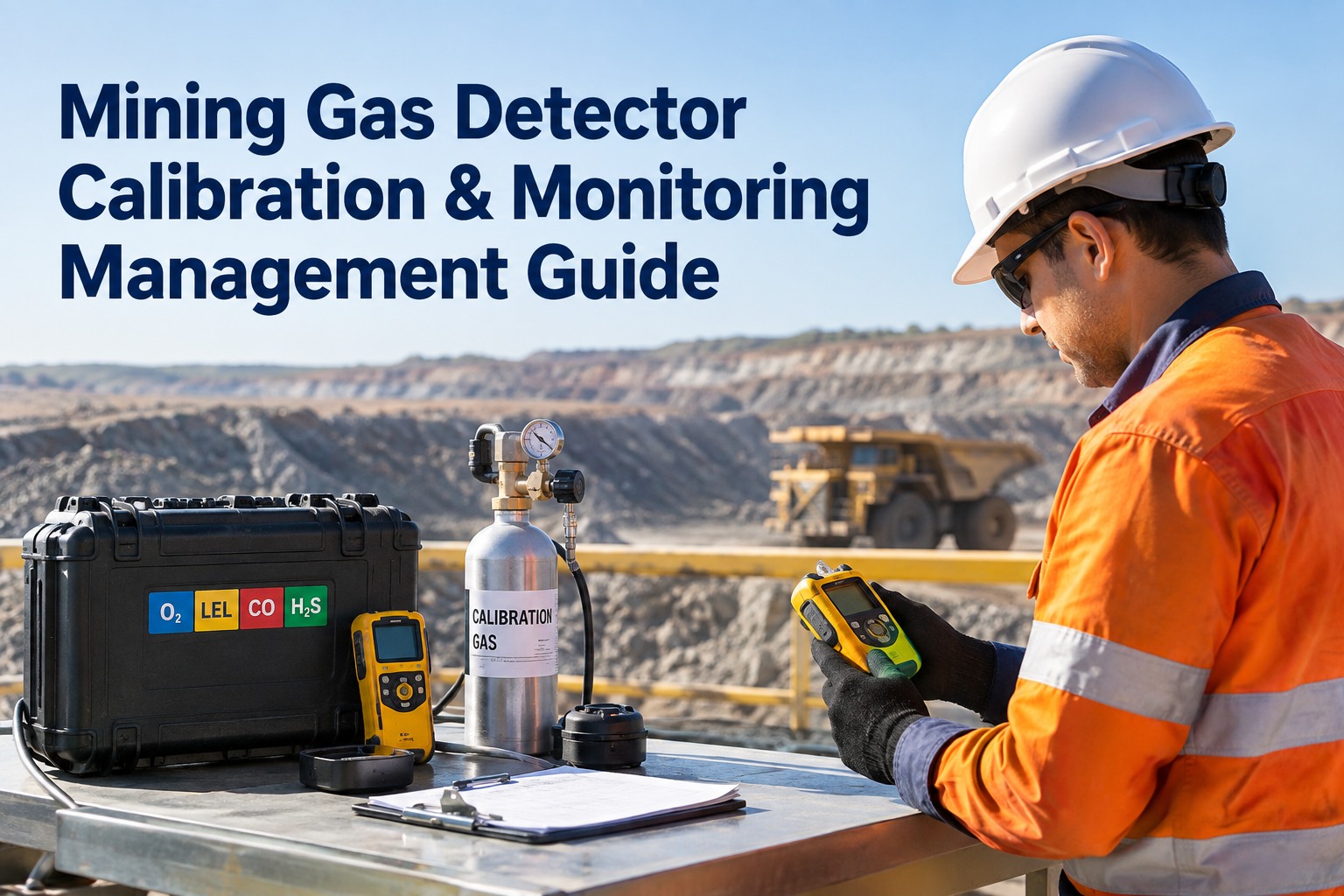
A gas detector that looks fine, powers on, and shows a clean screen can still be quietly wrong. Sensors drift a few percent every month, and after a year of dust, heat and vibration underground, a monitor that once read 100 ppm of CO might only register 80 — enough to leave a crew walking into an atmosphere their alarm never flags. That's the real risk mining gas detector calibration exists to close, and it's why calibration, bump testing and expiry tracking aren't paperwork — they're the difference between a working alarm and a false sense of safety. Book a demo to see how each instrument gets tracked.
Every portable gas monitor on your site has three clocks running at once — daily function, periodic accuracy, and end-of-life. Miss any one and the alarm you're trusting may not fire when it matters.
Managing one detector is easy. Managing forty of them across shifting crews, contractors and remote headings — each with its own calibration date, sensor age and bump-test history — is where the whole program quietly falls apart. The instrument that gets missed is never the one you'd expect. Below is what each of those three clocks actually means, why the records matter as much as the tests, and how to stop tracking it all in a shared spreadsheet nobody trusts.
Bump Test vs Calibration: They Are Not the Same Check
This is the single most common confusion in a gas detection program, and it's a dangerous one. Crews sometimes assume a daily bump test covers them and calibration can wait. It can't. The two answer completely different questions, and one cannot substitute for the other.
Bump Test
"Does it respond and alarm at all?"
A quick functional check — expose the sensor to a known gas and confirm it reacts and the alarm sounds. It typically only needs to detect around 50% of the gas concentration to pass. It proves the sensor, electronics and alarm are alive.
Calibration
"Is the reading actually accurate?"
A precise adjustment — a zero step in clean air and a span step against a known gas concentration — that resets the instrument's reference point to correct for drift. This is what keeps 100 ppm reading as 100 ppm.
Here's the danger in plain terms: a bump test only checks that a detector responds, not that it's accurate. A sensor that has drifted can still pass a bump test while under-reading a real hazard. That's why manufacturers recommend bump testing before each day's use and calibrating on a set schedule — commonly monthly for high-dust mining environments, and at least every six months as a floor. Skipping one because you did the other is how a "passing" detector ends up hiding a leak. Book a demo to see both checks logged against each instrument
Why sensors drift — and why it's invisiblethe slow failure that never trips an error message
Electrochemical sensors — the ones detecting CO, H2S and oxygen in most multi-gas units — degrade chemically over time. Nothing on the screen tells you. The device keeps showing numbers; they're just increasingly wrong. Mining conditions accelerate every cause of that drift.
The mining environment is a worst case for all of this: high dust, temperature and humidity swings, exposure to high gas concentrations, corrosive vapors, and constant handling and shock. Every one of those is a documented cause of drift. So a detector that's fine in an office is a different animal after six months underground. That's exactly why calibration intervals for mining are tighter than general industry, and why tracking the calibration date of each individual unit — not "the fleet" as a whole — is the only thing that keeps the numbers honest. Start free and log calibration dates per instrument
The life of one gas detectorfour maintenance events, four different intervals, all needing a record
A single monitor moves through a repeating cycle. Miss a step and the instrument doesn't stop working — it just stops being trustworthy, silently. Here's the full loop for one unit, and what should be captured at each point.
-
1Bump testEvery shift
Expose to test gas, confirm response and alarm. Pass/fail logged with date, unit ID and who did it. A fail pulls the unit from service immediately — before anyone carries it into a heading.
-
2Full calibrationMonthly–6 monthly
Zero in clean air, span against a known gas mix, adjust the reference point. Record the date, the cal-gas used and its own expiry, and the next-due date so the interval never lapses.
-
3Sensor replacement2–5 years
When a sensor fails repeat calibrations or reaches end-of-life, it's replaced. Log the new sensor's install date so its own 2–5 year clock starts — the most commonly forgotten record of all.
-
4Cal-gas & unit expiryOngoing
Calibration gas cylinders expire and reactive gases fade — an expired cylinder invalidates the calibration done with it. Track cylinder expiry alongside instrument service life so neither slips.
Notice that no two of these run on the same interval, and the one that gets forgotten — sensor install date, cal-gas expiry — is usually the one that invalidates everything else. A calibration performed with expired gas isn't a calibration; it's a false record. Getting all four clocks onto one system, per unit, is the whole game. Book a demo to see the full lifecycle tracked per detector
The records are the pointan untracked calibration might as well not have happened
Safety authorities are explicit on this: a written calibration record should be kept for the life of each instrument. That's not bureaucratic box-ticking. A per-device history is what lets you spot the monitor that keeps failing calibration, the one prone to erratic readings, and the sensor drifting toward the end of its life — before it's the reason an alarm didn't sound. When an auditor or an incident investigator asks "prove this detector was accurate on the day of the near-miss," a shoebox of paper tags is not an answer.
This is the practical case for treating a gas detector the way you treat a haul truck: as a tracked asset with its own inspection and maintenance history, not a shared tool that anyone grabs and nobody owns. The instruments are cheap next to the consequence of one that quietly stopped telling the truth. Start free and build an audit-ready detector register
From a mine safety manager who runs the program
The scare for us wasn't a failed bump test — those get caught. It was pulling a CO sensor for replacement and realising, from the drift on its last three calibrations, it had been under-reading for weeks before we swapped it. Bump tests passed the whole time. The unit looked healthy.
That's when I stopped treating detectors as consumables and started treating each one as an asset with a file. Now I can see every calibration date, every sensor's age, and I get an alert before anything expires — including the cal gas, which we'd let go out of date more than once. When the regulator asks for records, it's an export, not a week of digging.
Frequently asked questions
What's the difference between a bump test and gas detector calibration?
They answer different questions and neither replaces the other. A bump test is a quick daily functional check: you expose the sensor to a known gas and confirm it responds and the alarm activates. It typically only needs to detect around half the applied gas concentration to pass, so it proves the detector is alive — sensor, electronics and alarm all working — but it does not prove the reading is accurate. Calibration is the precise adjustment: a zero step in clean air and a span step against a known gas concentration that resets the instrument's reference point to correct for drift. A sensor that has drifted can still pass a bump test while significantly under-reading a real hazard. That's why manufacturers recommend bump testing before each day's use and calibrating on a fixed interval — commonly monthly in dusty mining conditions and at least every six months as a minimum. Using one to excuse skipping the other is a genuine safety gap, not a shortcut.
How often should mining gas detectors be calibrated?
The safe answer is: follow your manufacturer's interval as a floor, and tighten it for mining conditions. Manufacturers commonly recommend full calibration at least every six months, but many advise monthly for heavy-dust environments like mining and excavation, and electrochemical sensor guidance often lands in the 30–90 day range. Bump testing should happen daily or before each shift regardless of the calibration interval. You should also calibrate immediately after any event that can damage a sensor — a drop, an over-range gas exposure, or storage in extreme heat or cold — rather than waiting for the scheduled date. Because mining accelerates sensor drift through dust, humidity, vibration and gas exposure, treating the manufacturer's general-industry interval as the maximum rather than the target is the right instinct. The key is that the interval is tracked per individual instrument, since each unit ages differently depending on how hard it's used.
Why do gas detector sensors drift, and can I see it happening?
Sensor drift is the gradual, natural degradation of a sensor's accuracy as it ages — and no, you generally cannot see it happening. The device keeps displaying numbers; they simply become less accurate over time. Manufacturers typically define drift as a 2–5% shift in readings per month, and some electrochemical sensors can drift by up to around 20% after nine months of continuous use. Mining conditions accelerate every cause: high dust and particulates, temperature and humidity extremes, exposure to high gas concentrations, corrosive vapors, and the vibration and shock of daily field handling are all documented drift factors. Because a drifted sensor can still respond enough to pass a bump test, the only reliable way to catch drift is regular calibration against a known gas, with the results recorded per instrument so you can watch the trend. A sensor drifting steadily toward its adjustment limit is the early warning that it's nearing end of life.
What records do I need to keep for gas monitoring equipment?
Safety guidance is clear that a written calibration record should be kept for the life of each instrument. In practice that means, per unit: every bump test (date, result, who performed it), every full calibration (date, the calibration gas used and its expiry, and the next-due date), the install date of each sensor so its service-life clock is tracked, and any repairs or faults. Keeping this per individual instrument — not as a single fleet log — is what lets you identify a monitor with a history of excessive repairs or erratic readings and retire it before it fails in service. It's also what turns an audit or incident investigation from a scramble into a simple export. HVI stores this history against each detector as a tracked asset, with calibration records, sensor dates and automatic expiry alerts, so the record is complete and always current. You can book a demo to see the audit-ready records in action.
How do you manage calibration across many detectors and remote crews?
This is where most programs break, because managing one detector is trivial and managing forty across rotating shifts, contractors and remote headings is not. The reliable approach is to stop tracking dates in a shared spreadsheet and instead give each instrument its own asset record, then let the system watch every calibration date, sensor age and cal-gas expiry at once and alert you before anything lapses — rather than relying on a person to remember to check. The field piece matters just as much: bump tests and inspections often happen deep underground or on remote pads with no signal, so the tool has to work offline and sync the records automatically once the device is back in coverage. HVI is built for exactly this — per-asset calibration and inspection history, expiry alerts, and full offline capture — so a large, scattered fleet of detectors stays compliant without one person carrying the whole program in their head.
Turn a drawer of gas monitors into a tracked, audit-ready fleet
HVI tracks each gas detector as its own asset — bump-test and calibration history, sensor install and expiry dates, cal-gas tracking, automatic alerts before anything lapses, and offline capture for checks done underground. The program stops living in one person's head and starts living in a system that never forgets a date.
Per-asset records · Expiry alerts · Offline field capture from day one