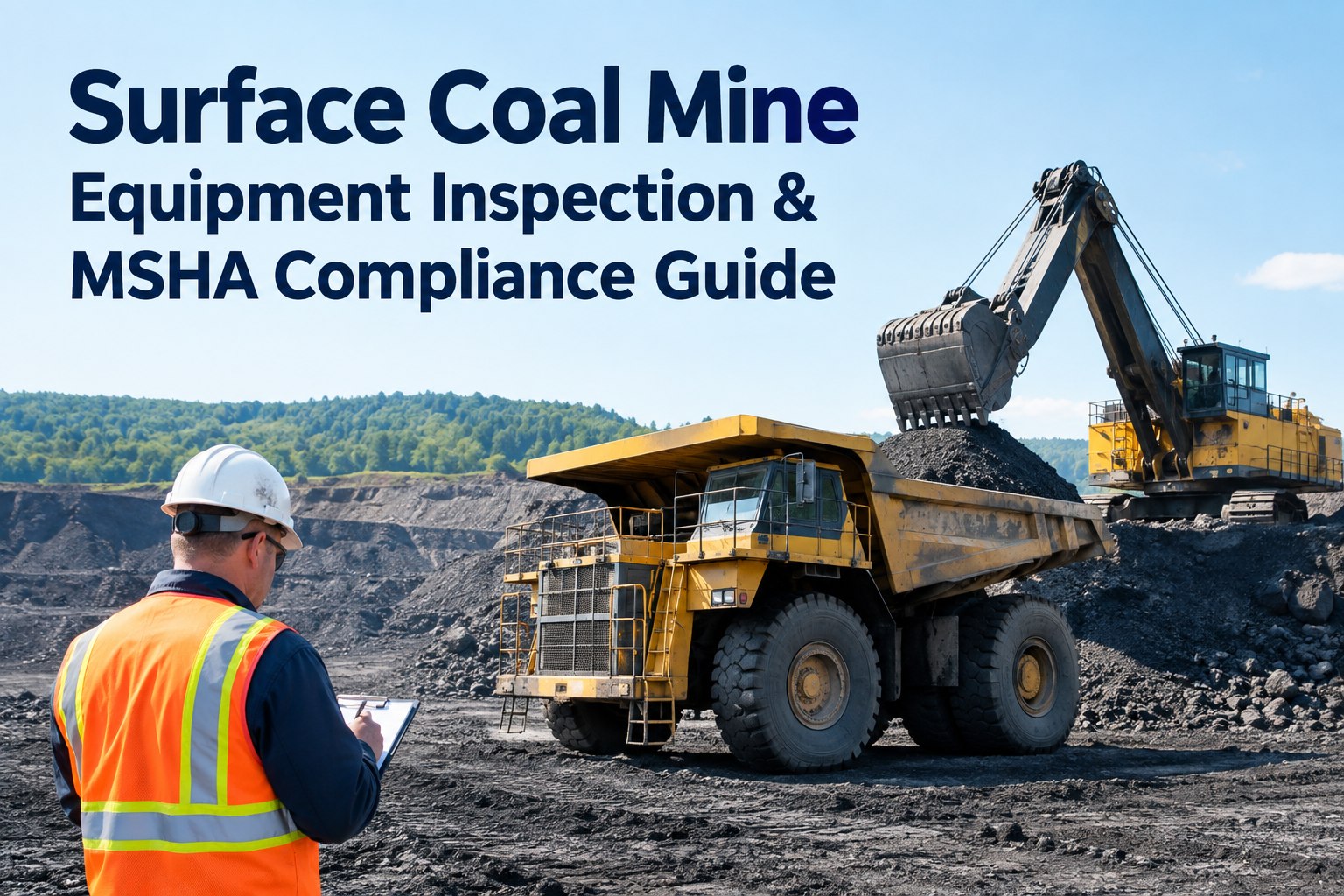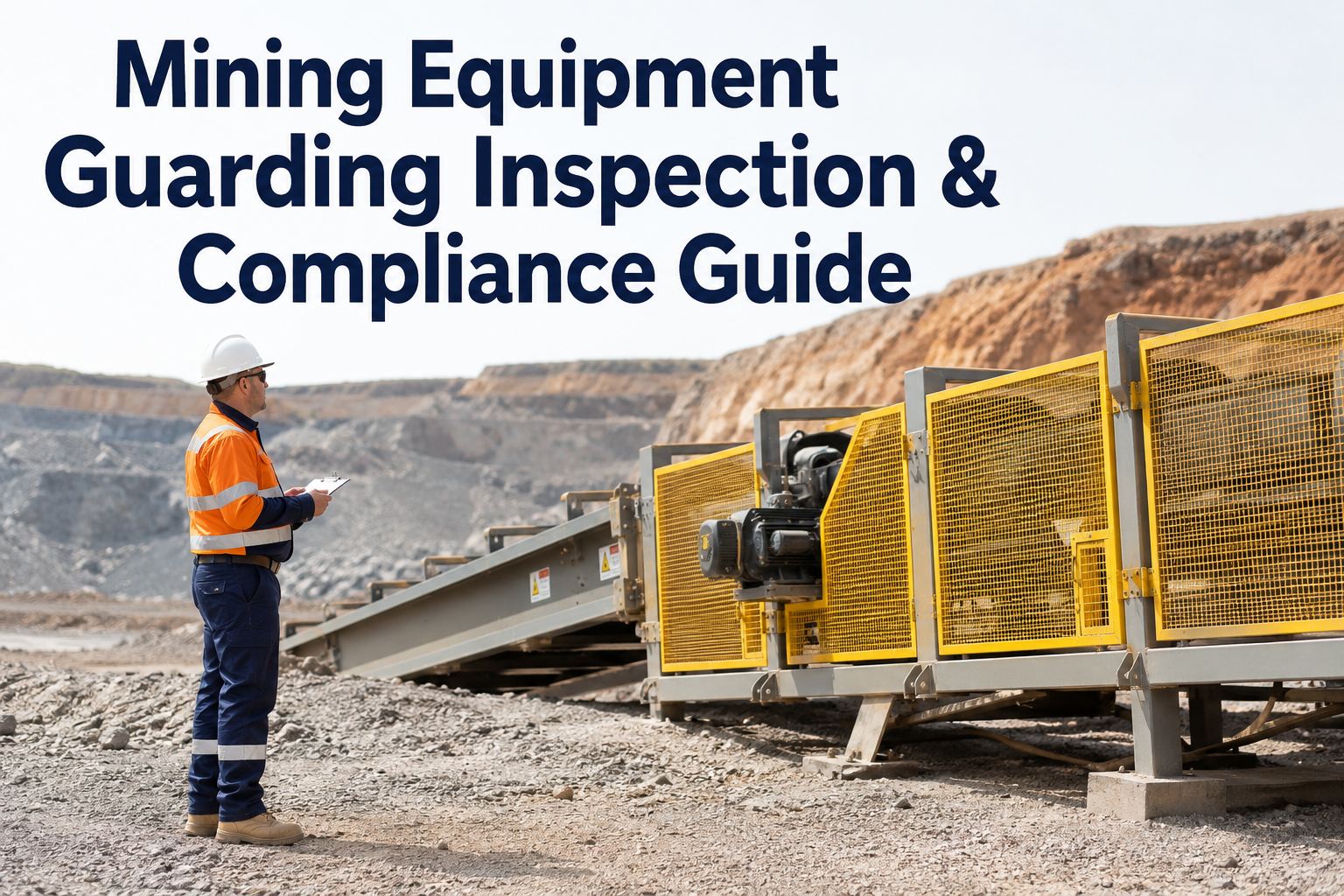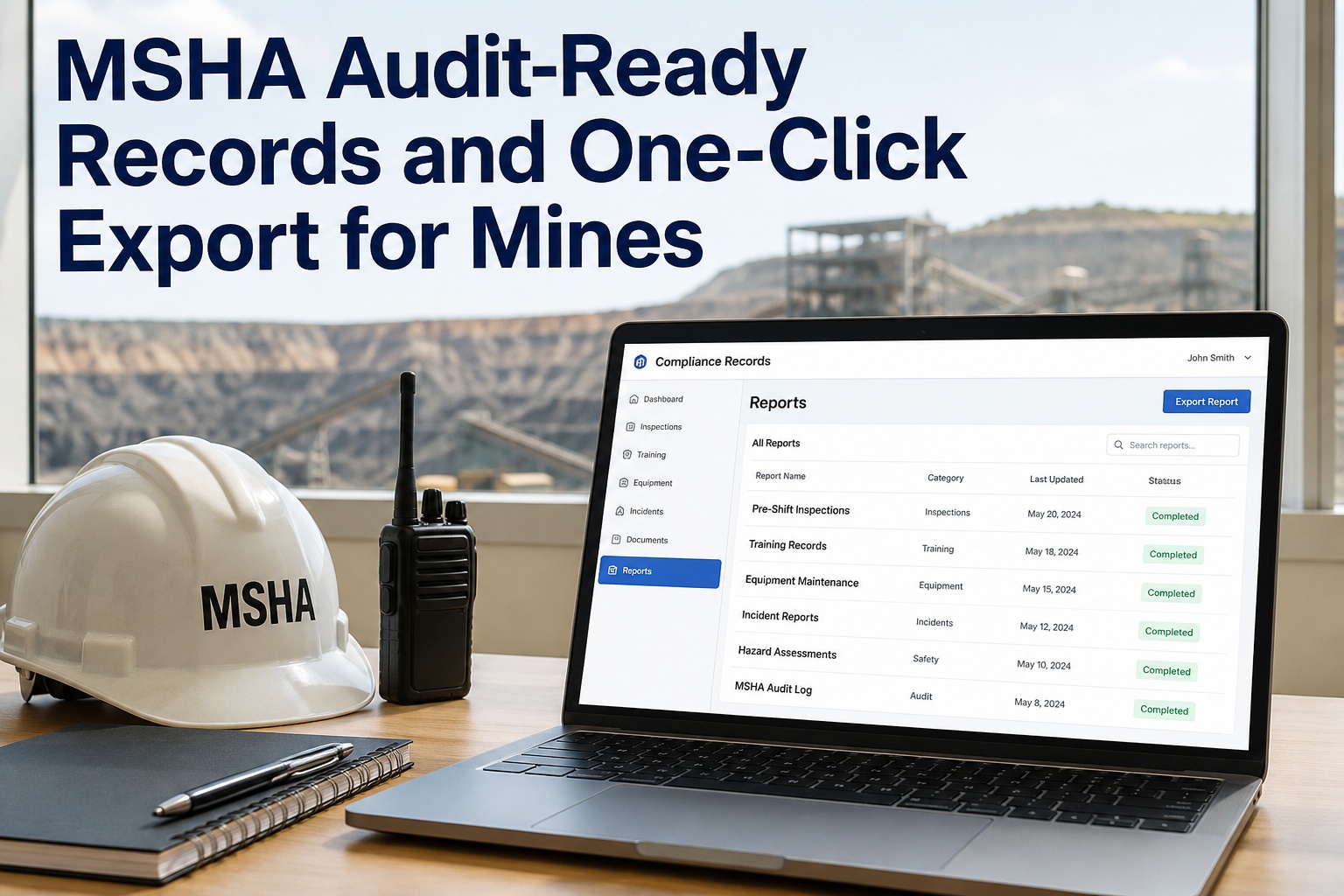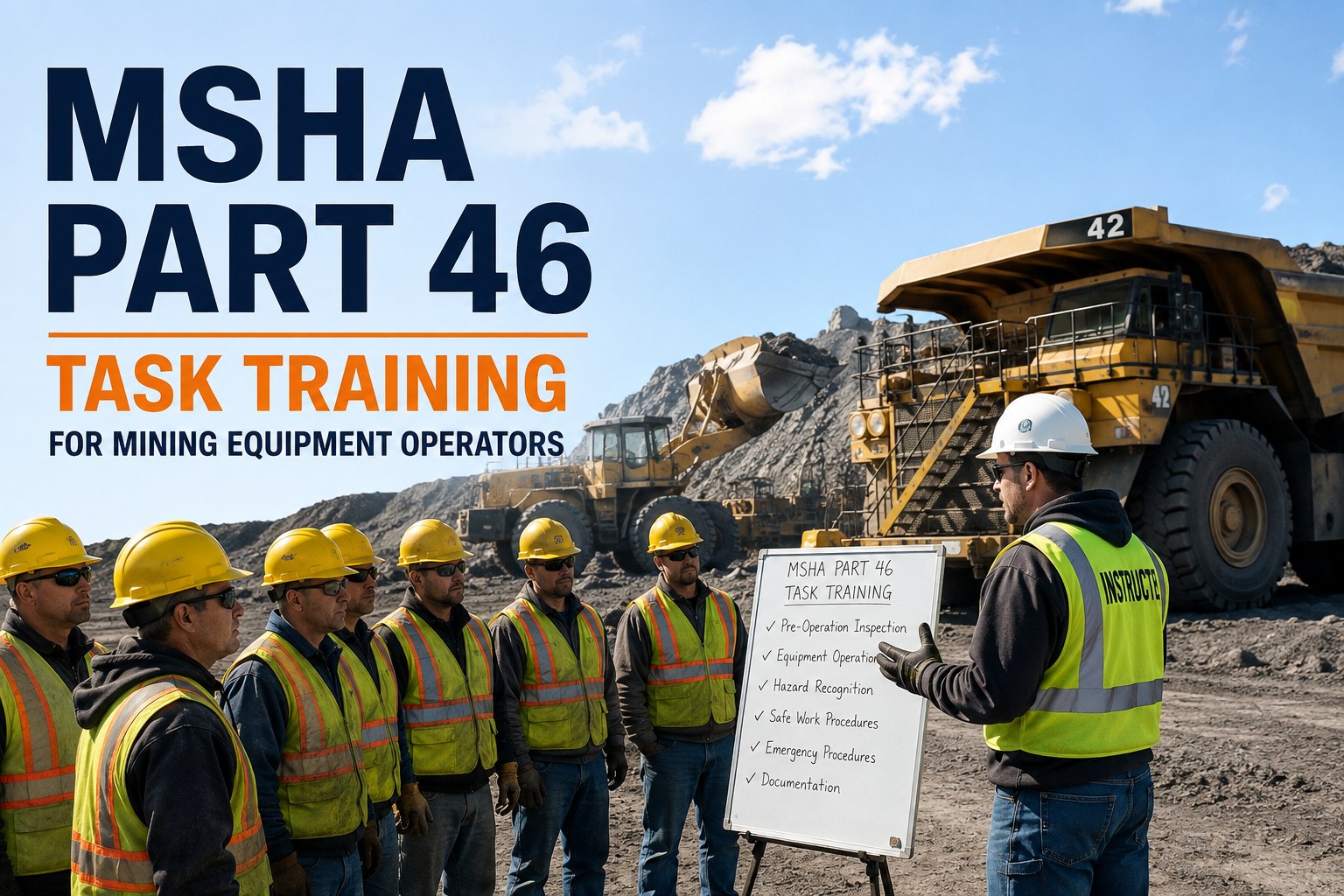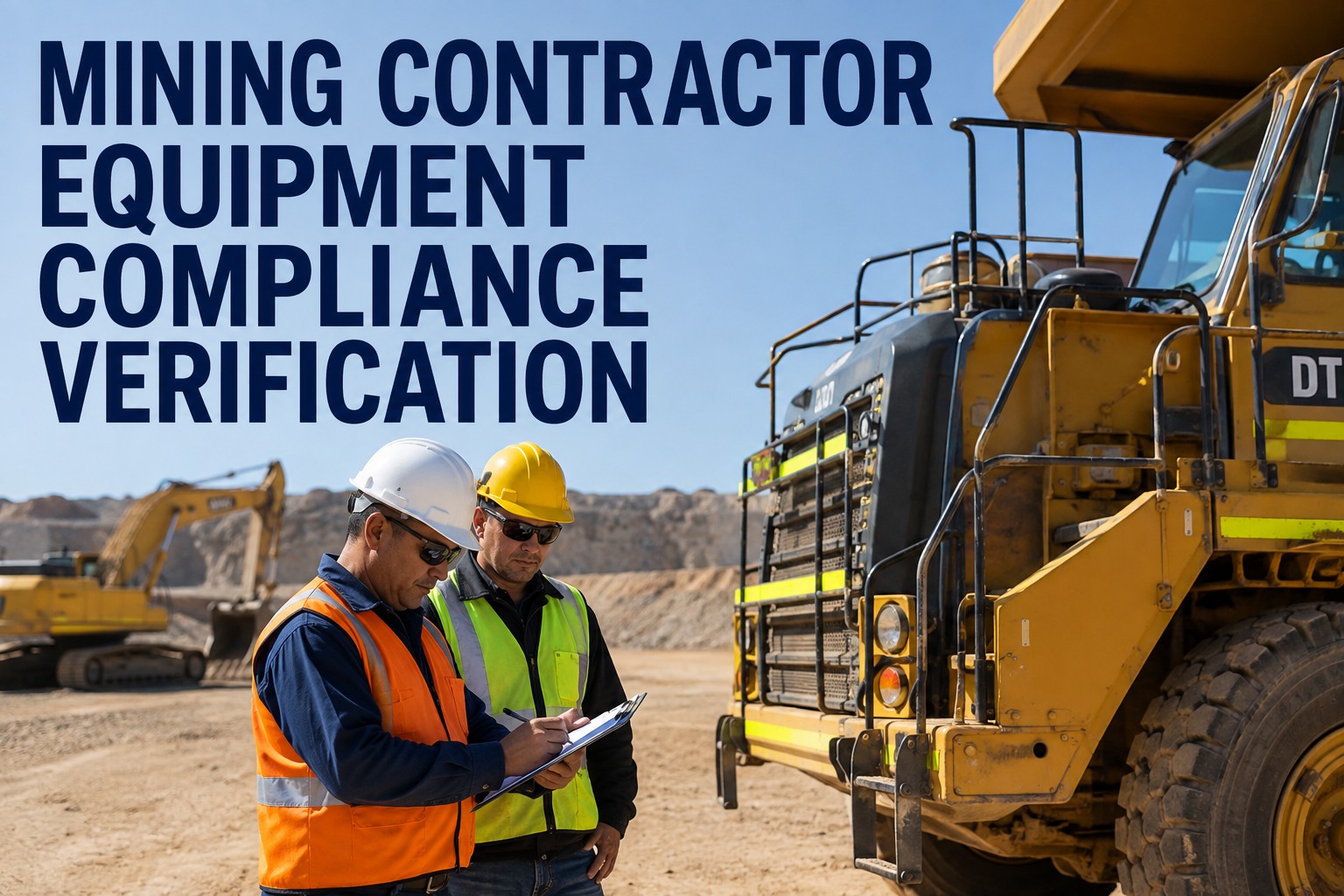
You’ve seen it happen. A contractor’s excavator rolls through the gate at 6:40 on a Monday morning, the operator waves a hard hat out the window, and by 7:15 that machine is digging beside your haul road. Nobody has checked its inspection records, nobody has verified the operator’s training file, and nobody has asked whether the contractor’s insurance is current. Then an MSHA inspector arrives on Wednesday, walks straight to that machine, and asks you — the mine operator — for the documentation. That is the reality of contractor equipment mining compliance: the exposure sits with you regardless of who owns the iron, and the only defence is evidence collected before anything goes wrong. If you are still chasing contractor paperwork through email threads and a filing cabinet in the scale house, it is worth seeing how a 30-minute walkthrough of digital contractor verification replaces that scramble with a gate that holds.
Whose machine is that, and can you prove it was safe to be here?
Mine operators carry the liability for every condition on their property — including equipment they do not own. The question is not whether your contractors are careful. The question is whether you can prove, on paper or on screen, that you verified them before they started work.
The numbers behind contractor equipment mining risk
These are not abstract compliance figures. Each one maps to a real cost, a real delay, or a real citation that lands on your operation — not the contractor's.
What to collect before contractor equipment touches your mine site
There are five document groups that form the core of any defensible contractor verification file. Miss one, and you are relying on trust instead of evidence. This is the set that holds up when an inspector, an insurance auditor, or a lawyer asks to see your records.
MSHA Contractor Identification
Every independent contractor working on your mine needs a valid MSHA contractor ID. Verify it before mobilisation, not after. If the contractor does not have one, they need to register — and that process takes time you do not want to lose on the first day of a job.
Training Records Under the Applicable Part
Part 46 covers surface mines for sand, gravel, stone and similar operations. Part 48 covers underground and surface coal mines. The training requirements differ, and the records must match the correct part for your operation. Collect certificates for every operator, not just the crew lead.
Equipment Inspection Documentation
You need evidence that each machine has been inspected and is in safe working condition. That means pre-shift or daily inspection records, defect logs, and repair confirmations. A contractor who cannot produce these is a contractor whose equipment you should not allow on site.
Insurance Certificates
General liability, workers' compensation, and auto or equipment coverage — all current, all with adequate limits for the work being performed. Certificates expire, and a policy that lapsed three weeks ago is the same as no policy at all when an incident occurs.
The Contractor's Own Safety Programme
Ask for their written safety and health programme. If they do not have one, that tells you something important about how they run their operation. If they do, review it against your site-specific hazards and make sure there is no gap between what they promise and what you require.
How to stop unverified contractor equipment before it enters your site
The gate is not a metaphor. It is a process step that either holds or it does not. Here is how a verification gate works when it is built into your operation instead of bolted on as an afterthought.
Contractor submits documentation before mobilisation
Send the contractor a clear list of what you need: MSHA ID, training certificates, equipment inspection records, insurance certificates, and their safety programme. Set a deadline at least five working days before their planned start date. If they cannot meet it, the start date moves — not the requirement.
You review and flag gaps
Check every document for currency, completeness, and match to the correct regulatory part. An expired training certificate or a missing insurance endorsement gets flagged and sent back. This is where most paper-based systems break down — the review happens in someone's inbox and the flag gets lost.
Equipment gets a condition check on arrival
Even with clean paperwork, the machine itself needs a walk-around. Brakes, lights, guards, backup alarms, fire suppression — the same standard you apply to your own fleet. If a contractor's haul truck would fail your own pre-shift inspection, it does not go to work until the defect is fixed and documented.
Access is granted — and logged
Once verification is complete, the contractor and each piece of equipment are logged as approved. That log is your evidence trail. If an inspector asks six months later whether a specific machine was verified before it worked on your property, you can pull the record in seconds, not days. You can see how this gate works in a live demo with your own contractor list.
Why contractor compliance tracking breaks down after week one
Most mine operators do a reasonable job of collecting documents at onboarding. The failure happens later — when a training certificate expires in week six of a twelve-week contract, or an insurance policy lapses because the contractor switched carriers and nobody told you.
Without expiry tracking
- Training certificates expire silently mid-contract
- Insurance policies lapse and nobody is notified
- Equipment inspections stop after the first week
- You find out about gaps during an audit, not before
- The citation lands on your operation, not the contractor's
With automated expiry alerts
- 90-day, 60-day and 30-day warnings before any certificate expires
- Insurance renewal requests go out automatically
- Equipment inspection schedules continue for the full contract term
- Gaps are flagged to you before they become violations
- Your evidence file stays current without manual chasing
This is where a system built for contractor compliance tracking with automatic alerts pays for itself. One missed expiry on a six-month contract can undo all the work you did at onboarding. The alert arrives, you send one message, the contractor sends the updated certificate, and the file stays clean.
Should contractor machines meet the same standard as your owned fleet?
Yes. There is no regulatory or practical reason to hold contractor equipment to a lower bar. An MSHA inspector examining a brake defect on a contractor's haul truck will not ask who owns it before writing the citation. The condition standard must be identical.
| Inspection Area | Your Owned Fleet Standard | Contractor Equipment Standard | What Happens If It Differs |
|---|---|---|---|
| Pre-shift / daily inspection | Documented every shift, defects logged | Same — documented every shift, defects logged | Undocumented defects become your liability when the machine is on your property |
| Brake systems and retarders | Tested per manufacturer schedule | Same — tested per manufacturer schedule | Brake failure on a haul road does not distinguish by ownership |
| Guarding and safety devices | All guards in place, backup alarms functional | Same — all guards in place, alarms functional | Missing guard on a contractor machine is still a citation against your mine |
| Fire suppression | Charged, inspected, tagged | Same — charged, inspected, tagged | An engine fire on any machine threatens your entire operation |
| Defect repair turnaround | Defects repaired before next shift or equipment parked | Same — repaired before next shift or parked | A contractor running a known defect creates a record you cannot defend |
The simplest way to enforce this is to run contractor equipment through the same digital inspection workflow you use for your own units. When every machine — owned or contracted — goes through the same checklist, the same defect capture, and the same repair confirmation, there is no ambiguity about what standard applies. A demo of HVI's per-asset inspection records shows exactly how this works when the asset has a different owner.
Stop chasing contractor paperwork. Start verifying it.
See how HVI holds inspection records, training files and expiry alerts for every asset on your site — owned or contracted — in one audit-ready system.
An inspector does not distinguish by ownership — and neither should your records
When an MSHA inspector walks your site, they see machines and conditions. They do not see org charts or equipment titles. If a contractor's loader has a cracked windshield and no inspection record, the citation goes to the mine operator. Your defence is a file that shows you verified, inspected, and tracked that machine the same way you track your own.
What the inspector asks for
- Training records for every person on site, including contractor employees
- Inspection and maintenance records for every piece of equipment, including contractor-owned units
- Evidence that defects were identified, reported and repaired
- Proof that the contractor's safety programme was reviewed and accepted
What you need to produce
- Timestamped training certificates matched to the correct MSHA part
- Per-asset inspection history with photos and defect resolution notes
- A repair log showing defect-to-fix turnaround for each machine
- A signed acknowledgement that the contractor's programme was reviewed
If producing any of these takes more than a few minutes, your system has a gap. The mine operators who handle audits well are the ones who can pull any record for any asset in seconds — not the ones with the biggest filing cabinets.
Contractor verification built into the same system that runs your fleet
HVI is not a separate contractor management tool bolted onto your maintenance software. It is the same platform — which means contractor equipment gets the same inspection rigour, the same record-keeping, and the same audit readiness as everything you own.
Role-Based Access for Contractors
Give each contractor controlled visibility into their own equipment records without exposing your full fleet data. They see their machines, their inspection schedules, and their compliance status. You see everything.
Inspection Records Per Asset, Regardless of Owner
Every machine on your site gets its own inspection history, defect log and repair trail. The record belongs to the asset, not the owner — so when a contractor's excavator is inspected, the record sits in the same system as your owned fleet.
Certification Tracking with 90, 60 and 30-Day Alerts
Training certificates, insurance policies and equipment certifications all carry expiry dates. HVI sends alerts at 90, 60 and 30 days so you can chase renewals before they lapse — not after an inspector finds the gap.
Audit-Ready Retrieval in Seconds
When an inspector, an insurance auditor or a client asks for contractor documentation, you pull it from one screen. Timestamped, photo-backed, and complete. No digging through email, no calling the contractor's office, no hoping the file is current.
What to remember about contractor equipment mining compliance
You carry the liability. MSHA does not care who owns the machine. If it is on your property, its condition and its operator's training are your responsibility to verify and document.
The gate must hold before work starts. Collect MSHA ID, training records, inspection documentation, insurance and the safety programme before mobilisation. A start date that slips because paperwork is incomplete is far cheaper than a citation.
Expiry is the silent killer. Onboarding is the easy part. The gap opens in week six when a certificate lapses and nobody notices. Automated 90/60/30-day alerts close that gap without manual tracking.
Same standard, same system. Contractor equipment should meet the identical inspection and condition standard as your owned fleet, recorded in the same platform, so there is no ambiguity during an audit.
If you are managing contractor verification with spreadsheets and email today, the fastest way to see the difference is to start a free account and load your first contractor — or book a 30-minute demo and walk through it with your own contractor list.
We had a contractor's water truck on site for four months before anyone noticed the operator's Part 46 training had expired in week three. Nobody's fault specifically — the certificate was in a binder somewhere and the expiry date was in nobody's calendar. That near-miss cost us a very uncomfortable conversation with an MSHA inspector and a week of scrambling. Now every contractor cert has an expiry alert attached to it, and I check the dashboard every Monday morning before the shift briefing. It takes me four minutes. The old way took four months to fail.
Contractor equipment mining compliance — common questions
Who is responsible when a contractor's equipment causes a violation on my mine site?
The mine operator. MSHA holds the operator responsible for conditions on the property regardless of equipment ownership. If a contractor's machine has a safety defect or an untrained operator, the citation goes to you. Your defence is documentation showing you verified the contractor's records, inspected the equipment, and tracked compliance throughout the contract. Without that evidence, you have no defence.
What documents should I collect from a contractor before they start work?
Five groups: MSHA contractor ID, training certificates under the applicable part (Part 46 for surface sand/gravel/stone, Part 48 for coal), equipment inspection and maintenance records, current insurance certificates (general liability, workers' comp, equipment coverage), and the contractor's written safety programme. Collect all of it before mobilisation, not after.
How do I track contractor training certificates that expire mid-contract?
Manual tracking fails because expiry dates sit in binders and spreadsheets that nobody checks weekly. The reliable method is automated alerts at 90, 60 and 30 days before expiry. When the alert fires, you contact the contractor, receive the updated certificate, and the file stays current. HVI handles this automatically for every certification on file — you can see the alert system in a demo with your own contractor list.
Should contractor equipment go through the same inspections as my owned fleet?
Yes. There is no regulatory basis for a lower standard. An inspector examining a brake defect does not ask who owns the machine. Run contractor equipment through the same pre-shift or daily inspection checklist, the same defect capture process, and the same repair confirmation workflow. When every asset on your site follows one standard in one system, there is no ambiguity about what applies.
Can contractors access their own records without seeing my full fleet data?
Yes, with role-based access. Each contractor sees only their own equipment, their own inspection schedules, and their own compliance status. They can upload certificates and view their records without any visibility into your owned fleet or other contractors. You retain full oversight of everything. This is how HVI structures contractor access — sign up free and set up your first contractor profile to see how it works.
Your mine. Your liability. Your records.
Verify every contractor before they work, track every expiry before it lapses, and pull any record in seconds when an inspector asks. That is what HVI does for contractor equipment on mine sites.
Free to start — Works on any phone or tablet — No card needed