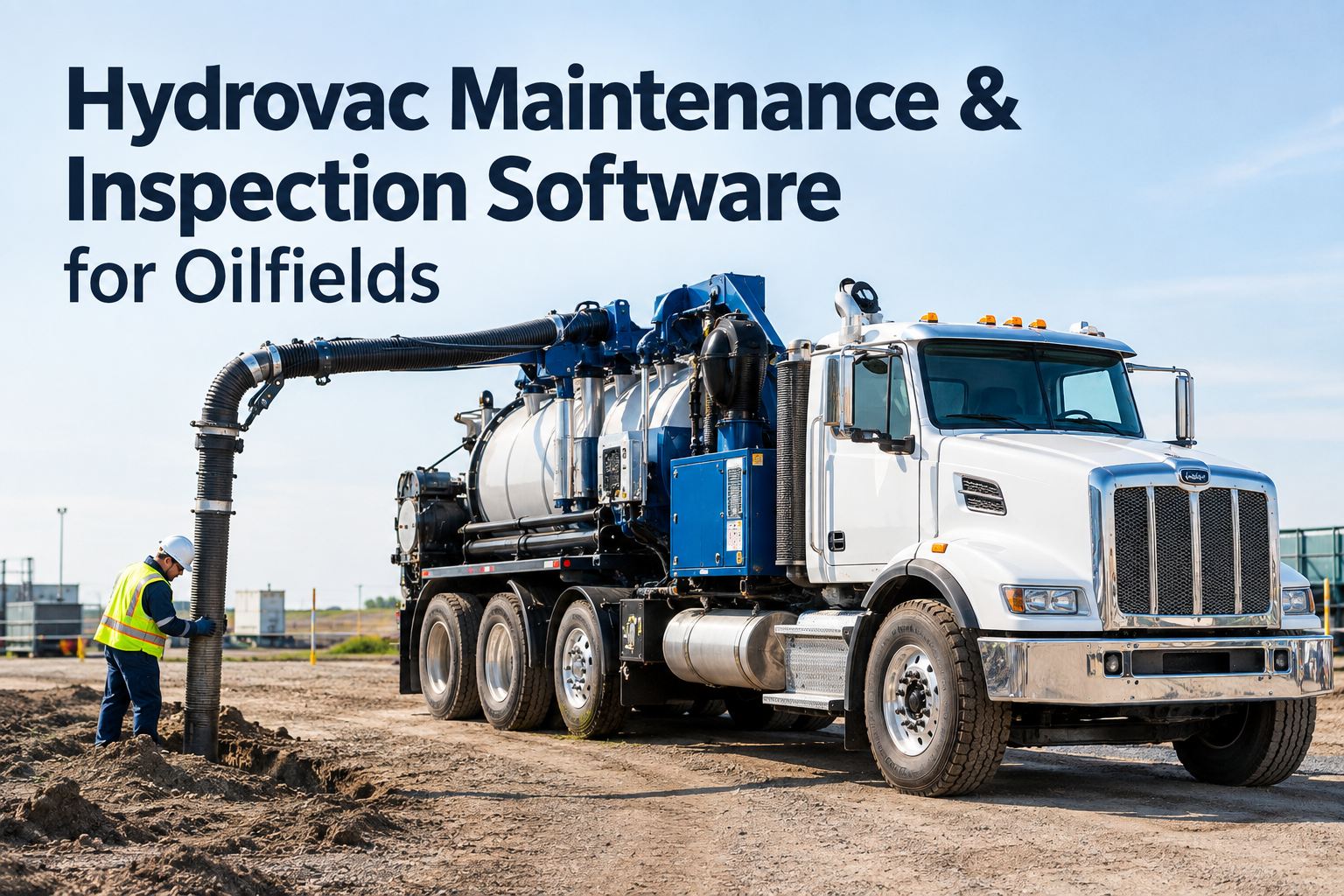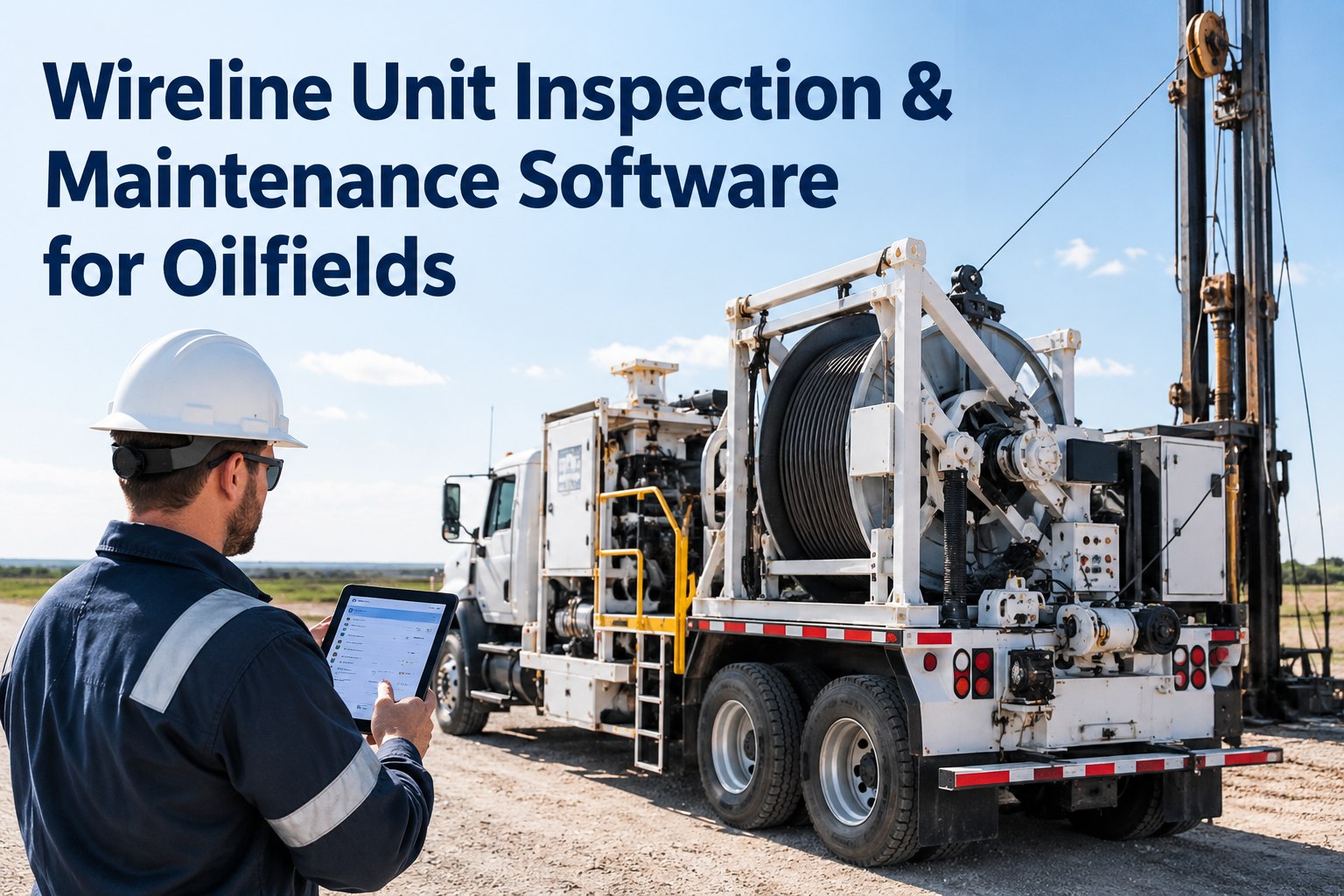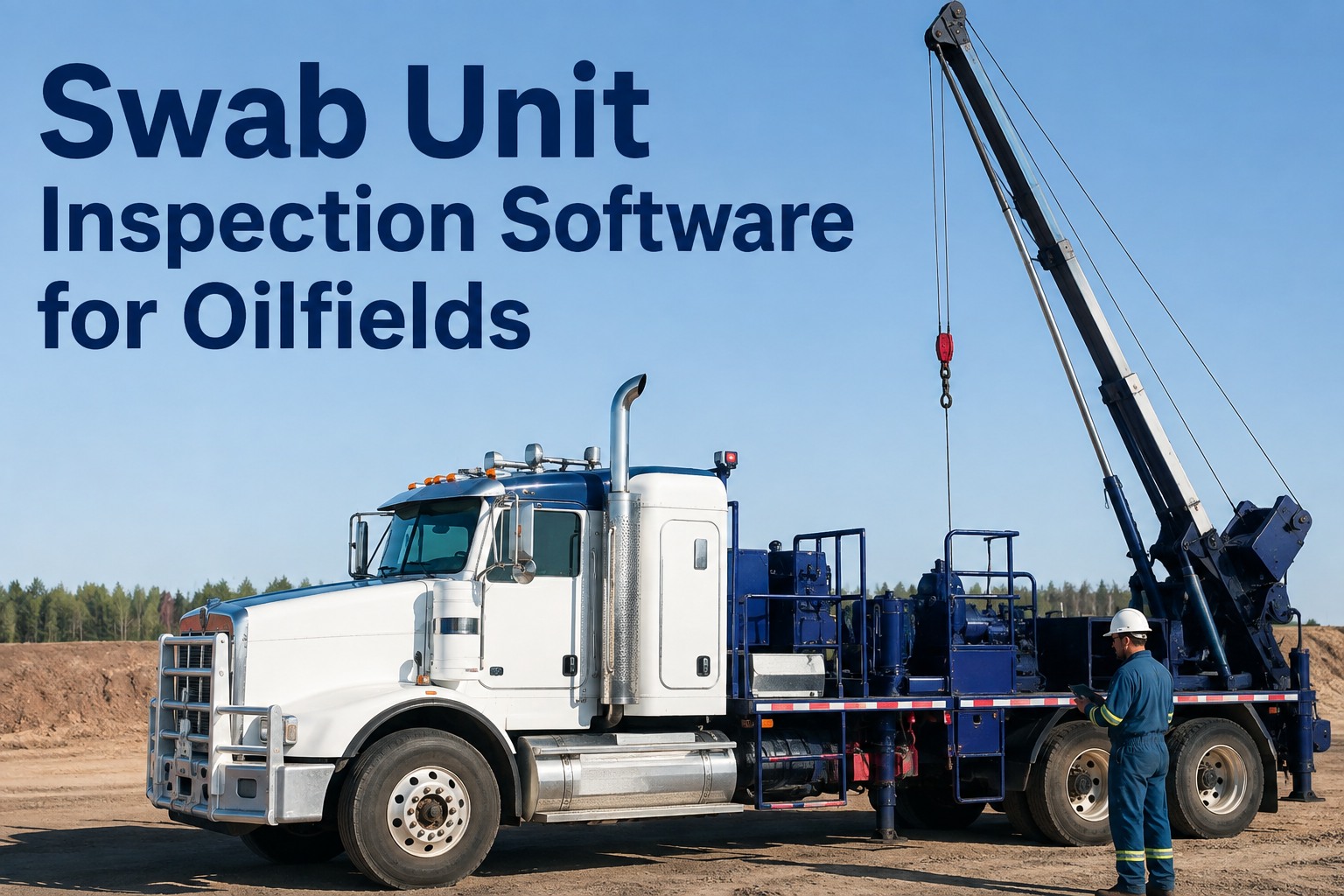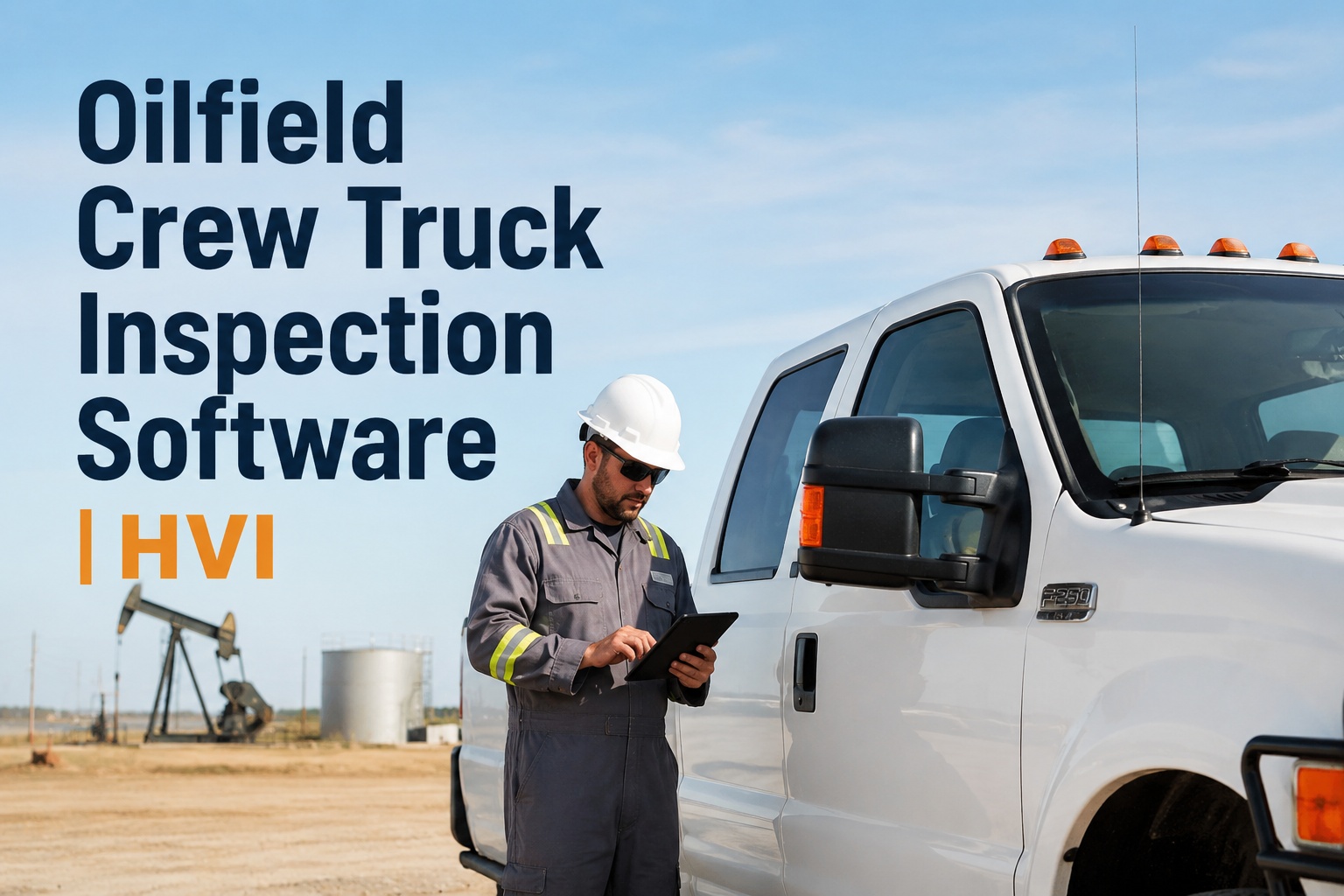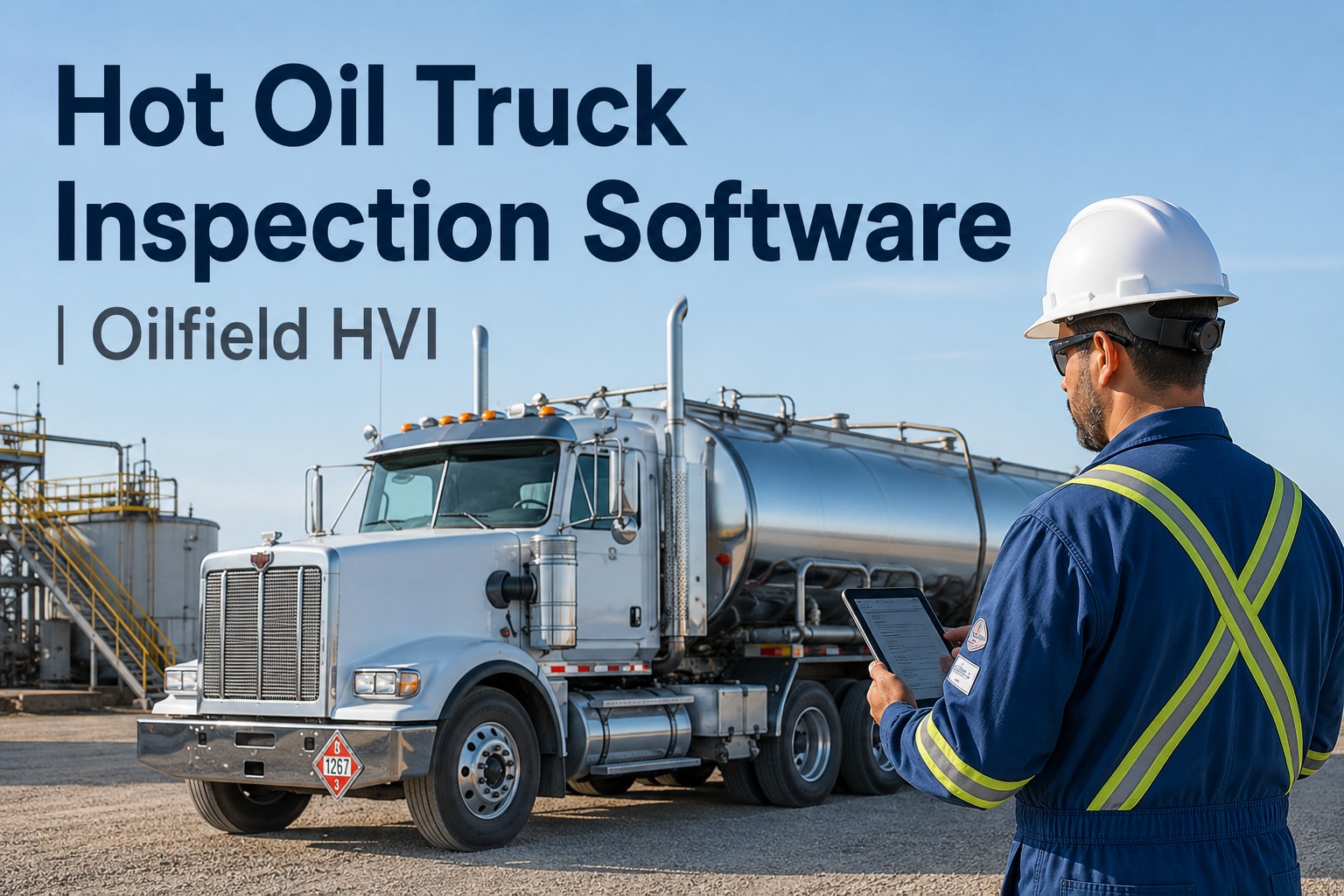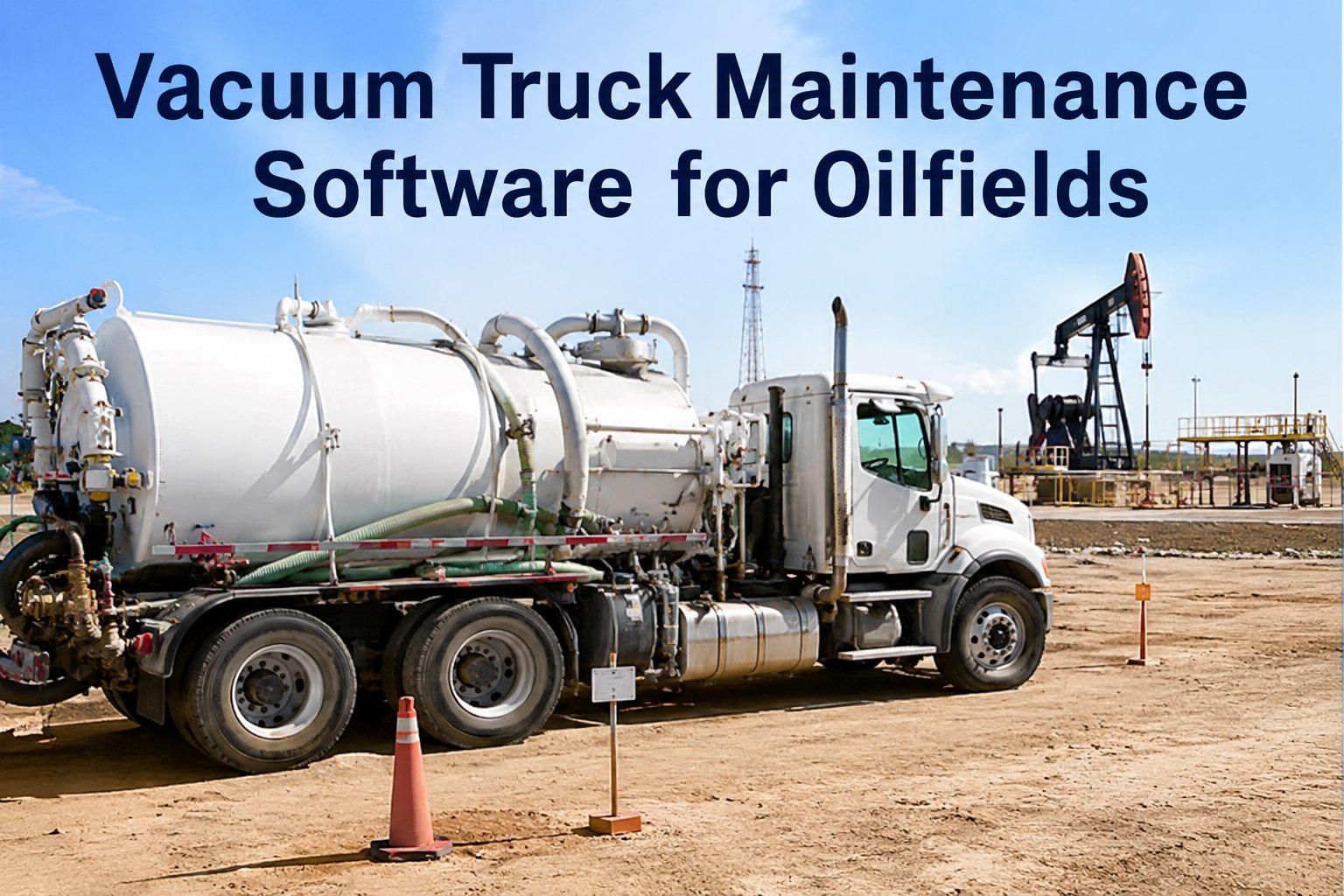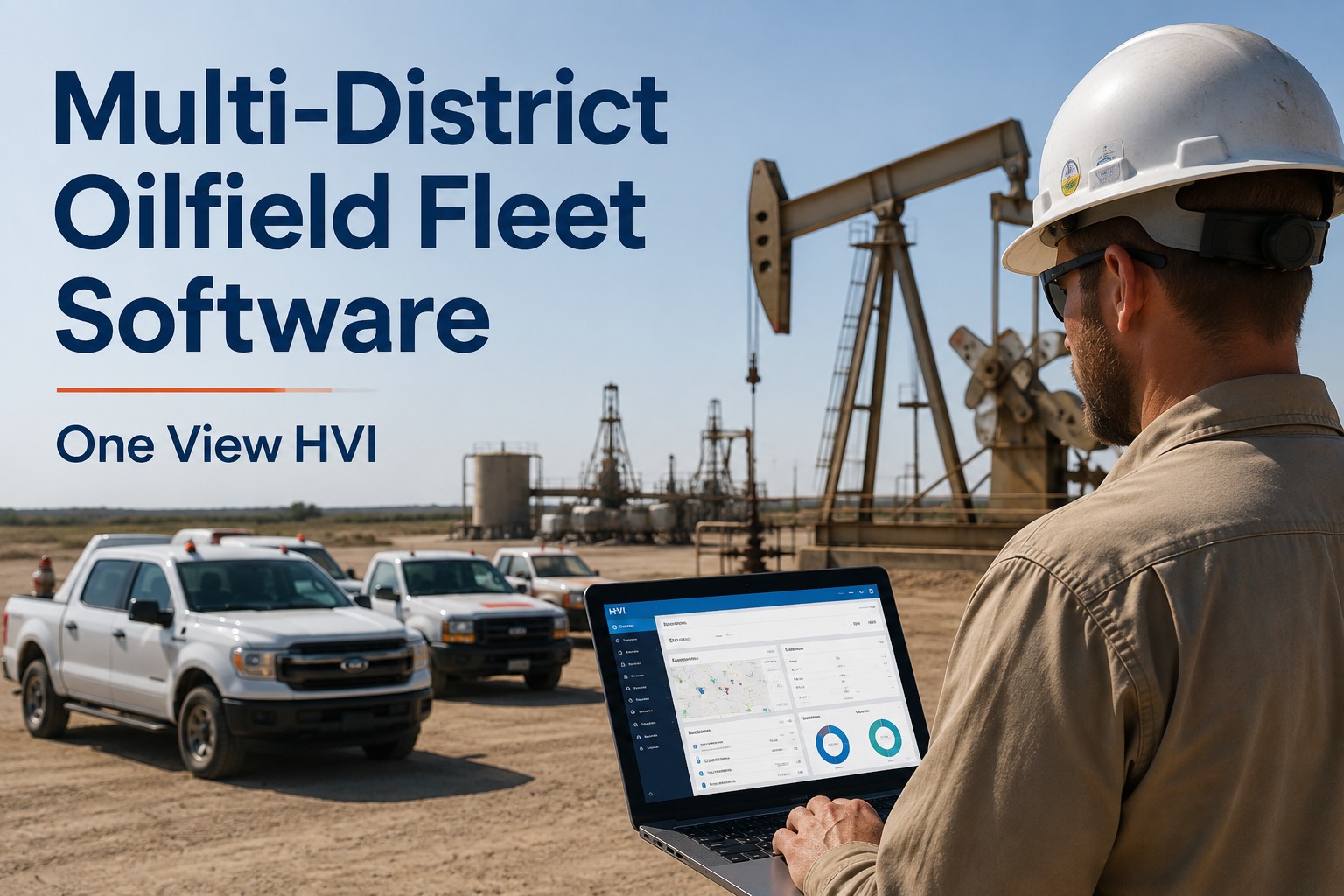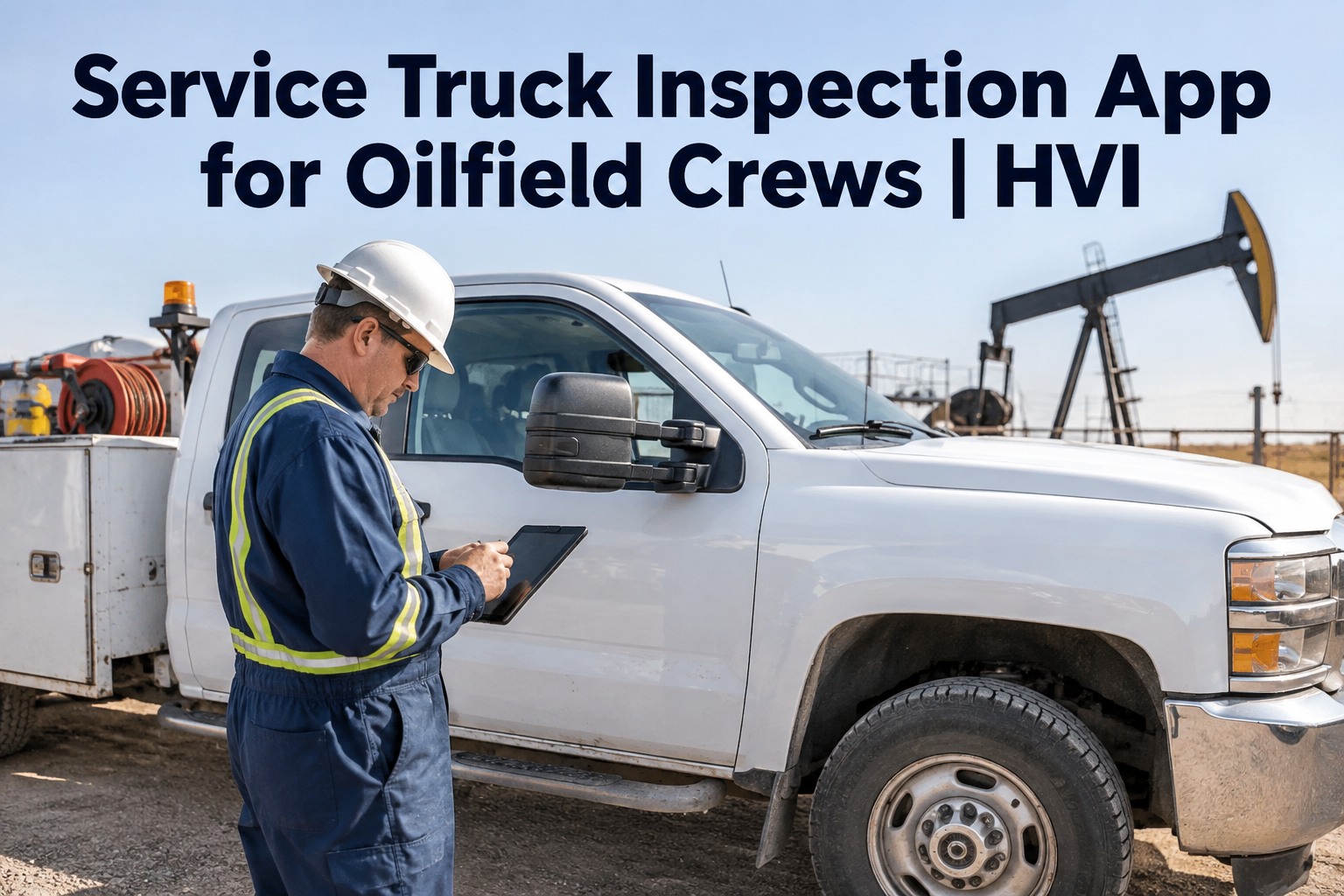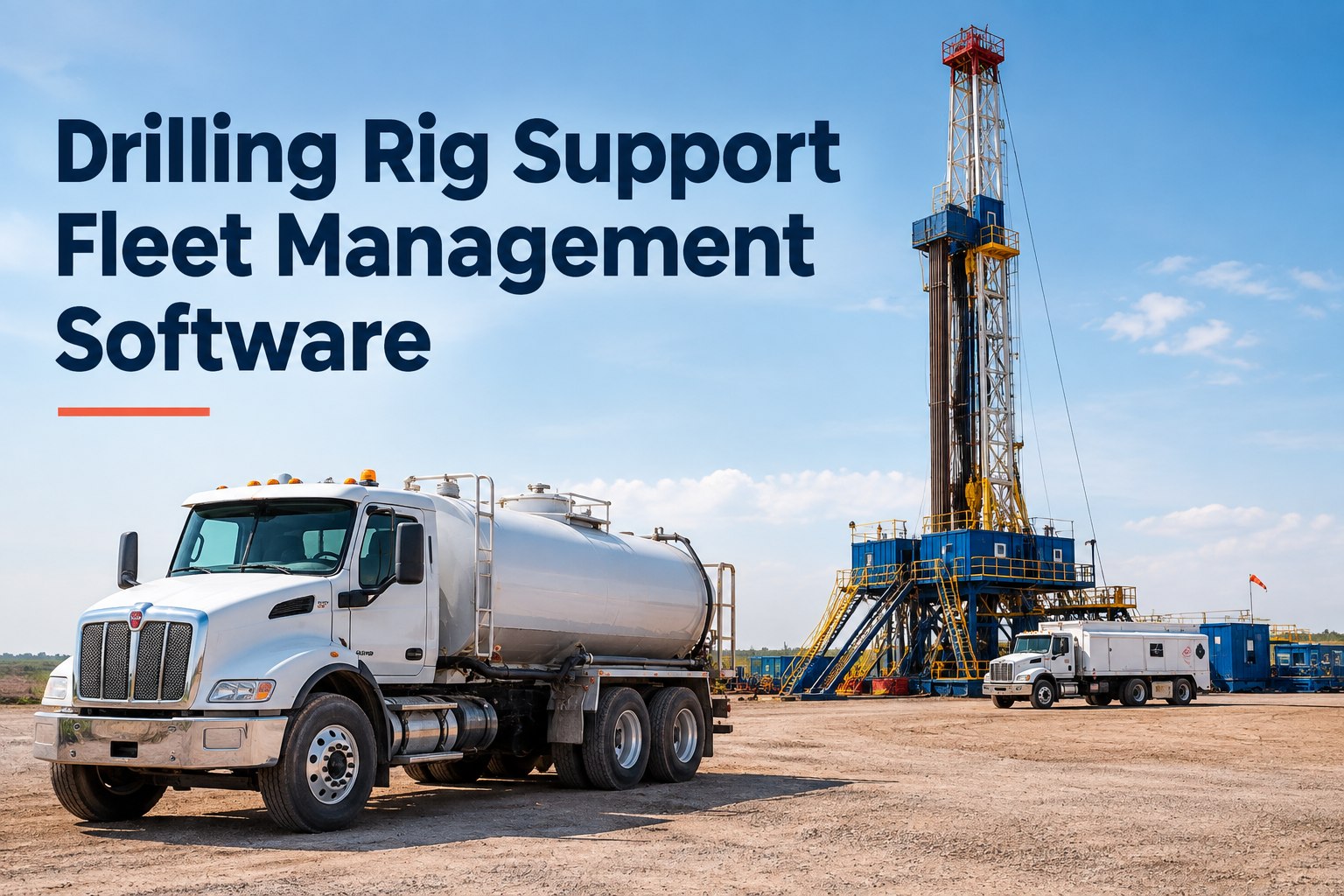
The rig gets watched around the clock. The drilling rig support fleet that feeds it — water haulers, fuel trucks, transporters and pickups — usually doesn't, right up until one strands a load and the rig waits. Drilling rig support fleet software gives oilfield contractors one place to inspect those units, catch defects in the field, trigger maintenance from real usage and keep a full history per asset. Book a demo to see it run across a support fleet. This page covers the assets, the compliance reality and the workflow that keeps them job-ready.
A Rig Runs on a Fleet Nobody's Watching Until It Breaks
Support units keep people, water, fuel and equipment moving between the yard and the wellsite. They rarely get the rig's operational attention — but a stranded water hauler or a fuel truck down for a preventable defect stops drilling just as hard as a rig failure does.
This page is about the fleet around drilling, not the rig itself — the trucks and support units that keep operations supplied. A note before the detail: inspection and maintenance requirements for these assets vary by vehicle type, load, jurisdiction, OEM and your operator's rules, so treat what follows as a practical framework rather than a universal checklist, and confirm specifics against the standards and client requirements that apply to you.
The fleet behind the rigwhat a drilling rig support fleet actually is
A drilling rig support fleet is the collection of trucks and vehicles that keep a rig supplied and staffed — not the drilling equipment itself. It's the logistics layer: units hauling water in and waste out, keeping tanks and equipment fueled, moving iron and camp between locations, and getting crews to and from the wellsite. Drilling rig support fleet software keeps that layer reliable by putting inspections, defects, maintenance and asset history for every support unit in one place instead of scattered across trucks, yards and spreadsheets.
The reason it matters is leverage. A rig represents enormous daily cost, and the support fleet is what keeps it turning. When a water hauler is down or a fuel truck misses a run because a defect went unlogged, the disruption ripples straight back to rig time. Managing these assets as an afterthought is how a cheap, preventable failure becomes an expensive one. Book a demo to see every support unit's status at a glance
The support fleet inventorythe asset types, and what each one lives or dies on
A support fleet is a mix of very different assets, and a single generic vehicle checklist serves none of them well. Each type has its own critical systems and its own inspection emphasis — the specifics come from the OEM manual, the applicable regulations and your operator's requirements.
Tank integrity, valves, hoses, pump and baffles, plus the usual chassis. High center of gravity and liquid surge make brakes, tires and suspension inspection matter more, not less.
Tank, pump, meters, hoses, nozzles, grounding and bonding, and fire-safety gear. Leak checks and hazmat considerations sit alongside the standard commercial-vehicle items.
Vacuum pump, relief systems, tank and manifold integrity, hoses and fittings. Produced-water and waste loads add hazmat, tank-test and manifest layers on top of vehicle upkeep.
Lowboys and heavy haulers moving rig iron and machinery. Deck, ramps, winches, tie-downs and trailer brakes and lights carry the securement and heavy-load inspection load.
The most numerous and most overlooked assets. Brakes, tires, lights, fluids and often a bed load or tow — small failures here quietly rack up miles and cost across the fleet.
Boom, winch, hydraulics and outriggers on top of the chassis, plus load-rating and rigging checks — a support asset with its own specialized inspection needs.
Because the fleet is this varied, the inspection has to be configurable per asset type, not one list forced on everything. Build the right template for a water hauler, another for a lowboy, another for a pickup. Start free and build a template per asset type
The compliance realitymore layers than a standard trucking fleet
Support units are commercial motor vehicles first, so the familiar obligations apply — driver vehicle inspection reports, periodic annual inspections, and the driver's daily inspection duty, all under FMCSA/DOT rules (with electronic DVIRs explicitly authorized under the 2026 FMCSA final rule). On top of that, oilfield operation adds layers a general freight fleet never touches.
FMCSA's 49 CFR 395.1(d) has two separate provisions. The 24-hour restart applies broadly to CMVs in direct support of well sites — hauling equipment, supplies and water — with no special vehicle or driver required. The waiting-time exclusion is much narrower: it applies only to specially trained drivers of vehicles specially constructed to service wells. FMCSA has specifically flagged fleets that apply the waiting-time provision across ordinary tankers as a misuse compliance reviews are built to catch. Confirm which provision actually applies to each unit and driver.
Depending on the asset and load, more can apply: tank vehicles may face annual tank inspection, pressure or thickness testing and valve certification; hazmat rules attach to certain fuels and produced-water or waste loads; and operators layer their own HSE and pre-job requirements on top. None of this is satisfied by a single generic checklist — which is why the inspection and record system has to be flexible and the records easy to produce. Book a demo to see audit-ready records per unit Always verify current federal, state and provincial requirements for your operation.
PM on the meter that mattersmileage for some units, hours for others
Support fleets get PM wrong when they schedule everything on one clock. A transporter running highway miles between basins wears differently than a water hauler that covers thirty miles a day but idles for hours pumping at the wellsite — the odometer barely moves while the engine racks up hours. Meter-based preventive maintenance triggers each unit's service from the measure that actually reflects its wear, whether that's mileage, engine hours or both.
Layer the OEM's intervals for each asset type on top of its chassis schedule, and every unit gets serviced against the clock that governs it — with OEM, regulatory and operator requirements taking precedence over any generic interval. Start free and set meter-based PM per unit
From field defect to closed repair
The hard part isn't spotting a problem — it's not losing it between a remote wellsite and the shop days later. On paper, a noted defect rides around in the cab until someone remembers it. On a connected platform, a defect flagged on the pre-trip carries straight through to a work order and a documented fix.
-
1Driver flags it in the fieldOn the pre-trip, the driver fails the brake item, photographs it and adds a voice note — the inspection works offline and syncs when there's signal.
-
2It becomes a tracked defectThe failed item lands on the unit record as an open defect visible to the maintenance lead, and a safety-critical one can block the unit from dispatch until it's resolved.
-
3One tap to a work orderThe defect converts into a work order with the photo, unit number and meter reading attached, and the parts pulled from inventory.
-
4Repaired, costed & documentedThe tech completes the repair, logs parts and labor against the unit, and the service history shows the fix — ready for the next run and the next audit.
Every asset type runs the same loop, so a pickup's dead lamp and a transporter's brake defect are handled identically — one workflow across the whole support fleet. Book a demo to watch a defect become a work order
From an oilfield logistics manager
Everyone obsesses over rig time, and rightly so — but half our non-productive time came from the support side. A water hauler down, a fuel truck that missed a run, a transporter that failed a roadside because a light nobody logged. Small stuff that stopped big stuff.
We had good people running paper DVIRs, but the paper never made it back in time to matter. Now the pre-trip's on the phone, a defect turns into a work order the same day, and I can see every unit across four rigs on one screen. The number that moved was support-side downtime — and the fuel-per-unit data quietly paid for the whole thing by flagging two trucks we were bleeding money on.
Drilling rig support fleet software FAQs
What is a drilling rig support fleet?
A drilling rig support fleet is the collection of trucks and vehicles that keep a rig supplied and staffed — not the drilling equipment itself. It typically includes water haulers bringing water in and taking waste out, vacuum trucks handling produced water, fuel and lube trucks, equipment transporters and lowboys moving rig iron and machinery, crane and service trucks, and the pickups and crew trucks that move people and gear. These assets are the logistics layer around drilling, and their reliability directly affects rig time: when a support unit is down or misses a run, drilling can stall even though the rig itself is fine. Managing them well means inspecting each asset type appropriately, fixing defects fast, scheduling maintenance on real usage, and keeping a complete record per unit across every rig the fleet supports.
What vehicles support a drilling rig?
A drilling operation relies on a varied support fleet. Water haulers move water to the site and waste away; vacuum trucks handle produced water and other liquids; fuel and lube trucks keep the rig and equipment supplied; equipment transporters and lowboys move rig components, machinery and camp; crane and service trucks provide lifting and field service; and pickups and crew trucks move people, tools and small loads. Each is a different asset with different critical systems — a water hauler's tank, valves and high center of gravity versus a lowboy's deck, winches and tie-downs versus a fuel truck's pump, meters and grounding. That variety is why a single generic checklist doesn't serve a support fleet well, and why inspection templates should be configured per asset type against the applicable OEM, regulatory and operator requirements.
How do you maintain rig support trucks?
Rig support truck maintenance combines standard commercial-vehicle upkeep with asset-specific and oilfield-specific requirements. The foundation is a consistent pre-trip and post-trip inspection that catches defects before a unit rolls, a driver vehicle inspection report process that turns any defect into a documented, tracked repair, and preventive maintenance scheduled on actual usage — mileage for highway-heavy units, engine hours for units that idle a lot at the wellsite. On top of that, specific assets carry their own needs: tank vehicles may require tank inspection, pressure or thickness testing and valve certification, and certain loads add hazmat obligations. The practical approach is to inspect each asset type on a template built for it, trigger PM from the right meter, route defects straight into work orders, and keep parts, fuel, cost and service history per unit — following the OEM, regulatory and operator requirements rather than a generic checklist.
How often should rig support trucks be inspected?
Support units that are commercial motor vehicles carry the standard federal obligations: a driver's daily inspection duty and the driver vehicle inspection report process, plus a periodic annual inspection, under FMCSA/DOT rules. Beyond that legal floor, most fleets run a pre-trip before every dispatch and often a post-trip too, because a wellsite is a long way from the shop and catching a defect early prevents a roadside failure or a stranded unit. Preventive-maintenance frequency depends on the asset and how hard it works, and is best driven by actual mileage or engine hours rather than a fixed calendar. Tank and specialized units may face additional periodic testing and certification. Because the exact intervals come from a mix of regulations, OEM recommendations and operator requirements — and vary by jurisdiction — confirm the current requirements for your specific equipment and operating area rather than relying on a single figure.
How does HVI help manage an oilfield support fleet?
HVI gives oilfield contractors one connected record per support unit across every rig and district. Drivers run a configurable, per-asset inspection from a phone at the wellsite and document defects — a failing brake, a leaking valve, a dead lamp — with photos and voice notes, even offline, syncing when connectivity returns. Any flagged defect becomes a tracked work order with the photo, unit number and meter reading attached, and a safety-critical defect can block dispatch until it's resolved. Preventive maintenance triggers from actual mileage or engine hours, and parts, fuel and cost are logged per unit so true operating cost and reliability patterns become visible. A fleet dashboard shows inspection status, open defects and due PM across the operation, and complete records are retrievable in seconds for an audit. HVI provides the workflow and recordkeeping; specific inspection items and intervals should follow the applicable regulations, OEM and operator requirements.
Stop letting the support fleet become the rig's blind spot
HVI puts inspections, defects, maintenance and cost for every rig-support unit on one connected record — configurable per-asset pre-trips, wellsite defect capture with photos and voice notes, one-tap work orders, meter-based PM on miles or hours, fuel and cost tracking, and service history that travels across rigs and districts. Built for oilfield contractors who can't afford a support-unit failure stalling the rig.
No credit card · Meter-based PM & fuel tracking · Records ready to pull on demand