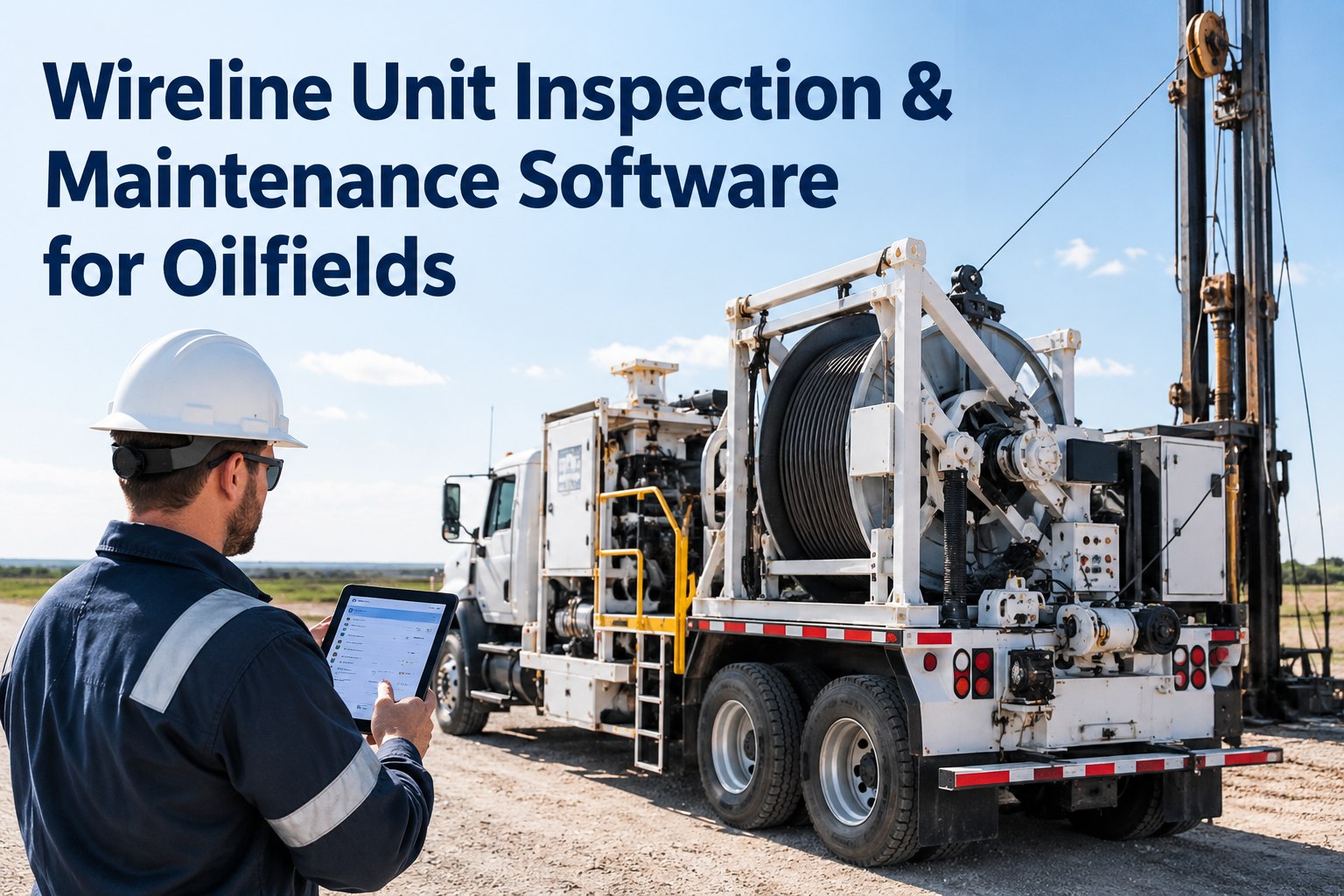
A wireline unit is a truck carrying a specialized well-service machine — and the truck is the easy part. Generic vehicle checklists cover the chassis and miss the winch, the cable, the sheaves and the pressure-control equipment that actually decide whether a unit is job-ready.Wireline unit inspection software gives field crews a template built for the equipment they're actually running, captures photo-backed defects at the wellsite, and keeps the service history tied to the asset. Book a demo to see a wireline inspection workflow end to end.
The Chassis Passes a Generic Checklist. The Wireline Gear Doesn't Show Up On One.
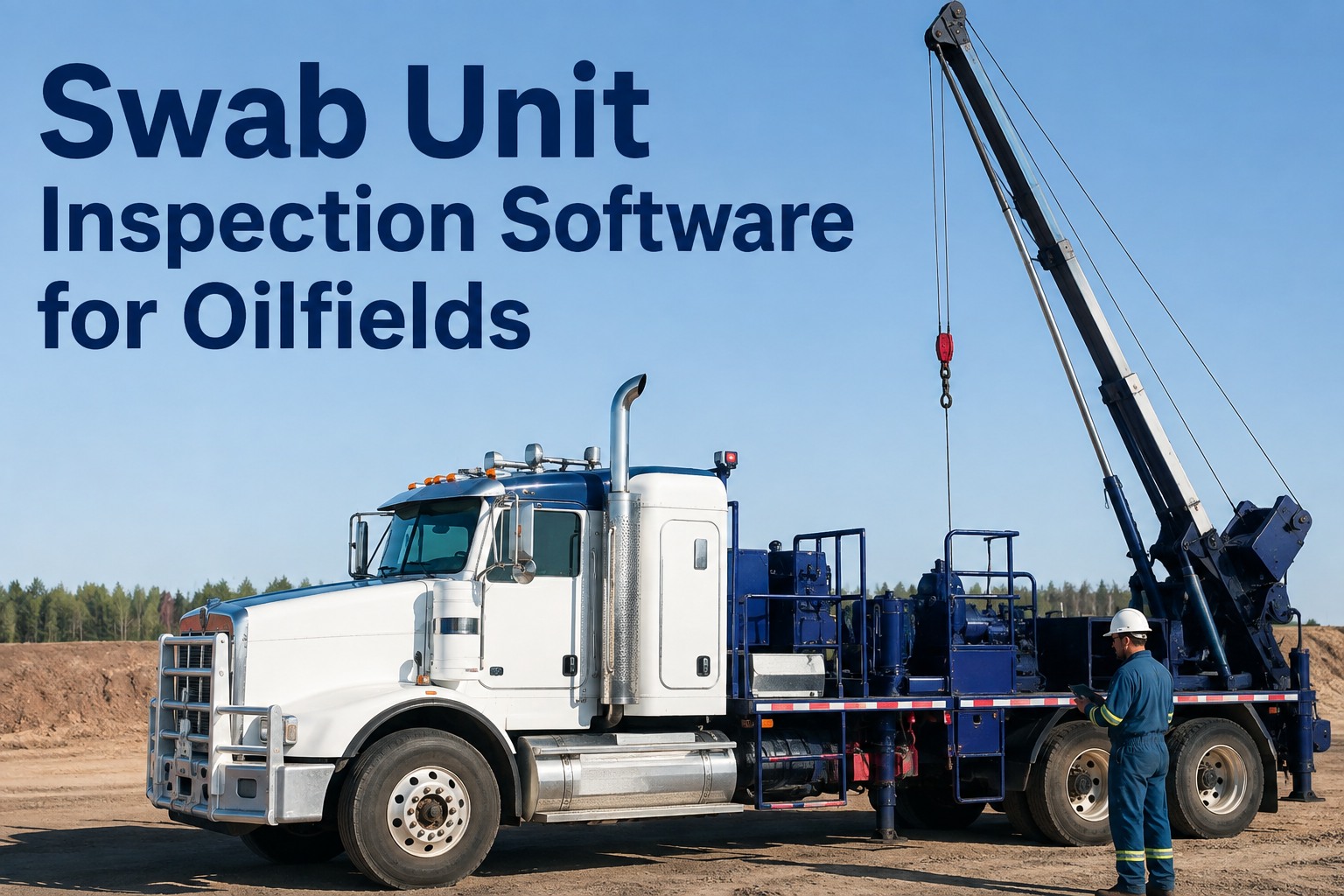
A wireline unit is really two machines sharing a deck plate: a road-going commercial truck, and a winch-cable-pressure-control system with its own wear points, its own standards, and its own way of ending a job early. One inspection has to cover both.
If you run wireline units across a district, you already know a truck can be perfectly road-legal and still useless on location because the packoff is leaking or the cable's flagged for retirement. That split — road-vehicle upkeep on one side, specialized well-service maintenance on the other — is what a purpose-built inspection workflow is for. One quick note before the detail: what a given unit needs inspected depends on its configuration, the applicable regulations, the manufacturer's requirements, and your client's rules, so treat this as a practical framework, not a universal checklist.
Why generic doesn't cut itwhat wireline unit inspection software actually does
Wireline unit inspection software is a digital inspection and maintenance workflow configured for the specialized equipment a wireline unit carries — not just its chassis. It gives the field crew a unit-specific pre-shift inspection, lets them document defects with photos and voice notes at the wellsite, routes those defects into work orders, triggers preventive maintenance from actual operating hours, and keeps the service history tied to the asset. The point isn't digitizing a form; it's covering the systems a generic truck checklist has no line item for.
Wireline splits into two service types, and the gear differs. E-line uses a braided conductor cable to run logging, perforating and surveillance tools with real-time data up the wire. Slickline uses a single-strand non-electric wire for mechanical work — setting and pulling plugs, valves and gauges. Both share the same surface backbone: a powered winch and drum, a control cabin, a measuring head, sheaves, and pressure-control equipment sealing a live well. A checklist built for a flatbed doesn't know any of that exists. Book a demo to see a template built for your unit type
What to inspect on a wireline unitthe systems a flatbed checklist has never heard of
Here are the specialized systems that sit on top of the chassis, grouped the way a crew works through a unit. Each has its own failure mode and its own reference standard — and none appear on a generic vehicle inspection. The specifics for your unit come from the OEM manual and the applicable API practice, not this page.
Drive, gearbox, brakes and the emergency stop. Check brake holding and function, listen for bearing noise, verify controls and confirm the drum spools evenly with no damage to flanges or level-wind.
Inspect for broken wires, corrosion, birdcaging, kinks and diameter loss against retirement criteria. OSHA and API RP 9B point to inspection before and after jobs; damaged or overstressed line comes out of service.
Check sheave groove profile, bearings and guards; confirm the correct D/d ratio and fleet angle; and verify slings, shackles and tag-lines are rated and certified for the lift.
Stuffing box/packoff, grease injector and flow tubes, and the wireline valve/BOP that seals a live well. These are typically subject to pressure testing and certification on defined intervals — per the applicable standard and client, not a generic form.
Power pack, pumps, hoses, fittings and cylinders driving the winch and PCE. Look for leaks, chafing, correct pressures and secure, undamaged lines.
Depth encoder and tension load cell calibration, line wiper, cabin controls, panel readouts, and power isolation. On e-line units, cable resistance and insulation checks matter too.
Emergency stops, guards, fire extinguishers, gas detection where required, and — on radioactive-source jobs — source-lock, survey meter and transport documentation handled under the applicable requirements.
Engine, brakes, tires, lights and frame — the road-going commercial vehicle side, with its usual inspection and maintenance obligations before the unit ever reaches location.
Configurable templates matter here because no two fleets run identical units. An e-line logging truck, a slickline skid and a pump-down unit need different inspection items — and the software should let you build each one, not force a generic list. Start free and build your first unit-specific template
Who sets the requirementsfour sources, and why "one checklist" is a myth
This is the part contractors get burned on: there's no single authority that defines a wireline unit inspection. Four different sources each impose requirements, they overlap, and your client often layers their own on top. A serious program accounts for all four — and good software lets you encode each without four separate binders.
OSHA sets pre-use and equipment-condition expectations for well-servicing operations; the chassis carries commercial-vehicle obligations. These are the legal floor, and they vary by jurisdiction and operation.
API recommended practices — such as RP 9B for wire rope care and RP 54 for well-servicing safety — provide widely referenced inspection, testing and retirement guidance for the specialized gear.
The OEM manual for your winch, PCE and measuring gear defines intervals, wear limits, torque values and pressure-test procedures. It's the authority on the equipment itself.
Operators routinely require their own pre-job inspections and documentation, and your own HSE procedures add more. These are often the strictest layer on a given job.
So when someone asks "what's the wireline inspection checklist," the honest answer is: it depends on your equipment, your regulators, your OEM and your client — and the right tool lets you build the exact template each unit and client needs. Always verify specifics against the current applicable standards and your client's documentation. Book a demo to see per-client inspection templates
From wellsite defect to closed repairthe loop that keeps a unit job-ready
Finding a problem on location is easy. Not losing it between the wellsite and the shop — two hundred miles and three days later — is the hard part, and it's where paper fails. On a connected platform, a defect flagged during the pre-shift inspection carries straight through to a work order and a documented fix.
-
1Crew flags it at the wellsiteThe operator fails the PCE item on the inspection, snaps a photo of the seep and adds a voice note — no typing on a greasy phone in the cold.
-
2It becomes a tracked defectThe failed item lands on the unit record as an open defect the moment there's signal, visible to the district maintenance lead — not buried on a clipboard.
-
3One tap to a work orderThe defect converts into a work order with the photo, unit number and operating hours attached, and any parts — seals, grease — pulled from inventory.
-
4Repaired, logged & job-readyThe tech completes the repair, logs parts and labor, and the unit's service history shows the fix — ready for the next dispatch and the next client audit.
The same loop handles a chassis brake defect and a pressure-control leak identically — which is the whole point of one system covering both halves of the unit. Book a demo to watch a defect become a work order
Managing wireline fleets across districts
Oilfield contractors rarely run one base. Units move between districts, crews rotate, and a client in one basin wants documentation a client in another doesn't. The maintenance record has to travel with the asset, not sit in a filing cabinet at whichever yard the unit last saw. That's where a single fleet platform earns its place over scattered spreadsheets and paper.
When a client asks for proof a unit was inspected and maintained before it worked their well, the answer should take seconds to produce — not a scramble through three districts' paperwork. Start free and put every unit on one dashboard, or book a demo to see multi-district fleet visibility
From a wireline operations manager
Our units run out of three districts and I used to have no real-time picture of any of them. A crew would note a soft winch brake or a marginal packoff on a paper sheet, it'd ride around in the cab for a week, and I'd find out when a unit no-showed on a job.
Now the pre-shift is on the phone, defects come in with a photo the same day, and they turn into work orders I can actually see. The piece I didn't expect to lean on is the audit export — when an operator asks for inspection and PM history on a unit before it works their well, I pull it in under a minute instead of digging through binders at whichever yard it came from.
How HVI supports wireline operations
HVI brings the whole workflow into one connected record per unit — so wireline contractors manage the chassis and the specialized gear together, across every district, without running separate systems.
Wireline inspection software FAQs
What is a wireline unit inspection?
A wireline unit inspection is a check of both the road-going chassis and the specialized well-service equipment the unit carries — the winch and drum, cable or wire, sheaves and rigging, pressure-control equipment, hydraulic and pneumatic systems, measuring and electrical gear, and safety systems. It's more involved than a generic vehicle inspection because most of those systems don't appear on a standard truck checklist. What must be inspected, and how often, depends on the unit's configuration, the applicable regulations, the manufacturer's requirements and the client's rules — there's no single universal checklist that satisfies every operator. Inspection software addresses this by letting a contractor build equipment- and client-specific templates, run them from a phone at the wellsite, capture defects with photos and voice notes, and tie results to the asset's service history.
What should be inspected on a wireline truck?
A thorough inspection covers the chassis and the specialized systems separately. On the chassis side: engine, brakes, tires, lights, frame and the usual commercial-vehicle items. On the wireline side: the winch and drum drive, gearbox, brakes and emergency stop; the cable or wire, inspected for broken wires, corrosion, kinks and diameter loss against retirement criteria; sheaves and rigging, including groove profile, bearings, guards and correctly rated slings and shackles; pressure-control equipment such as the stuffing box or packoff, grease injector, flow tubes and wireline valve, which are typically subject to pressure testing on defined intervals; the hydraulic and pneumatic systems; the measuring head, including depth encoder and tension load-cell calibration; and emergency and safety equipment. The exact items should come from the manufacturer's documentation, the applicable API practices and your client's requirements — not a generic list.
How often should wireline equipment be inspected?
Frequency depends on the component and the governing requirement, so there isn't one universal interval. As a general pattern in well-servicing operations, the unit gets a pre-use inspection each time it's put into service, and specialized components carry their own schedules on top. Wire rope, for example, is inspected before and after jobs under OSHA and API guidance, with damaged or overstressed line removed from service and inspection frequency increased in corrosive conditions such as H2S exposure. Pressure-control equipment is typically subject to periodic pressure testing and certification, and the chassis carries its own commercial-vehicle obligations. Because the intervals come from a mix of regulations, API practices, manufacturer manuals and client requirements — and because they change — confirm the current applicable requirements for your specific equipment rather than rely on a generic figure. Software helps by triggering each interval automatically so nothing is missed.
What is the difference between e-line and slickline equipment?
Both are wireline services, but they use different line and do different work, which affects what you inspect. E-line, or electric line, uses a braided multi-strand conductor cable that carries current downhole, so it's used for logging, perforating and surveillance work where real-time data or power runs through the cable. Slickline uses a single-strand, non-electric wire, primarily for mechanical operations such as running and retrieving plugs, valves and gauges. The surface equipment is broadly similar — a powered winch and drum, a control cabin, a measuring head, sheaves and pressure-control equipment — but e-line units add electrical considerations such as cable resistance and insulation checks and data-acquisition systems, while cable retirement and handling criteria differ between a conductor cable and a solid slickline wire. Good software lets you build a distinct template for each so crews check the right items for the equipment in front of them.
How does HVI help maintain a wireline unit?
HVI gives wireline contractors one connected record per unit that covers both the chassis and the specialized gear. Crews run a configurable, unit-specific inspection from a phone at the wellsite and document defects with photos and voice notes, even offline. Any flagged defect — a leaking packoff, a soft winch brake, a cable retirement flag — becomes a tracked work order with the photo, unit number and operating hours attached, and parts consumed are pulled from inventory. Preventive maintenance for the winch, hydraulics and chassis triggers automatically from actual operating hours, so services fire when they're genuinely due. The complete inspection and service history stays tied to the asset and travels with it between districts, so proof a unit was inspected and maintained is retrievable in seconds. HVI provides the workflow and recordkeeping; the specific inspection items and intervals should always follow the applicable regulations, API practices, manufacturer manuals and client requirements.
Keep every wireline unit job-ready and audit-ready
HVI puts chassis and wireline-system maintenance on one connected record per unit — configurable inspections for e-line and slickline, wellsite defect capture with photos and voice notes, one-tap work orders, meter-based PM for the winch and power pack, parts tracking, and audit-ready service history that travels between districts. Purpose-built for oilfield contractors who can't afford a unit that's road-legal but not job-ready.
No credit card · Configurable wireline templates · Records ready to pull on demand