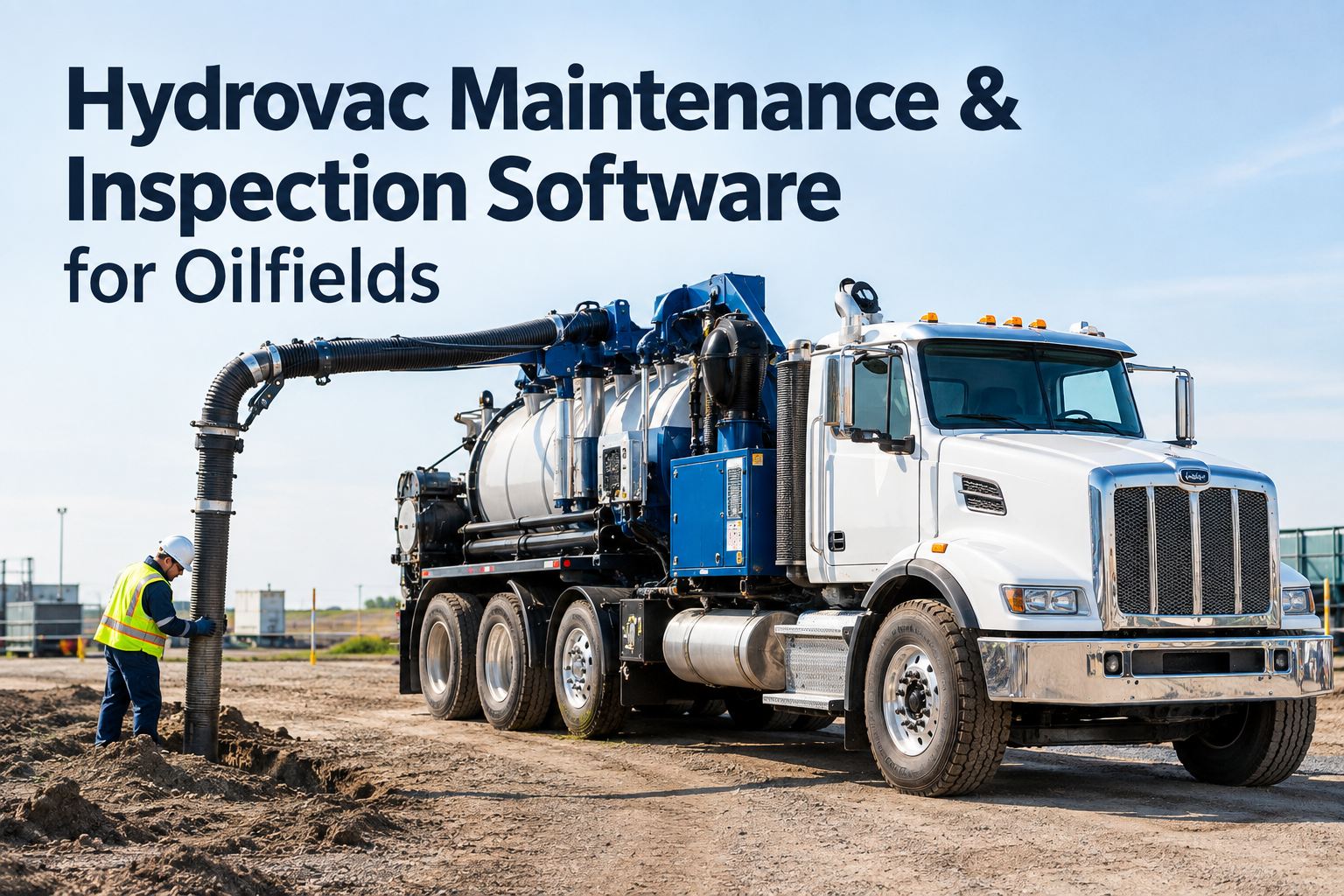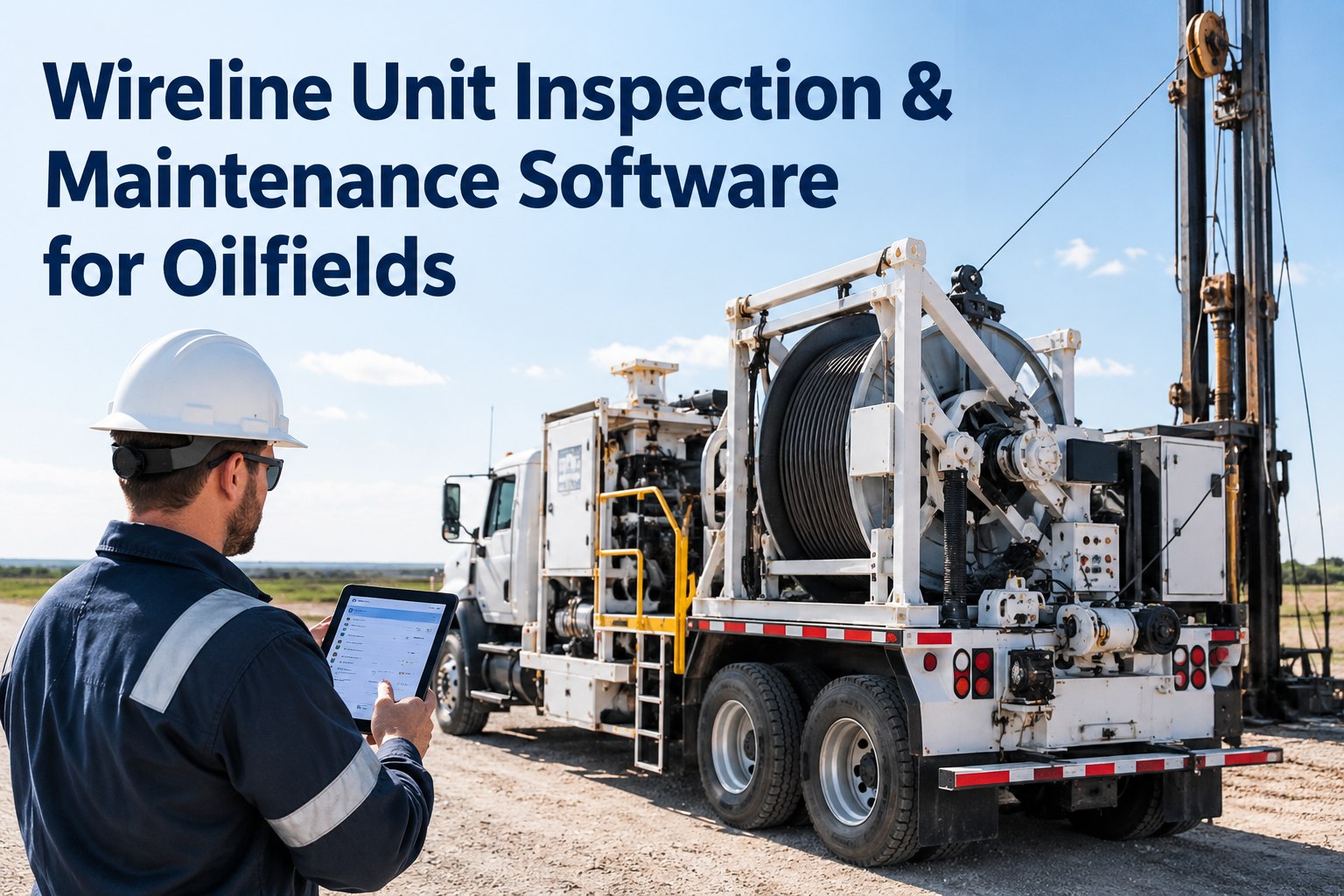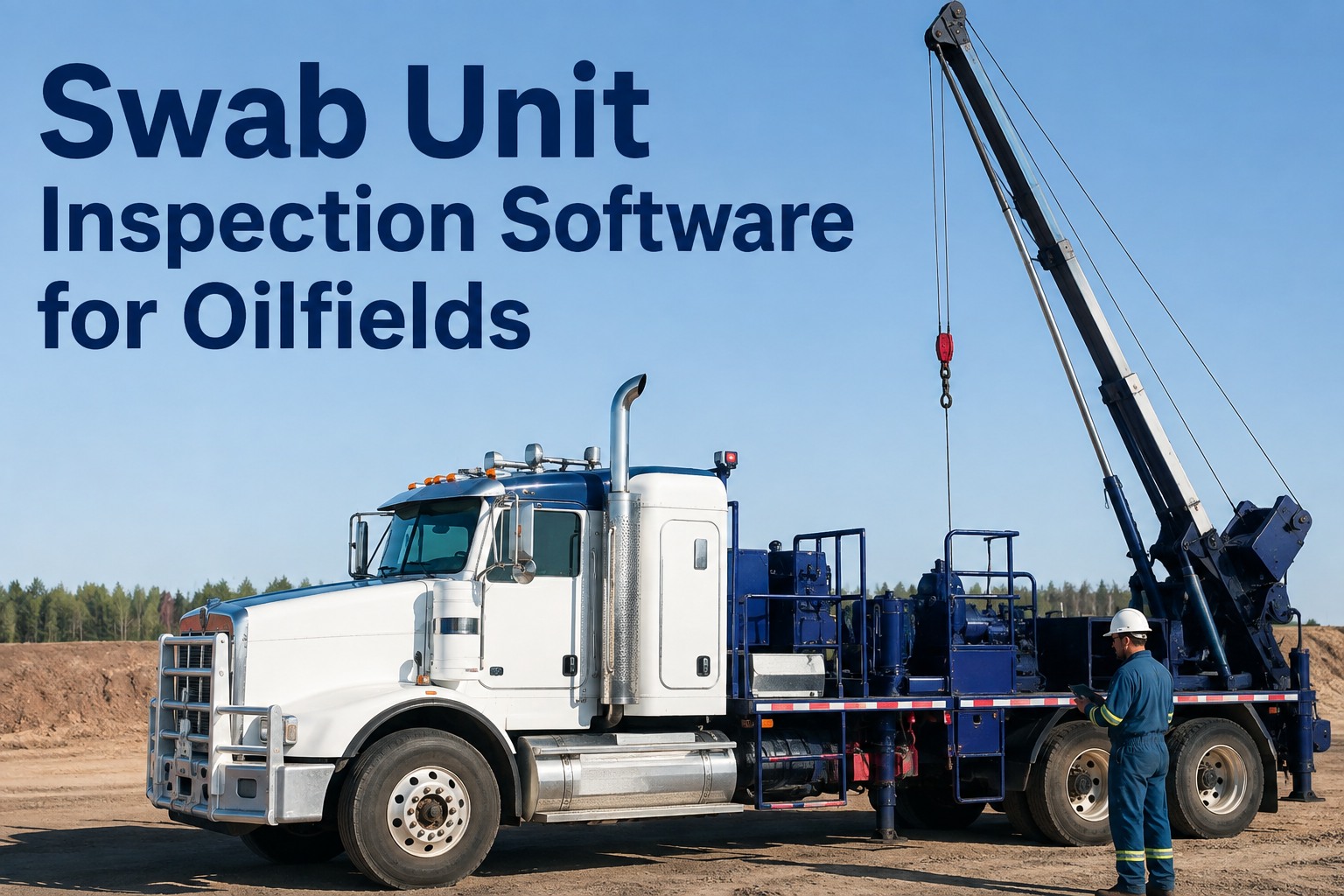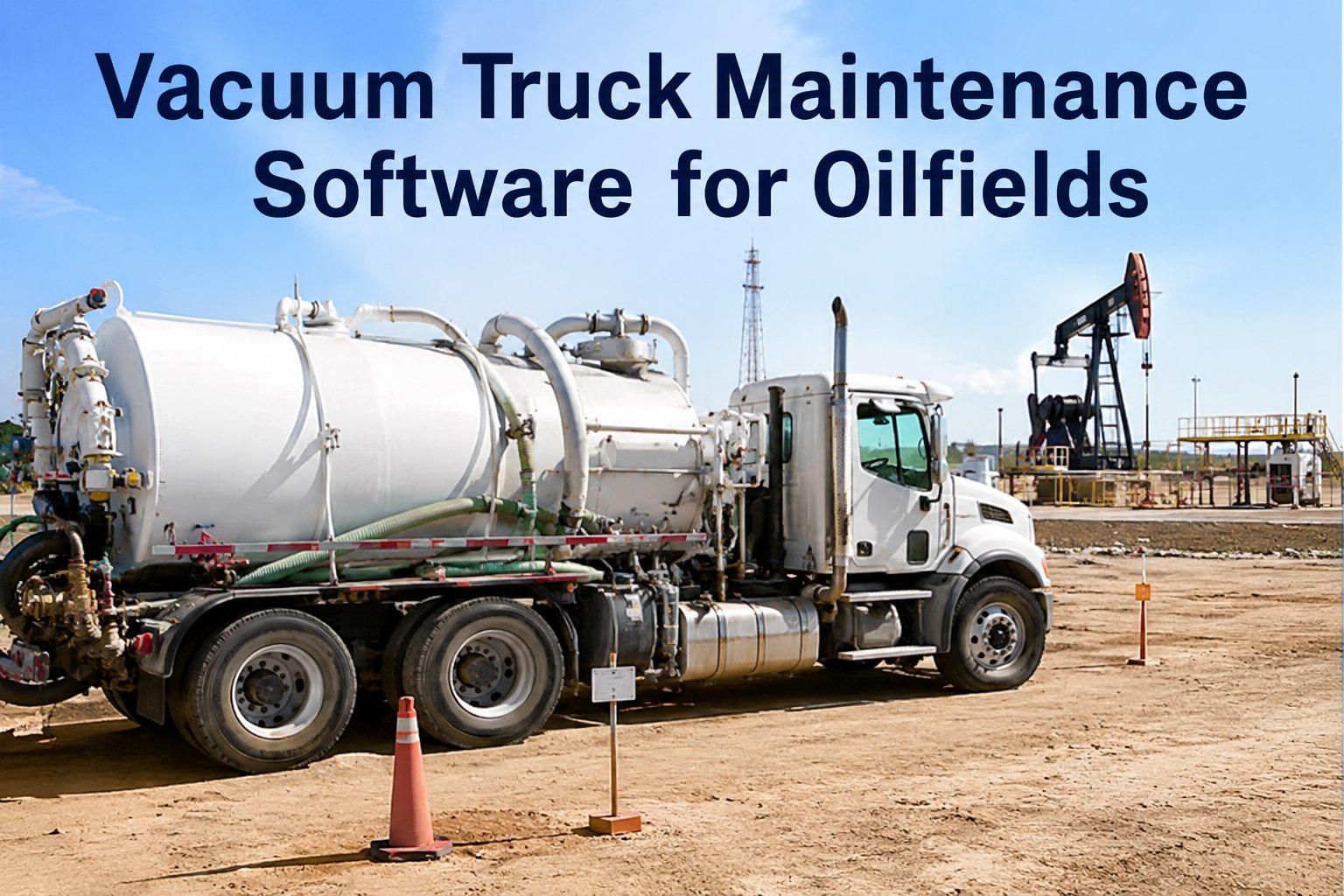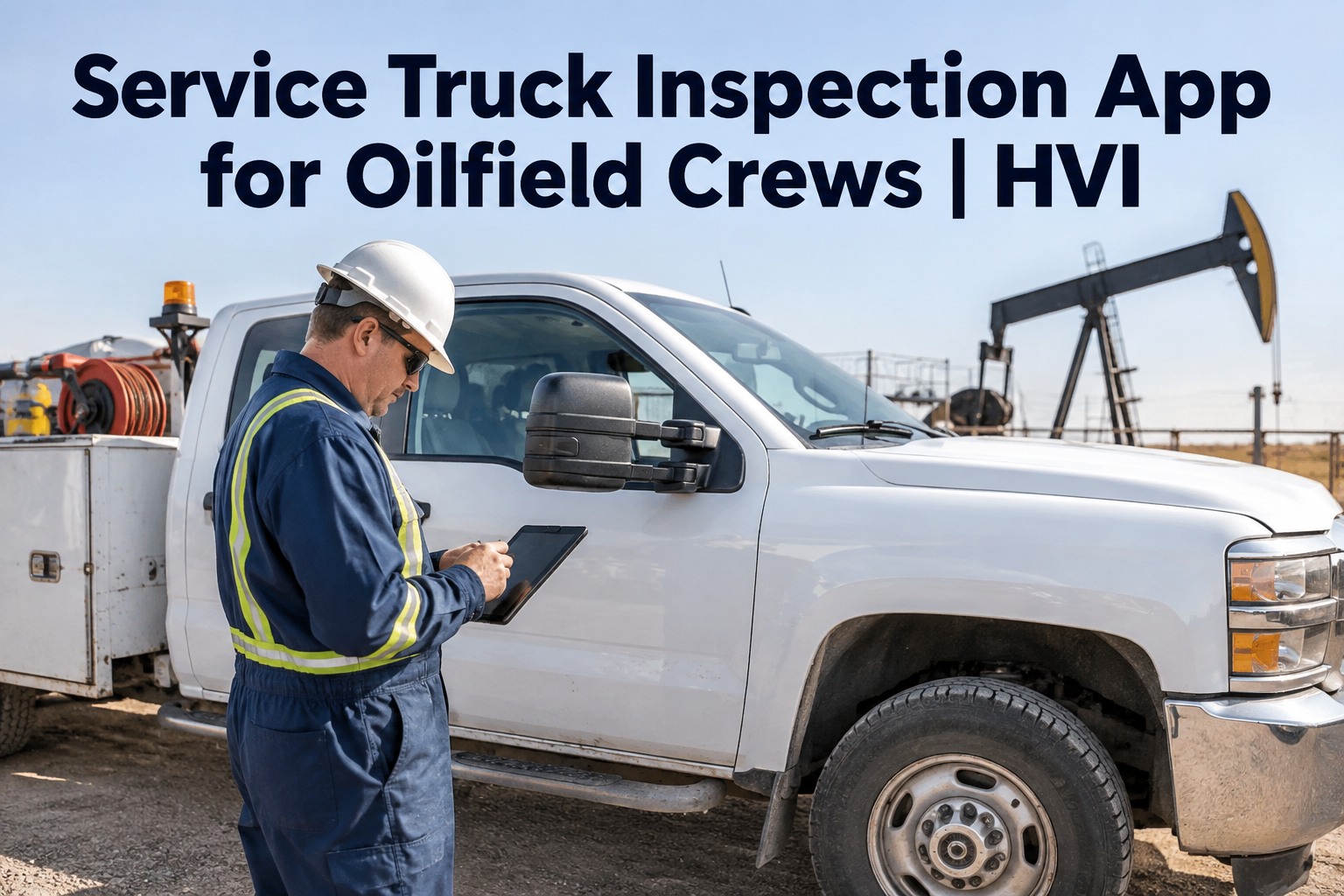
It's 5:40 a.m. at the yard and your swab unit operator is already rolling toward the lease — with a paper checklist he half-filled in the dark, a PTO that "felt fine," and a hydraulic fitting that started weeping sometime yesterday. A service truck inspection app replaces that guesswork with a guided pre-trip on the phone already in his pocket: engine, PTO, pump, hydraulics and safety gear, each checkpoint tapped pass or flagged with a photo before the wheels move. For wellhead service, hot oil and swab crews, that one habit is the difference between a truck that works the job and a truck that sits dead on a lease road while the client calls. If you want to see it on your own units first, you can book a 30-minute walkthrough with your actual service trucks and run a live inspection during the call.
OILFIELD SERVICE TRUCK INSPECTIONS
Every pre-trip signed, photographed and filed before the truck leaves the yard
HVI walks your crew through a unit-specific checklist on any phone — wellhead service, hot oil or swab — and turns every flagged defect into a work order in one tap. No paper, no group-chat photos, no missed 250-hour greases.
WHAT A MISSED CHECKPOINT COSTS
The numbers behind a 10-minute pre-trip
$448–$760
Typical cost of one day of unplanned truck downtime — before you count a lost day-rate on the job
250 / 500 hr
Grease and service intervals on pump and engine hours that slip when trucks move lease to lease
1 tap
From flagged defect to assigned work order with parts pulled — no phone calls, no lost notes
Seconds
To pull a signed, photo-backed inspection record during a client, safety or insurance audit
OILFIELD SERVICE TRUCK CHECKLIST
What a guided pre-trip covers on wellhead, hot oil and swab units
A generic pickup checklist won't catch a weeping swab-line connection or a hot oil burner fault. HVI builds the checklist around the unit, so the operator walks the truck in a fixed order and can't skip the items that strand trucks on location.
Powertrain & PTO
- Engine oil, coolant and fuel levels; visible leaks under the chassis
- PTO engagement and disengagement; unusual noise under load
- Belt condition and tension on pump drives
- Air system build-up time and warning buzzer check
Pump, Tank & Hydraulics
- Hydraulic oil level and condition; hose chafing at rub points
- Pump packing and seal weep; suction and discharge connections
- Tank valves, gauges and sight glasses functional
- Burner and heater operation on hot oil units; fuel lines intact
Swab & Rig-Up Gear
- Swab line condition, spooling and lubricator connections
- Winch brake holding test and drum guards in place
- Mast, crown and sheave pins secured; no cracked welds
- Pressure relief paths verified before first job of the day
Safety & Compliance
- Fire extinguishers charged, pinned and in date
- Spill kit, grounding strap and H2S monitor on board
- Lights, beacons and reflective markings working
- DVIR-equivalent record signed and time-stamped
Every item above is a tap on the phone. Fail one, and the app asks for a photo, a voice note and a Repair-or-Replace call — then files the signed PDF automatically. You can start logging inspections free and build your first unit checklist the same afternoon.
FROM DEFECT TO WORK ORDER
What happens the moment an operator flags a problem
Flag it at the truck
Operator taps "Fail" on a checkpoint — say, a hydraulic hose chafing at the pump mount — adds a photo and a 15-second voice note, and marks it Repair or Replace. The inspection still completes; the defect doesn't get forgotten.
Superintendent alerted instantly
The field superintendent gets the alert with the photo attached, while the signed PDF of the full inspection lands in the cloud record for that unit. If it's a safety item, the truck can be held before it rolls.
One tap to a work order
The flagged item becomes a work order in one click: assign a mechanic, reserve the hose and fittings from stock, and the labour and material cost logs automatically against that unit's history. No retyping, no text-message photos lost in a thread.
Closed loop, provable record
When the repair is done, the work order closes against the original defect — photo to photo. At audit time you show the full chain: found, assigned, fixed, signed. If you'd like to see that loop end to end, walk through it on your own units in a live demo.
PAPER VS APP
Paper binders and group chats vs a service truck inspection app
| Daily reality | Paper checklist + texts | HVI inspection app |
|---|---|---|
| Pre-trip completion | Pencil-whipped in the dark, or skipped on busy mornings | Guided, in order, can't submit with skipped checkpoints |
| Defect evidence | Blurry photo buried in a group chat | Photo + voice note attached to the exact checkpoint |
| Defect follow-up | Phone calls, sticky notes, "I thought you handled it" | One-tap work order, assigned mechanic, parts reserved |
| PM intervals | Engine hours scribbled on a whiteboard; 250-hr grease slips | Meter-based PM watches engine and pump hours automatically |
| Audit response | Dig through binders and hope the pages are signed | Signed, time-stamped PDF pulled in seconds |
| Cost visibility | Repair costs scattered across invoices and card statements | Labour and material logged against each unit, weekly reports |
See a full pre-trip run on your own service trucks
Book a 30-minute demo and we'll build a wellhead, hot oil or swab checklist live, flag a defect and turn it into a work order — your units, your checkpoints.
METER-BASED PREVENTIVE MAINTENANCE
Why engine hours, not calendar dates, keep service trucks alive
A hot oil truck can idle on location for six hours and drive forty miles. Calendar-based PM lies to you on these units. HVI tracks engine and pump hours per unit and fires due and overdue alerts as the meters turn — even as trucks swap between leases daily.
250 hr
Grease & inspection service
Chassis grease, pump packing check, hose and fitting inspection. HVI counts the hours and pushes the alert to the shop before the interval passes — not after the bearing fails.
500 hr
Full unit service
Engine oil and filters, hydraulic oil condition, belt and drive inspection, burner service on hot oil units. Parts are pulled from inventory against the work order, so stock levels stay honest.
Weekly
Cost & utilization reports
Cost per unit, downtime hours, PM compliance rate and utilization land in your inbox every week. You see which trucks earn and which ones bleed — without building a spreadsheet.
A quick worked example
Say a missed 250-hour grease lets a swivel bearing seize on a swab unit mid-job. You lose the truck for two days, pay a rush parts premium, and burn a day-rate with the client. At even $500 per day of downtime plus $900 in rush parts and labour, that one skipped interval costs around $1,900 — more than a year of software for that unit. Multiply it across a fleet and the app pays for itself on the first catch. Run the math on your own fleet when you book a demo and bring your downtime numbers.
HOW HVI HELPS
Built for fleets that work where the pavement ends
Works on any phone, anywhere
Yard, roadside or a remote lease with one bar of signal — inspections capture offline and sync when coverage returns. No new hardware, no per-truck tablets to buy.
Defect-to-work-order in one tap
Flagged items become assigned work orders with parts reserved and costs logged against the unit — cutting unplanned downtime and killing the sticky-note follow-up system.
Audit-ready in seconds
Every inspection is signed, time-stamped and photo-backed. Client HSE audits, insurance reviews and safety checks stop being a binder hunt — you pull the record while they're still asking.
One platform, whole fleet
Service trucks, pickups, trailers and shop equipment live in the same CMMS — inspections, PM, parts inventory, fuel and analytics together. Rollout takes days, and crews need minimal training.
KEY TAKEAWAYS
The short version for busy maintenance managers
- A service truck inspection app pays for itself on the first caught defect — one seized bearing or burst hose costs more than a year of software on that unit.
- Unit-specific checklists beat generic ones — wellhead service, hot oil and swab units fail in different places, and your pre-trip should know the difference.
- Meter-based PM is the only honest PM on oilfield trucks — engine and pump hours, not calendar dates, drive the 250-hour and 500-hour services.
- The record matters as much as the inspection — signed, photo-backed PDFs turn client audits and insurance reviews from a scramble into a formality.
- The fastest way to judge it is to use it — sign up free and run tomorrow's pre-trips on it, or see it configured for your fleet in a demo first.
My biggest gripe was the 250-hour grease. Trucks bounce between leases, the whiteboard hours were always two weeks stale, and we'd find out we missed one when something seized. Now the app counts the hours and my phone buzzes before the interval passes. I track one number every Monday: PM compliance. It was maybe 70 percent on paper. It's sat above 95 since we switched, and I haven't had a client auditor ask twice for a record.
— Dale Merritt, Maintenance Manager, oilfield services contractor running wellhead and swab units
COMMON QUESTIONS
Service truck inspection app FAQs
What should an oilfield service truck pre-trip inspection include?
Does the app work on remote leases with no cell signal?
How does meter-based PM work when trucks move between leases daily?
Will the records hold up in a client HSE or insurance audit?
How long does it take to roll out across a service truck fleet?
Tomorrow's pre-trips can be signed, photographed and filed
Put the guided inspection in your crew's pockets, catch the weeping hose before it bursts, and never chase a paper record again. See it on your own service trucks in 30 minutes.
Free to start — Works on any phone — No card needed