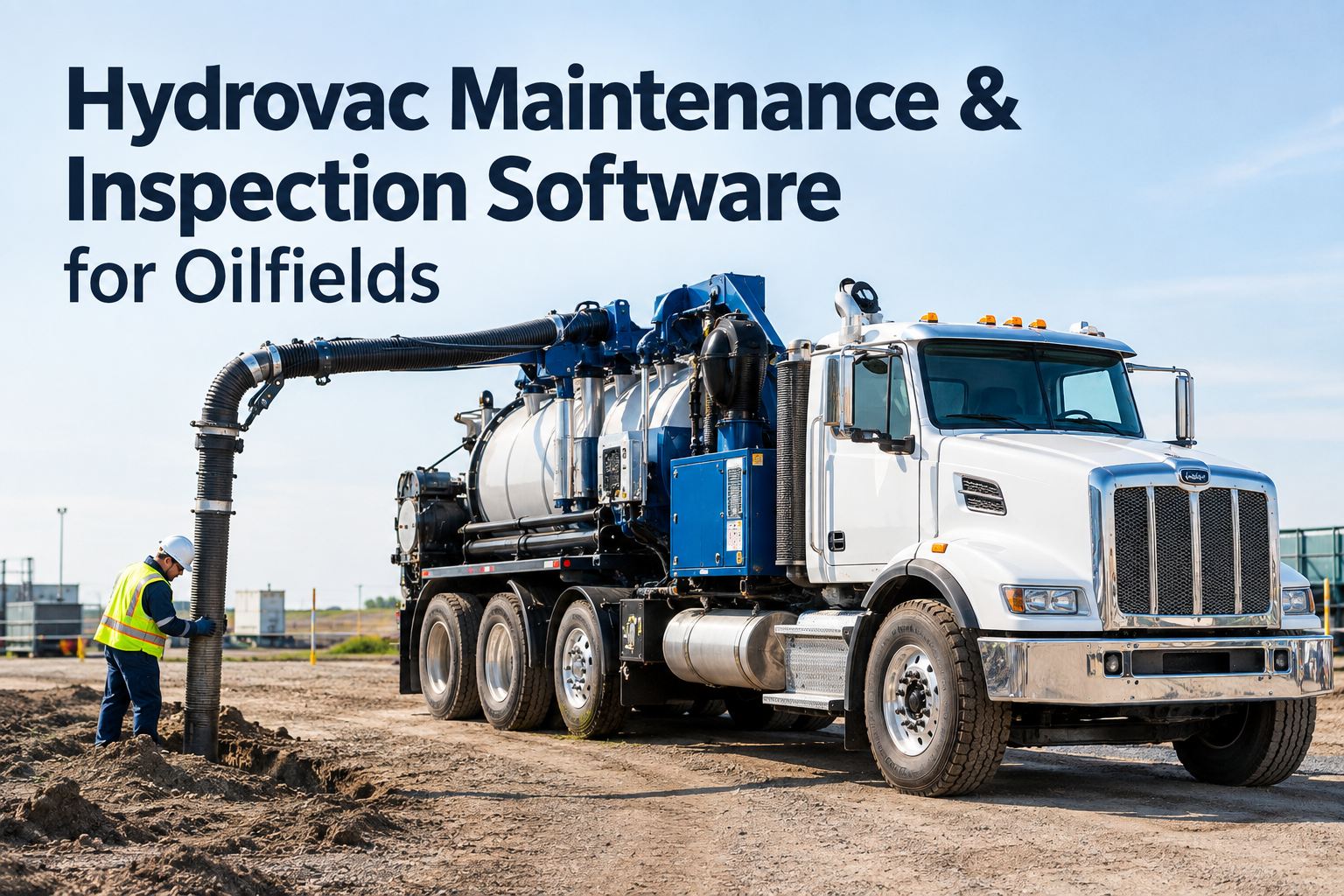
It's 2 a.m. on the lease, the swab valve is rigged up, and the night hand just noticed a hydraulic weep on the drawworks that the day crew "meant to write down." That is the moment workover rig inspection software either exists in your operation or it doesn't. HVI puts a guided pre-shift checklist on every crew member's phone — covering hoists, drawworks, hydraulics, BOP and safety systems — so defects get flagged with photos,and voice notes before they become a fishing job or a lost call-out. Well servicing companies running HVI report 30% less downtime and payback in under 90 days. If you want to see the rig templates configured for your own units, you can book a 30-minute walkthrough and have them built before your next rig-up.
Workover, Coiled Tubing & Wireline
Every pre-shift inspection, every meter hour, one audit-ready record
Guided digital checklists for workover rigs, coiled tubing units and wireline trucks — with Repair or Replace flags, instant defect-to-work-order, and meter-based PM that tracks 250-hour, 500-hour and 2500-hour services on equipment running 24/7.
- Pre-shift rig checklist with photos and voice notes on every line item
- Defect submitted — superintendent notified, work order created in one tap
- Engine and pump hour meters drive PM — no more missed 500-hour services
- Signed, timestamped HSE-ready PDFs retrievable in seconds from the Web Portal
What the Paper Log Is Costing You
Four numbers every well servicing manager should know
30%
Less unplanned downtime reported by well servicing fleets after moving to digital inspections and meter-based PM
<90
Days to payback — most crews recover the cost of HVI before the end of their first quarter on the platform
1 tap
From a flagged defect to a work order with parts pull and cost tracking — no phone calls, no lost notes
2,500
Hour major service interval tracked automatically per engine and pump — never slips on a rig running around the clock
Rig Up, Rig Down, Pre-Shift
A workover rig inspection checklist that crews actually complete
A paper rig-up checklist gets pencil-whipped at shift change. HVI forces a walk-around: each item needs a pass, a fail with a photo, or a voice note before the checklist can be submitted. Here is how the pre-shift template breaks down across your three core unit types.
Workover Rig
- Drawworks, brakes and crown block condition
- Hoist line, travelling block and hook inspection
- Hydraulic system pressure, hoses and fittings
- BOP and accumulator function and pressure test
- Engine oil, coolant, belts and fluid leaks
- Outriggers, pads and leveling jacks
- Fire extinguishers, H2S monitors and first aid
- Lighting, gauges and cab instrumentation
Coiled Tubing Unit
- Injector head chains, bearings and gripper blocks
- Reel, level wind and tubing guide condition
- Power pack engine hours and hydraulic oil level
- Stripper/pack-off element and BOP rams
- Control cabin gauges, E-stop and kill switches
- High-pressure lines, unions and swivel joints
- Depth counter and weight indicator calibration
- Spill containment and drip tray condition
Wireline Truck
- Winch drum, cable condition and spooling
- Stuffing box, lubricator and grease injector
- Hydraulic pump, motor and line integrity
- Depth measurement head and encoder function
- Engine service hours and fluid levels
- Pressure control equipment certification dates
- Grounding straps and electrical connections
- Cab controls, gauges and emergency shutoff
Every item carries a Repair or Replace flag. When a rigger marks a hydraulic hose as failed, the field superintendent gets a push notification before the crew finishes the walk-around. You can see the full checklist flow on a live demo with your own unit types loaded.
Defect to Done
How a flagged defect becomes a closed work order in four steps
Crew flags the defect
A floorhand marks a worn drawworks brake band as Repair during the pre-shift walk-around, attaches two photos and a 15-second voice note describing the scoring on the drum. The submission is timestamped and GPS-stamped to the lease location.
Superintendent is notified instantly
The field superintendent sees the defect on his phone with the photos and voice note attached. He approves the repair and taps once to create a work order — no phone call, no text message, no lost sticky note on the doghouse door.
Parts pulled and cost tracked
The work order pulls the brake band from the parts inventory, assigns it to the shop or a field mechanic, and starts tracking labour hours and parts cost against that specific rig. If the part is not in stock, the system flags it for reorder.
Repair signed off, record sealed
The mechanic completes the work, attaches a photo of the new band installed, and closes the work order. The entire chain — defect, approval, parts, labour, sign-off — is stored as a signed, timestamped PDF ready for any HSE audit. Start logging inspections free and see the full chain on your first unit.
Meter-Based Preventive Maintenance
Workover rig PM that tracks hours, not calendar pages
A workover rig on a 24/7 well servicing contract can rack up 500 engine hours in under three weeks. Calendar-based PM — "service it every month" — is useless when one rig runs double shifts and another sits on standby. HVI reads engine and pump hour meters and triggers services at the intervals you set.
| Service Interval | What Gets Done | What Happens If It Slips | How HVI Tracks It |
|---|---|---|---|
| 250-hour | Engine oil and filter change, fuel filter, air filter check, hydraulic fluid level and condition, grease all fittings | Accelerated engine wear, contaminated hydraulics, injector scoring on pumps | Meter reading submitted at each pre-shift inspection; alert fires at 225 hours so the shop has lead time |
| 500-hour | Full engine service plus hydraulic filter change, brake adjustment, drawworks chain inspection, BOP function test | Brake fade under load, chain stretch causing jerky drum operation, BOP response time degradation | Auto-generated work order at 475 hours with parts list pre-loaded; overdue flag if not closed by 500 |
| 2,500-hour | Major overhaul: injector service, valve adjustment, turbo inspection, full hydraulic system flush, structural NDT on mast and substructure | Catastrophic engine failure, mast fatigue cracks going undetected, insurance and client audit exposure | Long-range forecast shows which units approach 2,500 hours in the next 60 days so you can plan downtime between contracts |
Every service is logged against the unit's meter history, so when a client or insurer asks for maintenance records on Rig 14, you pull a complete, timestamped PDF in seconds. Walk through the meter-based PM setup and see how it maps to your service intervals.
See HVI running on your own workover rigs
Book a 30-minute demo and we will load your rig types, your checklist items and your PM intervals — so you see your operation, not a generic slide deck.
How HVI Helps
Four capabilities built for well servicing operations
Digital Inspections & DVIR
Guided checklists on any phone or tablet — at the lease, in the yard, or on a remote location with no signal. Photos, voice notes and Repair or Replace flags on every item. Kills the paper binder and the group-chat photo thread.
Work Order Management
One tap from defect to work order. Parts pull, labour tracking, cost per repair and mechanic sign-off — all tied to the specific rig, CT unit or wireline truck. No more whiteboard scheduling or lost repair requests.
Meter-Based PM Scheduling
Engine hours, pump hours and calendar dates all drive preventive maintenance triggers. Due and overdue alerts go to the right person before the interval passes — not after the failure. Works across your entire fleet, not just one rig.
HSE-Ready Audit Records
Every inspection, every repair, every PM service is timestamped, photo-backed and stored as a signed PDF. When a client, insurer or regulator asks for records on any unit, you pull them from the Web Portal in seconds — not days of digging through filing cabinets.
The Bottom Line
What changes when you move workover rig inspections off paper
Fewer missed call-outs
When a rig goes down at 2 a.m. and the client calls another contractor, you lose the job and the day rate. Well servicing companies on HVI report fewer missed call-outs because defects get caught at the pre-shift walk-around, not at the wellhead under pressure.
More billable days per rig
Every day a workover rig sits waiting on a part or a repair approval is a day of zero revenue. Instant defect-to-work-order and parts tracking mean repairs start the same shift the defect is found — not three days later when someone finally reads the paper log.
PM intervals that hold
A 500-hour hydraulic service that slips to 700 hours on a coiled tubing power pack is a pump rebuild waiting to happen. Meter-based scheduling means the interval is tracked by the machine, not by someone remembering to check a spreadsheet.
Audits stop being a fire drill
Client HSE audits, insurance reviews and internal safety checks all ask the same question: show me the inspection and maintenance records. With HVI, that answer is a filtered search and a PDF download — not a week of scanning paper. Sign up free and run your first audit search today.
"I used to find out about a bad brake band when the rig was already down and the client was calling. Now I see the defect photo on my phone before the crew finishes their walk-around. We track one number in our weekly ops meeting — unplanned rig-down hours — and it has dropped every quarter since we switched. I wish we had done it two years earlier."
Dale Kowalski — Field Superintendent, well servicing company running 14 workover rigs and 6 wireline units
Common Questions
Workover rig inspection software — what managers ask before switching
Does HVI work on remote well sites with no cell signal?
Yes. The mobile app works fully offline. Crews complete inspections, attach photos and submit defects with no connectivity — everything syncs automatically when the device reaches coverage. This is critical for workover and wireline operations on remote leases where signal is unreliable or nonexistent.
Can I build different checklists for workover rigs, coiled tubing and wireline?
Yes. HVI supports unlimited custom templates per asset type. Your workover rig checklist covers drawworks, BOP and mast; your coiled tubing template covers injector head, reel and stripper; your wireline template covers winch, lubricator and pressure control equipment. Each template can have its own Repair or Replace criteria and required photo items. Book a demo and we will build one of your templates live on the call.
How does meter-based PM work if my rigs do not have telematics?
The crew enters the hour meter reading as part of the pre-shift inspection — it takes five seconds. HVI tracks the reading against the service intervals you set (250-hour, 500-hour, 2500-hour) and fires alerts when a service is approaching or overdue. If you later add GPS or telematics, HVI integrates with those feeds to pull hours automatically.
What does an HSE audit look like with HVI records?
You open the Web Portal, filter by unit, date range or inspection type, and download a signed, timestamped PDF with every photo and voice note attached. What used to take days of digging through filing cabinets and scanning paper now takes under a minute. Clients, insurers and internal safety teams get a complete, professional record package.
How long does it take to get a fleet set up on HVI?
Most well servicing companies are running their first digital inspection within a day. You create your units, assign checklist templates and invite your crew — they download the app and start inspecting. Full fleet rollout with PM schedules and parts inventory typically takes one to two weeks. Sign up free and have your first rig template built before tomorrow's shift change.
Stop losing billable days to defects that should have been caught at shift change
Join well servicing companies that cut unplanned downtime by 30% and reached payback in under 90 days. Your crews already have phones — give them a checklist that works.
Free to start — Works on any phone — No card needed