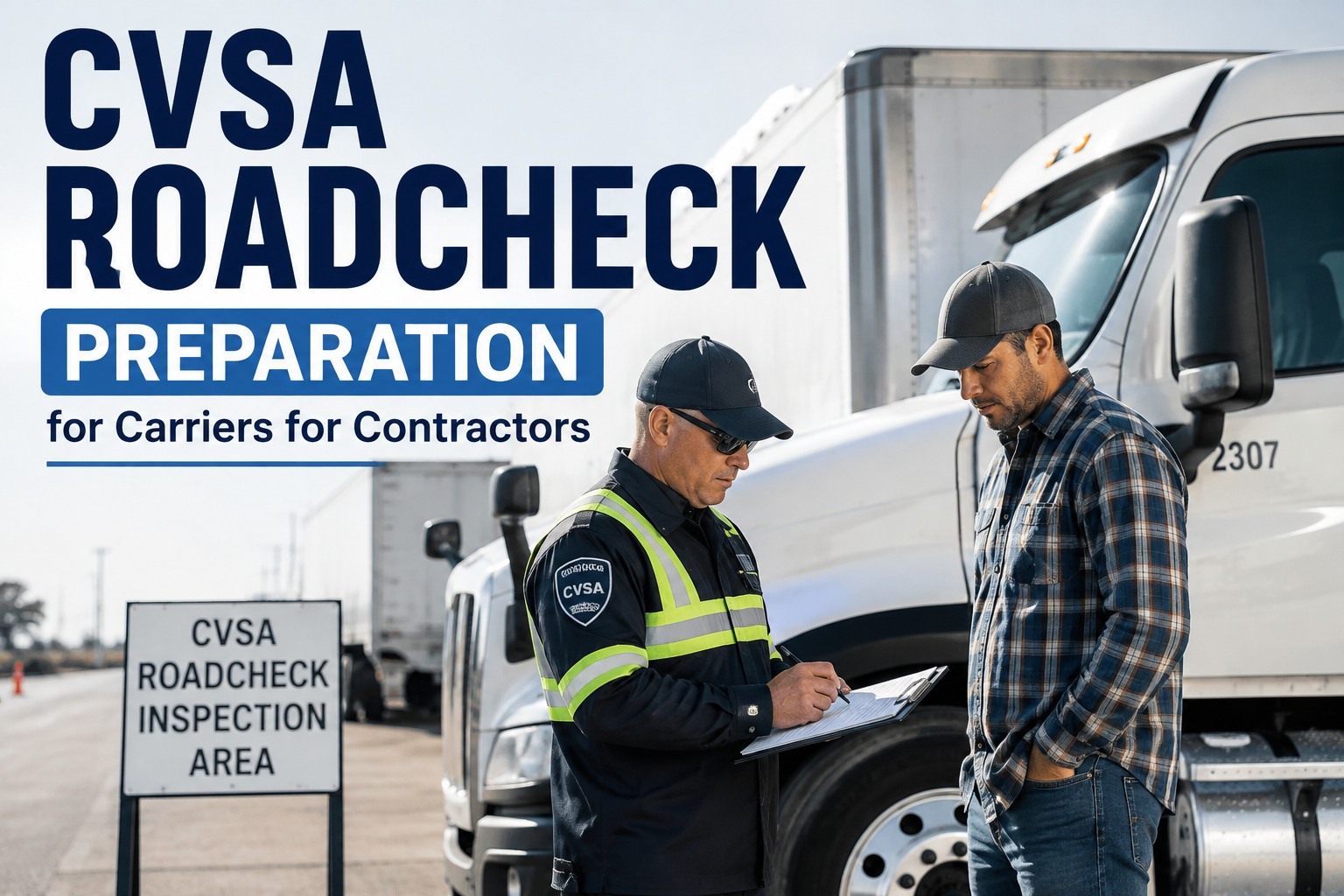
The scale house lights are on, the trooper is walking back with your driver's tablet, and you already know how this ends: another hours of service violation on the carrier record, a driver parked for ten hours, and a load that now needs a rescue driver at shortline rates. Hours of service violations remain the single largest driver out-of-service category in North American enforcement — 32.4% of all driver OOS findings at the 2025 CVSA International Roadcheck — and fines can reach $19,277 per infraction when falsification is involved. The frustrating part is that most of these violations are not drivers trying to cheat. They come from dispatch plans that were never legally completable, yard move statuses left on by accident, and logs nobody cross-checked until an auditor did. This guide breaks down where carriers actually get caught, what the penalties really cost, and the scheduling and verification habits that keep your drivers legal — including how fleets book a 30-minute walkthrough to see timestamped compliance records working alongside their ELD data.
Is your dispatch board writing violations your drivers will pay for?
Most hours of service violations are baked in before the key turns — a 620-mile run on a 14-hour window, a yard move left active at the fuel island, a personal conveyance that looks like a load reposition. Enforcement compares ELD records against fuel receipts, tolls and GPS. If your side of the file is thin, the driver's log loses.
Hours of service violations by the numbers
Four figures worth pinning above the dispatch desk. Each one maps to money, parked trucks or audit pain.
Of driver OOS violations
HOS was the top driver out-of-service category at the 2025 International Roadcheck — ahead of licensing and medical. One roadside stop can idle a truck for 10 hours and burn the delivery window.
Max penalty per infraction
Falsification-grade HOS penalties sit at the top of FMCSA's fine schedule. A single "driving beyond limits" pattern across one audit period can stack into five figures fast.
Cumulative daily exposure
Certain HOS recordkeeping violations accrue daily — $1,584 per day up to a $15,846 maximum. A missing-log problem ignored for two weeks costs more than a year of software.
Parked per OOS order
A driver placed out of service for HOS sits until they reset. Add a rescue driver, a late load and a CSA hit that follows the carrier for 24 months.
The three HOS findings that trigger most carrier audits
Roadside officers and auditors do not read logs start to finish. They hunt three patterns — and they verify them against documents your own operation generates every day.
ELD falsification and log edits
Edited drive time, unplugged ELD gaps, and "ghost" co-driver entries are the fastest route to the $19,277 tier. Auditors compare the ELD record against fuel card swipes, toll transponder hits, weigh-station timestamps and GPS breadcrumbs. When the truck was fueled in Amarillo at 14:02 but the log shows off-duty in Oklahoma City, the log loses — and "the driver must have fat-fingered it" is not a defense that survives a compliance review.
Driving beyond the 11-hour and 14-hour limits
The 11-hour driving limit and the 14-hour duty window are where dispatch pressure becomes a violation. If the run sheet says 640 miles with two live unloads and a border crossing, no legal driver completes it — so either the load fails or the log bends. Enforcement knows this math. When they see repeated arrivals that only work at 68 mph with zero breaks, they stop believing the logs and start pulling supporting documents. This is a scheduling failure, not a driver failure, and carriers own it.
Yard move and personal conveyance misuse
Yard move is a legitimate status — for moving a trailer 300 metres across a terminal. It is not for repositioning to a truck stop 12 miles up the interstate, and it is definitely not for "finishing the last 40 minutes" of a delivery. Personal conveyance has the same problem: bobtailing to dinner is fine; advancing a load toward its destination is not, no matter what the status button says. Drivers often trigger these exposures without intending to falsify — which is exactly why carriers need a verification layer that catches the pattern before an auditor does.
How auditors cross-check ELD records against your paperwork
A compliance review is a matching exercise. Every log claim gets tested against a document with an independent timestamp. Here is what gets compared — and what a clean file looks like.
| Log claim | Verified against | Red flag auditors want | Clean-file evidence |
|---|---|---|---|
| Off-duty / sleeper time | Fuel card swipes, toll records, GPS pings | Truck moving or fueling during claimed rest | Zero vehicle events inside the rest window |
| Yard move status | GPS geofence, gate logs, distance travelled | Yard move covering highway miles or customer sites | Yard move contained inside terminal boundaries |
| Personal conveyance | Load status, dispatch messages, route direction | PC used while loaded or advancing toward delivery | PC unladen, off-route, documented driver intent |
| 30-minute break | ELD event log, fuel receipts, camera timestamps | Break logged while the truck was rolling at 55 mph | 8+ consecutive hours driving preceded by a real 30-min stop |
| Pre-trip / DVIR time | Inspection timestamps, defect photos, work orders | 15 minutes "on-duty inspection" with no inspection record | Timestamped digital DVIR matching the log window |
| Edited drive events | ELD unassigned-driving report, edit history | Reassigned or shortened drive time without annotation | Every edit annotated, original record preserved |
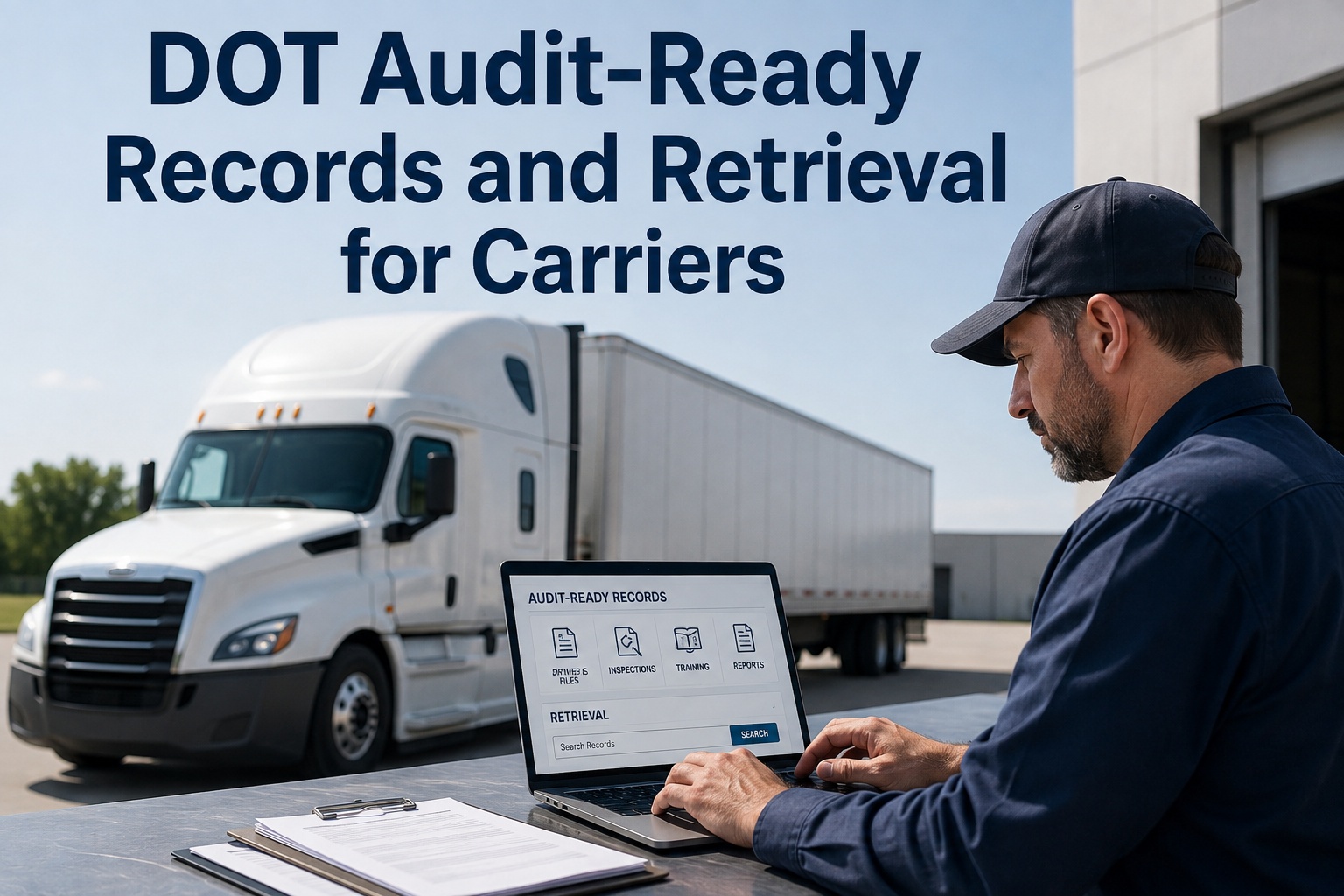
That last row is where most carriers get surprised: the ELD keeps the original record even after an edit. If your inspection and maintenance records live in the same timestamped system, they become independent corroboration instead of another gap. Fleets that see how HVI timestamps every inspection and defect usually spot two or three audit gaps in the first demo.
Dispatch pressure: the violation that starts in the office
Ask any driver placed out of service for driving beyond limits and you will hear the same story: the load could not be done legally, and saying so meant losing the next dispatch. Fix the schedule and you fix most of the log.
How violations get scheduled
- Appointment set with no buffer for border, scale or dock delays
- Miles divided by 65 mph with zero break or fuel time
- "Just get there" messaging after a late pickup
- 14-hour window treated as 14 hours of available driving
- No check of the driver's remaining hours before assigning the run
How legal schedules get built
- Run planned against the driver's actual remaining 11/14/70 hours
- Realistic speed assumption (50–55 mph average) plus break time
- Documented recovery plan when a pickup runs late
- Split-sleeper and exemption rules applied deliberately, not hopefully
- Pre-trip inspection time reserved in the plan — not stolen from drive time
A worked example: one "impossible" Tuesday
A 40-truck regional carrier books a 580-mile run with a 07:00 pickup and an 18:00 delivery. At a realistic 52 mph average that is 11.2 hours of driving — already over the 11-hour limit before the 30-minute break, fuel, and the pre-trip. The driver either fails the delivery or bends the log. Repeat that pattern twice a week across the fleet and you have roughly 100 falsification-exposure events a year, each one a potential $19,277 finding. The fix costs nothing: the dispatcher checks remaining hours before assigning, and the 18:00 appointment becomes a 21:00 or a team run. If your planners cannot see hours alongside the job board, book a demo and see fleet status in one screen.
See your fleet's compliance picture before an auditor does
HVI ties inspections, defects, work orders and timestamps into one audit-ready record — on any phone, in any yard. Book a 30-minute demo and we will walk it on your own units.
Core HOS limits every dispatcher should know cold
Property-carrying drivers under US FMCSA rules. Always confirm current requirements and exemptions with FMCSA — rules and relief provisions change, and Canada, the UK, Australia and the UAE run their own regimes.
Hour driving limit
Maximum driving time after 10 consecutive hours off duty. Every minute over is a log violation — and a pattern of them reads as carrier-directed.
Hour duty window
The clock starts at first on-duty activity and does not stop for breaks, fuel or dock delays. A 3-hour wait at the shipper still burns the window.
Minute break rule
Required after 8 cumulative hours of driving. It must be a genuine non-driving status — a break logged at highway speed is a falsification flag.
Hour weekly caps
60 hours in 7 days or 70 in 8, reset by 34 consecutive hours off. Dispatchers assigning Friday loads without checking the cycle are scheduling Monday violations.
Exemptions exist — short-haul, adverse conditions, agricultural and others — but each has strict conditions, and "we thought the exemption applied" is one of the most common HOS audit findings. Document why the exemption applies, every time, or do not use it.
Independent, timestamped proof that backs the log
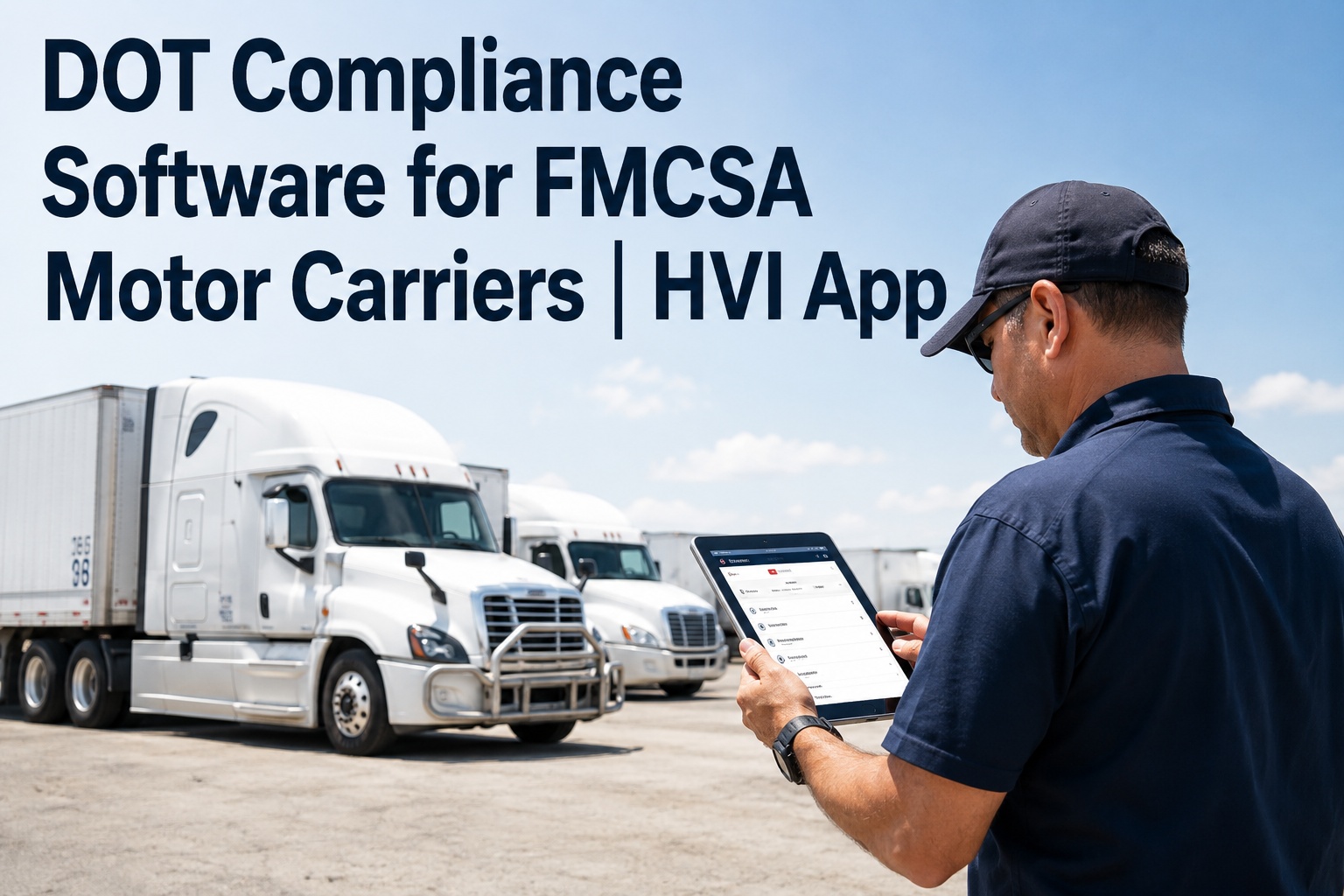
HVI is not an ELD — it is the verification layer around it. When an auditor compares records, yours agree with each other.
Timestamped inspections
Every DVIR and pre-trip carries an uneditable time and GPS stamp. When the log shows 20 minutes on-duty for inspection, the inspection record proves it — closing one of the most common audit mismatches.
ELD and telematics integration
HVI connects with GPS and telematics feeds, so mileage and engine hours flow into the same platform as your maintenance and inspection records — one timeline per unit instead of three systems that disagree.
Audit-ready document trail
Photo-backed defects, defect-to-work-order history and preventive maintenance records export in seconds. When FMCSA or an insurer asks for supporting documents, you send a file — not a scavenger hunt.
Pattern alerts before audits
Missed inspections, overdue PMs and units running without current DVIRs surface on one dashboard. Catching a documentation gap internally is free; catching it in a compliance review is not. You can start a free account and log your first inspection today.
Preventing hours of service violations is a systems job
HOS compliance is not a driver-training problem you solve once a year. It is a scheduling discipline plus a verification habit, run every day.
- Plan against real hours. No run gets assigned without checking the driver's remaining 11/14/70 — the majority of "driving beyond limits" violations are written by the schedule, not the steering wheel.
- Police the special statuses. Yard move and personal conveyance are legitimate tools that become falsification exposure when nobody reviews how they are used. Audit them weekly, internally.
- Make your records agree. ELD data, fuel receipts, GPS and inspection timestamps will be compared in any audit. Fleets whose documents corroborate each other finish reviews in days, not months.
- Treat exemptions as exceptions. Confirm current requirements with FMCSA, document the basis for every exemption use, and never let an exemption become the default plan.
- Price the risk honestly. At up to $19,277 per infraction plus out-of-service downtime, one prevented violation pays for a year of compliance tooling. That is the math behind hours of service management done properly.
If you want to see what that verification layer looks like on your own fleet, grab a 30-minute demo slot or sign up free and run your first digital DVIR this week.
"My gripe was never the drivers — it was finding out about a yard-move habit from an auditor instead of from our own data. Now I pull a status-misuse report every Friday and a timestamped inspection trail for any unit anyone questions. We have not had a log-versus-document mismatch in over a year, and our last compliance review closed in four days. The number I watch is simple: zero unexplained status events per week."
Hours of service violations: what carriers ask most
What is the most common hours of service violation?
Driving beyond the 11-hour or 14-hour limits and log form-and-manner errors top the list, and HOS overall accounted for 32.4% of driver out-of-service violations at the 2025 International Roadcheck. In audits, falsification findings — edits, mismatched supporting documents, misused yard move — carry the heaviest penalties because they imply intent.
How much is the fine for an HOS violation?
It depends on severity. Recordkeeping-type violations can accrue at $1,584 per day up to a $15,846 maximum, while falsification-grade infractions can reach $19,277 per occurrence. Add the indirect costs — a 10-hour out-of-service order, a rescue driver, a late load and a CSA hit that raises your insurance and audit risk for two years.
Can a driver use yard move to get to a nearby truck stop?
No — yard move is for moving within a terminal, yard or customer facility, not for travel on public roads toward a destination. Using it to cover highway miles is one of the first patterns enforcement checks by comparing the status against GPS distance and geofences. If the truck left the property, it was driving time, and the log entry reads as falsification even if the driver meant no harm.
What happens in an FMCSA HOS audit?
The auditor samples drivers and periods, then cross-checks ELD records against supporting documents: fuel receipts, tolls, dispatch records, GPS and inspection reports. Mismatches become findings; patterns become penalties. Fleets with timestamped, photo-backed inspection and maintenance records close these reviews far faster — you can see how HVI builds that audit-ready trail in a short demo.
How do I stop dispatch from causing HOS violations?
Make remaining hours a dispatch input, not an afterthought: no load is assigned without checking the driver's 11/14/70 status, and every plan assumes realistic speeds plus break and inspection time. When a pickup runs late, the recovery plan gets documented instead of the log absorbing it. Carriers that centralise fleet status in one platform give dispatchers the visibility to make that check in seconds.
Make your records the strongest part of your next audit
Timestamped inspections, defect-to-work-order history and telematics integration in one platform your drivers actually use. See it on your own fleet before your next roadside stop does the talking.
Free to start — Works on any phone — No card needed