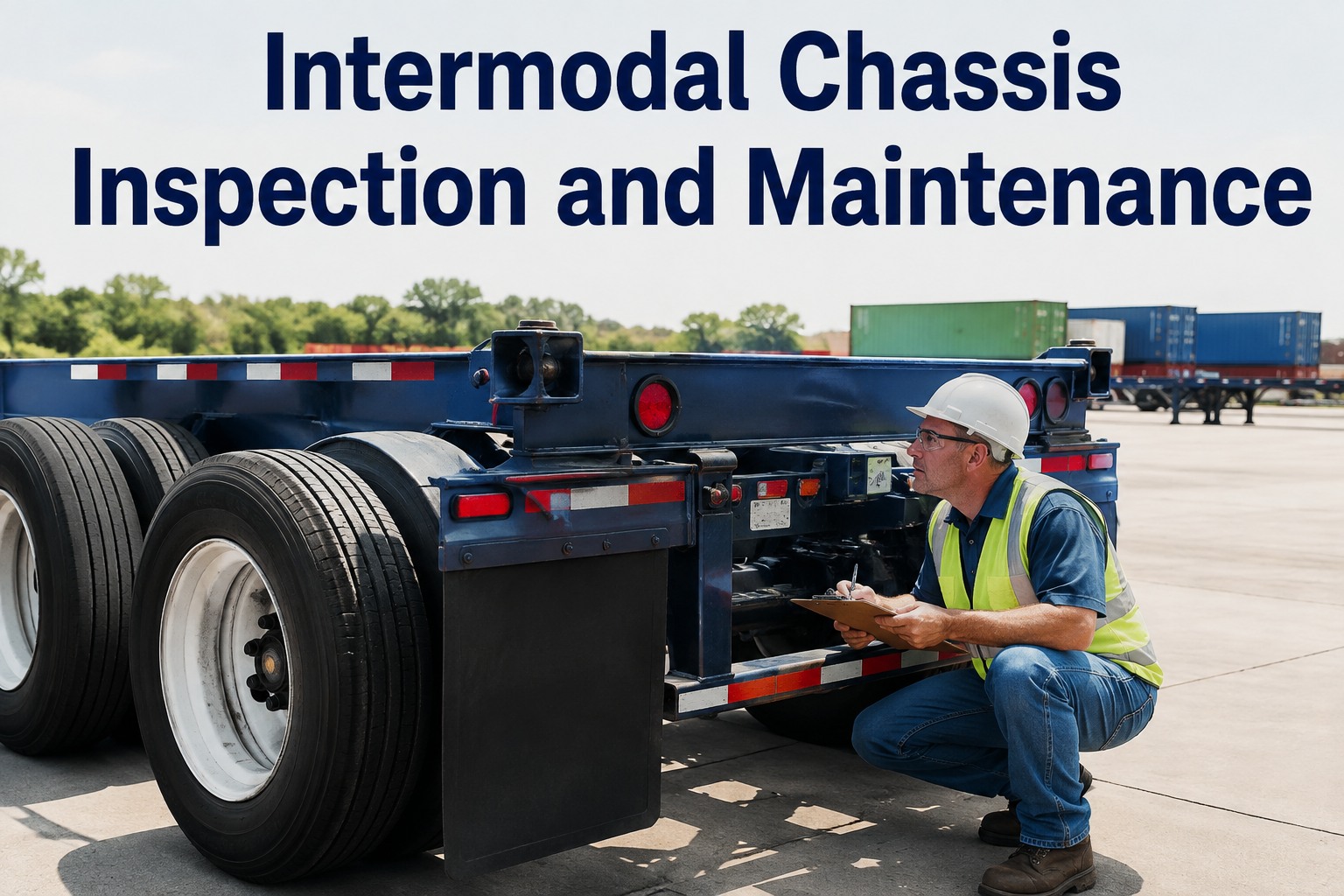
Intermodal chassis maintenance is one of the most contested corners of fleet compliance, because the equipment belongs to one party, gets pulled by another, and the roadside citation lands on whoever is holding the wheel. When you run drayage, you inherit the condition of every chassis you hook to, and the inspection record you create at that moment is often the only control you actually have. This guide breaks down how responsibility really divides under the roadability framework, what your drivers must check before the wheels move, how to report defects so the record protects you, and how a short walkthrough of digital chassis inspections can show you what audit-ready documentation looks like in practice.
The Core Problem
100%
Of the roadside consequence lands on the carrier and driver pulling a defective chassis, regardless of who was responsible for maintaining it.
3
Parties in the chain: intermodal equipment provider, motor carrier, and driver, each holding a different slice of the obligation.
Top 3
Highest-frequency chassis findings at roadside: lighting and wiring, brakes, and tyres, year after year in CVSA inspection data.
1
Documented pre-trip inspection with photos is often the only evidence a carrier has when a defect dispute reaches the provider.
Intermodal Chassis Maintenance: Who Actually Owns the Problem
Provider
Systematic Maintenance
The intermodal equipment provider carries the obligation to systematically maintain, repair, and annually inspect every chassis it offers for interchange, and to document that programme.
Carrier
Pre-Trip Obligation
You and your driver retain the duty to confirm the equipment is safe before operating it. You cannot lawfully run a chassis with defects you knew about or should have found.
Driver
Last Line of Defence
The driver accepting the chassis at the ramp or port gate inherits the roadside outcome. A skipped walk-around transfers the provider's failure straight onto your record.
Records
The Real Control
When responsibility is disputed, documentation decides. The party with timestamped inspections, photos, and defect reports wins the argument almost every time.
The Roadability Framework in Plain Terms
01
Provider maintains the fleet
Under the US roadability rules, the intermodal equipment provider must run a systematic maintenance and repair programme, complete an annual inspection on each chassis, and keep those records. Equivalent duties sit with equipment owners and operators in Canada, the UK, Australia, and the UAE under their own roadworthiness regimes.
02
You inspect before you pull
The motor carrier and driver must be satisfied the chassis is in safe operating condition before it moves. That obligation does not transfer to the provider just because the provider owns the maintenance programme.
03
Defects get reported, not absorbed
When your driver finds a defect, the correct move is to document it and report it to the provider through a traceable channel, then refuse or swap the unit if it is not roadworthy. Verbal complaints at the gate leave no trail.
04
Roadside decides by evidence
An enforcement officer at the scale does not care whose chassis it is. The vehicle combination in front of them gets inspected, and the violation attaches to the operating carrier. Your inspection record is your defence file.
05
Disputes settle on paper
When you push back on a damage claim, a repair bill, or a safety rating hit, the side with dated, photo-backed inspection history controls the outcome. The side with memory and email threads does not.
The Pre-Trip Checks That Catch the Most Findings
Lighting and Wiring
All lamps present, lit, and correct colour: tail, stop, turn, marker, and plate lamp
Harness secured, no chafing, no corroded pins at the connector
Conspicuity tape intact along the rails and rear impact guard
Brakes
Gladhands sealed, lines routed and not rubbing, no audible leaks
Slack adjusters and pushrod travel within limits, chambers undamaged
ABS lamp cycles correctly at power-up and does not stay lit
Tyres and Wheels
Tread depth legal, no exposed cord, no flat-spotted or mismatched duals
Inflation plausible by gauge or thump, valve caps present
Lug nuts seated, no rust trails, rims free of cracks
Structure and Coupling
Twist locks and pins functional, frame rails free of cracks and bent members
Landing gear cranks, holds, and stows; rear impact guard undamaged
Mudflaps, mudguards, and identification markings present and legible
The Drayage Pressure Problem
What the Gate Teaches vs What Compliance Requires
Myth
"Refusing a chassis costs a turn, so drivers take what they are given and deal with it later."
Reality
Later arrives at the scale house. A documented defect report takes under two minutes on a phone and gives you the standing to demand a swap without losing your place.
Myth
"The pool owns the chassis, so the pool owns the violation."
Reality
Enforcement attaches to the operating combination. Your safety record absorbs the hit first, and you argue about reimbursement afterwards, if you have records.
Myth
"A quick walk-around is enough; everyone knows pool chassis are rough."
Reality
An undocumented walk-around is legally indistinguishable from no walk-around. Photo capture at pickup is what turns a habit into evidence.
Defect Reporting That Actually Protects You
Report at the point of discovery
The defect report should exist before the chassis moves, not after the trip. A timestamped entry with photos, chassis number, and location closes the argument about when the damage occurred.
Use a channel the provider cannot ignore
Email chains and gatehouse conversations evaporate. A structured digital report creates a record both parties can retrieve, and it shows the provider you run a documented programme, which changes how they treat your claims.
Track repeat offenders by unit
When the same chassis number shows up in your defect log three times in a quarter, you have a pattern, not a complaint. Patterns are what move pool operators and what stand up in a dispute over repair costs or a damaged safety score.
Keep the refusal record too
If your driver declines a unit, that decision and its reason belong in the file. It demonstrates the pre-trip obligation was taken seriously, which matters if a later incident is ever scrutinised. You can see how refusal logging works in HVI in a short demo.
Confirm the rules that apply to you
Roadability specifics vary by jurisdiction. Confirm current requirements with FMCSA in the US, and with Transport Canada, DVSA, NHVR, or your UAE authority where you operate, then bake those items into your checklist.
What Good Chassis Documentation Is Worth
2 min
The time a photo-backed digital pre-trip takes on a phone, against hours of dispute handling, chargeback arguments, and safety-record damage when a roadside finding lands on a chassis you never owned but cannot prove you inspected.
Where This Plays Out Day to Day
Port Drayage
The gate swap
Driver finds inoperative tail lamps at the terminal, logs the defect with photos, and requests a different unit with the report already filed.
Result: swap justified in minutes, no lost turn, no inherited violation
Regional Carrier
The damage chargeback
Provider bills for frame damage on return. Pickup inspection photos show the bend existed before your driver hooked to it.
Result: claim dropped against timestamped evidence
Mixed Fleet
The audit request
A shipper or insurer asks for proof of your chassis inspection programme across every drayage run last quarter.
Result: exportable records by unit, driver, and date in one pull
Stop Inheriting Other People's Defects
Give every driver a two-minute chassis inspection with photo capture, defect reporting, and a record that follows the unit number. Set it up today and your next pool pickup is documented.
HVI turns chassis inspection from a gatehouse habit into a documented programme: digital checklists, photo evidence, defect workflows, and records you can hand to a provider, an auditor, or an insurer without preparation.
Chassis Inspection Checklists with Photo Capture
Purpose-built pre-trip templates for container chassis covering lighting, brakes, tyres, and structure, with mandatory photos on flagged items. Every inspection is timestamped, geolocated, and tied to the chassis number, so pickup condition is never a matter of memory.
Defect Documentation and Unit History
Defects logged at the gate flow into a per-unit history you can filter by chassis number, pool, or defect type. Repeat-offender units surface automatically, giving you the pattern evidence that wins chargeback and responsibility disputes.
Audit-Ready Records and Reporting
Every inspection, defect report, and refusal is retrievable by date, driver, or unit in a few clicks. When a shipper, insurer, or enforcement officer asks for your chassis compliance records, you export instead of scramble.
The provider owns systematic maintenance and annual inspection; you and your driver own the pre-trip. The roadside finding lands on you either way, so intermodal chassis maintenance on your side means inspection discipline.
Hit the high-frequency items first
Lighting and wiring, brakes, and tyres produce the bulk of chassis findings. Build your checklist around them and require photos on any defect.
Documentation is the real control
In a shared-pool world, the party with records wins the dispute. If you want to see what that looks like on your own runs, book a demo on your own fleet or start a free account and run your first chassis inspection this week.
What A HVI User Told Us
We used to eat every chassis damage claim because it was our word against the pool. Now my drivers photograph the unit before it moves, and I have not paid a bogus chargeback in over a year. The two minutes at the gate pays for itself every single week.
Marcus Delgado, Operations Manager, regional drayage carrier
Frequently Asked Questions
Who is responsible for intermodal chassis maintenance?
The intermodal equipment provider must systematically maintain, repair, and annually inspect chassis it offers, and keep those records. The motor carrier and driver still carry the pre-trip obligation and cannot lawfully operate defective equipment. In practice the roadside consequence lands on you, which is why your own inspection record matters. Book a Demo to see how carriers document their side.
Is a DVIR required on an intermodal chassis?
Driver vehicle inspection report duties apply to the equipment you operate, and a chassis in combination is part of that equipment. Even where the exact form of the report varies by jurisdiction, a documented pre-trip inspection with defect reporting is the defensible standard. Confirm specifics with FMCSA or your local authority.
What are the most common chassis defects found at roadside?
Lighting and wiring failures, brake defects, and tyre problems consistently top chassis findings in CVSA and FMCSA inspection data. Conspicuity tape, mudflaps, and coupling components follow. A checklist weighted toward these items catches most of what enforcement will flag.
What should a driver do when a pool chassis is defective?
Document the defect with photos and the chassis number, report it to the provider through a traceable channel, and request a roadworthy unit before moving. Do not absorb the defect to save a turn. A timestamped report is what justifies the refusal and protects your safety record.
How do inspection records help in chassis damage disputes?
Pickup photos with timestamps prove pre-existing damage, which defeats chargebacks for bends, lights, and tyres you did not cause. Per-unit defect history also reveals repeat-offender chassis, strengthening your position with the pool. Sign Up Free and your next dispute starts with evidence instead of argument.
Make Every Chassis Pickup a Documented One
Shared pools and split responsibility are not changing. What can change is whether you hold the records when the finding, the claim, or the audit arrives. Put digital chassis inspections in every driver's pocket today.