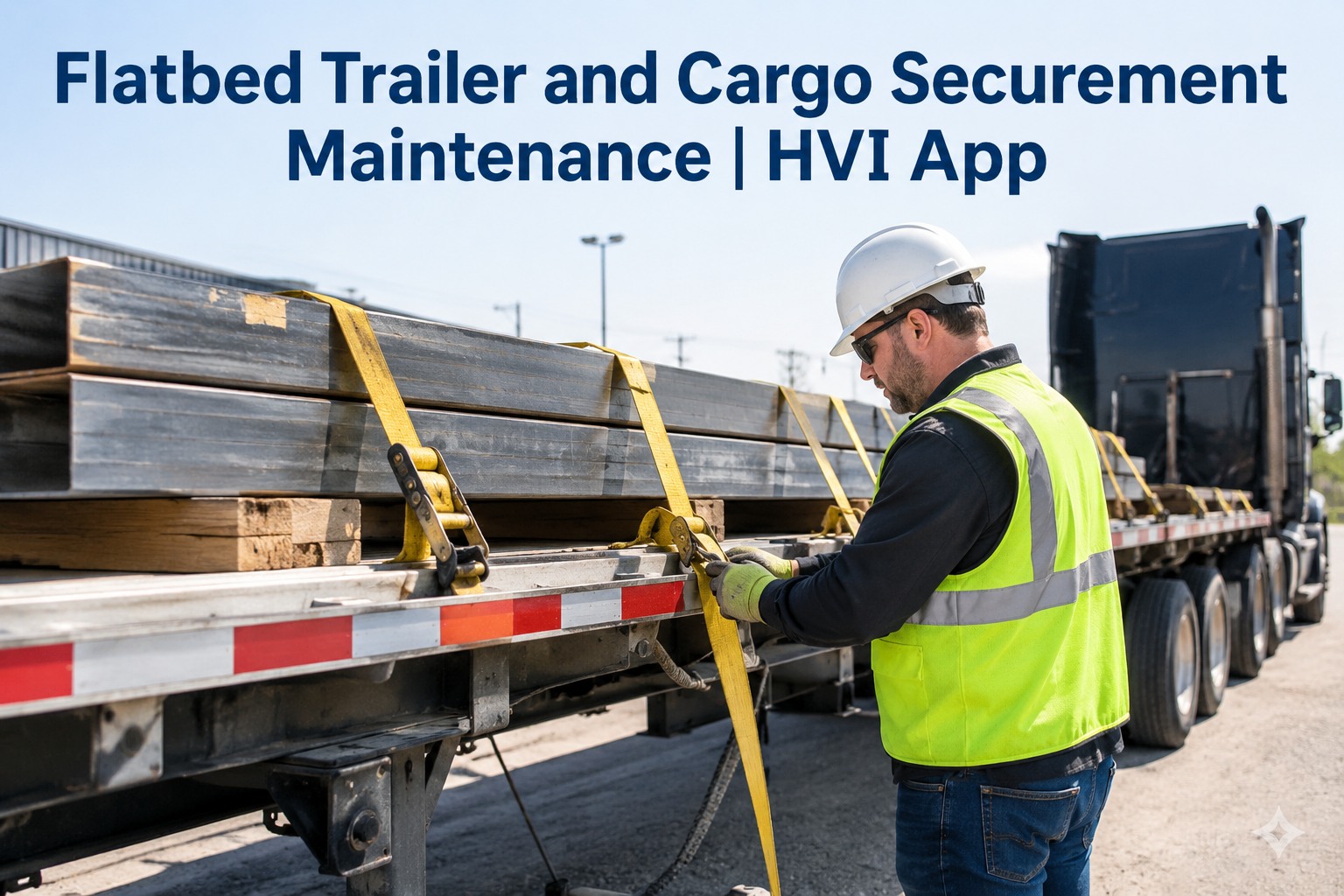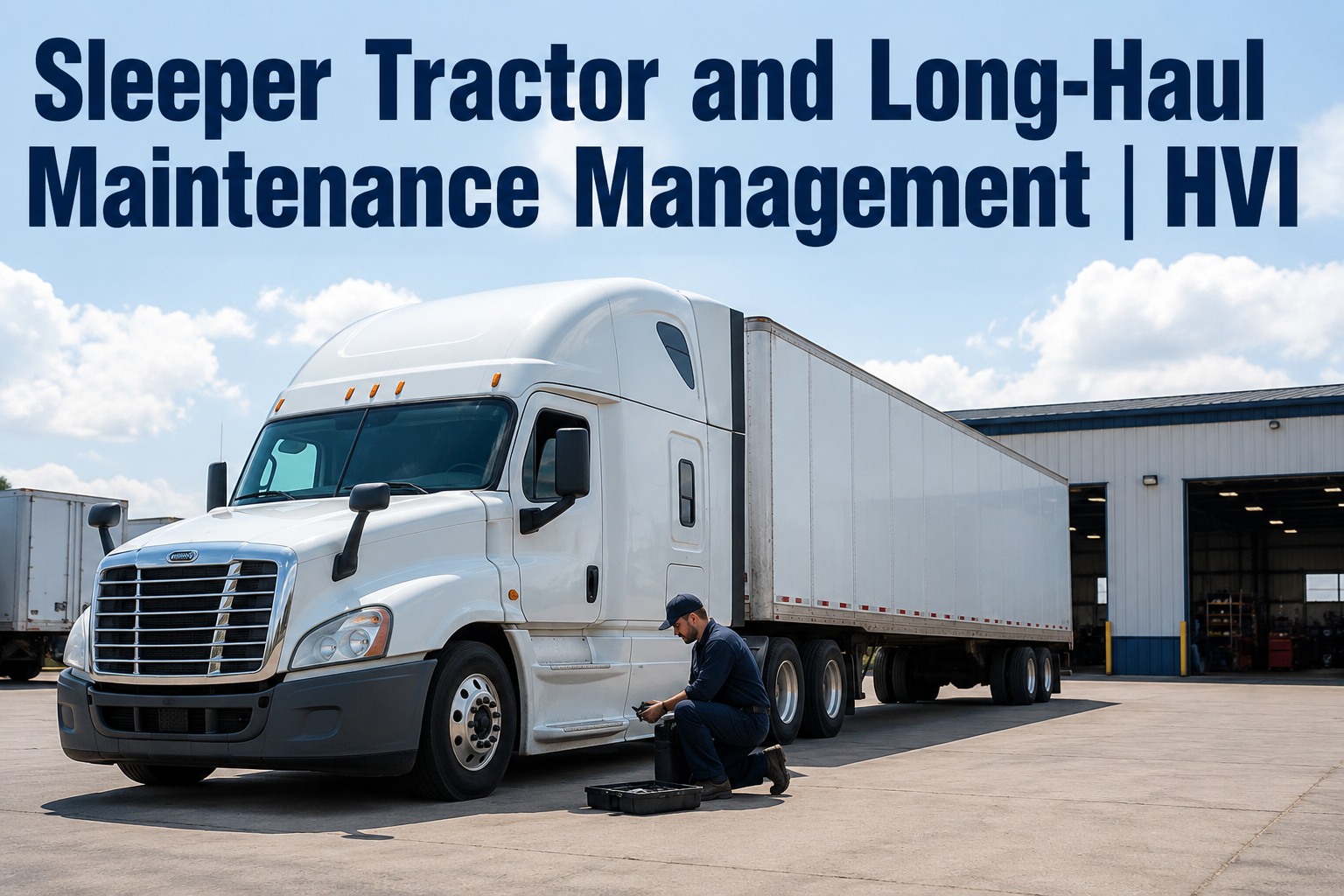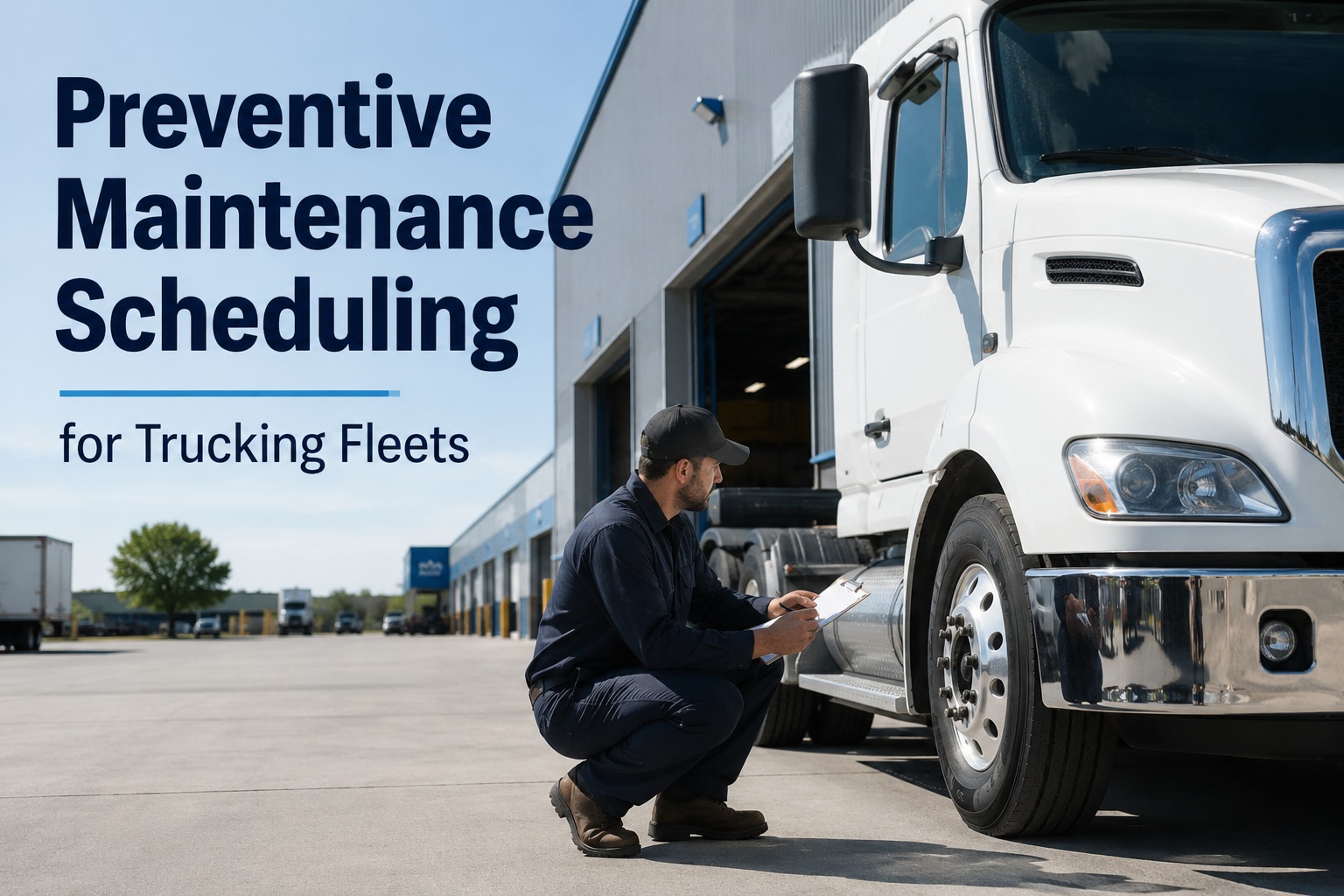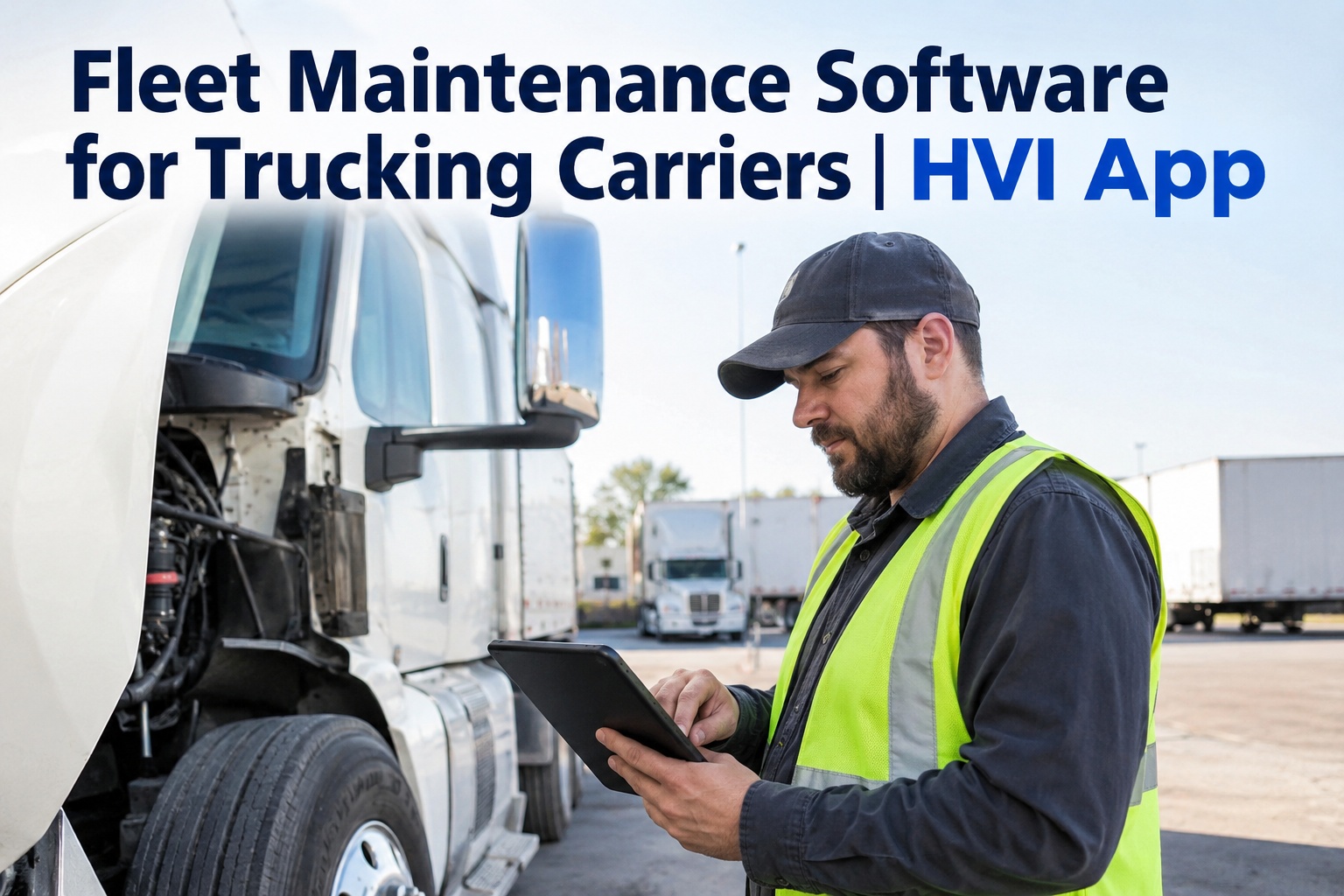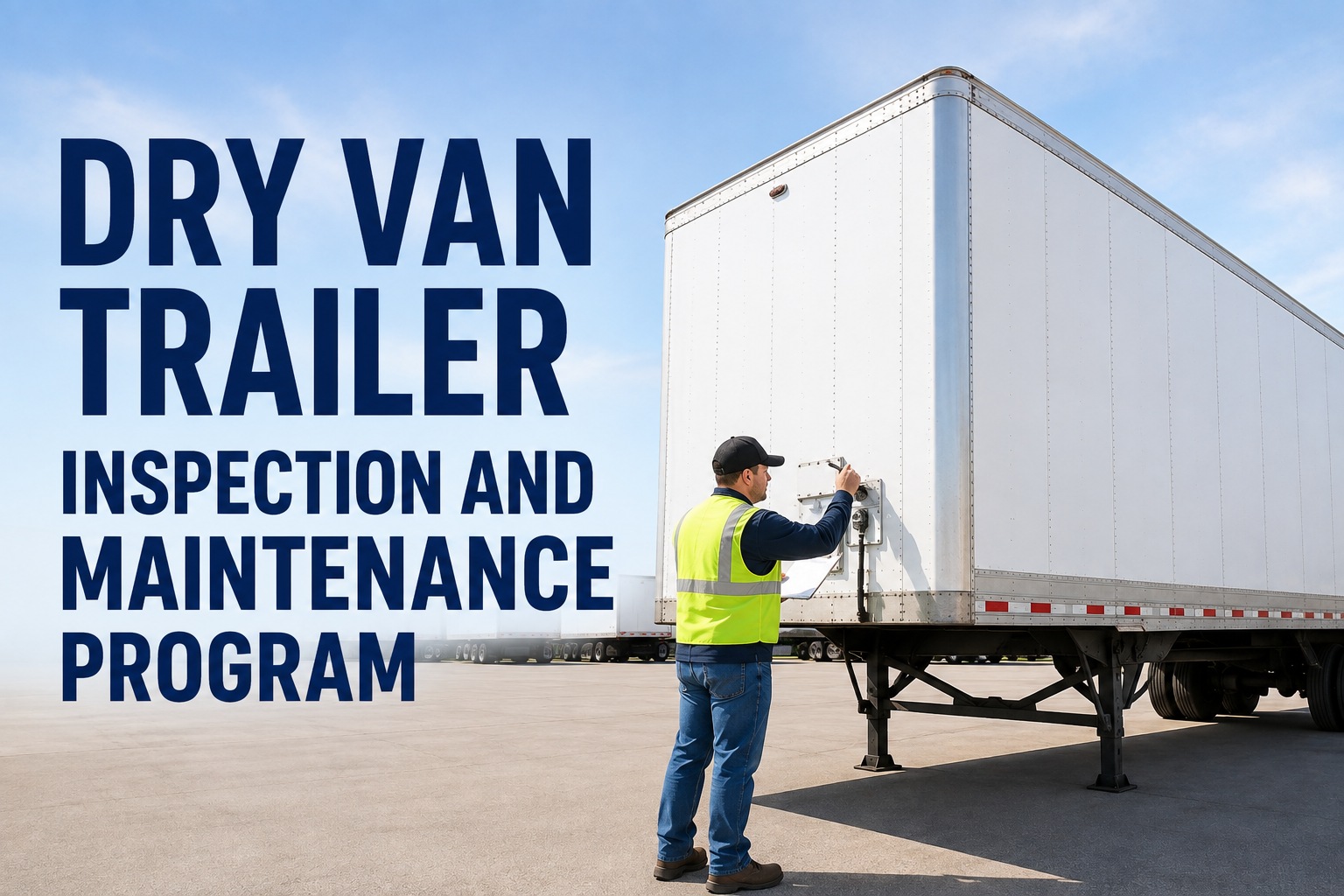
Your trailer pool probably outnumbers your tractors two or three to one, yet the last time anyone walked around most of those vans was when a driver hooked up and glanced at the lights. That gap is exactly where a dry van trailer maintenance program earns its keep: trailers carry the same annual inspection obligation as the power unit, they sit at customer docks and drop yards for weeks with nobody looking at them, and when a roadside inspector or a water-damaged freight claim forces the question, your records decide the outcome. This page lays out a practical inspection and PM structure for van trailers — brakes, lights, tyres, landing gear, doors, floors and roofs — and shows how to run annual inspection scheduling across a large pool with no odometer to trigger anything. If you want to see this running on your own units, book a 30-minute walkthrough of HVI on your trailer fleet and we will map it to your actual pool.
The trailer is half the combination. It gets a tenth of the attention.
A working trailer program in four checks — what to inspect, when to inspect it, and how to prove it when a DOT officer, a shipper or an insurer asks.
- Brake adjustment, lining thickness and gladhand seals at every touchpoint
- Lighting and wiring — the single most common roadside trailer finding
- Floor, roof and door condition — where water damage quietly destroys freight
- Annual inspection dates tracked across the whole pool with 90-day alerts
Why trailer maintenance slips — and what it costs you
Four numbers that explain why the trailer pool is where compliance and cost control break down first.
Trailers per tractor
Most carriers run two to three trailers for every power unit. Each one carries the same annual inspection duty as the tractor pulling it.
Sat at docks & drop yards
A loaded van can sit at a customer or a pool yard for weeks. Nobody inspects it, yet its annual inspection clock keeps running.
Roadside finding: lights
Lighting and wiring defects are consistently the most common trailer violation at roadside — and the easiest to catch in the yard first.
Cost visibility by default
In most shops trailer spend disappears into a general account. No cost per unit means no idea which trailers are eating your budget.
Trailer annual inspection and DVIR: what the rules actually demand
Two obligations cover every van trailer you own, and both are about records as much as wrenches.
The annual (periodic) inspection
Every trailer in commercial service must pass a full periodic inspection at least once every 12 months, and proof — a sticker, decal or carried document — must travel with the unit. There is no odometer on a trailer, so nothing reminds you. The date simply expires while the trailer sits loaded at a dock, and the first person to notice is usually a roadside inspector. Miss it and the unit is out of service on the spot, the load is late, and the violation lands on the carrier's record, not the driver's.
The DVIR covers the trailer too
Driver vehicle inspection reports are not just a tractor obligation. When a driver hooks to a trailer, that unit is part of the combination and its defects — inoperative lamps, chafed air lines, a soft floor, a dragging brake — belong on the report. If your DVIR process only captures the power unit, you have a hole in your trailer defect tracking exactly where drivers actually see problems. See how HVI ties trailer defects straight to work orders before they become roadside findings.
The audit reality: in a compliance review, the question is never "did you maintain the trailer?" It is "show me the record." A trailer with fresh brakes and no paperwork scores the same as a trailer with no brakes at all.
Dry van trailer inspection checklist: the six zones that matter most
Ranked by how often they fail, what they cost when they do, and how fast a walk-around catches them.
Brakes: adjustment, lining, air
- Pushrod stroke and slack adjuster free play
- Lining thickness and drum scoring
- Gladhand seals, hose chafe, gladhand screens
- ABS lamp cycle at key-on
Brake defects are the fastest route to an out-of-service order, and trailer brakes fade out of adjustment between PMs because nobody feels them from the cab.
Lighting & wiring
- Every lamp: marker, tail, stop, turn, plate
- Conspicuity tape intact and reflective
- Harness rub points at the rear sill and axle
- Corroded connectors and the 7-way plug
The most common roadside trailer finding, and the cheapest to fix in the yard. A five-minute light check beats a violation and a CSA hit every time.
Tyres & wheels
- Tread depth and uneven wear patterns
- Inflation — trailer tyres rot from under-inflation
- Dual spacing debris and sidewall scuffs
- Lug condition and hub oil leaks
Trailer tyre management is its own discipline: trailers sit, flat-spot, and run under-inflated for weeks because the driver never owns the unit.
Landing gear & frame
- Crank operation in high and low gear
- Cross-shaft, braces and mounting bolts
- Footpads and sand shoes for yard surfaces
- Upper coupler and kingpin wear
Landing gear maintenance is ignored until a loaded trailer nose-dives at a dock — a dropped trailer is a wrecked load, an injury claim and a very bad day.
Doors, hinges & seals
- Hinge pins, keepers and hold-backs
- Door seals and header gaskets
- Lock rods, cams and handle operation
- Rear frame and bumper integrity
Trailer door repair requests spike after winter and after dock strikes. A door that won't seal is a water-damage claim waiting for the next rainstorm.
Floor & roof
- Soft spots, delamination and forklift damage
- Crossmember condition under the floor
- Roof sheet, bows and rivet lines
- Light test: close the doors, look for daylight
A trailer roof leak doesn't show on any gauge. It shows as a rejected load and a freight claim worth more than a year of trailer PMs.
How to run a trailer PM program across a big pool
Tractors trigger service by mileage. Trailers give you nothing — so the program has to be date-driven and touchpoint-driven.
Put every trailer on a calendar, not a guess
Annual inspection, brake and running-gear PM, and a full structure check each get a fixed interval — typically 12 months for the annual, 90 to 180 days for brakes and tyres depending on duty cycle. With no odometer, the date is the trigger, so the system has to watch the dates for you. HVI tracks every unit's annual inspection and fires 90-day advance alerts across the whole pool, so nothing expires quietly in a drop yard.
Catch trailers at natural touchpoints
You can't pull a trailer to the shop every month, but you can inspect it every time it comes home: at swap, at unload, at wash, at hook. A short driver-facing trailer checklist at each touchpoint — lights, tyres, doors, visible damage — catches the common findings between full PMs. The key is making it a 3-minute phone task, not a paper form nobody carries.
Turn every defect into a tracked repair
A photo of a chafed harness in a group chat is not a repair process. Each flagged defect should spawn a work order with the unit number, the photo, the severity and a due state — so a trailer with a soft floor doesn't get reloaded because the message scrolled away. Start logging trailer defects free and watch how fast the repeat offenders identify themselves.
Track cost per unit, not per account
When trailer spend lives in a general ledger bucket, a 15-year-old van bleeding you $400 a month looks identical to a solid one. Cost per unit per month is the number that tells you which trailers to PM harder, which to sell, and which to stop repairing. It is also the number that justifies the program to whoever holds the budget.
See your whole trailer pool's compliance status on one screen
Book a 30-minute demo and we'll load a sample pool like yours — annual dates, PM intervals, defect flow and cost per unit.
Trailer compliance: what you must be able to show, and when
Map every obligation to the record that answers it — this is the table an auditor mentally runs through.
| Requirement | What triggers it | Record that answers it | Where it usually fails |
|---|---|---|---|
| Annual periodic inspection | Every 12 months, every trailer | Inspection report + proof on the unit | Date expires while trailer sits at a dock |
| Driver vehicle inspection report | Every day the trailer is hauled | DVIR covering the trailer, defects noted | DVIR only captures the tractor |
| Defect repair certification | Any defect found on a DVIR | Work order + sign-off before next dispatch | Repair happens, sign-off doesn't |
| PM / brake service records | Your own PM intervals | Dated service history per unit | Records in a binder at one shop |
| Freight damage defence | Any water or contamination claim | Roof/floor/door inspection with photos | No proof the trailer was sound at loading |
Notice the pattern: none of these fail because the work wasn't done. They fail because the proof wasn't kept. Walk through an audit-ready trailer record in a live demo and see how fast the question gets answered.
What one missed trailer annual inspection actually costs
A 60-trailer pool, one unit expired, caught at a scale with a time-sensitive load.
Run that across a pool where even two or three units a year slip their dates — which is normal when tracking lives in a spreadsheet — and the "free" spreadsheet is costing you real money. The same math applies to every soft floor that meets a forklift and every roof leak that meets a load of paper product.
Built for fleets where trailers outnumber trucks
Four capabilities that close the exact gaps this page is about.
Annual inspection tracking with 90-day alerts
Every trailer's periodic inspection date is tracked automatically. You get a 90-day runway to schedule the unit through a shop — no more expired vans discovered at a scale.
Configurable trailer checklists
Build the six-zone checklist above as a phone form: drivers run the short version at hook, techs run the full version at PM. Photos attach to every finding, and the DVIR covers the trailer by default.
Defect-to-work-order in one tap
A flagged brake stroke or a photographed roof leak becomes a work order instantly — assigned, tracked and signed off before the unit is dispatched again. No group-chat repairs, no lost paper.
Cost per unit, per month
Every part and labour hour posts against the trailer, not a general account. You see which vans earn their keep and which ones to sell — and you can see it on your own units in a demo.
The trailer program in five lines
Trailers carry the same annual inspection duty as tractors — with no odometer to remind you, so dates must be tracked for you.
The DVIR covers the trailer. If your inspection process stops at the cab, your biggest defect source is invisible.
Lights, brakes and tyres cause the roadside pain; floors, roofs and doors cause the freight-claim pain. Inspect both families.
Catch trailers at touchpoints — hook, swap, unload — with a 3-minute phone checklist instead of a monthly shop visit.
Cost per unit turns trailer maintenance from a general-account mystery into a decision: PM it, sell it, or stop fixing it.
A dry van trailer maintenance program is not a bigger version of your truck program — it is a different discipline built around dates, touchpoints and records. If you want the structure without the spreadsheets, sign up free and build your first trailer checklist today.
"I run 140 vans against 45 tractors, and for years the trailers were a shrug. My gripe was always the same: a unit would sit at a customer's dock for a month, come home with a dead light circuit and an expired annual, and somehow that was my fault. Now I watch one number — days-to-expiry across the pool — every Monday morning. Anything under 90 days gets scheduled that week. We haven't had a trailer put out of service in over a year, and the last insurance audit took an afternoon instead of a week."
Dan Kowalski — Maintenance Manager, regional dry van carrier (Midwest US)
Trailer inspection and maintenance FAQ
Does a trailer need its own annual DOT inspection, separate from the tractor?
Yes. Every trailer in commercial service must pass a periodic inspection at least once every 12 months, and proof must travel with the unit. The tractor's inspection does not cover it. Because trailers have no odometer, the expiry date is the only trigger — which is why date-based tracking with advance alerts matters more for trailers than for trucks.
Does the DVIR have to cover the trailer as well as the power unit?
It does. When a driver hooks to a trailer, that unit is part of the combination, and its defects — lamps out, air leaks, floor damage, brake issues — belong on the driver vehicle inspection report. A DVIR process that only captures the tractor leaves your most-neglected assets unreported. Digital DVIRs in HVI include the trailer by default, with photos attached to each finding.
What are the most common trailer violations found at roadside?
Lighting and wiring defects are consistently the most common trailer finding — inoperative lamps, damaged conspicuity tape, chafed harnesses. Brake adjustment and tyre condition follow close behind. All three are cheap to catch in the yard with a short hook-time checklist, and expensive to discover at a scale. Book a demo to see the checklist drivers actually complete.
How often should a dry van trailer get a full PM service?
A common structure is the annual periodic inspection as the backbone, with a brake, tyre and running-gear PM every 90 to 180 days depending on duty cycle, plus a structural check of floor, roof, doors and landing gear at least annually. High-utilisation pool trailers lean toward the shorter interval; seasonal or spot-rental units still need the annual regardless of miles.
How do I track maintenance costs across a large trailer pool?
Post every part and every labour hour against the unit number, never a general account — that is the whole game. Once cost per unit per month exists, repeat offenders and end-of-life trailers identify themselves. HVI does this automatically from work orders, and you can sign up free and start with your ten worst trailers this week.
Your trailers are half the fleet. Give them a real program.
Annual dates tracked with 90-day alerts, trailer checklists drivers actually finish, defects that become work orders, and cost per unit — in one platform that runs on any phone in any yard.
Free to start — Works on any phone — No card needed