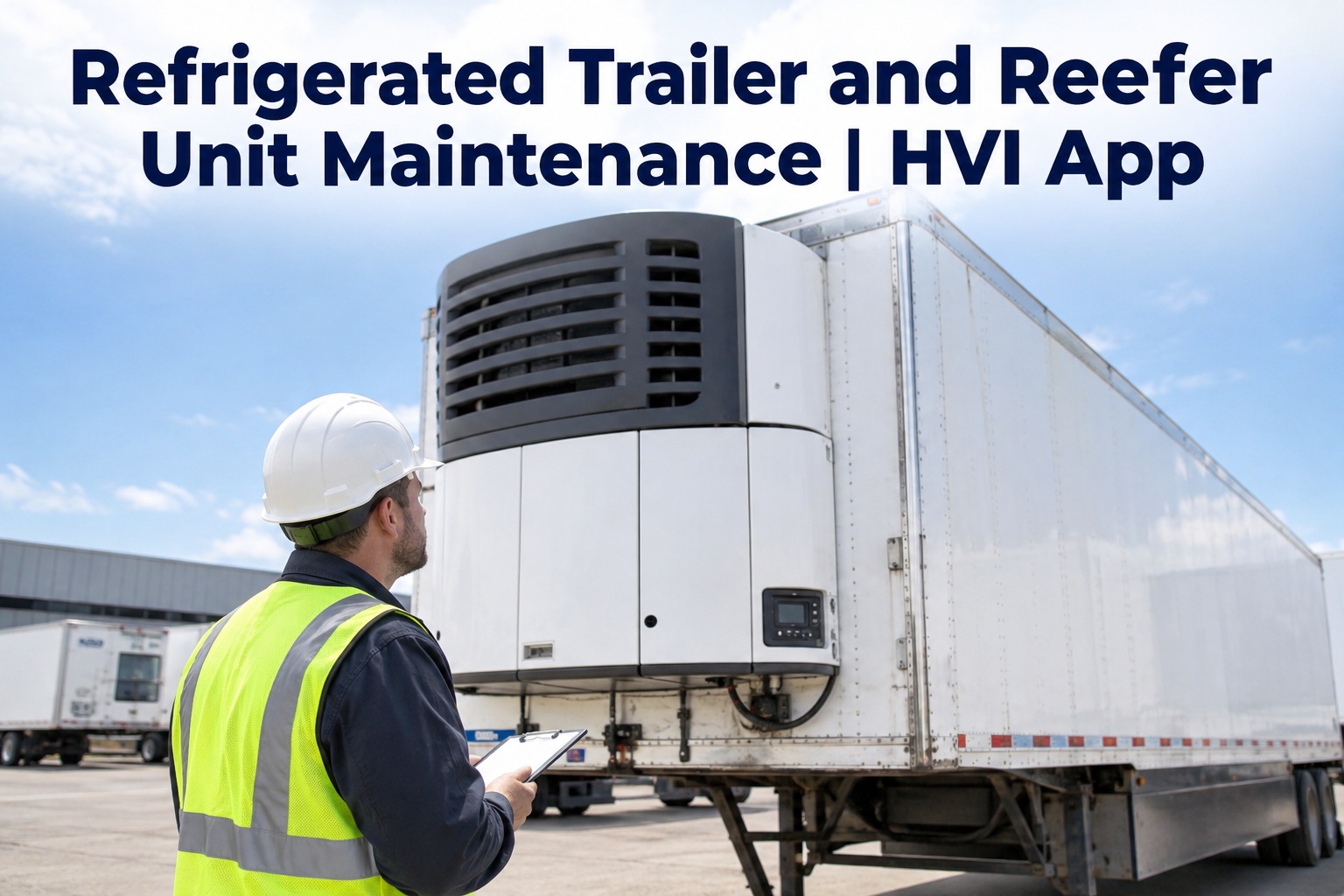
Reefer trailer maintenance fails quietly: the trailer passes its annual inspection, the tyres look fine, and then the refrigeration unit dies at hour 2,900 because nobody tracked its service schedule separately from the trailer's mileage. A refrigerated trailer is two assets in one — a trailer with its own annual inspection obligation and a refrigeration unit with its own hour meter, its own oil, filters, belts and refrigerant checks, and its own failure consequences. When the unit faults on a loaded run, you are not dealing with a delay. You are dealing with a freight claim, a rejected load, and a customer who stops calling. If your reefer PM schedule still lives in a spreadsheet or a sticker on the unit, book a 30-minute walkthrough of hour-based reefer tracking and see what changes when the unit gets its own schedule.
Your reefer unit does not care about trailer mileage. It runs on hours.
The trailer might do 80,000 miles a year. The refrigeration unit might log 3,500 engine hours in the same period — idling at docks, running overnight in a yard, pre-cooling before a pickup. Two assets, two clocks, two service schedules. Miss one and the cargo pays for it.
The trailer
- Annual DOT / DVSA / NHVR inspection
- Brakes, lights, tyres, coupling
- Mileage-based PM schedule
- Insulation and floor condition
The refrigeration unit
- Hour-meter service intervals
- Oil, filters, belts, refrigerant
- Temperature recorder calibration
- Separate fuel tank and consumption
The Numbers That Change How You Think About Reefer PM
A dry van breakdown is a late delivery. A reefer breakdown on a temperature-controlled load is a claim, a rejected shipment, and often a lost contract. These four figures are why refrigerated fleets run PM differently.
Why Reefer Unit Hours Tracking Breaks Most PM Systems
Most fleet maintenance software tracks one odometer per asset. A refrigerated trailer needs two: the trailer's mileage for its own inspection and PM schedule, and the refrigeration unit's hour meter for its completely separate service intervals. If your system only tracks one, the other is running blind.
| Service item | Trailer (mileage-based) | Reefer unit (hour-based) |
|---|---|---|
| Regulatory inspection | Annual DOT / DVSA / NHVR inspection | Not separately regulated, but FSMA and customer audits require temperature records |
| Oil and filter change | Not applicable (no engine) | Every 1,000–2,000 hours depending on manufacturer |
| Belt inspection and replacement | Not applicable | Every 1,500–3,000 hours; a snapped belt stops cooling immediately |
| Refrigerant level and leak check | Not applicable | Every service interval; low refrigerant means the unit runs but cannot hold setpoint |
| Door seal and insulation check | Part of trailer inspection, but often a visual glance | Directly affects unit runtime, fuel burn, and ability to hold temperature |
| Fuel system | Not applicable | Separate diesel tank; fuel filter and water separator need regular service |
The right column is where most fleets have a gap. The trailer gets its annual inspection because it has to. The reefer unit gets attention when it breaks. By then, the load is already compromised. See how HVI tracks both clocks on one asset and why that matters for cold chain compliance.
A Reefer Breakdown Is Not a Breakdown. It Is a Claim.
When a dry van trailer has a mechanical fault, you lose time. When a refrigeration unit faults on a loaded run, you lose the cargo. That single difference changes the entire economics of preventive maintenance for refrigerated fleets.
The real cost of one reefer failure
The claim
A full load of fresh produce, pharmaceuticals, or frozen goods rejected at delivery because the temperature recorder shows an excursion. Claims on temperature-controlled freight regularly run into five figures. Insurance may cover part of it, but your premium remembers.
The callout
Emergency reefer repair on the roadside or at a receiver's dock costs two to three times a scheduled shop visit. Add the driver waiting, the dispatcher scrambling for a recovery trailer, and the delivery window you missed.
The disposal
Spoiled product does not just disappear. Someone pays for certified disposal, and if the load is food or pharma, there may be documentation obligations for the disposal itself. The claim paperwork alone can take weeks.
The contract
Temperature-controlled shippers track carrier performance. One rejected load with a temperature excursion on the recorder can end a relationship that took years to build. That revenue loss never appears on a maintenance report, but it started there.
The Trailer Body Decides Whether the Reefer Unit Can Do Its Job
A refrigeration unit is only as good as the box it is trying to cool. Worn door seals, damaged insulation panels, and floor gaps force the unit to run longer, burn more fuel, and still fail to hold setpoint. This is the part of reefer trailer maintenance that most pre-trip checks skip entirely.
Door seals
Cracked, compressed, or torn seals let warm air in and cold air out. The unit compensates by running longer cycles, burning more diesel, and wearing faster. A seal that costs under $200 to replace can add hundreds of dollars a month in extra reefer fuel.
Insulation panels
Impact damage from forklifts, moisture ingress, and age degrade insulation performance. A panel that looks fine from outside may have a void or waterlogged core that creates a thermal bridge. The unit runs harder and the temperature recorder shows the drift.
Reefer fuel management
The reefer unit draws from its own diesel tank, separate from the tractor. Fuel consumption is a direct indicator of unit health: a sudden increase means the unit is working harder than it should. Track reefer fuel separately and you catch problems before they become claims.
Temperature recorder
The recorder is your legal evidence. If it is not calibrated, your temperature logs are worthless in a claim dispute. Calibration checks belong in the PM schedule, not in a drawer. FSMA transport rules and customer audits both expect verifiable records.
These four items are where reefer trailer inspection checklists most often fall short. A driver glancing at the fuel gauge is not a pre-trip reefer check. Start building a proper reefer checklist free and see what your drivers have been missing.
Stop Tracking Reefer Hours on a Whiteboard
HVI gives the refrigeration unit its own hour-based PM schedule, its own inspection checklist, and its own fuel log — alongside the trailer it is mounted on. One platform, two clocks, zero missed services.
What a Real Reefer Pre-Trip Check Looks Like
Most drivers treat the reefer pre-trip as a fuel level glance. A proper check takes five minutes and catches the failures that turn into claims. Here is what should be on it — and what HVI's configurable checklists enforce.
Fuel level and tank condition
Not just "is there fuel" but how much, and is the tank cap sealed. A reefer that runs dry mid-route is a total loss on a frozen load. Log the level so fuel consumption trends are visible over time.
Unit start and setpoint verification
Start the unit, confirm it reaches setpoint, and check for alarm codes. A unit that starts but cannot pull down to temperature has a refrigerant or compressor problem that will not fix itself.
Door seal and latch inspection
Close the doors, check for light gaps, and confirm the latches pull tight. A door that looks closed but leaks air is a fuel drain and a temperature risk. Photograph any damage.
Temperature recorder check
Confirm the recorder is running, the display matches the unit controller, and the last download was recent. If the recorder is not working, you have no evidence in a claim dispute.
Hour meter reading
Log the current hour meter reading. This is the number that drives the reefer PM schedule. If nobody records it, nobody knows when the next oil change is due. See how HVI captures this on any phone in under ten seconds.
Reefer Unit Maintenance, Tracked Like It Matters
HVI treats the refrigerated trailer as what it is: two assets with separate schedules, separate checklists, and separate failure consequences. Here is what that looks like in practice.
Hour-based PM on the reefer unit
Set service intervals by engine hours for oil, filters, belts, and refrigerant checks. HVI alerts you when the unit is due or overdue, independent of the trailer's mileage schedule. No more guessing from a sticker.
Configurable checklists per asset type
Build a reefer-specific pre-trip checklist that covers fuel, setpoint, seals, recorder, and hour meter. Drivers complete it on any phone, with photo capture for defects. Failed items become work orders automatically.
Fuel Logs and Storage
Track reefer fuel separately from tractor fuel. Consumption spikes flag a unit working harder than it should — often the first sign of a seal, insulation, or refrigerant problem. Catch it in the data before it catches you in a claim.
Audit-ready temperature records
Every inspection, every service, every temperature check is timestamped and photo-backed. When a customer or auditor asks for cold chain compliance evidence, you pull it in seconds instead of digging through binders.
What to Do Differently Starting This Week
Refrigerated trailer and reefer unit maintenance is not complicated, but it is different from dry van work. The fleets that get it right treat the unit as a separate asset, track hours religiously, and never let a pre-trip check become a fuel glance.
Separate the schedules
The trailer runs on miles. The reefer runs on hours. If your PM system cannot track both on one asset, you are running one of them blind. Book a demo to see dual-clock tracking in action.
Price the failure, not the service
A $400 oil change feels optional until you price the $25,000 claim it prevents. Run the numbers for your own fleet: one avoided claim pays for years of reefer PM.
Fix the box before the unit
Door seals and insulation determine whether the unit can hold temperature at all. A $200 seal replacement saves more fuel and wear than most people realise.
Make the pre-trip real
Five minutes, five checks, one phone. If your drivers are not logging hour meter readings and seal condition, your reefer PM schedule is running on guesswork. Start with a free account and build the checklist today.
We lost a full load of chicken because the reefer belt snapped at hour 2,800 and nobody had logged the hour meter in three months. The claim was $31,000. The belt was $45. Now I check the hour report every Monday morning before I check my email. If a unit is within 200 hours of a service, it does not leave the yard until the work is done. That one habit has saved us more than any other change we made.
Reefer Trailer Maintenance FAQ
How often should a reefer unit be serviced?
What happens if a reefer unit fails during a loaded run?
What records do I need for FSMA transport compliance?
How do I know if my trailer insulation or door seals are failing?
Can HVI track the reefer unit and the trailer as separate assets?
Your Next Reefer Claim Is Already on the Schedule. You Just Cannot See It Yet.
Every hour the unit runs without a logged meter reading is a service interval drifting further out of view. HVI puts the reefer unit on its own clock, with its own checklist, its own fuel log, and alerts before anything goes overdue. See it running on your own fleet.
Free to start — Works on any phone — No card needed