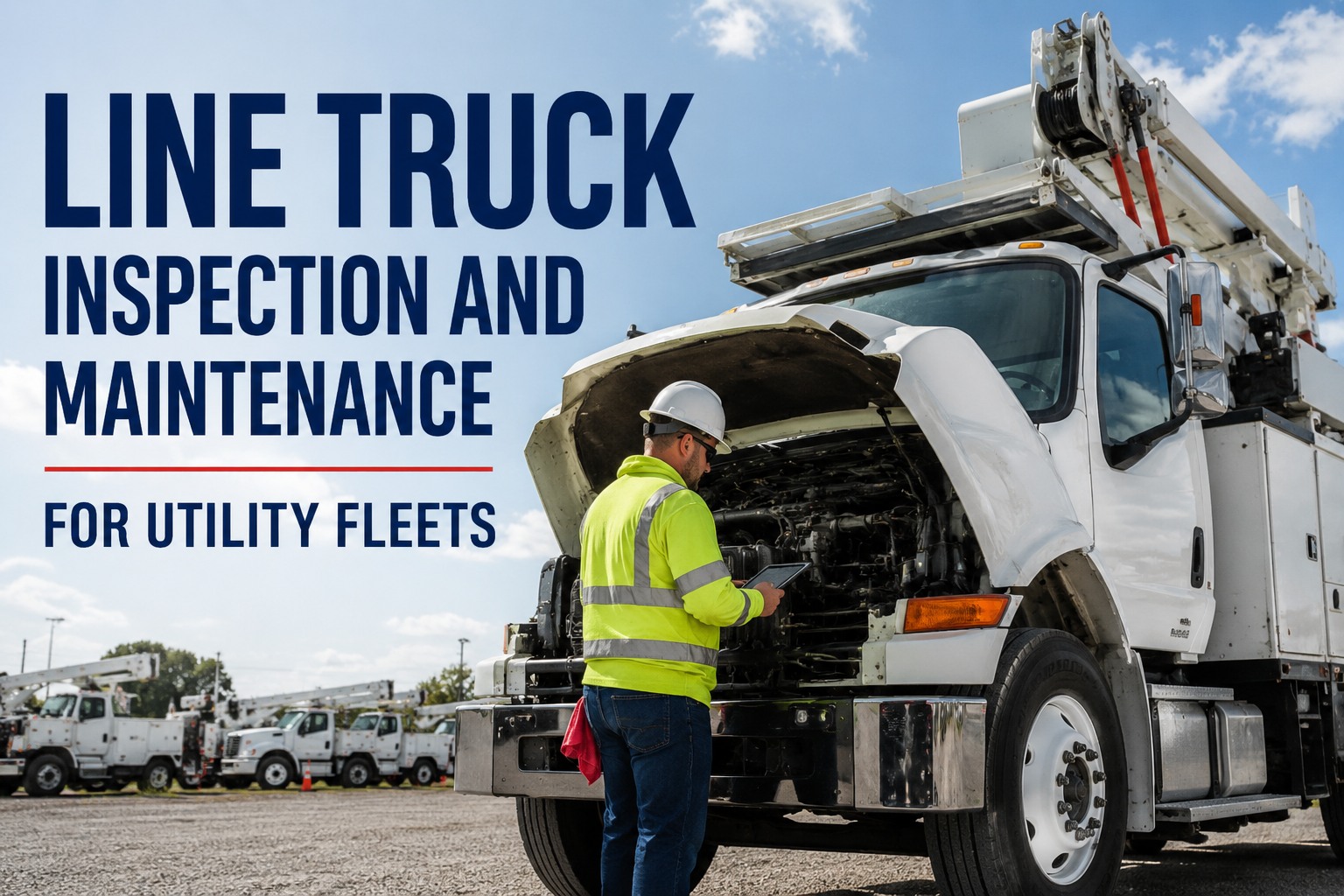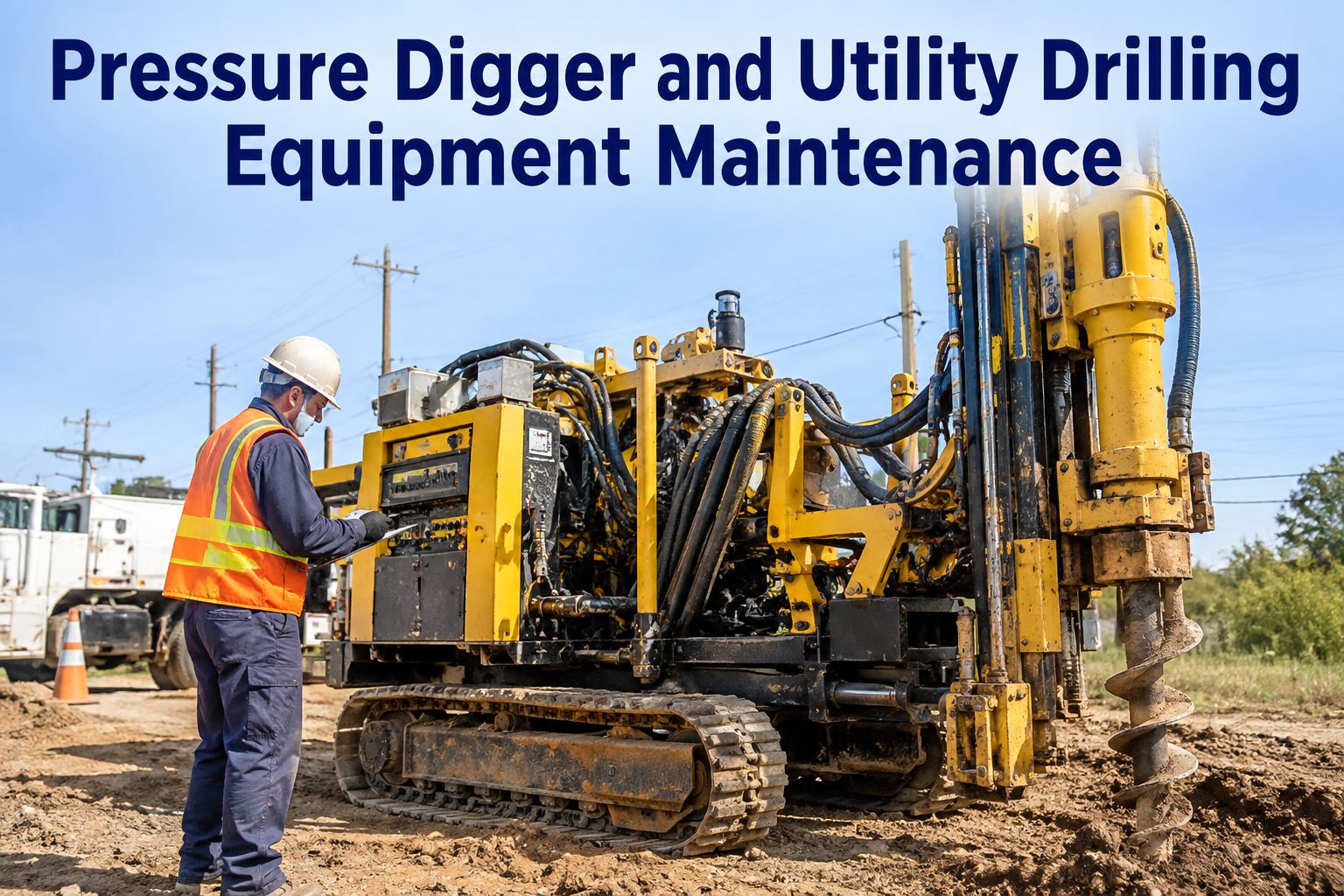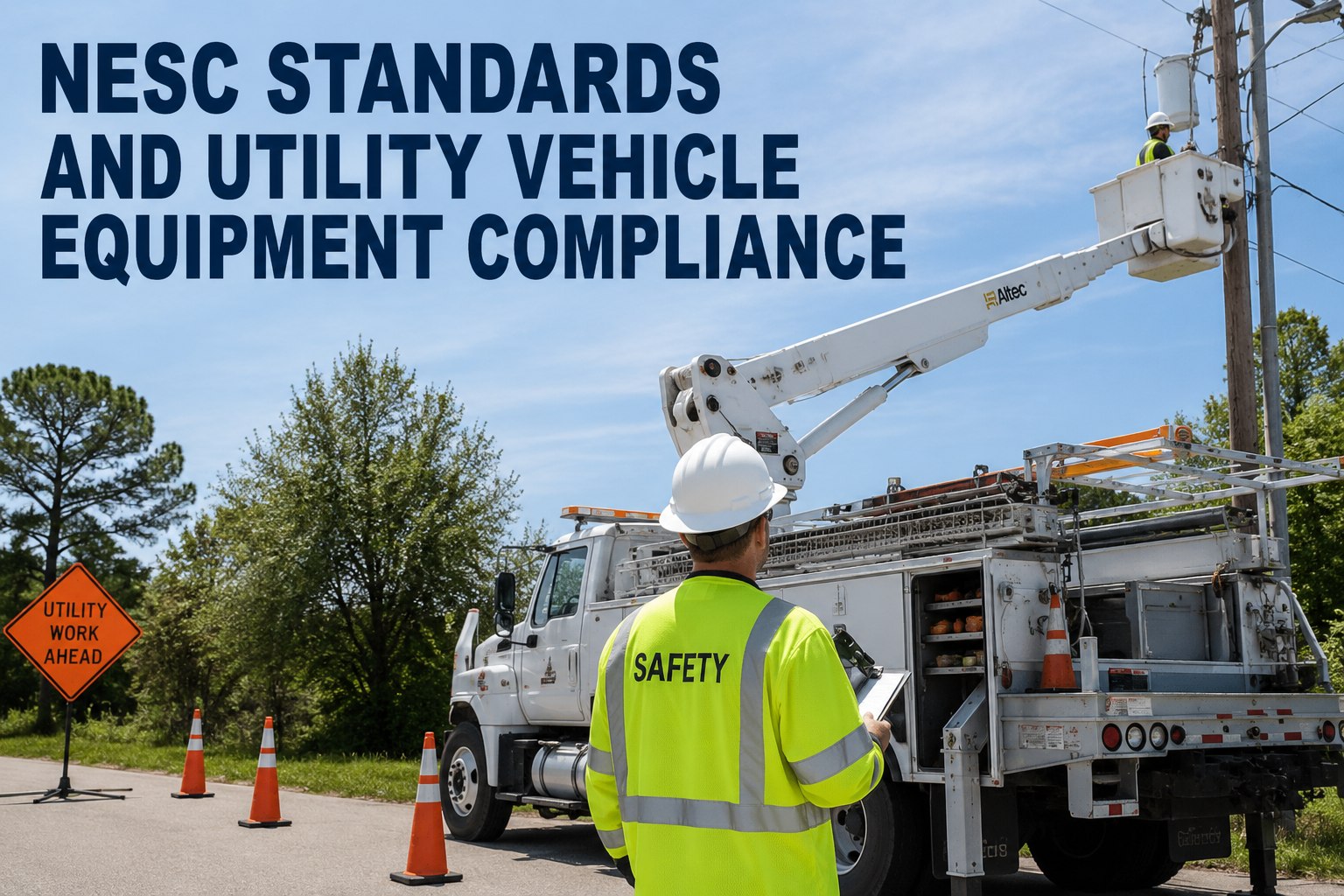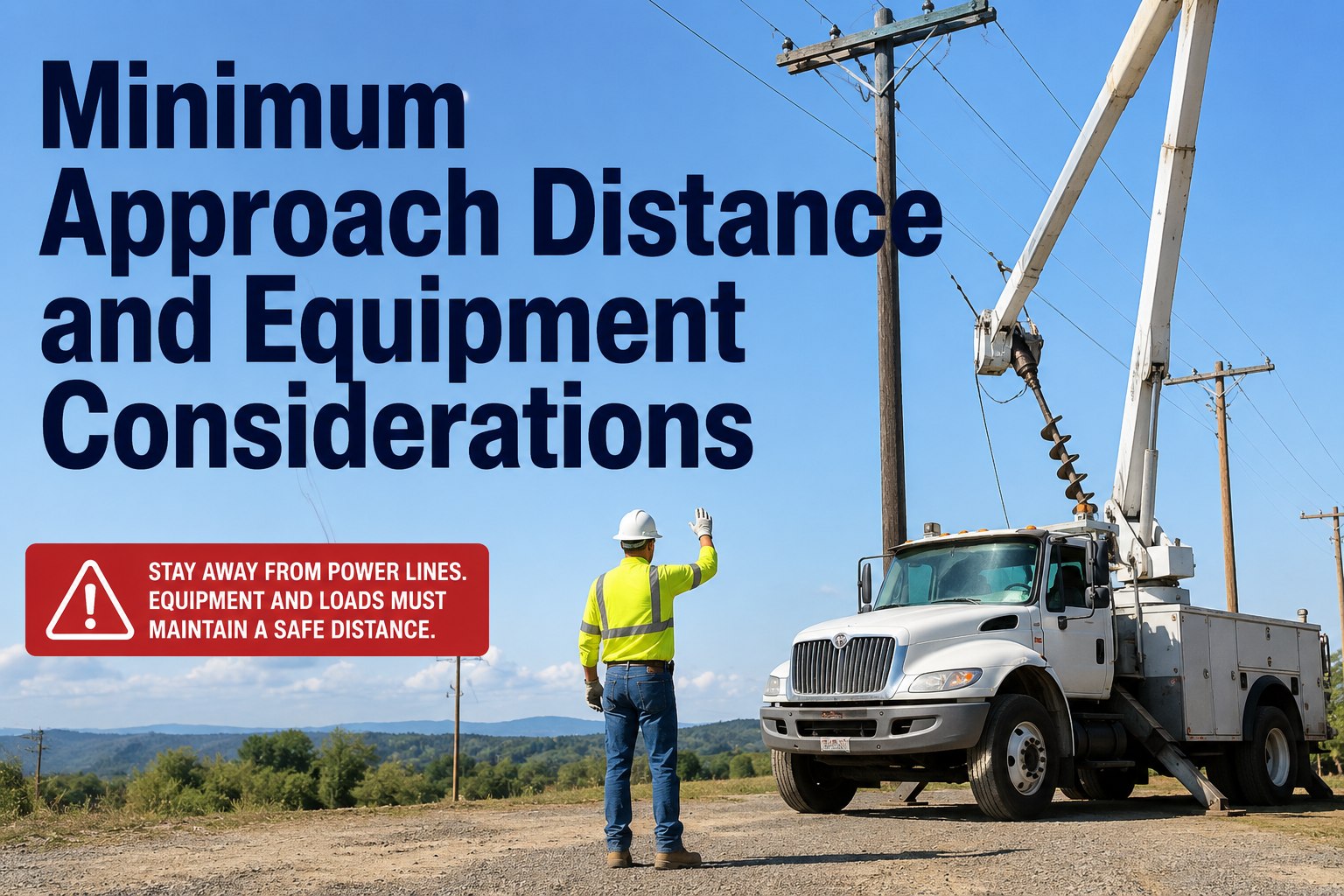
Minimum approach distance is not just about where the lineworker stands - it governs every inch of the machine too, from the tip of the boom to the load line, the auger hanging off the digger derrick, and whatever is hanging on the hook. If you run bucket trucks, digger derricks, cranes or any aerial device near energized conductors, the clearance rules apply to the whole unit, not just the person in the basket. That changes how you spec equipment, how you maintain insulating components, and how you prove to an auditor that the truck was fit to be there. This guide breaks down what counts as part of the machine, when an insulated boom changes what work is allowed, why operator judgement of distance fails, and how to keep dielectric certification and insulating-defect records tight enough that a compliance officer closes the file and moves on. If you want to see how digital inspection trails handle this on your own units, book a 30-minute walkthrough and we will show you on real equipment.
Is your boom part of the violation, or part of the control?
The machine, its attachments and its load all count toward minimum approach distance. Here is how to keep the equipment side compliant, certified and audit-ready.
Minimum approach distance applies to the whole unit, not just the worker
OSHA 1910.269 and 1926 Subpart CC both treat the equipment as an extension of the exposure. The boom tip, the load line, the auger on a digger derrick, the bucket itself, and any material or conductor on the hook are all part of the machine for clearance purposes. If any of those parts could breach the minimum approach distance during normal operation - including a load swing, a boom drift or a hydraulic creep - you are in violation before contact ever happens.
This is where fleet and operations intersect. The clearance requirement is not just a training issue for the lineworker in the basket. It is a spec issue when you buy the truck, a maintenance issue when the insulating boom needs its dielectric test, and a dispatch issue when a non-insulated unit gets sent to a job that requires an insulated one. If your team is still tracking dielectric certs in a spreadsheet, see how automated certification tracking works on your fleet before the next audit.
Boom and jib
Every section, extension and articulation point counts. A telescopic boom that drifts two feet under load has just changed your clearance by two feet.
Load line and rigging
Wire rope, synthetic line, hooks, blocks and any tag line in use. A swinging load line near a conductor is an encroachment waiting for a gust.
Auger and digger head
On a digger derrick the auger hangs below the boom tip and swings wide during positioning. It is the part most often forgotten in clearance planning.
Load on the hook
A transformer, pole or conductor being lifted is part of the machine until it is landed. Its swing radius is your clearance radius.
Why the insulating status of your aerial device decides what work is allowed
An insulated aerial device or digger derrick with a current, passing dielectric test permits certain work that a non-insulated unit simply cannot do. Under 1910.269, a qualified employee using an insulated boom may work closer to energized parts than the same employee on a non-insulated unit, because the boom itself provides a layer of protection. That makes the device's certified insulating status directly operational - it is not a paperwork nicety, it is the difference between a legal job and a citation.
The dependency runs both ways. If the dielectric test is expired, or if an inspection finds a crack, tracking mark or contamination on the insulating section, the unit is no longer insulated for compliance purposes. It does not matter that the boom looks fine. Until the defect is repaired and the unit retested, it is a non-insulated device, and any work planned around its insulated status has to stop or be replanned. This is exactly the kind of condition-based routing that digital inspection software handles automatically - a failed dielectric check flags the unit out of service before a dispatcher sends it to an energized job.
Insulated device, current cert
- Qualified employees may use reduced MAD where 1910.269 Table R-6 / R-7 permits
- Boom itself provides secondary protection if contact occurs
- Work methods like rubber gloving from the basket are allowed
- Dispatcher can assign energized-line jobs without replanning
Non-insulated or expired cert
- Full minimum approach distance applies at all times, no reduction
- Any insulating defect or expired dielectric test removes the status
- Work methods requiring an insulated boom are prohibited
- Unit must be routed out of service or reassigned to de-energized work
Operator judgement of distance is unreliable - plan for it
Ask ten experienced operators to judge ten feet against a sky background and you will get ten different answers, most of them short. Depth perception against a featureless sky is poor, and it gets worse with fatigue, glare, night work and the visual clutter of a real job site. The encroachment risk is highest during setup, travel and boom movement - the moments when the operator is focused on leveling, traffic or the load, not on the conductor above.
The control hierarchy is straightforward: plan the setup so the boom cannot reach the line, use a dedicated spotter when the work is inside the planning zone, and treat proximity alarms as a backup layer, never the primary control. An alarm that goes off after the boom is already inside the minimum approach distance is a notification of a violation, not a prevention of one. If your crews are still relying on a whiteboard and a radio call to confirm clearances, walk through a digital pre-job briefing on a live demo and see how the checklist forces the distance check before the boom leaves the cradle.
Plan the setup position
Before the truck moves, identify every conductor within reach of the fully extended boom plus load swing. Mark the setup spot so the boom cannot physically reach the line from that position.
Assign a dedicated spotter
If any part of the machine could breach the approach distance, a spotter whose only job is watching clearance is required. The operator cannot watch the load, the controls and the conductor at the same time.
Use proximity alarms as backup
Proximity alarms and encroachment sensors are useful secondary layers, but they are not a substitute for planning and a spotter. Test the alarm before the job and log the test.
Reassess after any move
Every time the truck repositions, the clearance plan resets. A unit that was safe at the first pole may be inside the approach distance at the second.
Stop tracking dielectric certs in a spreadsheet
HVI flags expired tests, routes insulating defects to out-of-service and keeps photo-backed records for every audit.
Who may work within which minimum approach distance
OSHA 1910.269 draws a hard line between qualified employees and everyone else. A qualified employee - trained and demonstrated competent in the work methods, clearances and emergency procedures for the voltage involved - may work within the minimum approach distance using the correct insulating equipment and techniques. An unqualified employee may not cross that line at all, and must stay at the full approach distance for the voltage class plus any additional distance for the equipment in use.
The equipment side of the framework matters for fleet managers because the qualification of the operator interacts with the insulating status of the machine. A qualified lineworker on a non-insulated boom has different options than the same worker on an insulated unit. A crane operator who is not a qualified electrical worker is restricted to the crane-specific clearances in 1926.1408 and Table A, regardless of experience. The table below maps the common combinations.
| Worker type | Equipment | Clearance rule | What it means for you |
|---|---|---|---|
| Qualified electrical worker | Insulated aerial device, current cert | May use reduced MAD per 1910.269 tables with correct PPE and methods | Full range of energized work methods available |
| Qualified electrical worker | Non-insulated boom or expired cert | Full MAD applies, no reduction for the equipment | Work methods requiring insulation are off the table |
| Crane operator, not electrically qualified | Any crane or derrick | 1926.1408 / Table A clearances, 20 ft default up to 350 kV if no assessment | Cannot use the reduced electrical-worker distances |
| Unqualified worker | Any equipment | Must stay outside full MAD at all times | No energized-line work, ground support only |
A single insulating defect can ground the unit - and the job
The insulating value of an aerial device depends on the condition of the boom, not just its design. A crack in the fiberglass section, a deep scratch that has started tracking, contamination from hydraulic oil or road film, or moisture inside the boom can all destroy the dielectric strength. The unit may still operate mechanically, but for compliance purposes it is no longer insulated, and any work planned around that status is now unplanned.
This is why the inspection and maintenance side of minimum approach distance is not optional. Daily visual checks of the insulating section, periodic dielectric testing on the manufacturer and regulatory schedule, and immediate out-of-service routing on any suspected defect are the only way to keep the unit's status valid. A worked example: a utility contractor with six insulated bucket trucks loses one unit to a failed dielectric test. If the defect had been caught on a daily visual check with a photo, the repair could have been scheduled before the test date. Instead the unit fails at the testing facility, is red-tagged on the spot, and the crew that was booked for an energized job the next morning is stood down. One day of a six-person crew plus a truck is roughly $4,800 in lost productivity - more than the cost of a year of inspection software for the whole fleet. If you want to see how photo-backed defect capture works on a phone in the yard, book a demo and we will show you on a real unit.
How HVI keeps your equipment clearance records audit-ready
Photo-backed insulating checks
Technicians snap a photo of the boom section during the daily check. The image is timestamped, attached to the unit record and available in seconds during an audit.
Dielectric certification tracking
HVI stores the dielectric test date, result and certificate for every insulated unit, and alerts you before expiry so no truck is dispatched on a lapsed cert.
Out-of-service routing on defect
Any failed insulating check flags the unit out of service automatically. Dispatch sees the status before assigning the truck, and the defect becomes a tracked work order.
Audit-ready compliance reports
Pull a unit's full inspection, certification and defect history in one report. When OSHA or a client auditor asks for proof, you hand over a PDF, not a filing cabinet.
If you are still chasing paper certs and text-message photos, start logging inspections free and see the difference on your first unit.
Minimum approach distance is an equipment management issue
The machine and every part of it - boom, load line, auger, load - is subject to the same clearance rules as the worker. The insulating status of an aerial device is operational, not administrative: it decides what work is allowed, and it depends entirely on the condition of the boom and the currency of the dielectric test. Operator judgement of distance is unreliable, so plan the setup, use a spotter and treat alarms as backup. And confirm the specific requirements for your voltage class and work methods with OSHA - this page is a guide, not a substitute for the standard.
The fleets that get this right are the ones that treat the equipment side of minimum approach distance as a maintenance and compliance workflow, not a training slide. Daily visual checks, tracked dielectric certs, automatic out-of-service routing and photo-backed records are what keep the units legal and the audits short. If you want to see that workflow running on your own fleet, book a 30-minute demo and we will walk through it on your units.
I track one number every month: how many insulated units had a current dielectric cert on the first of the month. Last year we had a truck fail at the testing facility because a hairline crack nobody photographed turned into a tracking mark. The crew sat for a day, the job slipped, and I had to explain to the client why an expired-status unit was even on the schedule. Now every daily check includes a photo of the boom section, and any defect routes the truck out of service before dispatch sees it. My cert-current number has been 100 percent for fourteen months straight.
Marcus Delaney - Fleet Maintenance Manager, regional utility contractor, 40+ aerial devices and digger derricks
Minimum approach distance and equipment - what fleet managers ask
Does minimum approach distance apply to the equipment or just the worker?
It applies to both. OSHA 1910.269 and 1926 Subpart CC treat the boom, load line, auger, bucket and any load on the hook as part of the machine, and all of it must stay outside the approach distance unless the worker is qualified and using the correct insulating equipment and methods.
What changes when the aerial device is insulated?
A qualified employee on an insulated device with a current dielectric test may use reduced approach distances where the 1910.269 tables permit, and may use work methods like rubber gloving from the basket. A non-insulated unit, or one with an expired cert or insulating defect, does not get those reductions.
Are proximity alarms enough to prevent encroachment?
No. Proximity alarms are a backup layer, not a primary control. The primary controls are planning the setup so the boom cannot reach the line, and using a dedicated spotter when work is inside the planning zone. An alarm that sounds after the boom is already inside the distance is a notification of a violation.
What happens if the dielectric test expires or the boom fails an inspection?
The unit loses its insulated status immediately. It must be routed out of service or reassigned to de-energized work until the defect is repaired and the unit retested. Any work planned around the insulated status has to stop or be replanned. HVI flags expired certs and routes defects automatically - sign up free to see it on your first unit.
Who is allowed to work within the minimum approach distance?
Only qualified employees - workers trained and demonstrated competent in the work methods, clearances and emergency procedures for the voltage involved. Unqualified workers must stay outside the full approach distance at all times. Crane operators who are not electrically qualified follow the crane-specific clearances in 1926.1408 and Table A. If you want to see how HVI tracks qualifications alongside equipment certs, book a demo.
Keep every insulated unit certified, inspected and audit-ready
HVI tracks dielectric certs, photo-backs every insulating check and routes defects to out-of-service before dispatch assigns the truck.
Free to start - Works on any phone - No card needed