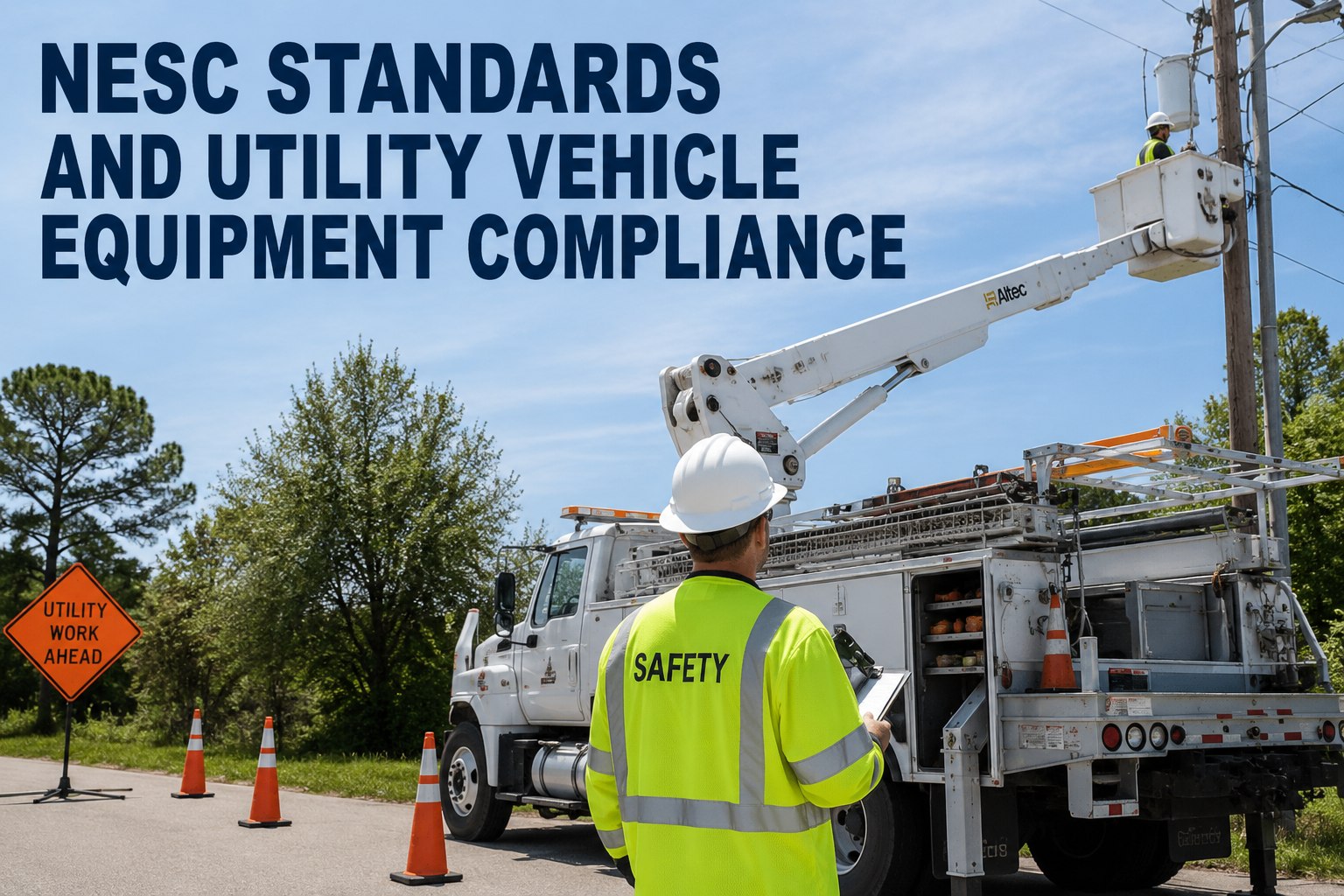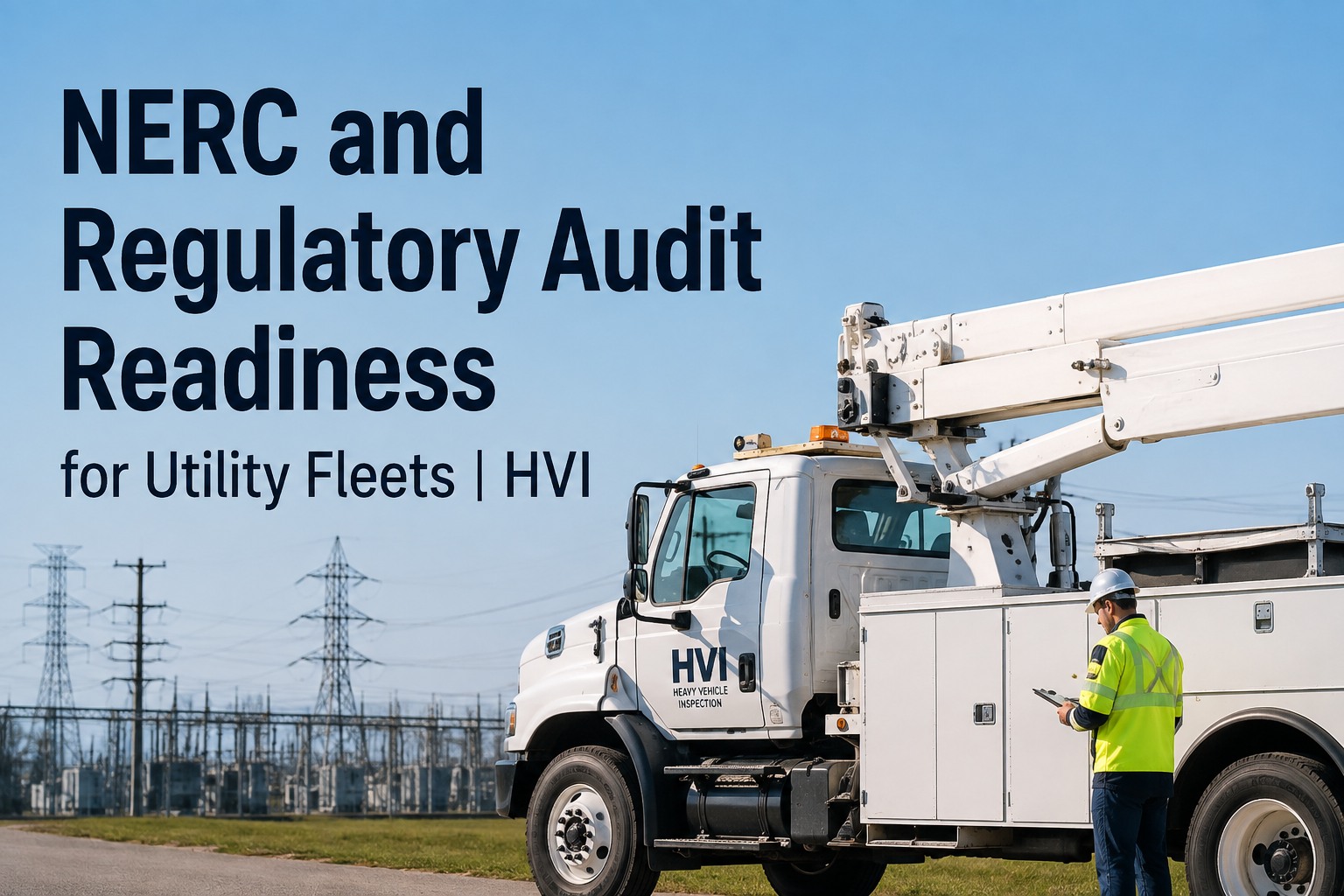
Your line contractor's bucket truck rolls onto your right-of-way at 6 a.m., the crew badges in, and somewhere in a filing cabinet is a dielectric certificate that may or may not still be valid. That is the daily reality of contractor fleet compliance for utilities: the truck works under your name, on your system, but the paperwork lives in someone else's office. When a boom fails a dielectric test six months after onboarding, or an OSHA investigator asks for the frequent-inspection log on a unit you never owned, the exposure lands on you. Verification before mobilisation - and re-verification during the contract - is the only practical control, and it gets much easier when you see how a 30-minute walkthrough handles contractor records alongside your own fleet.
Whose certificate is in that bucket truck?
Contractor and mutual-aid units work your lines under your name. If the dielectric cert, the ANSI inspection log or the operator qualification is missing or expired, you carry the risk - not the contractor's office manager. Verify before mobilisation, track expiry during the contract, and keep the audit trail in one system.
What to collect before a contractor mobilises on your system
Five document groups cover nearly every question an auditor, insurer or investigator will ask about a third-party unit. Collect them per unit and per operator - not per company - because contractors rotate trucks and crews between jobs.
Dielectric certificates, per insulated unit
Every bucket truck and insulated digger derrick needs a current dielectric test certificate tied to its serial or unit number. Check the test date against the contractor's stated interval - six months is common practice for units in regular service. A certificate for "the fleet" or for a different truck is not evidence.
ANSI annual and frequent inspection records
ANSI A92.2 requires an annual inspection by a qualified person and frequent inspections at defined intervals based on use. Ask for the last annual report and the frequent-inspection log. If the contractor cannot produce the frequent log quickly, it usually does not exist - and that gap becomes yours the moment the unit works your lines.
DOT and roadworthiness compliance
Current DOT annual inspection, registration, and driver medical and licence status for any unit travelling public roads to your site. A roadside out-of-service on a contractor truck heading to your job is your schedule problem and, after an incident, your documentation problem.
Insurance and operator qualification
Certificates of insurance with your utility named as additional insured, plus evidence each operator is qualified for the equipment class - training records, apprenticeship status, or certification where your jurisdiction requires it. Qualification follows the person, not the company badge.
The fastest way to see this working on real units is to book a demo and run one of your contractor's trucks through it - most utilities have the first unit verified in under ten minutes.
Certificates lapse mid-contract - and nobody rechecks
Onboarding verification is a snapshot. A six-month dielectric interval means a unit verified in January is out of date by July, right in the middle of storm season. The gap is not dishonesty - it is that nobody's calendar is watching someone else's certificate.
Onboarding: everything checks out
Contractor submits the verification set. Dielectric cert dated three months ago, annual ANSI inspection current, insurance certificate fresh. The unit is approved and mobilised.
First silent lapse
The insurance certificate renews and the broker sends the new one to the contractor's office, not to you. Your file now holds an expired COI. Nobody notices because nobody is looking.
Dielectric interval passes
The six-month dielectric test comes due. The contractor's shop is busy, the test gets pushed, and the unit keeps working your system on an expired certificate. Your onboarding file still says "verified."
The incident that finds the gap
A contact event, a boom failure, an injury - and now the investigator's first request is the inspection and certification history for that unit. The file you hand over shows a cert that lapsed two months ago. That is the record that matters, and it is yours.
The fix is not more paperwork - it is expiry alerts that fire before the lapse. With a free HVI account tracking certification dates, the system warns you 30, 14 and 7 days out, for contractor units exactly as it does for your own.
Should contractor equipment meet your owned-fleet standard?
Yes - and most utility contracts already say so. The hard part is enforcement. A contract clause is not a control; a record is. Here is how the two approaches compare in practice.
| Requirement | Contractual enforcement (paper) | Practical enforcement (verified records) |
|---|---|---|
| Dielectric testing | Clause requires current cert; checked once at onboarding | Cert stored per unit with expiry alerts; lapsed units flagged before dispatch |
| ANSI inspections | Annual report collected at prequalification, filed, forgotten | Annual and frequent logs live in the same system as your fleet's DVIR records |
| Daily condition | Contractor self-reports; no visibility between annual checks | Contractor operators run your digital pre-trip on their own phones, defects visible to you same day |
| Defect repair | Email threads and verbal confirmation | Defect converts to a work order with photos, timestamps and a closed status you can audit |
| After an incident | Request records from the contractor and wait days | Pull the unit's full history in seconds - inspections, certs, repairs, operators |
A worked example: a utility running 40 owned aerials and 25 contractor units through storm season. At one missed dielectric lapse per ten contractor units per year, that is two to three units working the system out of certification at any given time. Catching each lapse before dispatch - instead of after an incident - is the difference between a rescheduled job and a reportable event with your name on it. If you want to test this against your own contractor list, walk through the verification workflow in a demo with one real unit's paperwork in hand.
Verify the next contractor unit before it mobilises
See HVI running on your own fleet and your contractor list - certs, expiry alerts, inspections and audit trail in one place.
Contractor verification when the storm is 48 hours out
Mutual aid compresses weeks of onboarding into hours. Out-of-area crews and their equipment arrive under time pressure, and verification becomes the bottleneck between trucks parked and trucks working. The utilities that move fastest are the ones whose verification is a checklist in a system, not a pile of emailed PDFs.
Paper-based storm intake
- Certificates arrive as email attachments, phone photos and faxes from hotel business centres
- A coordinator cross-checks unit numbers against certs by hand, one spreadsheet row at a time
- Expired documents surface after crews are already dispatched - or not at all
- After the event, reconstructing who worked with what equipment takes weeks
System-based storm intake
- Mutual-aid units are pre-registered in the same platform as your home fleet, before they roll
- Certification status shows green, amber or red per unit - the bottleneck is visible, not hidden
- Role-based access lets the contractor upload their own documents while you keep approval control
- Every unit's work, inspections and defects during the event are logged for the post-storm review
Mutual-aid and contractor resources confirmed and documented in the same system as the home fleet is exactly how HVI is built - you can see the mutual-aid intake flow in a 30-minute demo before the next storm season starts.
One system for your fleet and everyone working on it
Certification tracking with expiry alerts
Store dielectric certs, ANSI inspections, COIs and licences per unit and per person. Alerts fire at 30, 14 and 7 days so a mid-contract lapse surfaces before dispatch, not after an incident.
Contractor inspections on any phone
Contractor operators run your digital pre-trip checklist on their own devices - photos, defect capture, instant defect-to-work-order. You see unit condition daily, not once a year.
Role-based access for third parties
Give each contractor a login scoped to their own units. They upload documents and close work orders; you approve, flag and audit. No shared spreadsheets, no emailed PDFs.
Audit-ready records in seconds
Timestamped, photo-backed history for every unit - owned, contractor or mutual aid. When OSHA, your insurer or a client asks, you pull the record instead of requesting it and waiting.
Contractor fleet compliance, boiled down
Three habits separate utilities that carry contractor risk from utilities that control it.
Verify per unit, not per company
Certificates, inspections and qualifications belong to a serial number and a person. Collect them that way and contractor fleet compliance stops depending on a logo on a door.
Watch the dates, not the drawer
Onboarding is a snapshot; contracts run for months. Expiry alerts on every certificate are the only reliable defence against the mid-contract lapse nobody rechecks.
Keep the trail where you can reach it
After an incident, the record you can produce in seconds is the only one that counts. Contractor units in the same CMMS as your fleet means one search, one export, one answer.
If your contractor records still live in binders and inboxes, start a free account and load your first contractor unit - it takes minutes, and the first expiry alert usually pays for the effort on its own.
"My rule is simple: no cert on file, no key in the ignition - and that goes for contractor trucks same as ours. I used to chase dielectric renewals by phone every July. Now the system flags them a month out and the contractor uploads the new cert themselves. Last storm we onboarded fourteen mutual-aid units in a day. I track one number: units working with anything expired. It's been zero for over a year."
Dale Brennan - Fleet & Compliance Manager, regional electric distribution utility
Contractor fleet compliance for utilities - FAQ
Who is responsible if a contractor's bucket truck has an expired dielectric certificate?
What documents should I collect before a contractor mobilises?
How do I stop certificates from lapsing mid-contract?
How do utilities verify mutual-aid crews during storm response?
Can contractors use the same inspection system as my own fleet?
Your system, your standard - every unit on it verified
Book a 30-minute demo and see contractor verification, expiry alerts and audit-ready records running on your own fleet list. Or start free and load your first unit today.
Free to start - Works on any phone - No card needed