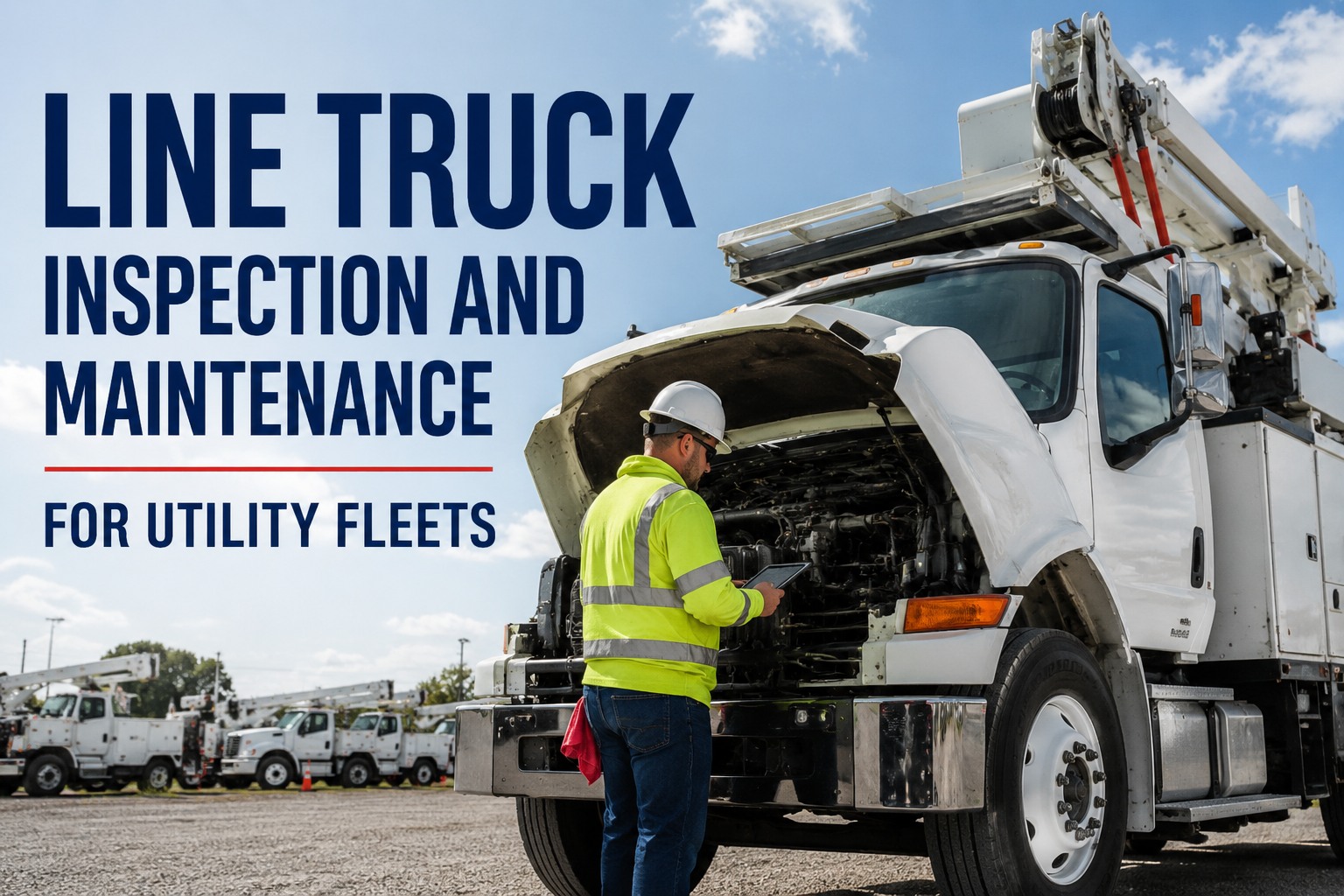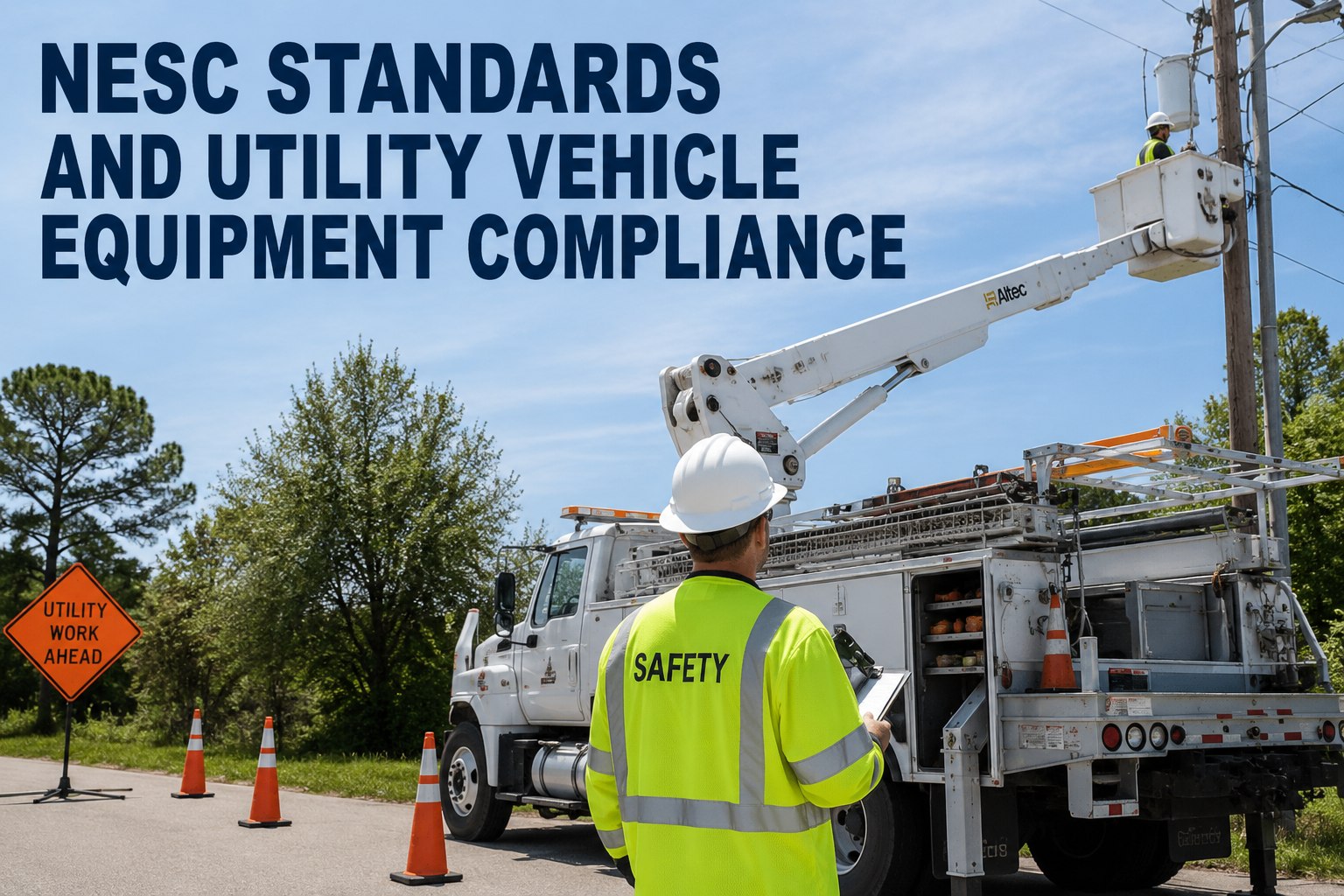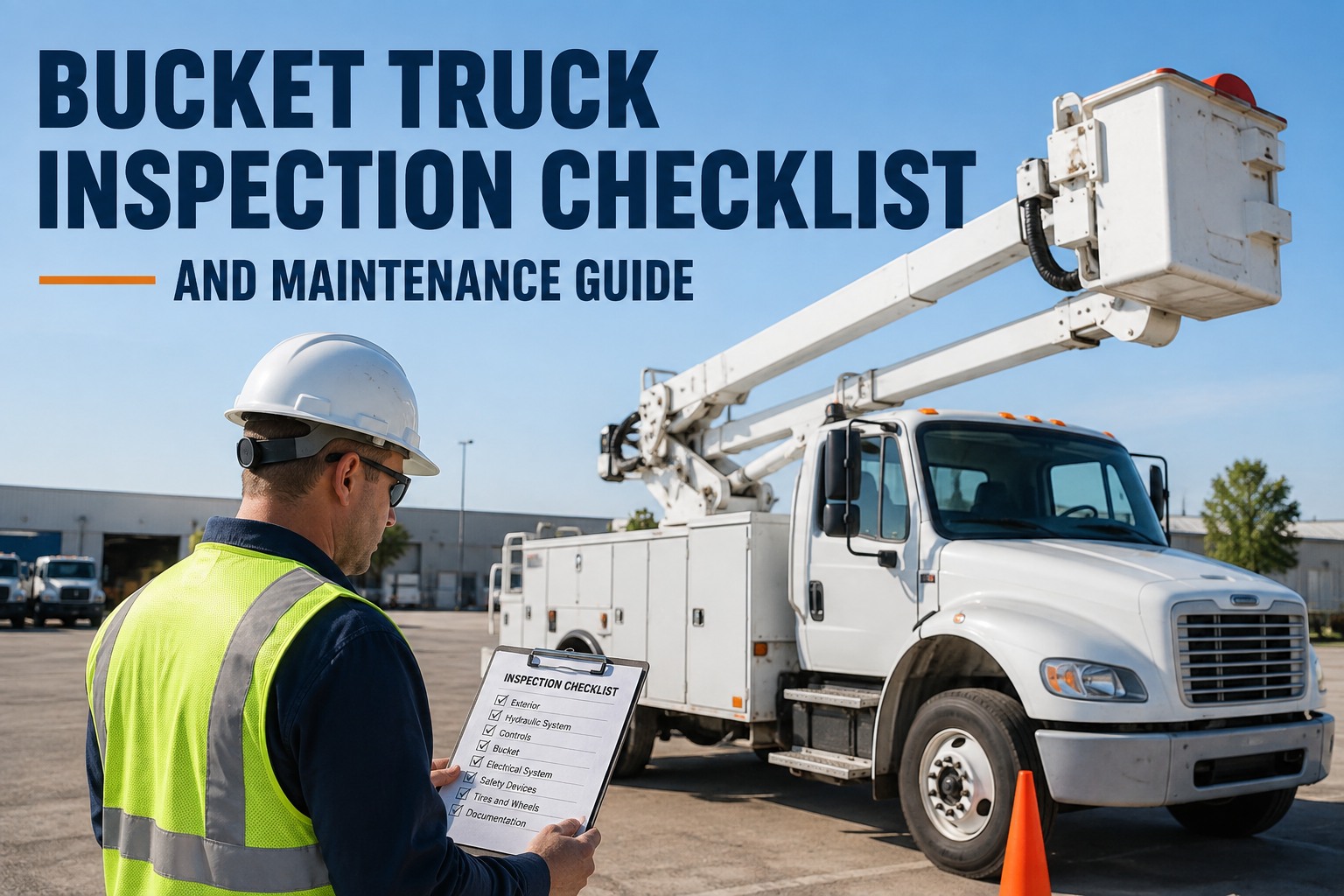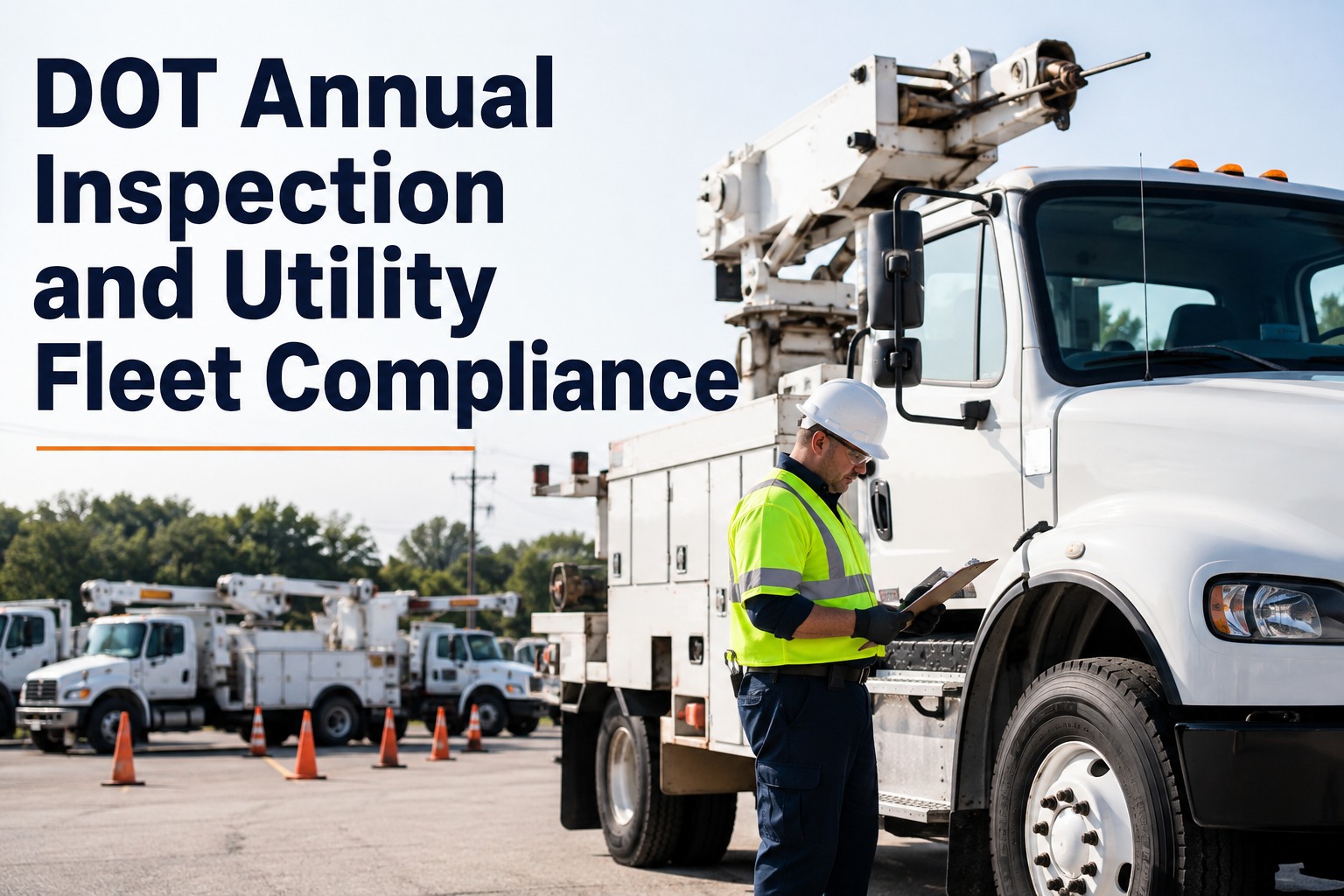
A bucket truck rolls out at 5:40 a.m. with a freshly recertified boom, but the DOT annual inspection sticker on the cab is eleven days expired — and nobody caught it because the boom inspection and the commercial vehicle inspection live in two different binders. That gap is where utility fleets get hurt. The DOT annual inspection and utility fleet compliance load you carry is not the same as your ANSI aerial device recertification, and treating them as one checklist is the fastest way to get a truck placed out of service at a scale or a roadside check. The two records cover different systems, answer to different regulators, and run on different calendars. You can map both cadences against your own fleet in a live demo before the next audit window closes.
Your boom is ANSI-certified. Is the truck underneath it DOT-current?
Utility fleets carry a full motor carrier compliance load on top of equipment standards — and both must be current before that truck leaves the yard. One missed annual inspection, one blank DVIR, one driver without the right endorsement on the qualification file, and the whole unit sits until it is fixed.
Four numbers that shape a utility fleet compliance program
Every figure below is tied to a cost you already pay — in downtime, in violations, or in audit prep hours. Tracking them is cheaper than explaining them after a roadside stop.
DOT annual inspection vs ANSI aerial device inspection — what each actually covers
The names sound similar. The regulators, scopes, and documentation are entirely different. A truck can pass one and fail the other on the same morning.
| Dimension | DOT Annual Vehicle Inspection | ANSI Aerial Device Inspection |
|---|---|---|
| Regulator | FMCSA — 49 CFR 396.17 | ANSI / SAIA — equipment standard |
| What it covers | Brakes, steering, lights, tires, coupling, frame, suspension — the chassis | Boom, outriggers, upper controls, hydraulics, dielectric, load charts — the aerial work platform |
| Who can perform it | A qualified inspector under 396.19 — motor carrier's responsibility | A competent person per the manufacturer's manual, often the OEM or dealer |
| Cadence | Every 12 months, no extension | Annual plus frequent (pre-use) and periodic inspections |
| Documentation | Inspection report on file, sticker or decal on the vehicle | Inspection record kept with the equipment, tags visible |
| Common utility-fleet mistake | Letting the chassis annual lapse because the boom was just recertified | Running the boom annual but skipping the frequent pre-use log |
Running both on one truck means two schedules, two inspectors, and two paper trails. Fleets that see HVI track both cadences side by side usually find at least one truck where the dates had drifted apart without anyone noticing.
DVIR for the truck and pre-use check for the boom — two records, not one
A driver walks around the truck, checks the lights and brakes, signs a DVIR, then climbs up and runs the boom through its pre-use function test. Those are two separate records covering two separate systems — and both need to exist, every day the truck is deployed.
Driver Vehicle Inspection Report (DVIR)
- Covers the commercial motor vehicle: brakes, steering, lights, tires, wheels, coupling, emergency equipment
- Required for each day the truck is operated, completed before and after the trip
- Defects must be noted, and if safety-related, repaired before the truck goes back out
- Driver signature and date required — a blank DVIR is a violation
Aerial Device Pre-Use Check
- Covers the boom: upper and lower controls, outriggers, hydraulics, safety devices, visual condition
- Required by ANSI before each use — not once a day, but before each operating shift
- Documents that the aerial device is safe to operate at that time, in that location
- Often a separate log or checklist stored with the equipment, not the truck file
The two checks overlap in time but not in scope. A driver can complete a clean DVIR and still have a boom with a sticky upper control valve that nobody documented. When both records live in the same digital inspection app, the shop sees the whole truck — chassis and aerial — in one readiness view instead of two folders that never get compared.
What a DOT audit actually asks for from a utility fleet
An auditor does not separate your "utility" trucks from your "commercial" trucks until you prove the exemption applies. Until then, every vehicle over the threshold carries the full motor carrier requirement set.
| Requirement | What it means in practice | Record you must produce |
|---|---|---|
| DOT number | Displayed on both sides of the power unit if the fleet crosses state lines or meets the interstate threshold | Registration and active USDOT status |
| Driver qualification file | One file per driver: application, MVR, medical certificate, road test or equivalent, annual MVR review | Complete DQF, updated and reviewable on demand |
| CDL class and endorsements | Class depends on GVWR and combination; air brake restriction removed if the truck has air brakes | Copy of the licence and any endorsement verification |
| Hours of service | Time records or ELD logs, depending on whether the utility exemption applies | Logs or time records for the previous 7-8 days |
| Annual vehicle inspection | Every CMV inspected at least every 12 months under 396.17 | Inspection report and sticker on the vehicle |
| DVIR | Daily driver inspection report covering required components | Completed DVIRs retained for the required period |
| Maintenance file | Record of inspection, repair, and maintenance for each vehicle | Vehicle maintenance file, identifiable by unit number or VIN |
If you want to walk through a mock audit against your own unit list, the question to ask is not "do we have these records somewhere?" but "can we produce all of them for any truck, in under ten minutes, from a phone in the yard?" That is the standard HVI is built to meet.
See HVI running on your own fleet — book a 30-minute demo
We will load your truck list, show the DOT annual and ANSI cadences on one screen, and prove you can pull a full compliance file for any unit in seconds.
When a utility body pushes a truck into a higher class
A crew buys a chassis with a 25,950 lb GVWR, mounts a utility body, a crane, an aerial device, and a full load of tools — and the truck is now sitting at 33,000 lb without anyone recalculating the weight rating or checking the CDL class against it.
That shift changes the CDL class required, it can change the weight rating compliance story, and it changes whether the truck needs an annual inspection under motor carrier rules. The driver who was legal on the cab-and-chassis may not be legal on the finished truck — and if the body was mounted by an upfitter and handed back without a re-rating, the fleet often does not catch it until a roadside inspector puts the truck on a scale.
CDL class mismatch
A driver with a Class B may be legal on the chassis but under-licensed on the finished truck if the actual weight pushes it into Class A territory.
Air brake restriction
If the upfit moves the truck onto air brakes and the driver's CDL still carries an L restriction, the truck is not legal to deploy.
Annual inspection triggered
A vehicle that crosses the commercial motor vehicle threshold now needs a 396.17 annual, a DOT number, and a full maintenance file — even if it started life as a lighter truck.
The fix is to capture the re-rated GVWR and the CDL class requirement as fields on the asset record in your fleet compliance software — not as a note buried in an upfitter invoice. When HVI flags a weight or licence mismatch on a truck, it does it before the truck leaves the yard, not after a scale ticket.
Utility exemptions, mutual aid, and crossing state lines
The utility-specific exemptions that exist under FMCSA are narrower than most crews believe. They do not blanket-cover every truck with a boom on the back, and they do not survive a state line without provable compliance.
| Situation | What is often assumed | What actually applies |
|---|---|---|
| Utility truck operating within the state | Fully exempt from FMCSA because it is a utility vehicle | Some hours-of-service relief may apply for emergency work; the annual inspection and DVIR requirements generally still apply |
| Mutual aid across a state line | Emergency response overrides all compliance | The truck and driver must still be able to prove inspection, qualification, and registration; exemptions are narrower and time-limited |
| Contractor working for a utility | Covered by the utility's exemption | A contractor is generally a separate motor carrier and must meet the full requirement set independently |
| Vehicle weight rating change after upfit | Original chassis rating still applies | The as-built weight rating determines whether the truck is a commercial motor vehicle, not the cab-and-chassis number |
Always confirm the current rules with FMCSA and your state or provincial regulator — exemptions shift, and they are narrower in practice than the yard rumour suggests. If you are running mutual aid convoys and want to pre-build a compliance packet you can hand a driver before they cross a border, that is a use case HVI is built for.
One readiness view for DOT and ANSI together
HVI tracks the motor carrier compliance cadence and the equipment standard cadence on the same asset, so a truck does not deploy with one sticker current and the other lapsed.
Dual-cadence interval tracking
DOT annual, ANSI annual, PM by date, mileage, or engine hours — all on one asset record, with due and overdue alerts that reach the shop before the date passes.
Digital DVIR with photo capture
Drivers complete the chassis DVIR and the aerial pre-use check on their phone, with photos of defects that flow straight into a work order — no paper, no text-message photos.
Audit-ready records
Every inspection, defect, repair, and sign-off is timestamped and photo-backed. Pull a full compliance file for any unit in seconds during a DOT audit, client review, or insurance renewal.
Driver qualification tracking
CDL class, endorsements, medical certificate, and annual MVR review dates tracked per driver — so a licence about to lapse or an endorsement gap surfaces before a roadside stop.
The payoff is simple: one truck, one screen, every date that gates deployment visible at the same time. If you want to see that screen populated with your own units, we can have it ready in a 30-minute call.
DOT annual inspection and utility fleet compliance, in short
Two inspections, one truck. The DOT annual and the ANSI aerial device annual are separate records with separate scopes, inspectors, and calendars — track both or risk deploying a half-compliant unit.
DVIR and pre-use check are not interchangeable. A clean DVIR does not cover the boom, and a passed boom function test does not cover the brakes — both need to exist every day.
Upfits change the compliance class. A utility body, crane, and tools can push a truck into a higher GVWR class, triggering the annual inspection, DOT number, and a different CDL requirement.
Exemptions are narrower than the rumour. Utility relief exists but is limited and does not survive a state line without provable compliance — confirm with FMCSA every time.
One platform beats two binders. HVI puts the DOT cadence, the ANSI cadence, the DVIR, the DQF, and the maintenance file on one asset record — ready for any audit in seconds.
The worst call I ever got was a DOT inspector telling me our bucket truck boom was ANSI-current but the cab annual had lapsed three weeks earlier. Two different binders, two different people, and nobody compared the dates. We track both on one screen now — if the DOT date and the ANSI date are not sitting next to each other, you are always one missed sticker away from a parked truck.
Utility fleet DOT compliance — what crews actually ask
Is the DOT annual inspection the same as the ANSI annual inspection for a bucket truck?
Does a utility truck need a DVIR if the driver does a pre-use boom check?
Does mounting a utility body change the GVWR and CDL class required?
Are utility fleets exempt from FMCSA hours of service during mutual aid?
How long do DOT inspection and driver qualification records need to be kept?
Stop tracking DOT and ANSI in two different binders
Book a demo and see every compliance date for every truck on one screen — or start logging inspections free today.
Free to start — Works on any phone — No card needed