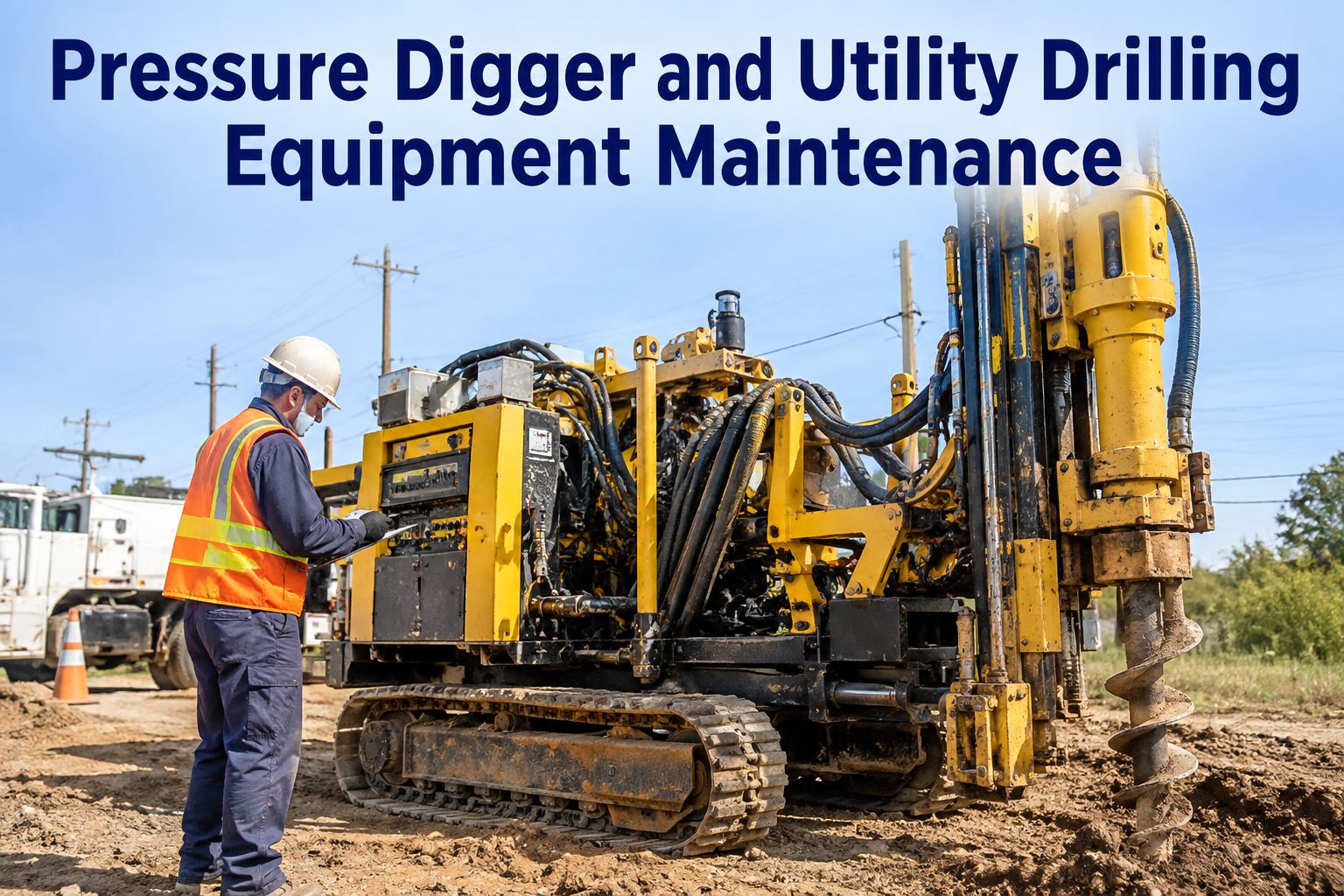
The auger stalls three feet down, the boom shudders under torque, and somewhere below your bit is a gas line nobody marked on the locate ticket. That is the reality of pressure digger maintenance: these machines drill pole holes in rock and hard ground that a standard auger cannot touch, and every hour of that work hammers the teeth, the drive head, the kelly bar and the hydraulics all at once. Miss a worn pilot or a weeping swivel and you are not just replacing a part - you are shutting down a crew of five with a truck-mounted drill sitting over an open hole. This guide walks through the wear points that matter, the PM intervals that catch failures before they strand a job, and the records that prove due diligence when a utility strike or structural crack gets investigated. If you want to see how digital inspection and wear tracking works on your own diggers, book a 30-minute walkthrough and bring your toughest unit.
High Torque, High Pressure, Zero Margin for a Missed Inspection
A pressure digger works its boom close to structures and energized conductors while the drive head pushes thousands of foot-pounds into the ground. One worn kelly bar pin or a overheated hydraulic system turns a routine pole hole into a stranded crew and an incident report.
Paper & Memory
- Auger teeth condition guessed from the cab
- Hydraulic hours tracked on a whiteboard
- Kelly bar cracks found when it snaps
- Locate ticket filed in a glovebox
HVI Digital Records
- Photo-logged tooth wear every shift
- Hour-based PM alerts on the drive head
- Structural checks flagged to a work order
- Utility locate attached to the job record
The Drive Path: Where Pressure Digger Maintenance Is Won or Lost
Torque flows from the drive head through the kelly bar into the auger. Every component in that chain absorbs the shock when the teeth hit rock, and the weakest one sets the maintenance clock for everything upstream.
Auger Teeth & Pilot
Carbide teeth and the pilot bit take the first abuse. Worn or missing teeth slow penetration, spike hydraulic pressure and overload the gearbox. Check tooth rotation, pocket wear and pilot condition at the start of every shift - a five-minute look saves a drive head.
Drive Head & Gearbox
The planetary gearbox converts hydraulic flow into torque. Listen for gear whine, check oil level and look for metal on the drain plug magnet. Oil analysis every 500 hours catches bearing wear before the unit locks up over a hole.
Kelly Bar & Extensions
The kelly bar transmits torque down the hole and takes bending load when the auger walks. Inspect drive keys, locking pins and welds for cracks and elongation. A kelly failure at depth often means cutting the bar and losing the hole.
Swivel & Crowd System
The swivel lets the auger spin while crowd cylinders push down. A leaking swivel passes air into the hydraulic tank and aerates the whole system. Check for weepage, play in the bearing and smooth crowd response.
Digger Hydraulics Service and Boom Torsion Checks
Drilling loads the boom in torsion - a twisting stress completely different from lifting - while the hydraulic system runs near relief pressure for minutes at a time. Both demand their own inspection rhythm.
| System | What Fails | Check Interval | Record to Keep |
|---|---|---|---|
| Hydraulic fluid & filters | Heat breakdown, contamination, aeration | Daily level / 500-hr analysis | Fluid analysis report, filter change log |
| Hoses & fittings | Chafing at the boom pivot, weeping crimps | Weekly walk-around | Photo of wear point, replacement date |
| Cooler & fan | Clogged fins, failed fan motor | Daily in hot weather | Operating temperature reading |
| Boom & weldments | Fatigue cracks at pivots and gussets | Monthly detailed / annual NDT | Crack inspection sign-off with photos |
| Outriggers & pads | Bent beams, worn pads, leaking cylinders | Every setup | Pre-drill stability checklist |
Reaction forces from drilling are substantial - the torque that twists into rock also twists back into the truck. Outriggers must be fully deployed on firm, level ground with pads under the feet, and the pre-drill stability check belongs in the same digital record as the equipment inspection. When you walk through HVI on a demo call, ask to see how a failed outrigger check blocks the job from closing until a supervisor signs off.
Underground Utility Location: The Step That Decides Everything
No wear part on the machine can hurt you like a utility strike can. Hitting a gas line, fiber duct or primary power cable is a procedural failure, not an equipment failure - and the record of your locate is the first thing an investigator asks for.
Call Before You Dig
Place the 811 (US), Before You Dig (AU), or equivalent one-call request the required working days ahead. Log the ticket number, the validity window and the marked utilities against the job in your CMMS.
Verify Marks On Site
Walk the bore path and confirm paint or flags match the ticket. Photograph the marks with a timestamp. If marks are missing or the ticket expired, the auger stays on the truck.
Hand-Dig the Tolerance Zone
Within the tolerance zone around a marked line, expose the utility by hand or vacuum before the pressure digger works. Record who exposed it and what was found.
File the Evidence
Attach the ticket, the site photos and the sign-off to the asset and job record. When a strike claim surfaces months later, you produce the file in seconds instead of digging through gloveboxes.
Overhead matters as much as underground. The boom works close to structures and energized conductors, so the pre-job brief must cover approach distances and a dedicated spotter. Fleets that start logging these checks free in HVI build a defensible habit: no completed checklist, no drilling.
See Every Wear Part on Every Digger, From One Screen
Book a 30-minute demo and we will load one of your pressure diggers into HVI live - teeth, kelly bar, hydraulics and locate records included.
Pressure Digger PM Schedule: Hours, Not Calendar Pages
A digger can sit for a week then drill forty holes in two days. Calendar-based PM misses that entirely - engine and hydraulic hours are the only honest trigger.
Every Shift
- Tooth, pilot and pocket condition with photo
- Hydraulic level, leaks and hose chafing
- Kelly bar pins and visible welds
- Outrigger function and pad condition
250 Hours
- Drive head oil level and breather check
- Swivel bearing play and seal weepage
- Boom pivot pin greasing and play check
- Cooler fins cleaned, fan operation verified
500 Hours
- Hydraulic fluid analysis and filter change
- Gearbox oil change, magnet inspection
- Torque check on structural bolts
- Detailed boom and weldment crack inspection
Annually
- NDT on boom welds and kelly bar
- Full hydraulic pressure and flow test
- Outrigger cylinder drift test
- Review of wear-part consumption vs. plan
Worked example: a utility contractor running six diggers replaces auger teeth on feel. One crew burns a set in a week on rock, another stretches a set for a month in clay - but both order the same way, so the rock crew runs dull teeth and overloads two drive heads a year. At roughly $6,000 for a gearbox rebuild plus a lost day at $8,000, that is $28,000 of avoidable cost. Hour-based PM with tooth-wear photos per shift cuts it to near zero, and a short demo shows exactly how the alerts fire.
Utility Drilling Equipment Maintenance, Managed in One Platform
Templates Per Equipment Class
Build a pressure digger checklist once - teeth, kelly bar, swivel, outriggers, locate ticket - and apply it to every unit. Operators complete it on any phone at the site, with photos forced on critical items.
Wear Component Tracking
Log tooth sets, pilots and kelly bars as tracked components with install dates and hours. See cost per drilled hole per unit and spot the crew or ground condition eating parts early.
Hour-Based PM Alerts
Sync engine hours from telematics or manual entry. The 250-hour and 500-hour services trigger work orders automatically - no whiteboard, no missed gearbox oil change.
Parts & Inventory
Keep teeth, pilots, filters and hydraulic hose on the shelf across multiple shops. When a work order consumes a tooth set, stock decrements and reorder points fire before the next rock job.
Pressure Digger Maintenance Comes Down to Records
The machine will tell you what it needs - if someone is looking and writing it down.
- Teeth and pilots set the load. Dull cutting tools multiply stress on the drive head, kelly bar and hydraulics. Photograph them every shift.
- Hydraulics run hot and hard. High pressure and flow demand clean fluid, working cooling and chafe-free hoses - checked on hours, not months.
- The boom twists. Torsional drilling loads crack welds differently than lifting. Schedule detailed and NDT inspections and keep the sign-offs.
- The locate is the job. No documented utility locate, no drilling - and the ticket, photos and sign-off must live with the asset record.
- Records decide outcomes. After a strike, a crack or a failure, the fleet with timestamped, photo-backed pressure digger maintenance records walks away clean. See how that record looks in a live demo.
"I track one number above everything: cost per drilled hole on teeth. When it jumps on a unit, I know the crew is pushing dull pilots into rock and the gearbox is next. Before we logged it digitally, I found out when the drive head seized. Now the photos land in my inbox the same morning, and I have not lost a gearbox in two seasons. The locate tickets being attached to the job saved us once already - a strike claim came in eight months after the dig and we pulled the whole file in under a minute."
Marcus Delaney - Fleet Maintenance Manager, regional power-line construction contractor
Pressure Digger and Utility Drilling Maintenance Questions
How often should auger teeth and pilots be inspected on a pressure digger?
Every shift, without exception. Teeth and pilots determine penetration rate, and worn cutting tools multiply load on the drive head, kelly bar and hydraulics. A photo-logged check takes five minutes; a seized gearbox costs a rebuild plus a crew standing idle for a day or more.
What is the difference between drilling load and lifting load on the boom?
Lifting loads the boom in bending; drilling loads it in torsion - a twisting stress as reaction torque pushes back from the auger. Fatigue cracks appear at pivots, gussets and welds in different places, so your structural inspection must be written for torsional drilling duty, not copied from a crane checklist.
Should pressure digger PM be scheduled by hours or by calendar?
By engine and hydraulic hours. A digger may sit idle for weeks then drill forty holes in two days, so calendar intervals either service a clean machine or miss a worked one. Hour-based triggers with automatic alerts - the kind you can watch fire in a live HVI demo - match service to actual wear.
What records matter after an underground utility strike?
The one-call locate ticket with its validity window, timestamped photos of the marks on site, the tolerance-zone exposure sign-off and the completed pre-drill checklist. Investigators ask for these first. If they live in a glovebox you have a problem; if they live in a digital job record you have a defense.
How do I get crews to actually complete drilling equipment inspections?
Make the checklist short, mobile and impossible to pencil-whip: forced photos on teeth, kelly bar and outriggers, and a job that cannot close until the checklist does. Crews adopt it fast when it takes three minutes on a phone. You can sign up free and build your first digger template today.
Put Every Digger, Tooth and Locate Ticket on the Record
HVI gives you digital inspections, hour-based PM, wear tracking and parts inventory in one platform your crews actually use - in the yard, at the site, on any phone.
Free to start - Works on any phone - No card needed