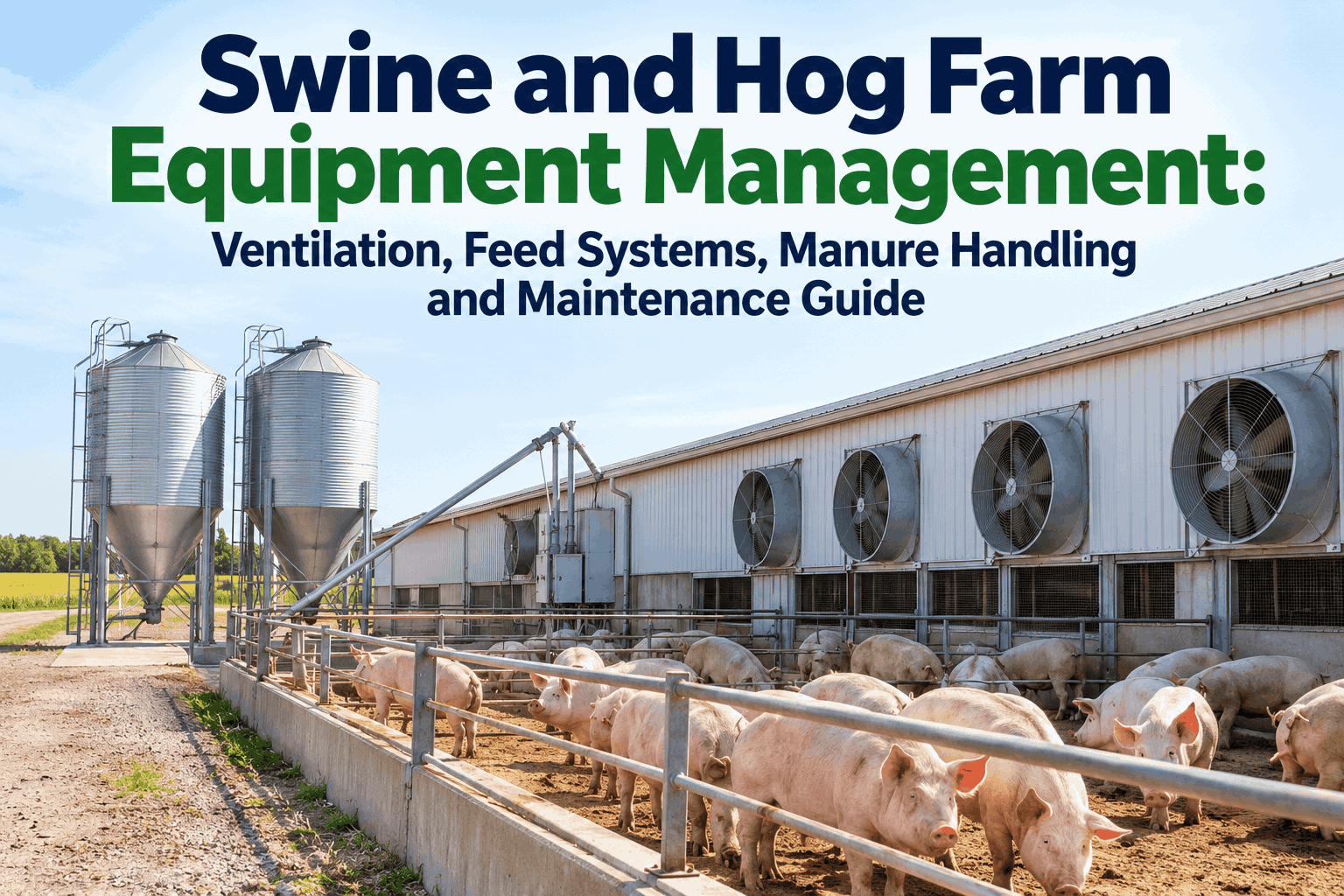
On a swine farm, a failed ventilation fan, stalled feed auger or unavailable manure pump can turn an ordinary maintenance delay into an urgent operational problem. Effective swine farm equipment maintenance starts with knowing which systems support animal welfare, which checks operators can perform safely and which defects require immediate escalation. A consistent equipment register, inspection routine and repair history helps managers prepare before the next breakdown.
Four critical systems. One maintenance plan.
Ventilation, feed delivery, manure handling and backup power have different failure modes—but each needs clear inspection ownership and a documented response.
Illustrative equipment map — not a live HVI dashboard
Maintain the systems that keep the barn running
Not every asset has the same consequence of failure. Assign inspection frequency and response priority according to the equipment's role, site conditions and manufacturer instructions.
Ventilation and climate control
Check fan operation, belts or drives, shutters, air inlets, controllers and alarm functionality. Record abnormal noise, airflow restrictions and faults promptly.
Animal environmentFeed storage and delivery
Inspect bin condition, augers, motors, guards, delivery lines and sensors. Investigate bridging, jams, unusual vibration and inconsistent feed delivery.
Feeding continuityManure and waste handling
Review pump condition, accessible pipework, seals, controls and service history. Keep pit-entry and agitation hazards under strict site-specific safety controls.
High-risk maintenanceBackup power and alarms
Verify generator readiness, fuel and battery condition, transfer arrangements and critical alarms under an approved testing procedure.
Failure responseA single asset list makes it easier to see who owns each check and which issues remain unresolved. Sign Up Free to Create Your Equipment Register.
A practical swine barn equipment inspection checklist
Use operator-safe checks to spot early warning signs. Isolate equipment and involve qualified personnel for electrical, mechanical or confined-space work.
Confirm expected operation, clear obstructions and note alarm or controller faults.
Look for visible damage, leaks, guarding issues, abnormal sounds and feed-flow problems.
Record leaks, corrosion, vibration and signs of malfunction without entering hazardous spaces.
Review test records, indicators and overdue service items against approved procedures.
Book an HVI Demo to Explore Configurable Farm Equipment Checklists.
Schedule by equipment duty—not one blanket interval
Set tasks by calendar date, run-hours when available, operating conditions and the manufacturer's service guidance. The example below shows planning categories, not mandatory service intervals.
Confirm fan and feed-system operation, alarm status and obvious defects during regular rounds.
Schedule lubrication, wear checks, cleaning and component replacement using approved equipment procedures.
Prepare ventilation for temperature changes, verify backup power and review critical spare parts.
Capture root cause, repair actions, replacement parts and any changes needed to the PM plan.
HVI can organize planned service and maintain a record of completed work. Sign Up Free to Build Preventive Maintenance Schedules.
Prepare for failures that cannot wait
Maintenance planning must include safe operating responses. In particular, manure pit gases can be rapidly fatal; never treat an inspection checklist as permission to enter or agitate a pit.
Ventilation interruption
Define who receives alarms, how backup ventilation or power is activated and when animals or personnel require urgent protective action.
Manure gas exposure
Use qualified procedures for agitation and confined spaces, including exclusion zones, ventilation and emergency planning. Never attempt an untrained rescue.
Moving machinery
Apply lockout/isolation before servicing augers, fans, conveyors or pumps; verify guarding before restart.
Turn an equipment defect into a traceable repair
Inspection history becomes useful when the same asset record connects the issue, assigned maintenance work and evidence of completion.
| Asset | Inspection finding | Next step | Record to retain |
|---|---|---|---|
| Ventilation fan F-12 | Abnormal bearing noise | Technician assessment | Inspection + service notes |
| Feed auger A-04 | Intermittent feed flow | Isolate and investigate | Defect + repair history |
| Backup generator G-02 | Test overdue | Schedule approved test | Test result + follow-up |
Build a manageable farm equipment program
Start with the assets whose failure has the greatest operational consequence, then expand the inspection and maintenance process across the facility.
List critical assets
Assign IDs, locations, equipment owners and manufacturer documents.
Set inspection templates
Define safe checks and clear defect escalation for each system.
Schedule recurring work
Enter service dates, responsible people and critical spares.
Review open defects
Check unresolved work, repeat failures and maintenance evidence.
Swine farm equipment maintenance FAQs
Answers for managers organizing inspections, repairs and preventive maintenance.
What equipment should a swine farm maintenance program cover?
At minimum, inventory ventilation fans and controls, feed bins and augers, manure-handling equipment, backup generators and alarm systems. Include other site-critical equipment based on the farm's design and operating risks.
How often should hog barn ventilation equipment be inspected?
Use manufacturer recommendations, operating conditions and the farm's risk assessment. Routine operating checks and periodic qualified service serve different purposes; high-consequence equipment may require more frequent attention.
What should be included in a swine feed system inspection?
Check accessible bins, motors, augers, guards, controls and feed delivery for visible damage, obstruction, unusual sounds or inconsistent operation. Isolate equipment before maintenance and record defects for follow-up.
Why is manure pit maintenance especially hazardous?
Manure handling can release hydrogen sulfide and other hazardous gases, particularly during agitation. Entry, agitation and rescue require site-specific controls and trained personnel; routine inspections must not involve unsafe exposure.
How can HVI support swine farm equipment maintenance?
HVI can help maintain equipment asset records, configurable inspection checklists, scheduled maintenance, work orders and service history. It is a maintenance documentation tool, not a barn climate-control, gas-detection or animal-monitoring system.
Make every inspection and repair easier to follow
Give your team a consistent place to document equipment condition, schedule service and review open maintenance tasks across the barn.