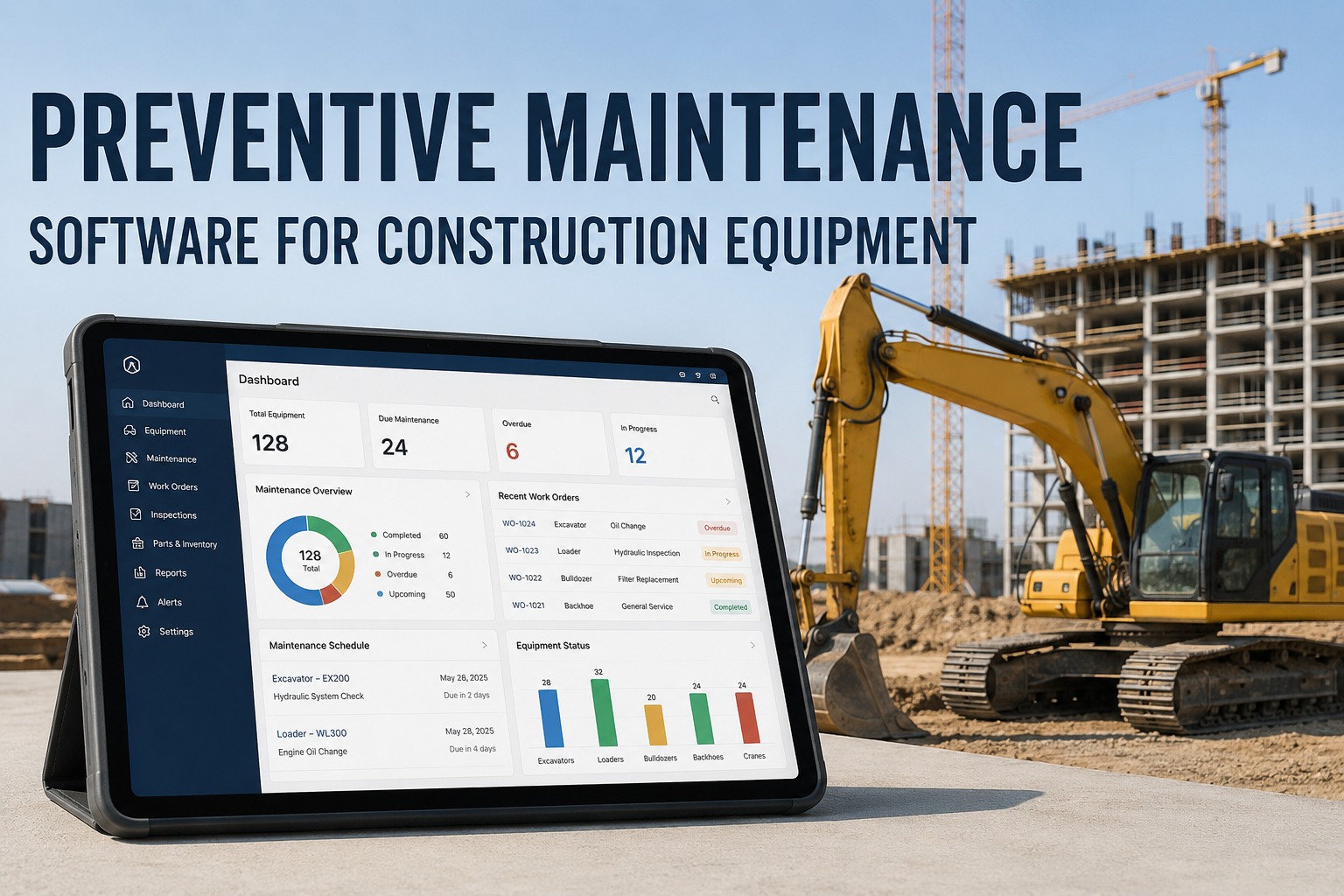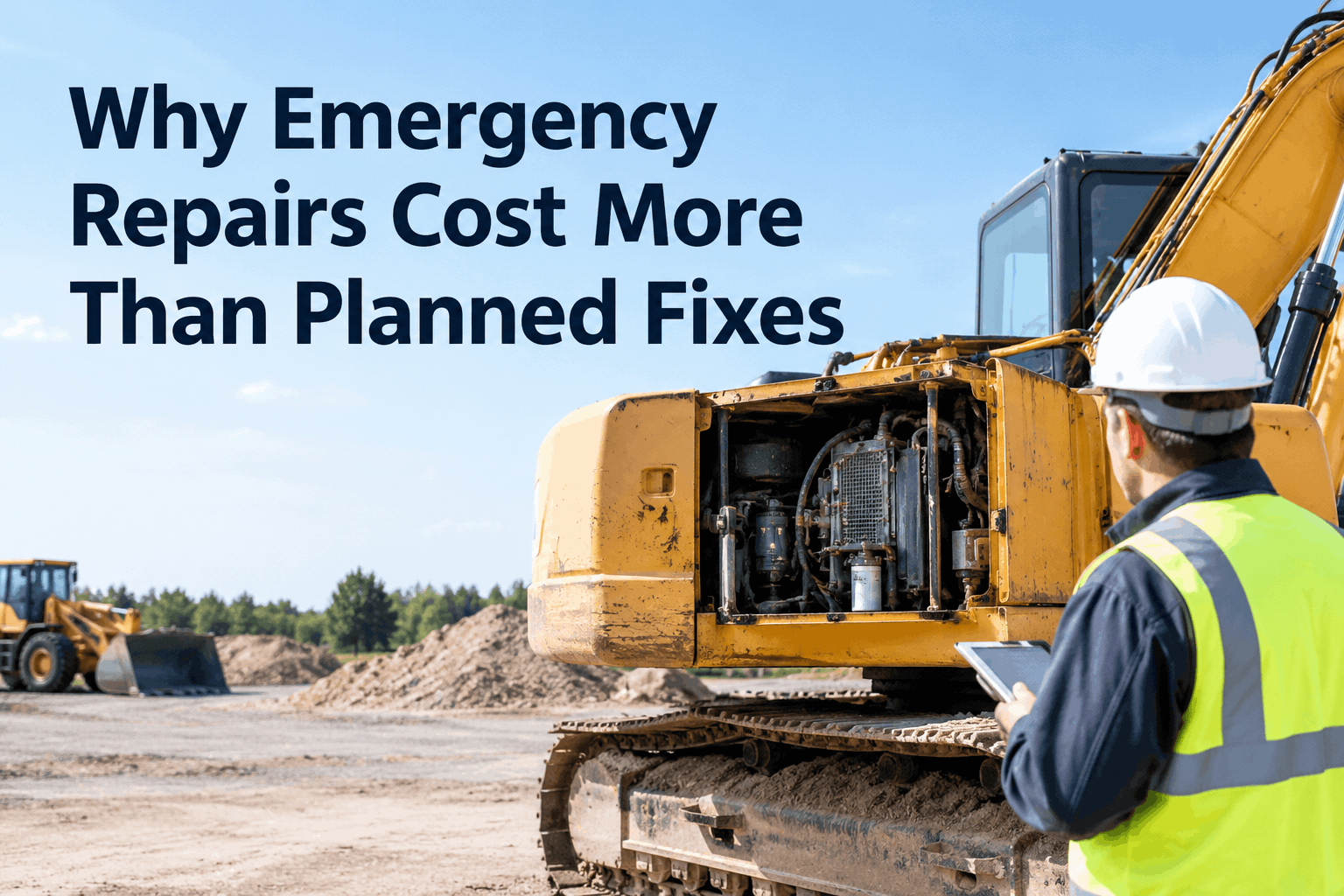
A weeping hydraulic hose caught on a walkaround is a $150 part and twenty minutes. The same hose, caught when it bursts under a loaded boom, is a cylinder reseal, a jobsite stoppage, and a rental excavator while yours sits in the shop. Construction equipment emergency repair costs aren't a different kind of expense — they're the same repair, just paid for at the worst possible moment. Book a demo to see how HVI catches it at the first version instead of the second.
Why Emergency Repairs Cost More Than Planned Fixes, Every Single Time
It's not bad luck or a bad part — it's the gap between a flagged defect and a scheduled repair versus a machine that fails mid-shift with a crew standing around it.
Scheduled, parts on hand, no downtime surprise
Expedited parts, overtime labor, stalled crew
The part doesn't get more expensive because it failed instead of being replaced on schedule — the surrounding cost does. Expedited freight on a part that was sitting in a warehouse yesterday. Overtime for a technician called out after hours. A crew and a rented machine sitting idle while the real one gets fixed. None of that shows up on the invoice for the part itself, which is exactly why it's so easy to underestimate.
Five machines, five defects, the same patternplanned vs. emergency, by component
The multiplier holds whether it's a hose, a bearing, or a pin — what changes is which machine and which component. Book a demo to see this tracked across your specific equipment, not a generic example.
Hydraulic hose at a cylinder fitting
Rotary head bearing
Exciter / drum bearing
Articulation pin & bushing
Undercarriage track shoe & roller
Specific dollar costs vary by machine, region, and vendor — these illustrate the pattern, not a quote. For benchmarked reactive-vs-planned cost ratios across a fleet, see our fleet maintenance cost benchmark guide.
Where the extra cost actually comes fromit's rarely the part itself
An emergency repair stacks several costs on top of the base job that a planned repair never touches at all.
Illustrative proportions — the actual split varies by repair and site. The point isn't the exact ratio, it's that every one of these line items disappears when the defect is caught before the machine fails.
The number that actually sets your maintenance budgetyour reactive-to-planned ratio
Most fleets run closer to half-and-half reactive versus planned work than they'd guess, and every shift toward planned work compounds into real savings — not just on the repair itself, but on the schedule disruption around it. We've written the full benchmark breakdown separately rather than repeat it here: see our fleet maintenance cost benchmarks for industry ratio targets, and our cost of missed preventive maintenance guide for the cascade-failure math behind it. What this page is about is getting construction equipment specifically off the reactive side of that ratio.
How a defect stays on the planned sidethree steps between "noticed" and "scheduled"
A weeping hose, a noisy bearing, excess pin play — caught on the walkaround, photo attached.
No re-typing the finding — the shop sees it on their board the same day, scheduled around the project, not around a breakdown.
Engine-hour PM scheduling catches the next wear item before it's a defect at all.
Sign up free and route your next defect to a work order, not a breakdown.
From a project manager running three active sites
The repair bill was never really the problem — it was the day. An excavator down for a hydraulic rebuild mid-pour doesn't just cost the rebuild, it costs the whole crew standing around and a rental machine at double the day rate.
Once we started catching the hose before it burst instead of after, the maintenance budget didn't just shrink — the schedule stopped blowing up every few weeks for reasons that were, in hindsight, completely avoidable.
Frequently asked questions
Why do emergency equipment repairs cost so much more than planned ones?
The base repair is similar either way — what adds cost is expedited parts freight, overtime labor, secondary damage from running the defect to failure, and downtime from a machine that stops mid-shift instead of on a schedule.
How does inspection software reduce emergency repair costs on construction equipment?
By catching defects like hose wear, bearing noise, or pin play on a routine walkaround and routing them to a scheduled work order, before they become a mid-shift failure with a crew standing idle.
What's a good reactive-to-planned maintenance ratio for a construction fleet?
Industry benchmarks generally target around 80% planned to 20% reactive work; many fleets without a tracked PM program run closer to an even split, which is where most of the recoverable cost sits.
Does engine-hour PM scheduling actually prevent emergency repairs, or just reduce them?
It won't eliminate every failure, but it catches wear items like bearings, hoses, and pins on a schedule that matches actual machine use, which is where most preventable emergency repairs originate.
Does this apply across different equipment types, or just one machine?
The pattern holds across excavators, drill rigs, rollers, wheel loaders, dozers and other construction equipment — the component changes, but the gap between a planned and emergency repair doesn't.
Move your construction equipment off the reactive side of the ratio
Inspection checklists per machine, defects routed to work orders the same day, and PM intervals tracked by engine hours — so fewer repairs happen at the worst possible moment. No credit card, no hardware to install.
- Inspection checklist per machine type
- Defect-to-work-order routing turned on
- Engine-hour PM intervals loaded per asset
- Reactive-vs-planned split visible on your dashboard