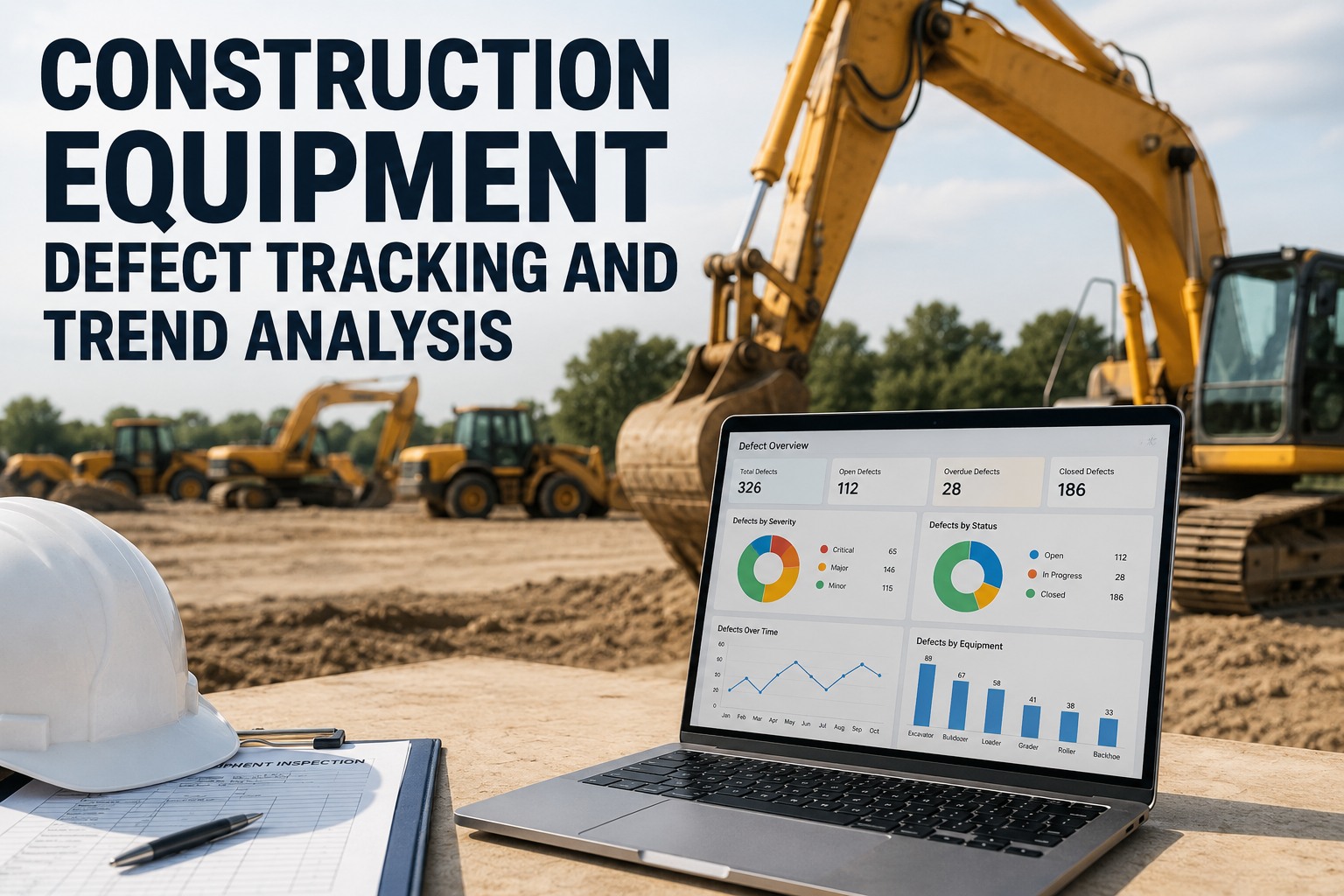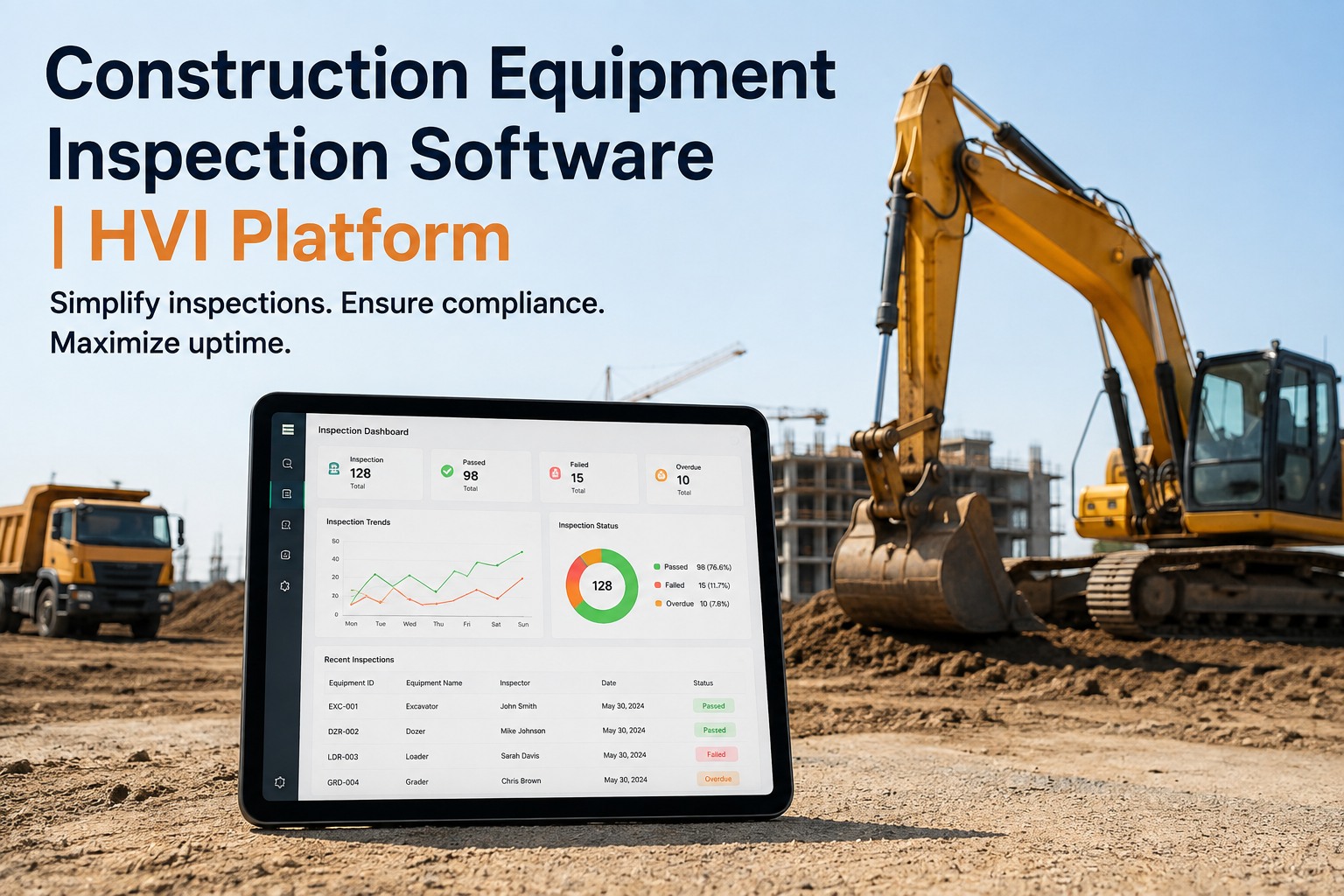
A drill mast that's been sitting half a degree off plumb for three shifts doesn't announce itself — it shows up as a hole that's walking off-line and a crew re-drilling on the clock. Drill rig inspection and maintenance software closes that gap by turning every operator walkaround into a defect record your maintenance team can act on the same day, instead of a note that never makes it off a clipboard. Book a drill rig demo to see it running against your own rig fleet.
Drill Rig Inspection and Maintenance Software, Built Around the Mast, Rotary Head, and Undercarriage
Standardize drill rig inspections, catch defects on the component that's actually failing, and schedule preventive maintenance by engine hours instead of a calendar that doesn't match how hard the rig is working.
- 1 Mast & boom alignment
- 2 Rotary head & drill string
- 3 Hydraulic system & hoses
- 4 Undercarriage & tracks
- 5 Engine, compressor & fluids
Most drill fleet teams already know the components that fail — it's the follow-through that breaks down. A defect gets written on a paper sheet, the sheet sits in the cab, and by the time it reaches the shop the rig has run another 40 hours on a hydraulic hose that was flagged as "weeping" on day one. Here's where that time actually goes, and the four places HVI closes the loop.
What undermanaged drill rig inspections actually costthe three numbers worth knowing before you shrug this off
Drill rigs are hydraulic-heavy, track-mounted, and operated in the same demanding conditions as the rest of the construction fleet — which means the same downtime math applies, and it's rarely small. Industry analysis of construction equipment maintenance programs puts unplanned downtime at 20–30% of operating hours for fleets without a consistent preventive maintenance program, against roughly 5% for contractors running a disciplined, software-tracked PM schedule. On hydraulic-driven machines specifically, hose and seal failures are consistently reported as one of the leading causes of major unplanned breakdowns — exactly the kind of defect a rotary head or mast inspection catches early if someone's actually looking at it, logging it, and routing it to the shop. A single unavailable rig on a live drilling program doesn't just cost the repair bill; it costs the crew standing around it and the schedule slipping behind it.
That gap is exactly what HVI's digital inspection workflow is built to close. Book a demo to see a rotary head or hose defect caught on the walkaround, instead of mid-shift.
The five zones to put on every drill rig inspection checklistcomponent-level detail, not a generic walkaround
A generic heavy-equipment checklist misses what actually fails on a rig. These five zones are where drill-specific inspection points belong, and each one maps to a defect HVI can route directly into a work order. You can sign up free and build this exact drill rig checklist inside your own account today.
Plumb and level checks, cracked welds at the base pin, pin and bushing wear, cylinder leaks on the raise/lower function.
Chuck jaw wear, drive gear noise, rod and sub connection condition, drill string straightness and thread wear.
Weeping or chafed hoses at pressure fittings, cylinder drift, fluid level and condition, filter and cooler check.
Track tension, pad and sprocket wear, idler condition, debris buildup that strains the drive motor.
Air filter condition, compressor oil level, coolant and fuel leaks, exhaust and DPF regeneration status.
Rotating guard condition, control linkage play, emergency stop function, fire suppression check if fitted.
Preventive maintenance that follows engine hours, not the calendartwo rigs on the same jobsite rarely run the same hours in a week
A drill rig that's been running double shifts for a tight production schedule shouldn't be on the same 90-day service clock as a sister unit that's been sitting idle waiting on a permit. HVI's preventive maintenance scheduling tracks service intervals against meter readings or engine hours pulled straight from the machine, so the PM date moves with how hard the rig is actually working — not a fixed date on a spreadsheet nobody updates. Book a demo to see engine-hour PM scheduling set up for your rigs.
Fluid levels, hose visual check, track tension, guard and e-stop function before the rig moves.
Grease points on mast pins and rotary head, hydraulic filter inspection, torque check on drill string fasteners.
Engine oil and filter, compressor oil, hydraulic fluid sample, undercarriage wear measurement.
Hydraulic hose replacement review, rotary gearbox oil, full mast and boom alignment check.
Major component teardown review, track and drive motor condition, full compliance documentation refresh.
These intervals are a starting template — every rig make and model has its own OEM service schedule, and HVI lets you load the manufacturer's actual intervals per asset rather than applying one generic schedule across the fleet.
From a flagged defect to a closed work orderno second system, no re-typing the same finding twice
The gap between "someone noticed it" and "someone fixed it" is where most drill rig downtime actually hides. This is the same flow that runs across HVI's maintenance management module for every asset type, applied to a rig-specific checklist. Book a demo to walk through this defect-to-work-order flow on a rig from your own fleet.
-
1Operator inspects on a phone
Pre-start checklist completed before the rig moves, photo attached to any flagged item.
-
2Defect is flagged against the asset
The finding is logged to that specific rig's history, not a loose note or a group text.
-
3Work order is created automatically
No re-entry — the inspection finding becomes the job the shop sees on their board.
-
4Technician repairs and closes it out
Parts used, hours logged, and the repair tied back to the original defect.
-
5History feeds your audit and analytics
Every signed inspection and repair is on record for compliance review and fleet-wide trending.
Paper checklist vs. a connected systemsame inspection, very different odds the defect gets fixed
The inspection questions barely change between the two columns below — it's HVI's maintenance management workflow underneath that decides whether a flagged hose actually gets replaced before it fails. Sign up free and move your drill rigs off paper this week.
- Defect notes sit in the cab until someone drives back to the yard
- No photo, no timestamp, no signature tied to the finding
- PM dates set by the calendar, not actual engine hours
- Audit prep means digging through binders by hand
- Defect routes to the shop the moment the inspection is submitted
- Photo, GPS, timestamp, and signed PDF on every finding
- PM intervals tracked against meter readings per rig
- Full inspection and repair history exportable in one click
From a drilling site supervisor running six rigs
We had a rotary head failure that cost us four days mid-program. Looking back at the paper sheets, it had been flagged as "noisy" twice before it seized. Nobody connected the two notes because they were on two different sheets, two weeks apart.
Now every defect against every rig lands in one place, and the second time something gets flagged the same component shows up red on the history, not buried in a stack of paper. We've caught three hose failures early this quarter that would have been field repairs before.
Frequently asked questions
What does drill rig inspection and maintenance software actually do?
It replaces paper walkaround sheets with a mobile checklist that flags defects against the right rig, turns those defects into work orders, and tracks preventive maintenance by engine hours instead of a fixed calendar date.
Can preventive maintenance be scheduled by engine hours instead of calendar dates?
Yes. HVI tracks service intervals against meter readings or engine hours pulled from each rig, so a unit running double shifts hits its PM window earlier than one that's been sitting idle.
How are flagged defects turned into repair work orders?
When an operator flags an item during inspection, HVI generates a work order from that finding automatically, with the photo and description attached — no re-typing the issue for the shop.
Does this work for a mixed fleet of drill rigs and other heavy equipment?
Yes. HVI runs inspections, PM schedules, and work orders across drill rigs alongside excavators, dozers, trucks, and other assets, each with its own checklist and service intervals.
How long does it take to get a drill rig fleet running on HVI?
Most fleets are inspecting and logging work orders inside two weeks — checklists are built per rig type, operators are added, and PM intervals are loaded from OEM schedules or your current ones.
Put your drill rig inspections and PM schedule in one place
Mast, rotary head, hydraulics, undercarriage, and engine — one checklist per rig type, defects routed straight to the shop, and PM intervals tracked by engine hours. No credit card, no hardware to install.
- Drill rig inspection checklist, built and assigned
- Engine-hour PM intervals loaded per asset
- Defect-to-work-order routing turned on
- Signed inspection history for every rig