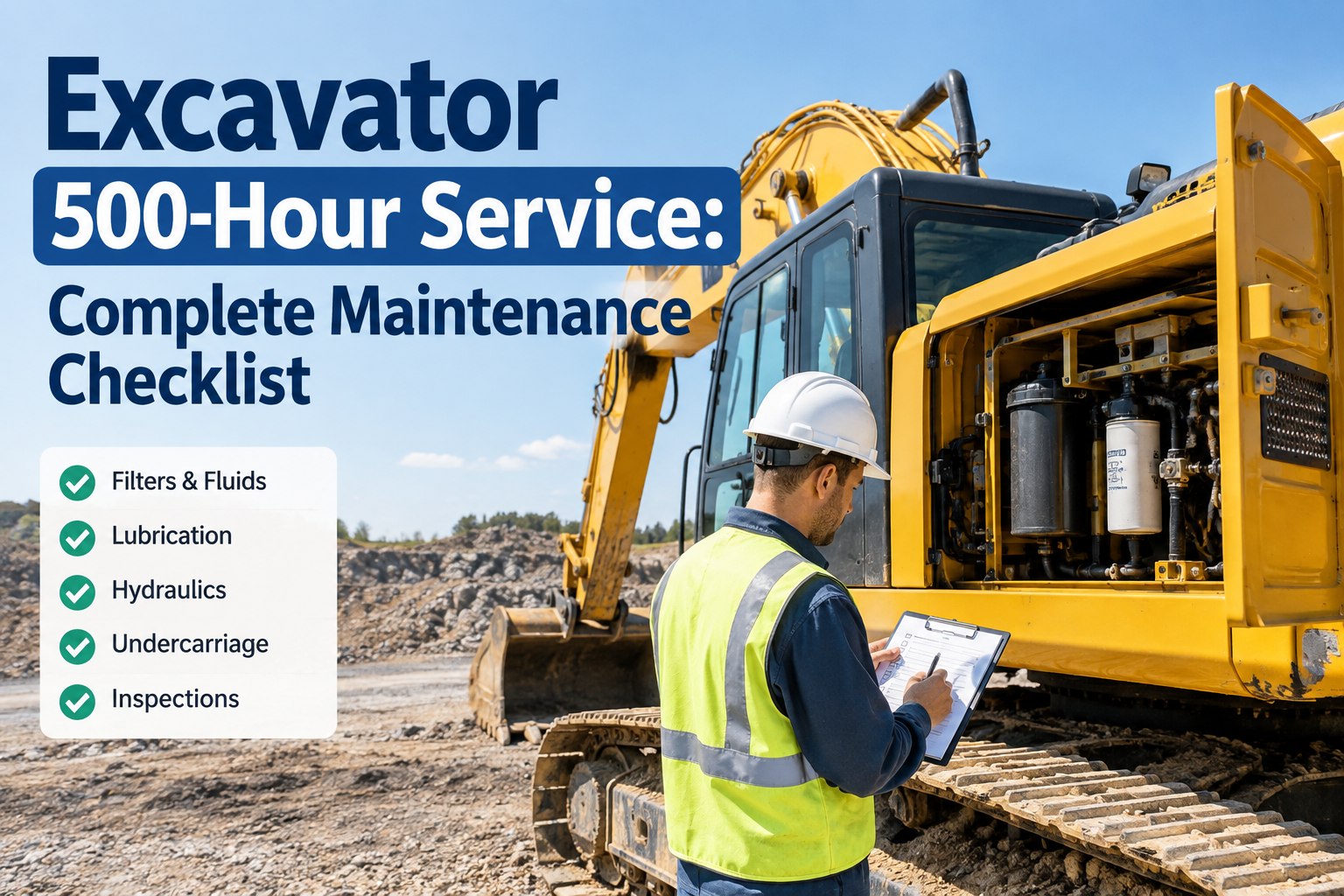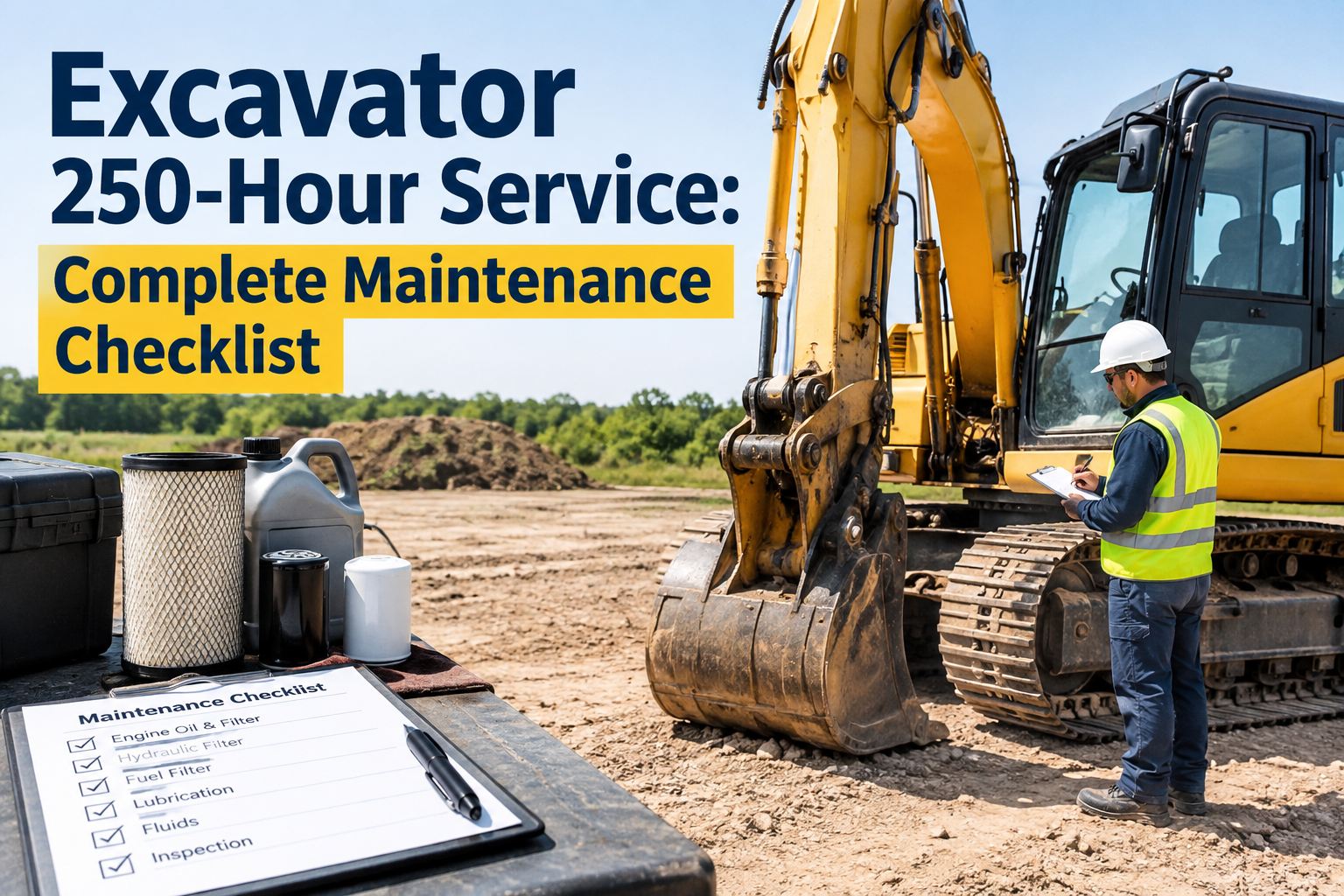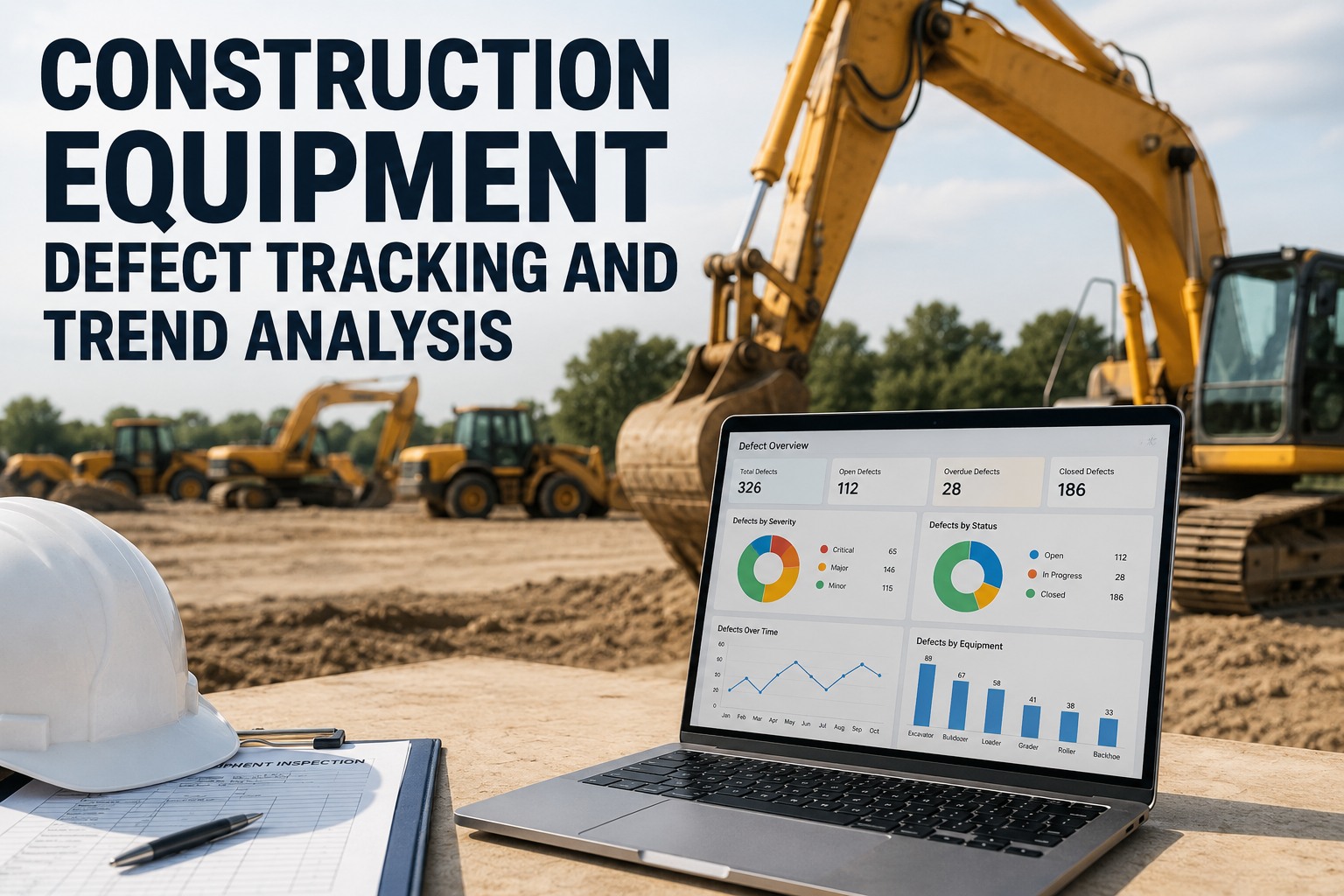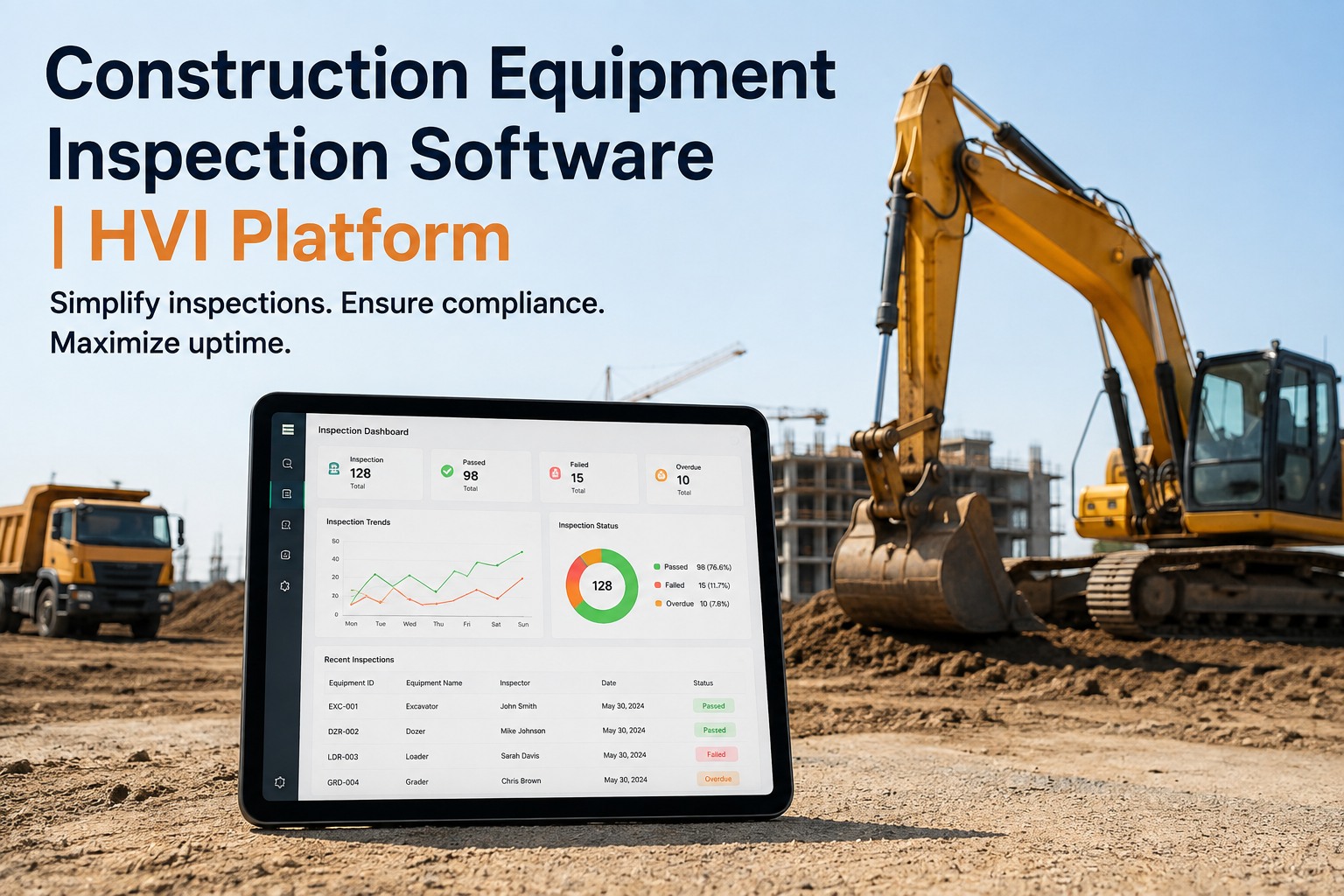
Half the money your excavator will ever cost you isn't the engine or the hydraulics — it's the undercarriage, and most crews never look underneath it. Excavator inspection and maintenance software catches that wear while a $300 roller swap is still on the table, instead of a $25,000 track replacement that was always coming. Book an excavator demo to see it on your own fleet.
Excavator Inspection and Maintenance Software, Built Around the Undercarriage, Boom, and Hydraulics
Standardize excavator inspections in walkaround order, catch wear on the component that actually drives your maintenance budget, and schedule preventive maintenance by engine hours instead of a date on a calendar.
- 1 Boom & arm pins/welds
- 2 Stick & bucket, teeth and GET
- 3 Hydraulic cylinders & hoses
- 4 Undercarriage & tracks
- 5 Engine, cab & controls
Ask most crews what breaks on an excavator and they'll say the hydraulics. Ask what actually costs the most over the machine's life and the answer is almost always the undercarriage — and it's the component least likely to get a real look, because it's under the machine, covered in mud, and easy to skip when the site is running hot.
Where excavator maintenance dollars actually goone component decides half your budget
Industry data on tracked excavators is remarkably consistent on this point: the undercarriage — track shoes, rollers, idlers, sprockets, and pins — typically accounts for roughly 50% of an excavator's total lifetime maintenance cost, because every one of those components runs in direct contact with abrasive material, every hour, under the full weight of the machine. Miss the wear window and a $300 roller becomes a cascading undercarriage rebuild running into tens of thousands of dollars.
That's exactly why HVI's inspection workflow puts the undercarriage and hydraulic system on every checklist, not as an afterthought. Book a demo to see undercarriage wear tracked against engine hours on your own excavators.
An inspection route that follows how operators actually walk the machinecab out, around the boom, down to the tracks
A checklist that jumps around the machine gets skipped. These five stops follow the order most operators already walk — HVI just makes sure nothing gets missed, and every flagged item is tied to the right asset. Sign up free and load this route onto your excavators today.
-
1Cab & controls
Seat belt, mirrors, control response, HVAC, warning lights at start-up.
-
2Boom & arm
Pin and bushing play, weld cracks at the base, cylinder leaks on raise/curl.
-
3Stick, bucket & GET
Tooth wear, bucket pin play, linkage condition, quick-coupler lock check.
-
4Hydraulic system
Hose chafing at pressure points, cylinder drift, fluid level and visible leaks.
-
5Undercarriage & tracks
Track tension, roller and idler wear, sprocket condition, debris buildup.
An engine-hour PM schedule, not a calendar guesstwo excavators on the same site rarely log the same hours in a week
A machine that's been digging double shifts for a tight pour date shouldn't be on the same fixed service date as a sister unit that's been parked waiting on permits. HVI's preventive maintenance scheduling tracks intervals against meter readings or engine hours pulled straight from the machine.
These are starting intervals — every make and model has its own OEM schedule, and HVI lets you load the manufacturer's actual intervals per excavator rather than one generic schedule for the whole fleet. Book a demo to see engine-hour PM set up for your excavator models.
From a flagged defect to a closed work orderfour steps, no second system
The gap between "someone noticed the track was loose" and "someone tensioned it" is where excavator downtime hides. Book a demo to walk through this flow on a machine from your own fleet.
Walkaround completed on a phone, photo on any flagged item.
Tied to that specific excavator's history, not a loose note.
Auto-generated — no re-typing the finding for the shop.
Closed out with parts and hours, feeding fleet-wide trends.
Before HVI vs. after HVIsame excavators, very different odds a defect gets fixed
- Undercarriage wear goes unmeasured until a track fails mid-project
- Defect notes sit on paper in the cab for days
- PM dates set by the calendar, not actual engine hours
- Audit prep means digging through binders by hand
- Undercarriage wear tracked per machine, flagged before failure
- Defect routes to the shop the moment the inspection is submitted
- PM intervals tracked against meter readings per excavator
- Full inspection and repair history exportable in one click
From a maintenance manager running 40+ excavators
We budgeted undercarriage like everyone else — replace it when it looks bad. Problem is "looks bad" from ground level is already past the point where you could have caught it cheap.
Once we started logging wear measurements against engine hours instead of eyeballing it, we pushed two undercarriage rebuilds back by nearly 400 hours each just by tensioning and rotating earlier. That's real money on a 40-plus machine fleet, not a rounding error.
Frequently asked questions
What does excavator inspection and maintenance software actually do?
It replaces paper walkaround sheets with a mobile checklist that flags defects against the right machine, turns findings into work orders, and tracks PM by engine hours instead of a fixed date.
Why does the undercarriage matter so much for excavator maintenance cost?
The undercarriage typically accounts for roughly half of an excavator's lifetime maintenance cost, since tracks, rollers, idlers and sprockets wear constantly under full machine weight on abrasive ground.
Can preventive maintenance be scheduled by engine hours instead of calendar dates?
Yes. HVI tracks service intervals against meter readings or engine hours from each excavator, so a machine running hard hits its PM window earlier than one that's been idle.
How are flagged defects turned into repair work orders?
When an operator flags an item during inspection, HVI generates a work order from that finding automatically, with the photo attached, so the shop doesn't need the issue re-typed.
Does this work for a mixed fleet of excavators and other heavy equipment?
Yes. HVI runs inspections, PM schedules, and work orders across excavators alongside dozers, drill rigs, trucks and other assets, each with its own checklist and intervals.
Put your excavator inspections and undercarriage tracking in one place
Boom, stick and bucket, hydraulics, undercarriage, and engine — one checklist per machine, defects routed straight to the shop, and PM intervals tracked by engine hours. No credit card, no hardware to install.
- Excavator walkaround checklist, built and assigned
- Engine-hour PM intervals loaded per machine
- Defect-to-work-order routing turned on
- Signed inspection history for every excavator