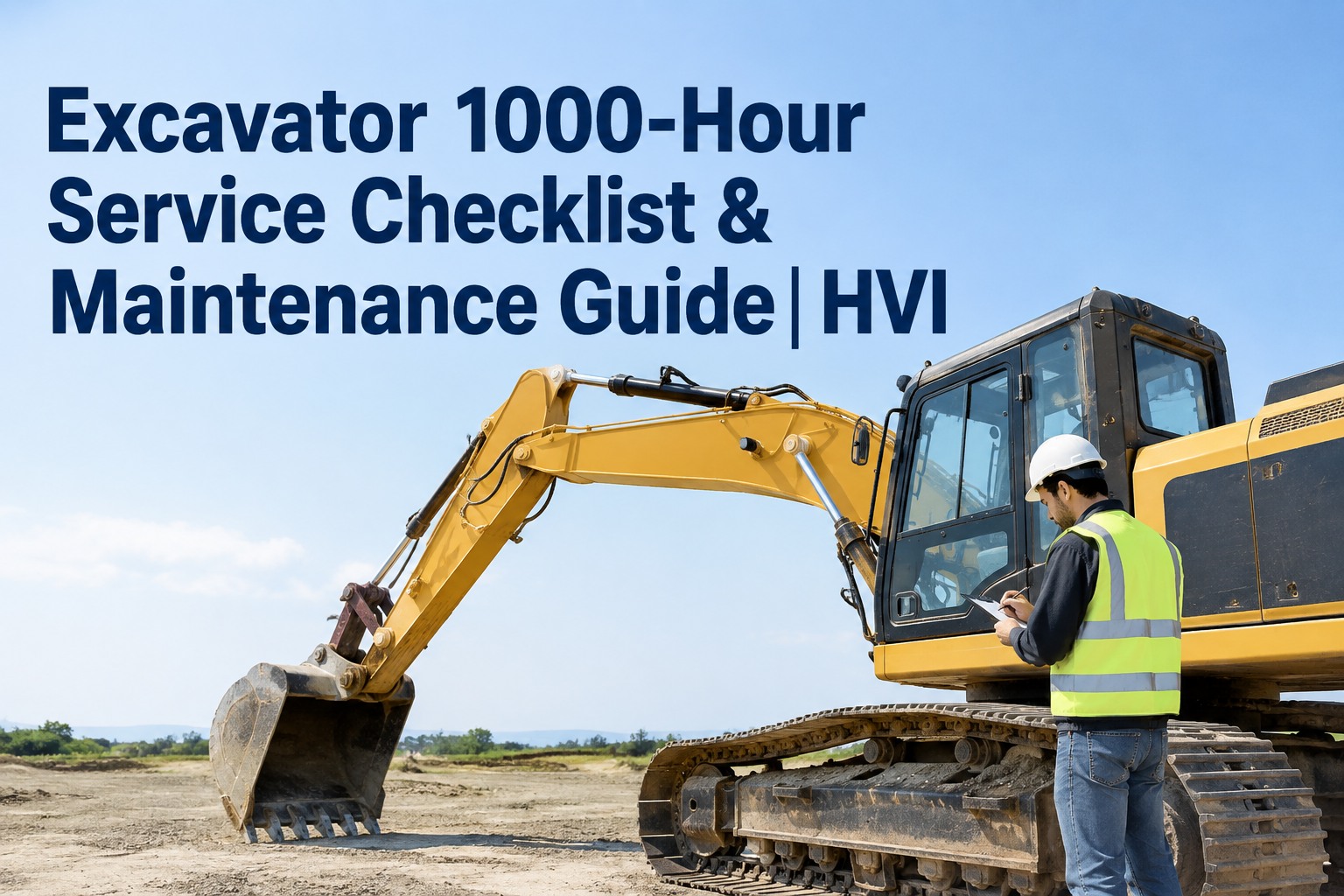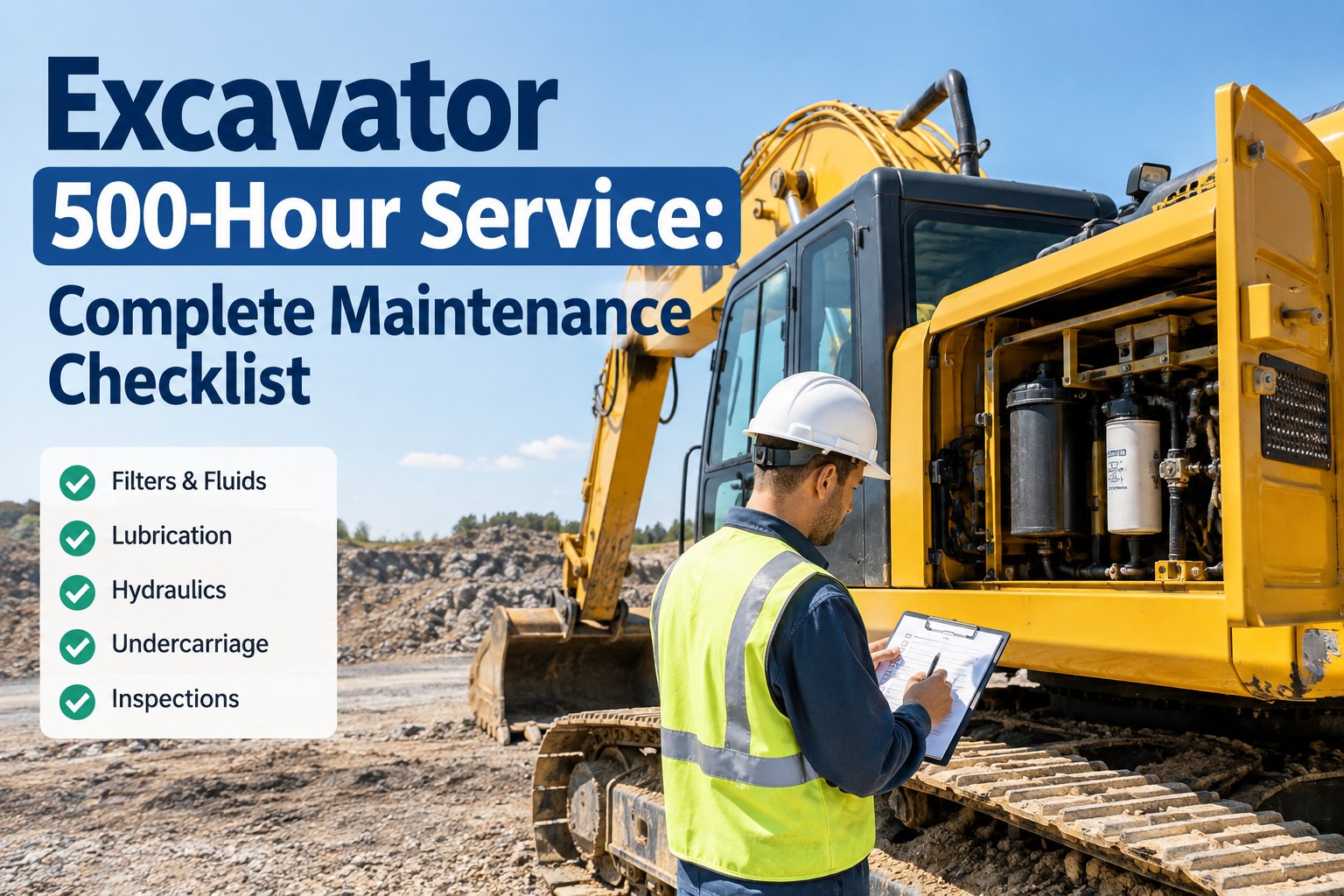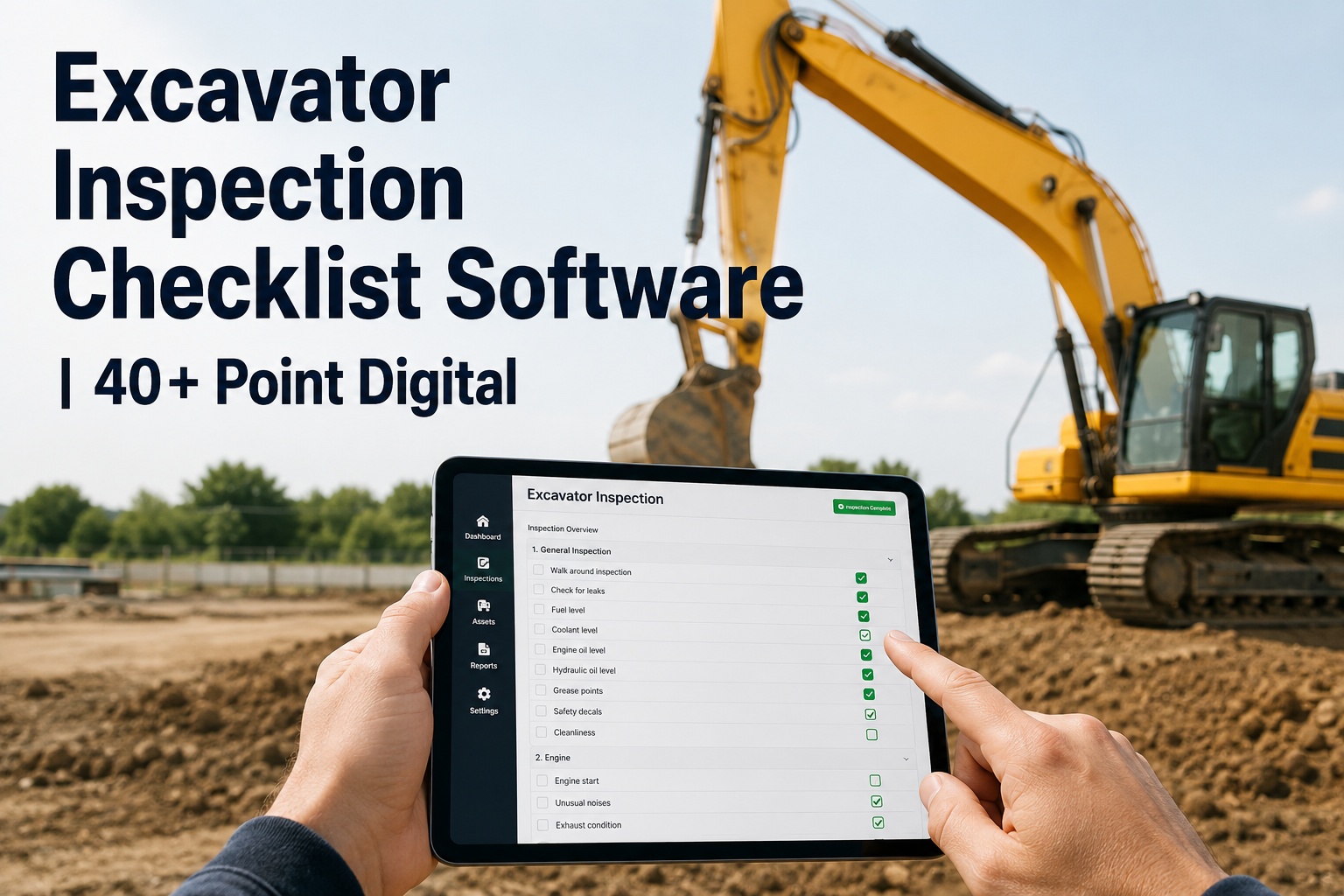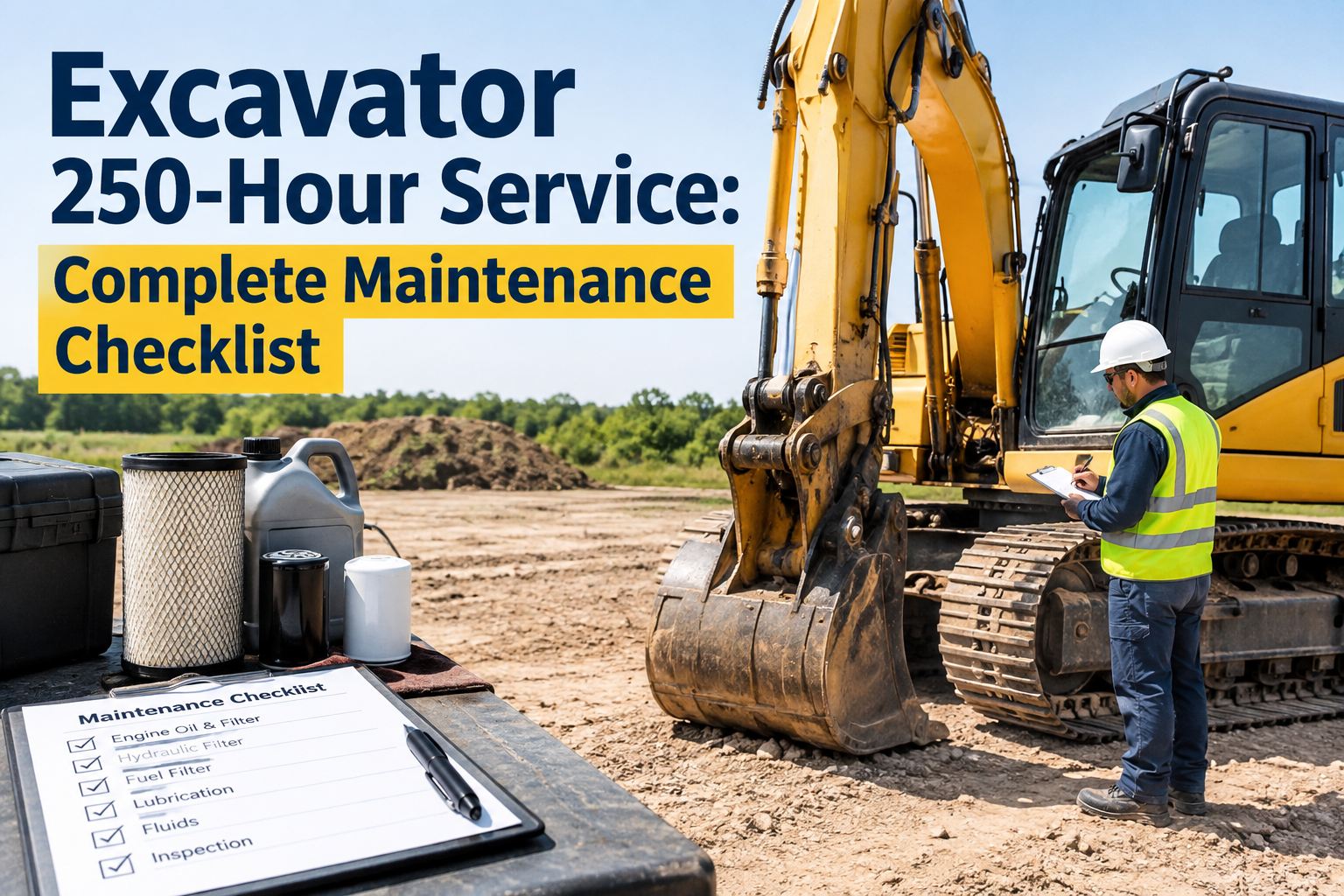
The excavator 250 hour service is the first real maintenance milestone in a machine's life — the point where daily walkarounds give way to actual fluid and filter work. Miss it, guess at it, or run it off a wall calendar instead of the hour meter, and you start the machine down a road that ends in a scored pump or a failed final drive thousands of hours early. Book a demo to see how PM triggers off real machine hours. This guide walks the full 250-hour checklist and where the OEM manual always wins.
The 250-Hour Service Runs on Hours — Not the Calendar
A machine at full utilization hits 250 hours in about a month. One sitting on a yard might take a season. The service is due at the hours, not the date — and that single distinction is where most PM programs quietly drift off schedule.
One thing before the checklist: no generic list — including this one — replaces your machine's own maintenance manual. Fluid capacities, filter part numbers, grease grades, torque values and whether your model even lands on a 250-hour or a 500-hour oil interval all come from the OEM manual for your specific serial number, engine and emissions tier. Treat what follows as a field-ready framework for what a 250-hour service usually covers, then check every number against the book.
What the 250 actually isthe first minor service, and where it sits in the ladder
The excavator 250 hour service is the first tier of scheduled preventive maintenance beyond the daily pre-start check. Unlike a walkaround — which just confirms the machine is safe to start — the 250 involves real maintenance actions: draining and replacing fluids, swapping filters, greasing every pivot, and inspecting systems you don't touch every morning. Most OEMs build their whole PM program on the same repeating hour-based ladder, and every higher service includes everything below it.
- 10 hrsDaily walkaround — fluid levels, grease, visual check
- 50 hrsBreak-in service — first oil & hydraulic filter (one-time)
- 250 hrsFirst minor service — engine oil & filter, full greasing, inspections
- 500 hrsAdds fuel & hydraulic filters, coolant test, fluid sampling
- 1,000 hrsAdds final-drive oil, valve clearance, deeper checks
- 2,000 hrsMajor service — full hydraulic oil & coolant change
The 250 matters most because it sets the pattern. Every 500-, 1,000- and 2,000-hour service builds on the tasks you establish here, so a missed or sloppy first service compounds all the way up the ladder. Book a demo to see the full ladder auto-scheduled per machine
The 250-hour checklistorganized by system — verify every spec against your OEM manual
Here's what a 250-hour excavator service typically covers, grouped by system. A tracked hydraulic excavator with a diesel engine is the reference machine; compact and mini units follow the same logic with smaller capacities. Each block is a place where a digital service record keeps the parts used and the readings taken instead of a grease-smudged clipboard.
- Drain & replace engine oil (grade per OEM, commonly 15W-40 for older diesels; use the emissions-tier spec for Tier 4)
- Replace engine oil filter
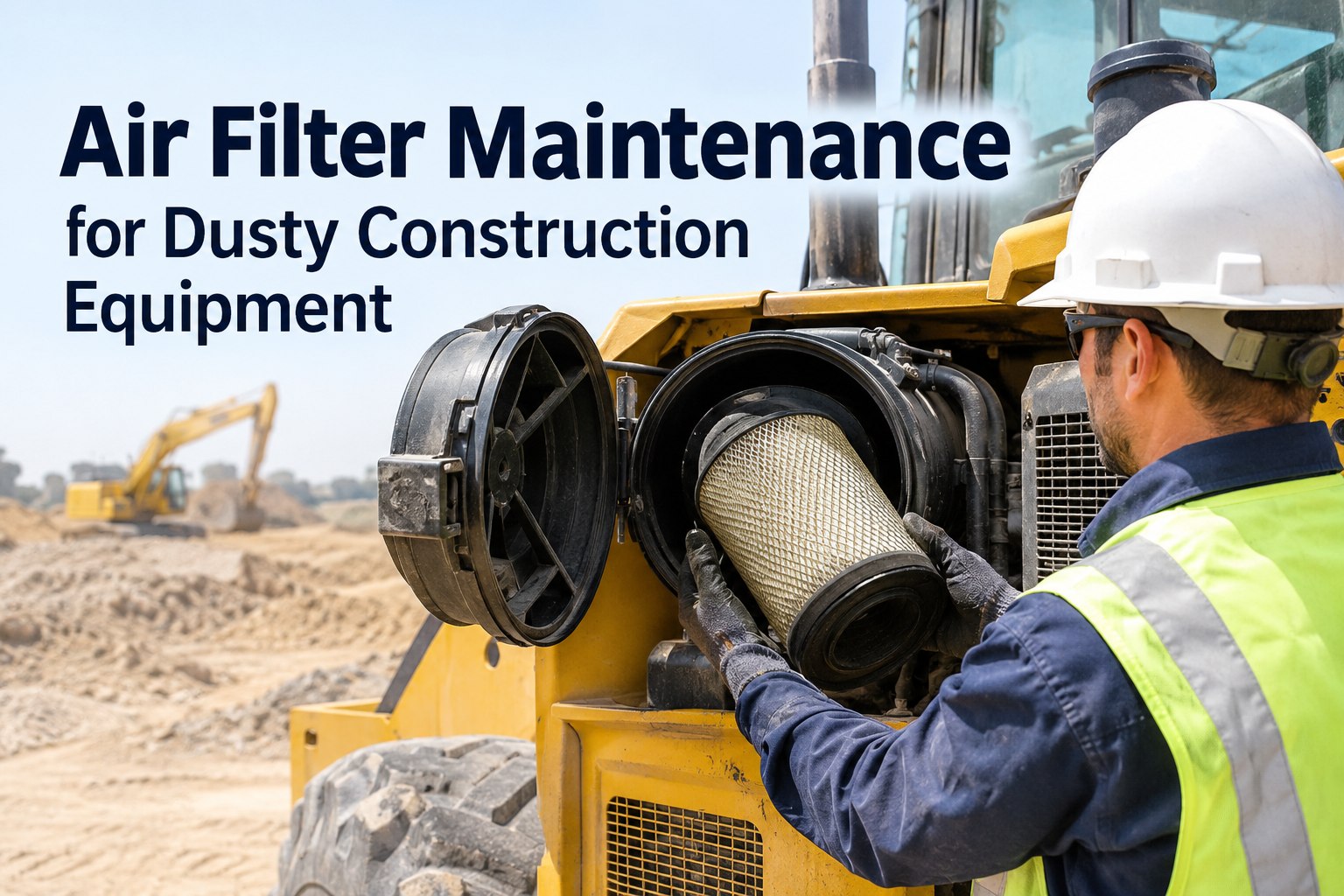
- Inspect outer air filter element; clean or replace per condition
- Drain the fuel/water separator
- Check hydraulic oil level (top up only with the specified fluid)
- Inspect hoses, fittings and cylinders for leaks, chafing or damage
- Note cycle times or sluggishness that could signal pump or valve wear
- Hydraulic filter change is usually a 500-hour task — confirm in the manual
- Grease every boom, arm (stick) and bucket pin
- Grease the swing bearing and slew ring per OEM shot count
- Hit all remaining chassis and linkage grease points
- Wipe fittings first so you're not pumping grit into the joint
- Check & adjust track tension per the OEM procedure
- Inspect track pads, links, rollers and idlers for wear or damage
- Listen and watch for final-drive noise or leaks (oil change is later)
- Clear packed material from the undercarriage
- Check coolant level and condition; look for leaks
- Clean the radiator and cooler pack of dust and debris
- Check fuel level and top up DEF if the machine runs SCR
- Inspect belts and hoses for cracks, glazing or softness
- Check battery charge, terminals and cable condition
- Scan for stored fault codes before clearing them
- Test horn, backup alarm, lights, beacons and seatbelt
- Inspect structure: boom, arm, bucket teeth and cutting edge
Log what you did, not just that you did it — oil grade, filter part numbers, grease grade, track-tension reading and hour-meter value. That record is what turns a checklist into a service history you can defend at trade-in or warranty time. Book a demo to capture parts and readings per service
When 250 isn't 250severe-duty conditions that pull the interval in
The OEM's 250-hour interval assumes normal operating conditions. Most fleets don't have normal conditions. Dust, heat, shock loading, continuous production and heavy idle all age fluids and filters faster than the hour meter suggests — so the same machine in a quarry needs service sooner than one on light utility work. Industry practice is to shorten intervals under these conditions; a single severe factor commonly justifies a 20–30% reduction, and stacking factors can cut them by half.
Quarry limestone, coal, sand and demolition dust load air filters fast — primary element inspection can move to every ~100–150 hours instead of 250, and undercarriage wear accelerates.
High ambient temperature and sustained high-load hydraulic cycles oxidize fluid faster. Hot climates can shorten hydraulic and engine oil life meaningfully — sampling confirms the real number.
Extended idle degrades engine oil faster than working hours do. When idle exceeds roughly 40% of total hours — common on excavators — the oil interval should come down, not stay put.
Demolition shock loading and 16-hour production days are textbook severe duty. Urban demolition often caps engine-oil intervals well under the standard figure to protect the machine.
The point isn't to guess a percentage — it's to set the machine's baseline from the manual, then adjust for the duty it actually sees and let data confirm you got it right. During the warranty period, follow OEM specs exactly; extending intervals beyond the manual can void coverage regardless of how good the oil looks. Start free and set a severe-duty multiplier per machine
Should you sample at 250?fluid analysis as condition monitoring, not a universal rule
Fluid sampling gets talked about like a checkbox, so let's be precise: it's a condition-monitoring practice, not a universal OEM requirement at 250 hours. The industry baseline for hydraulic oil sampling on excavators is every 500 hours, and pulling it forward to 250 is a judgment call that makes sense under severe duty — hammer work, high heat, heavy dust, continuous loading — or when you're trying to establish a trend on a new or suspect machine.
What makes sampling worth the $15–30 per sample isn't any single result — a lone sample is a snapshot. It's the trend. Four to six samples logged over a couple thousand hours turns ISO cleanliness codes and metal content (iron from bearings, copper from bushings, aluminum from pumps, silicon from dust ingress) into an early warning that predicts pump and cylinder condition months before any performance symptom shows up. Draw it from the correct sampling port on the operating tank — not the drain plug or a filter housing, which give misleading results — and log it against the machine so the trend actually accumulates. Book a demo to see sample results trended per machine
Why actual machine hours matterthe calendar lies, the hour meter doesn't
Here's the failure mode that quietly wrecks PM programs: scheduling from a calendar instead of the machine. Book every excavator for a "monthly" service and the busy unit blows past 250 hours mid-month while the idle one gets serviced at 90 hours for no reason. Machine hours are the only honest trigger, because they measure what the machine actually did — not what the wall said.
This is where telematics earns its keep. Manual hour-meter reads drift — the 50-to-200-hour gaps that pile up between someone walking the yard with a notepad are exactly how services get missed. Feed engine hours straight from the machine's telematics into the PM trigger and the service fires on the reading, automatically, whether the machine is in the yard or on a jobsite two states away.
HVI integrates with major OEM telematics so hours flow in automatically — and if you run a mixed fleet of Cat, Komatsu and Deere, it puts them all on one PM schedule instead of three separate dealer portals. Book a demo to connect your telematics to automated PM
From an equipment manager who stopped guessing
We ran services off a spreadsheet and a guy walking the yard every Monday writing down hour meters. Sounds fine until you realize the machine on the far job hadn't been read in three weeks and was 180 hours past its oil. We found that out the expensive way.
Now hours come off the telematics and the 250 pops as a work order on its own, with the tasks and the parts already on it. Nobody's guessing, nobody's walking the yard with a clipboard, and I can pull any machine's full service history in about ten seconds when a rental customer or a warranty rep asks. The oil analysis trend is the part I didn't expect to care about — it's caught two pumps before they let go.
Common 250-hour service mistakes
The 250 is a simple service, which is exactly why it gets done carelessly. These are the ones that quietly cost the most.
Every one of these comes down to discipline and documentation — the two things a paper process leaks. Setting PM to trigger from real hours and forcing the parts and readings into the record closes most of these gaps automatically. Start free and standardize your 250-hour service
Excavator 250-hour service FAQs
What is included in a 250-hour excavator service?
A 250-hour excavator service is the first minor scheduled service and typically includes draining and replacing the engine oil, replacing the engine oil filter, inspecting the air filter, draining the fuel/water separator, checking the hydraulic oil level, inspecting hoses and cylinders for leaks, greasing every boom, arm and bucket pin plus the swing bearing, checking and adjusting track tension per the OEM procedure, checking coolant and other fluid levels, inspecting belts and hoses, checking the battery and electrical connections, testing safety devices like the horn, backup alarm and seatbelt, and inspecting structural components such as the boom, arm and bucket teeth. It usually takes about 1.5 to 2.5 hours. Exact fluid capacities, filter part numbers and grease grades come from your machine's OEM maintenance manual for its specific model, engine and emissions tier — a generic checklist is a framework, not a substitute for the manual.
How often should excavator engine oil be changed?
It depends on the machine and its operating conditions, which is why the OEM manual is the authority. Many excavators specify engine oil and filter replacement somewhere between every 250 and 500 hours depending on model, engine type and emissions tier; some newer machines with premium oils extend further. Under normal conditions the published interval applies. Under severe conditions — heavy dust, extreme heat, mining or quarry work, high idle time, continuous heavy loading — industry practice is to shorten the interval, often by 20 to 30% for a single severe factor and more when several stack up. Extended idle in particular degrades oil faster than working hours do, so a machine that idles more than about 40% of its total hours should have its interval pulled in. Oil sampling is the best way to confirm whether your specific application is tracking closer to the standard or the severe interval, and during warranty you should follow the OEM figure exactly.
Is a fluid sample needed at 250 hours?
Not as a universal requirement. Fluid sampling is a condition-monitoring practice rather than something every OEM mandates at 250 hours, and the common industry baseline for hydraulic oil sampling on excavators is every 500 hours. Pulling a sample forward to 250 makes sense under severe-duty conditions — hammer or breaker work, high ambient heat, heavy dust, continuous loading — or when you want to establish a baseline trend on a new or questionable machine. The value of sampling comes from the trend, not a single result: several samples logged over time turn ISO cleanliness codes, water content and metal spectroscopy into an early warning that can flag pump or cylinder wear months before you'd feel it in performance. If you do sample, draw it from the correct port on the operating hydraulic tank — not the drain plug or a filter housing — and log every result against the specific machine so the trend accumulates.
How do you track excavator service hours?
You can read the machine's hour meter manually, but on any fleet larger than a couple of units that quickly breaks down — machines move between sites, meters go unread for weeks, and 50-to-200-hour gaps accumulate between manual readings, which is exactly how services slip past due. The reliable approach is to feed engine hours automatically from the machine's telematics — systems like Caterpillar VisionLink, Komatsu KOMTRAX and John Deere JDLink/Operations Center all report operating hours — directly into your maintenance system so PM triggers fire on the actual reading. In HVI, you set each model's PM intervals once, hours flow in from the hour meter or telematics, and the platform raises the work order with the correct tasks when a service comes due. For mixed fleets that run several OEMs, that means one PM schedule and one service history across all brands instead of logging into three separate dealer portals.
Does severe-duty operation change the 250-hour interval?
Yes. The OEM's published intervals assume normal operating conditions, and most real-world excavator work isn't normal. Severe-duty conditions include heavy dust exposure (quarry, demolition, unsealed haul roads, mining), extreme heat, high-load-factor duty cycles, continuous long-shift production, heavy idle time, and coastal salt exposure. Under any of these, industry best practice is to shorten filter and fluid intervals — commonly a 20 to 30% reduction for one severe factor, and up to half or more when several combine. In practical terms that can mean an air filter checked every 100 to 150 hours instead of 250 in a dusty quarry, or engine oil pulled in well under the standard figure in urban demolition. The right method is to start from the OEM baseline for your specific machine, apply a duty-cycle adjustment for the conditions it actually works in, and let oil analysis confirm the interval is correct — while staying within OEM specs during any active warranty period.
Never let a 250-hour service slip past due again
HVI triggers every excavator PM from actual machine hours — read manually or pulled from Cat, Komatsu and Deere telematics — raises the work order with the right tasks, records the parts and fluids used, and keeps the full service history attached to each machine for its whole life. Set your intervals once per model and let the hour meter do the scheduling.
No credit card · Meter-based PM · Service history that travels with the machine