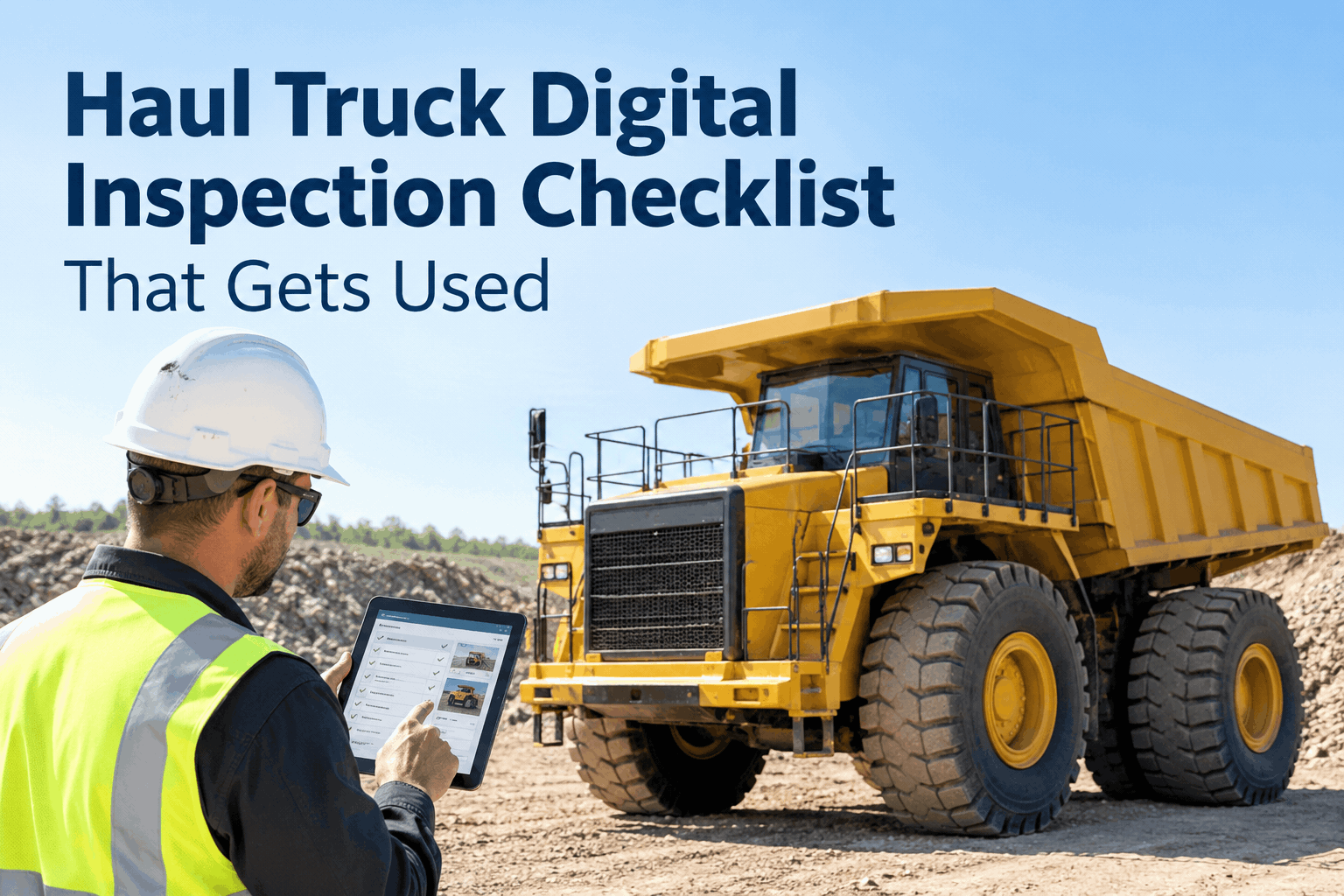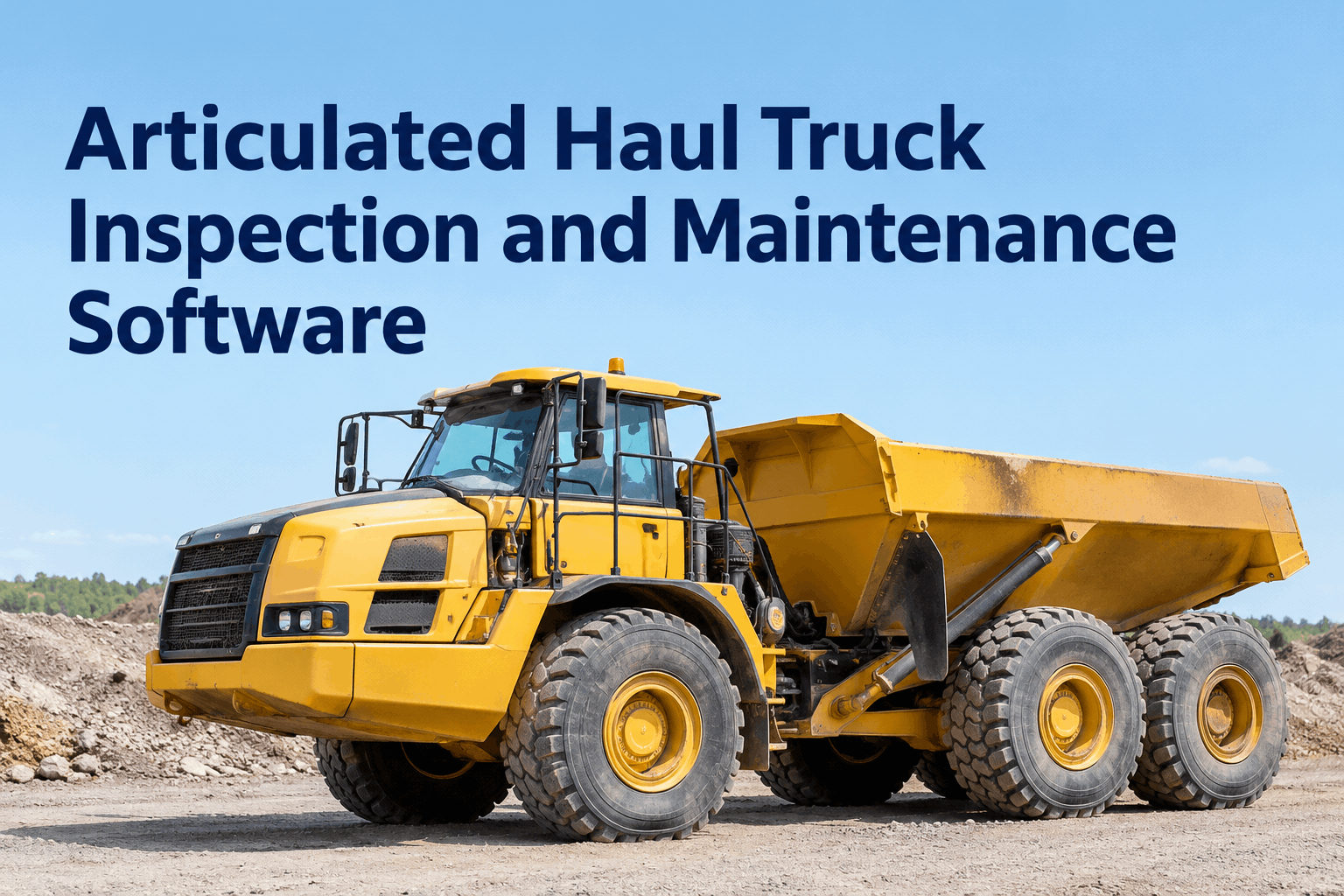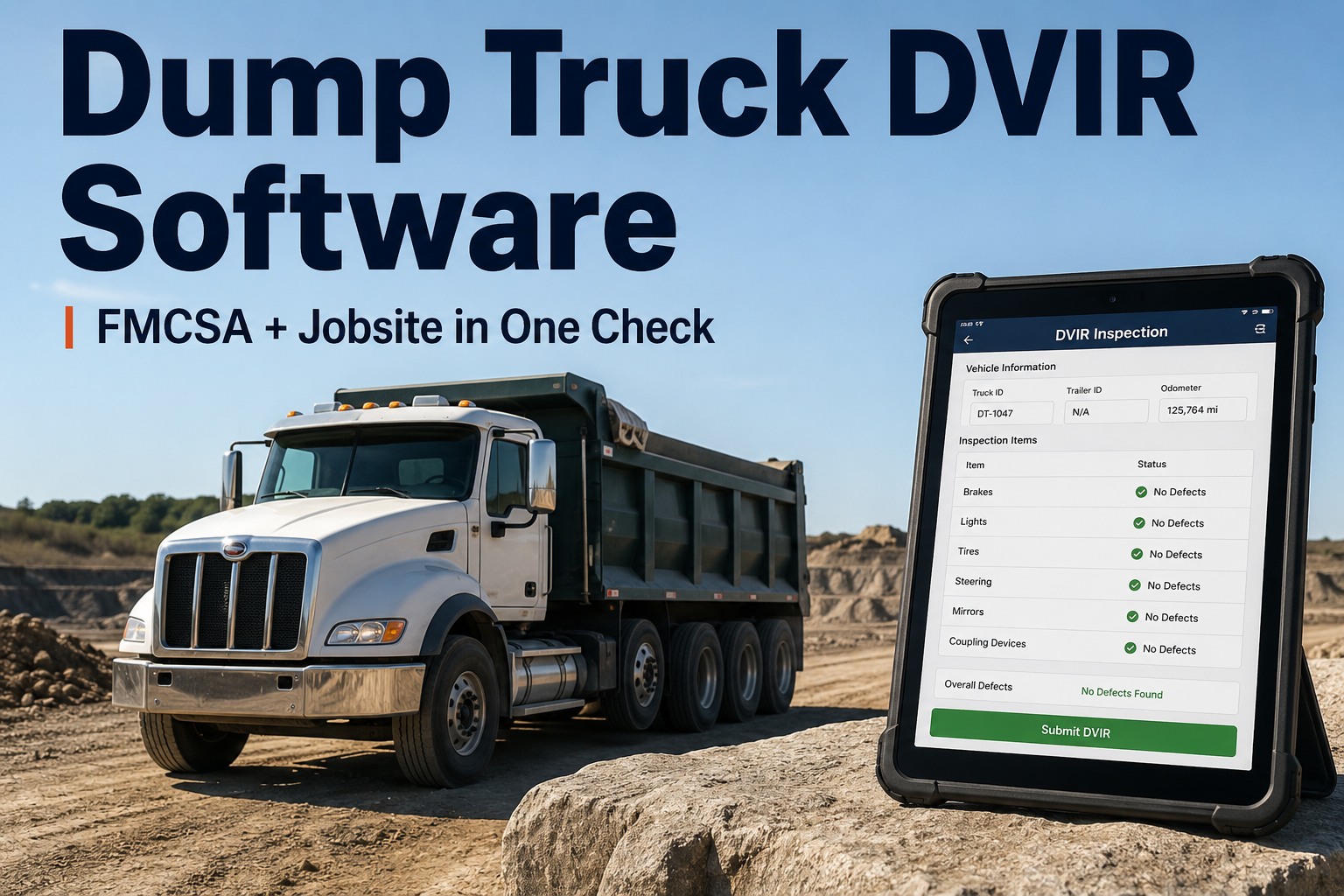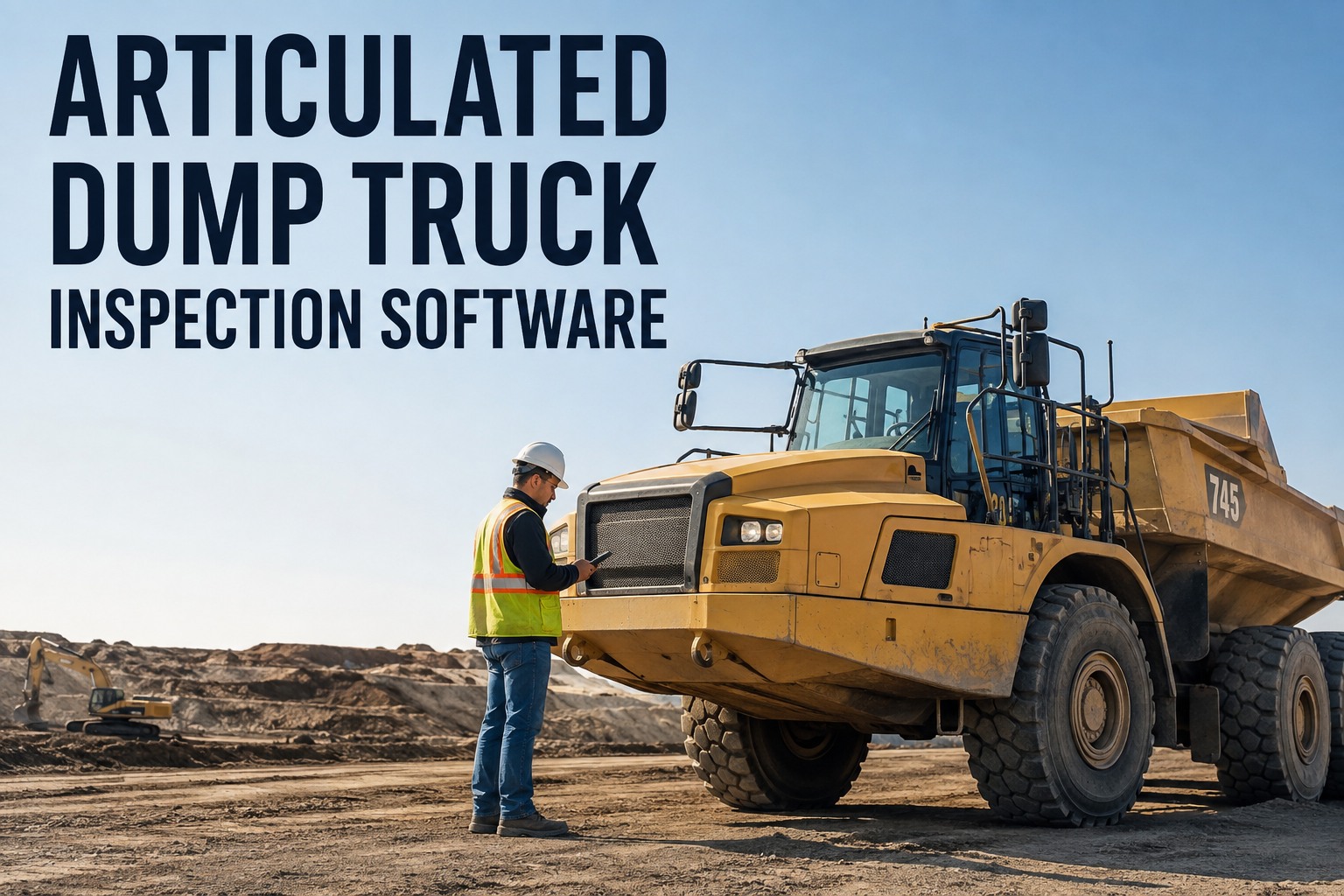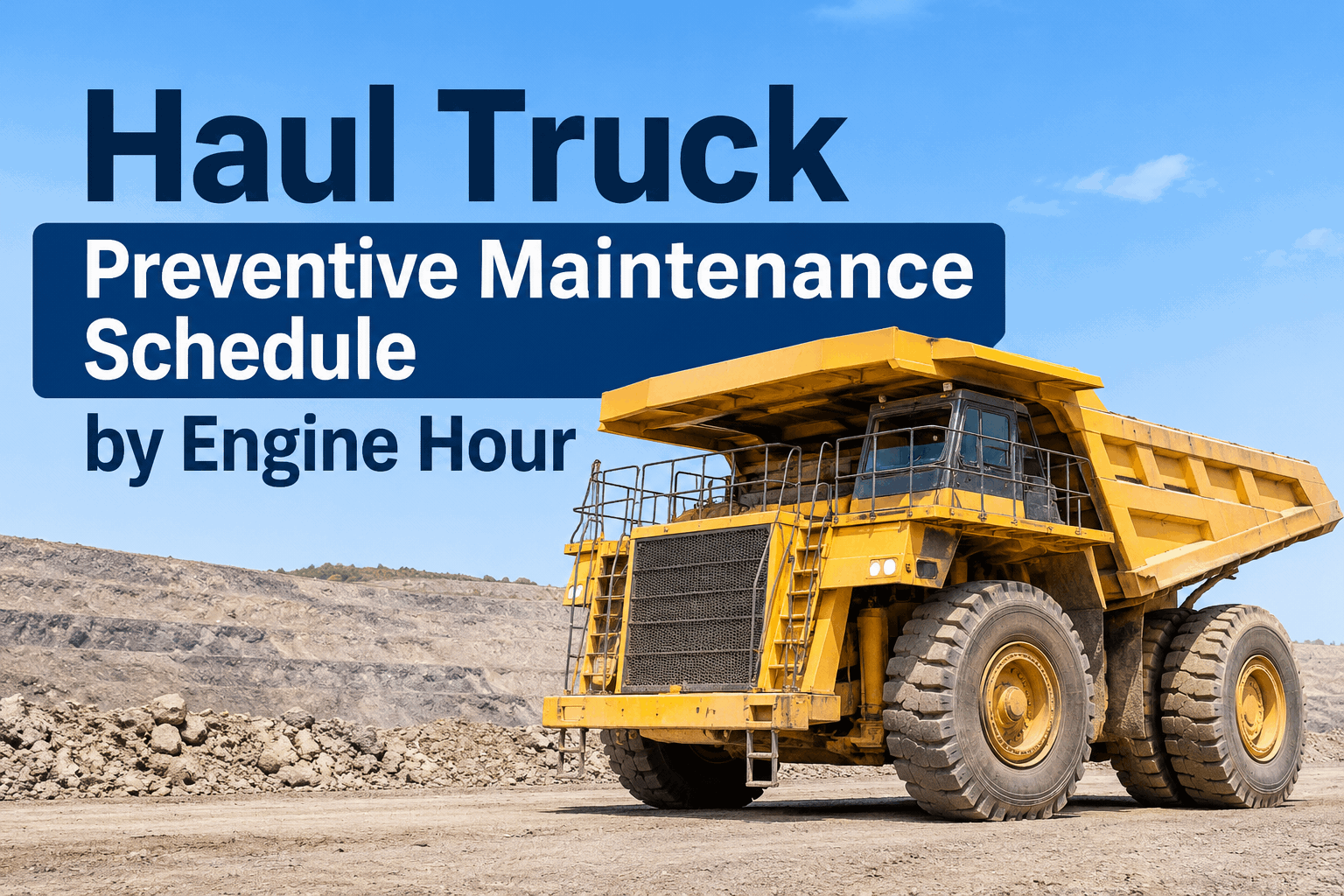
A construction haul truck doesn't get the luxury a mine-site truck does — it moves between jobs, crosses public roads, and switches from an articulated hauler to a rigid dump truck depending on what the site needs. A haul truck preventive maintenance schedule by engine hour keeps both types on a tiered, hour-based cadence instead of a calendar guess. Book a demo to see it on your fleet .
One Fleet, Two Truck Types, One PM Logic
Articulated and rigid-frame haul trucks wear differently and cost differently to maintain — but both belong on the same engine-hour PM discipline, not a calendar.
Most haul truck PM content is written for one of two extremes — a 400-ton mine-site rigid hauler that never leaves the pit, or a highway-only construction truck covered by FMCSA. A construction haul fleet usually runs neither of those. It's a mix of articulated dump trucks working rough, changing terrain across several job sites, and maybe a rigid-frame truck or two on a longer-term quarry or road job with a well-maintained haul road. Those two truck types wear differently, cost differently to maintain, and in the ADT's case, occasionally travel public roads between jobs — but the underlying discipline that keeps either one reliable is the same: tiered preventive maintenance fired by engine hours, not a date on a calendar.
Why ADTs and rigid trucks need different maintenance attentionsame PM logic, different wear profile and cost
The choice between an articulated and a rigid-frame truck is usually made on job requirements — terrain, haul distance, how long the job lasts. The maintenance plan has to follow that choice, not fight it.
More components to maintain — the articulation joint, hydraulics, and all-wheel drive system — which is exactly where that extra ~$10,000/year in maintenance cost tends to come from. Tire sets run $10,000–$25,000.
Simpler drivetrain and generally lower maintenance complexity — but it demands infrastructure an ADT doesn't, and a full tire set runs $40,000–$60,000 when it's due.
Neither type is "lower maintenance" in absolute terms — they're lower maintenance in different categories, which is why a single generic PM template for "haul truck" misses the items that actually drive cost on each type. Start a free trial and set up truck-type-specific PM templates
What a construction haul truck inspection has to coverthe systems that drive most unplanned downtime
Engine & cooling
Oil, coolant, air filter restriction, and exhaust smoke — the baseline that catches most early engine problems before they're expensive ones.
Brakes & retarder
Service brake response, park brake hold, retarder function — non-negotiable on any grade, loaded or empty.
Tires
Pressure, tread, and cuts — tracked against position, since a full set is a five-figure cost on either truck type.
Articulation & suspension
On an ADT, the articulation joint and oscillation bearings; on a rigid, the suspension and steering linkage — both under constant grade and payload stress.
Hydraulic dump system
Hoist cylinder leaks, body prop function, and tailgate operation — the system that actually does the job the truck exists to do.
Frame & body
Weld integrity, liner condition, and hinge pins — the full payload goes through this structure every single cycle.
Every one of these belongs on a truck-type-specific digital checklist, not a generic form. HVI's haul truck inspection software runs separate templates for ADT and rigid-frame units, each covering what actually fails on that configuration. Book a demo to see both truck types on one platform
The pre-trip checklist, including what changes on public roadswhat to cover before a loaded cycle — and before an ADT moves between sites
A construction haul truck's pre-trip covers the same core systems every shift. An ADT moving under its own power between job sites adds a layer most site-bound mining trucks never need to think about.
In HVI this is a guided mobile template — tick, flag, photo — with a separate profile for public-road legs so nothing gets missed when a truck leaves the site boundary. Book a demo and see this checklist live on one screen
The engine-hour PM scheduletiered intervals that apply to either truck type, adjusted for duty
The tier structure holds across both configurations; what changes is how hard a given site's terrain and cycle pull the interval in.
-
250 hr
Basic service
Engine oil and filter, brake inspection, tire pressure and wear check, hydraulic fluid level.
-
500 hr
Intermediate service
Hydraulic filter and sample, articulation or suspension inspection, brake lining measurement.
-
2,000–3,000 hr
Major service
Transmission and differential service, full structural inspection, the interval most sources treat as a dump truck's major overhaul point.
HVI's meter-hour PM scheduling auto-generates the work order when a truck's hours cross an interval, applies separate schedules per truck type, and lets you shorten intervals for rough-terrain ADT duty versus steady haul-road rigid work. For mining-scale ultra-class trucks running a different tier structure entirely, see our mining haul truck PM schedule guide. Book a demo to see tiered PM set against your fleet
From flagged defect to closed work orderhow a defect reaches the shop, whichever truck type flagged it
-
1
Operator runs the pre-trip inspection
The truck-type-specific checklist, on a phone, before the first loaded cycle.
-
2
A defect is flagged with photo & severity
A brake concern, tire cut, or hydraulic leak gets logged with a photo, tied to that exact truck.
-
3
It becomes a work order in one tap
The flag converts to a work order and lands with the shop, visible immediately.
-
4
Repair closes against that truck's history
Parts, labor, and sign-off record against the machine's own file, feeding cost-per-hour analytics across the fleet, by truck type.
From a construction fleet manager
We run a mixed fleet — a couple of rigid trucks on a long quarry contract, and a handful of ADTs that move between smaller jobs depending on the week. For a while we tried to run one generic PM schedule across all of them, and it fit neither truck particularly well.
Splitting the templates by truck type, with the ADTs' articulation and hydraulics getting their own attention, changed how often we were catching things on the walkaround instead of in the shop. The public-road checklist for the ADTs moving sites was the detail that finally stopped getting skipped once it was built into the app instead of a separate paper form.
Frequently asked questions
What's the difference between PM for an articulated and a rigid-frame haul truck?
Both follow the same engine-hour-based tier structure, but an ADT's schedule weighs the articulation joint, hydraulics, and all-wheel drive more heavily, while a rigid truck's weighs suspension and drivetrain simplicity against higher per-component repair cost.
How much does haul truck maintenance cost per year?
ADTs commonly run $50,000–$100,000 per unit per year, and a Komatsu study found articulated trucks average roughly $10,000 more annually than comparable rigid-frame trucks due to added mechanical complexity.
How often should a construction haul truck get major service?
Major service commonly falls every 2,000–3,000 operating hours, layered on top of 250 and 500-hour basic and intermediate tiers, adjusted for terrain and duty cycle.
Does an ADT need a different inspection when traveling public roads between sites?
Yes. Lights, signals, registration, permits, and load securement should be confirmed before any public-road leg, in addition to the standard pre-trip checklist.
Can HVI run separate PM schedules for different truck types in one fleet?
Yes. Each truck type gets its own inspection template and PM tier structure, with cost and defect history tracked per machine, visible across the whole fleet.
One PM system for every truck in the fleet
HVI gives every haul truck operator a type-specific digital inspection, routes flagged defects to a work order in one tap, fires PM on real engine hours, and keeps a cost-tracked history per truck — whether it's an ADT moving between jobs or a rigid hauler parked on one site for years. Live in under two weeks.
- ADT & rigid-frame specific templates
- Defect → work order in one tap
- Tiered engine-hour PM, auto-fired
- Cost-per-hour per truck, by type