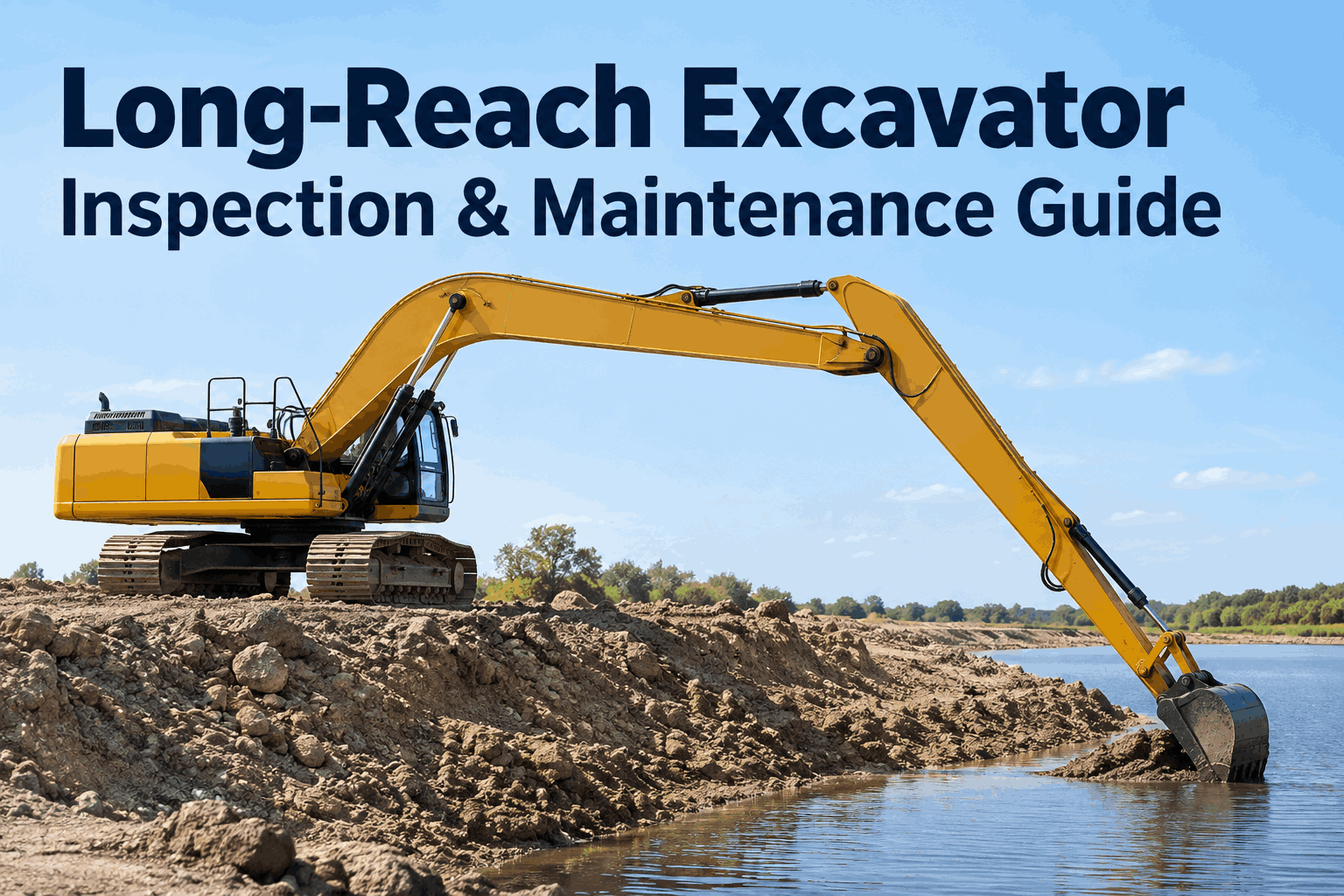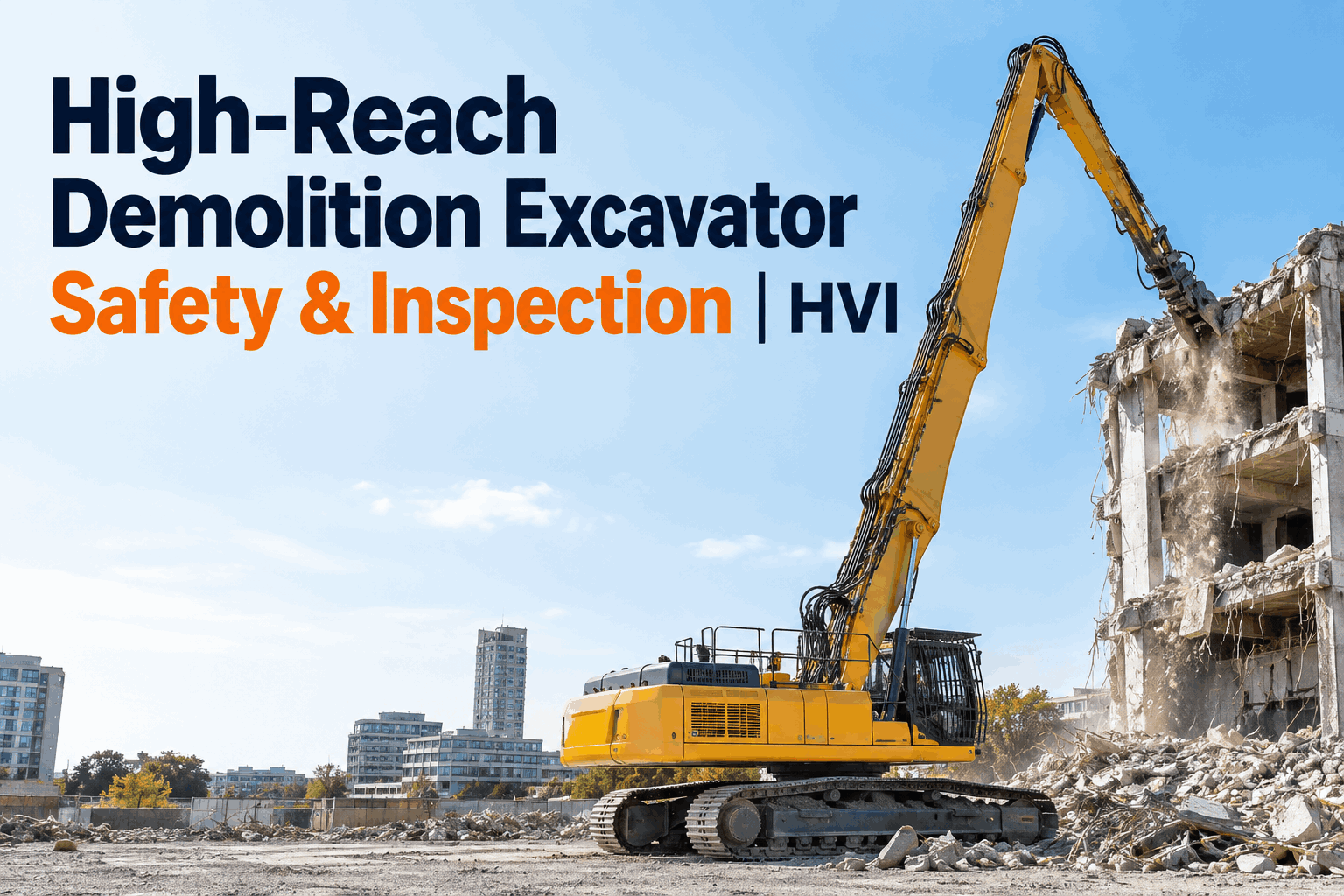
A high-reach demolition excavator does its work with a boom stretched 60, 90, sometimes 120 feet up a structure — top-heavy, no outriggers, swinging a multi-ton shear over a drop zone. When something goes wrong on a machine like this, it isn't downtime, it's a fatality report. A demolition excavator inspection is the one check where a skipped line can kill someone on the ground. See the pre-shift safety inspection that blocks a bad lift.
High-reach demolition excavator safety that holds the line
Structure, cab, hydraulics, attachment and setup — inspected before every shift, with the safety-critical items as must-pass gates, so a top-heavy machine never goes up on a missed defect.
A standard excavator digs close to the ground, low and stable. A high-reach demolition machine carries that same weight class up in the air, far out over its tracks — the margin for a missed defect shrinks the higher the boom goes.
Four ways a high-reach demolition excavator hurts someone
The risks aren't the same as a digging excavator. These four are what a demolition excavator inspection exists to catch before the boom comes up.
Tip-over
Top-heavy with the boom extended and no outriggers. Soft or sloped ground, an overreach, or the wrong counterweight and the whole machine goes over.
Falling debris into the cab
Working up a structure drops material straight down toward the operator. A failed FOPS guard or cracked protective glass turns a near-miss into a casualty.
Boom & structural failure
Extended booms carry huge stress. A hairline crack at a weld or pin, or a hydraulic line that lets go up high, drops the whole front end.
Dropped attachment
A shear or pulverizer weighs tons and hangs over the drop zone. A worn coupler lock or pin releasing it in the air is catastrophic.
None of these are random — each is a specific thing you can inspect for before the shift — see each risk tied to a must-pass inspection item.
The pre-shift inspection is a gate, not a formality
On a high-reach machine the inspection isn't paperwork — it's the gate that decides whether the boom goes up at all. These zones get cleared first, every shift.
Any one of these failing is a stop, not a note for later — make the safety-critical items must-pass gates free.
Stability is set before the first lift, not during it
Most high-reach incidents trace back to setup, not operation. Three things decide whether the machine stays upright — and all three are checkable on the ground.
Firm, level, load-bearing ground only — never soft fill, mud or a slope. The higher the boom, the less the machine forgives a soft spot under a track.
The right counterweight for the boom configuration is what balances a heavy front. Wrong config or a missing weight changes the tipping point entirely.
A defined drop zone with ground crew kept out. The operator has real blind spots up high — nobody should be where falling material lands.
Logging the setup check means the machine lifts on a confirmed-stable base, every time — see the stability setup logged before the boom goes up.
How HVI runs high-reach demolition excavator safety
The inspection, the must-pass gates, the photo proof and the work orders live on one platform, so a safety-critical defect stops the machine instead of getting written down.
Must-pass safety inspections
Cab guard, structure, hydraulics, coupler and setup run as must-pass items with photos — a failure flags the machine out of service, not into a note.
Defects straight to work orders
A cracked guard or weeping boom line becomes an assigned work order with the part attached, so the fix happens before the machine works again.
A record that proves it was checked
Every inspection signed and time-stamped against the machine and operator — the audit trail an OSHA review or an insurer asks for after demolition work.
It runs on the same platform as your wider excavator inspection software and your safety management, so demolition sits in the same record as the rest of the fleet.
On high reach, the inspection isn't a formality — it's the thing standing between a crew and a machine coming down on them. We had a protective-glass crack flagged on a pre-shift once that a paper sheet would have let slide to "note it later."
Now the cab guard, the structure and the setup are must-pass. If they don't pass, the boom doesn't go up — the operator can't just sign past it. That's the only way I'll run a high-reach fleet.
Frequently asked questions
What makes a high-reach demolition excavator inspection different?
The stakes and the risks. A high-reach machine is top-heavy with no outriggers, working a long boom over a drop zone, so the inspection centers on tip-over stability, cab and FOPS protection, extended-boom structure and hydraulics, and the attachment coupler — hazards a standard digging-excavator check doesn't carry.
What are the biggest safety risks on a demolition excavator?
Tip-over from an extended boom on soft or sloped ground, falling debris into the cab, boom or structural failure at a crack or hydraulic line, and a dropped attachment from a worn coupler. All four are inspectable before the shift starts.
What should a pre-shift demolition excavator inspection cover?
Cab and operator protection (FOPS, glass, seatbelt, alarms), boom and structure for cracks, hydraulic lines and cylinders up the reach, the attachment and coupler lock, and the setup — firm level ground, correct counterweight, and a cleared drop and exclusion zone.
How does a digital inspection improve demolition safety?
It makes safety-critical items must-pass, so a failed cab guard or boom crack stops the machine instead of getting noted and forgotten. It attaches photo proof, routes defects to work orders, and keeps a signed, time-stamped record for OSHA and insurers.
How does HVI help with demolition excavator safety?
HVI runs the high-reach inspection on a phone with photos, flags the cab, structure, hydraulic, coupler and setup items as must-pass gates, and turns any failure into a work order. Every check is signed against the machine and operator for a complete safety audit trail.
Make high-reach demolition excavator safety a gate the shift can't skip
Must-pass pre-shift inspections with photo proof, safety-critical defects routed to work orders, and a signed record for every lift. Keep a top-heavy machine from ever going up on a missed defect.