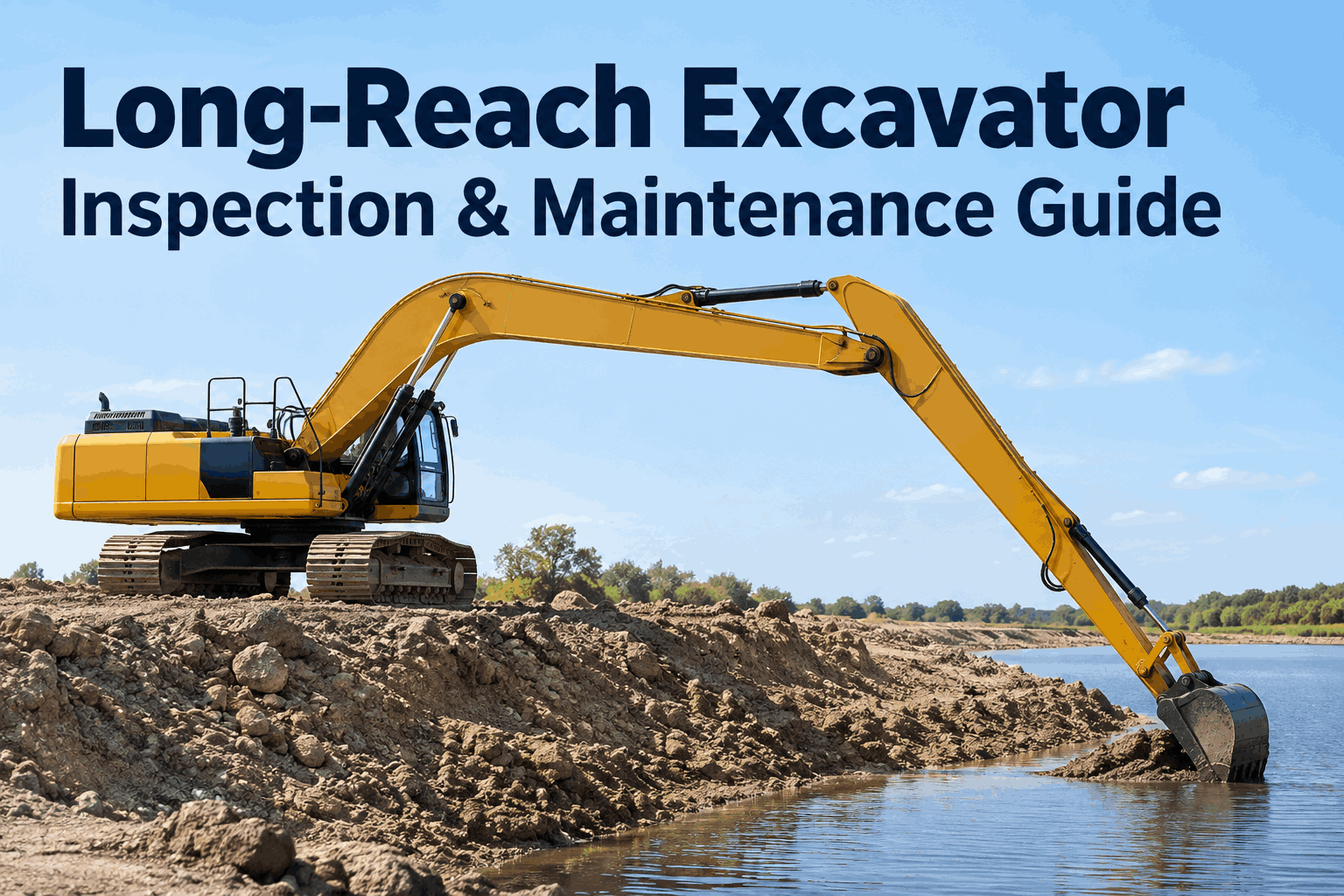
A long reach excavator earns its keep by reaching where nothing else can — across a canal, down a slope, out over a settling pond with a 50 or 60-foot front. But every foot of reach multiplies the load on the pins, bushings and swing bearing back at the machine. The front end wears faster than a standard excavator's, and it fails at the pivot points first. See long-reach pin and bushing wear tracked by the hour.
Long reach excavator care that protects the front end
Pins, bushings, swing bearing, boom structure and hydraulics — the parts an extended front punishes hardest, inspected and greased on schedule before leverage turns wear into a failure.
A standard excavator keeps its work close and its loads over the tracks. A long reach pushes the same hydraulics far out front — so the wear story isn't the same machine stretched, it's a machine working under constant leverage.
Why a long reach excavator wears from the front back
Leverage is the whole story. The further out the load sits, the more force the pivot points carry — and the front end pays for it first.
That's why the same machine on a long front needs tighter inspection intervals, not the standard ones — see tighter intervals set for the long-reach front.
The pivot points a long reach excavator inspection lives on
Walk the front from the house out. These are the parts the extended reach loads hardest, in the order you'd check them.
-
1Swing bearing & gearThe extended front and extra counterweight load the swing circle constantly. Watch for play, rough rotation, metal in the grease and bolt tension.
-
2Boom & arm pinsThe pins carry peak leverage at full reach. Check for play, scoring and heat; a loose pin ovals its bore fast and spreads wear up the front.
-
3Bushings & greaseDry or worn bushings are the most common and most preventable long-reach wear. Grease to spec every shift — the front has more fittings and less tolerance for a miss.
-
4Boom & arm structureLong sections see bending and torsion. Inspect welds, the stick and any reinforcement for hairline cracks — on a long front a crack spreads under its own leverage.
-
5Hydraulics on the reachCylinders and lines run the full length and work hard to hold position out there. Check rods, seals and hoses for leaks, chafe and drift.
Five points, each one a logged inspection line instead of a glance — see each pivot point captured against the machine.
The operating rules that keep a long front alive
Half of long-reach wear is how the machine gets used. Three operating rules protect the front as much as any inspection does.
Longer stick, smaller bucket
The reach is balanced for a lighter bucket. Overloading it at full extension is what overstresses the pins and swing — keep the tool sized to the front, not the job you wish it did.
Not a heavy-dig front
A long reach is for dredging, slope and clean-up — not tearing into hard ground. Using it like a standard digging arm is the fastest way to crack a boom or wreck a pin.
Firm ground, right counterweight
The center of gravity shifts way out with the front extended. Firm, level footing and the correct counterweight keep the load off the structure and the machine planted.
Log these alongside the inspection and the front lasts the way it was specced to — put the long-reach operating checks on the record free.
How HVI runs long reach excavator care
Inspection, hour-based PM, parts and work orders live on one platform, so a flagged pin or a cracked weld becomes a fix instead of a line in a notebook.
Greasing & checks by machine hours
The front's heavier greasing load and pin checks scheduled per machine and raised off the hour meter — tighter intervals for the long front, not the standard ones.
Pivot-point inspection with proof
Swing, pins, bushings, structure and hydraulics run as a checklist on a phone with photos, so play or a hairline crack is logged against the machine, not missed.
Defects into work orders & parts
A worn pin or weeping cylinder becomes an assigned work order with the part attached, and repeat wear by position points to the cause instead of another bushing.
It runs on the same platform as your general daily excavator inspection, your excavator inspection software and your wider preventive maintenance scheduling — so the long-reach front sits in the same record as the rest of the fleet.
People treat a long reach like it's just a regular excavator with a longer arm, and it isn't. We burned through boom pins twice as fast as our standard machines until we figured out the front needed its own, tighter grease and inspection schedule.
Once the pins, bushings and swing were on their own hour-based checks with photos, the front-end failures basically stopped. We catch the play now while it's a pin swap, not a boom crack.
Frequently asked questions
Why does a long reach excavator wear faster than a standard one?
Leverage. The extended boom and arm put the load far out front, so the pins, bushings and swing bearing carry much higher forces than a standard machine. The front end sees more stress every cycle and wears at the pivot points first.
What should a long reach excavator inspection cover?
The swing bearing and gear, boom and arm pins, bushings and greasing, the boom and arm structure for cracks, and the hydraulic cylinders and lines along the reach. The extended front means each of these carries more load, so they get checked more closely than on a standard machine.
How often should you grease a long reach excavator?
Grease the pins and bushings every shift, and more thoroughly than a standard machine — the long front has more fittings under higher load and less tolerance for a missed round. Follow the manufacturer's intervals, but treat the long-reach front as needing tighter, not standard, greasing.
Can you use a long reach excavator for heavy digging?
No. A long reach is balanced for lighter work — dredging, slope grading, canal and pond clean-up — with a smaller bucket. Using it to tear into hard ground overstresses the pins, swing and boom and is a fast way to crack the structure.
How does HVI help with long reach excavator care?
HVI schedules the front's greasing and pin checks by machine hours at tighter intervals, runs the pivot-point inspection with photo proof, and turns flagged defects into work orders with parts attached. Repeat wear by position surfaces the cause, so the front end gets protected before it fails.
Make long reach excavator care protect the front before leverage breaks it
Tighter hour-based greasing and pin checks, pivot-point inspections with photo proof, and defects routed to work orders before a worn bushing becomes a cracked boom. Keep the front end lasting the way it was specced to.