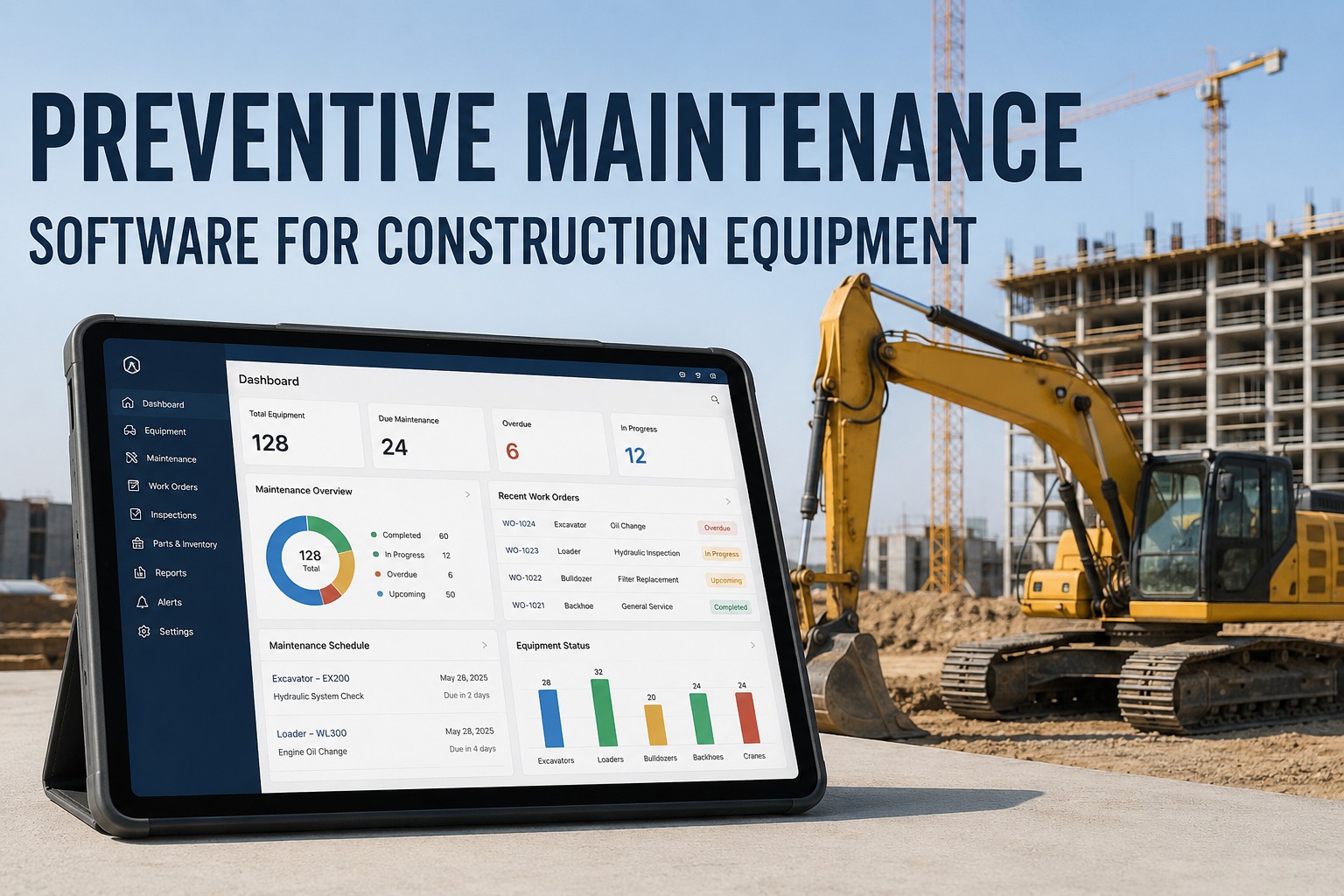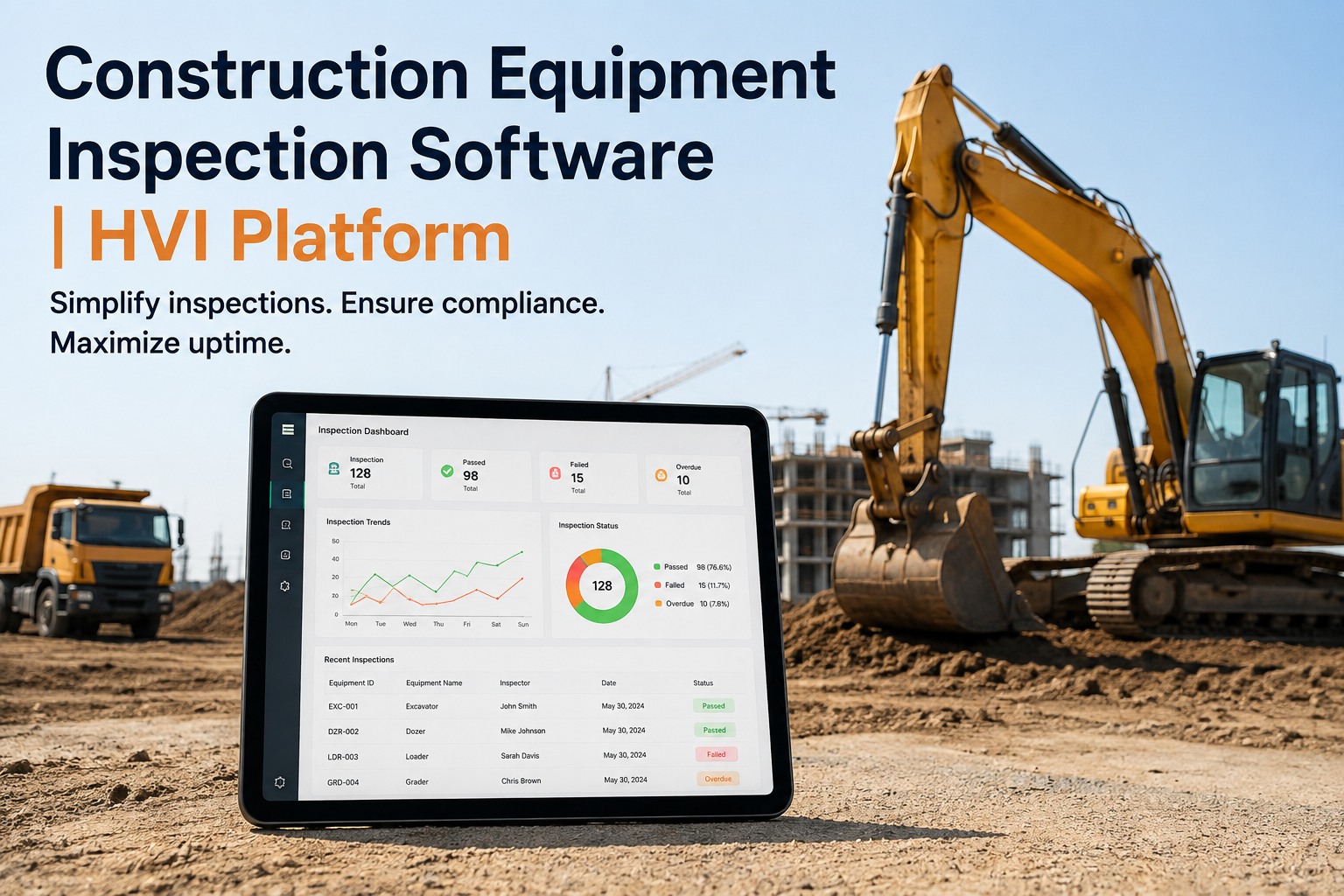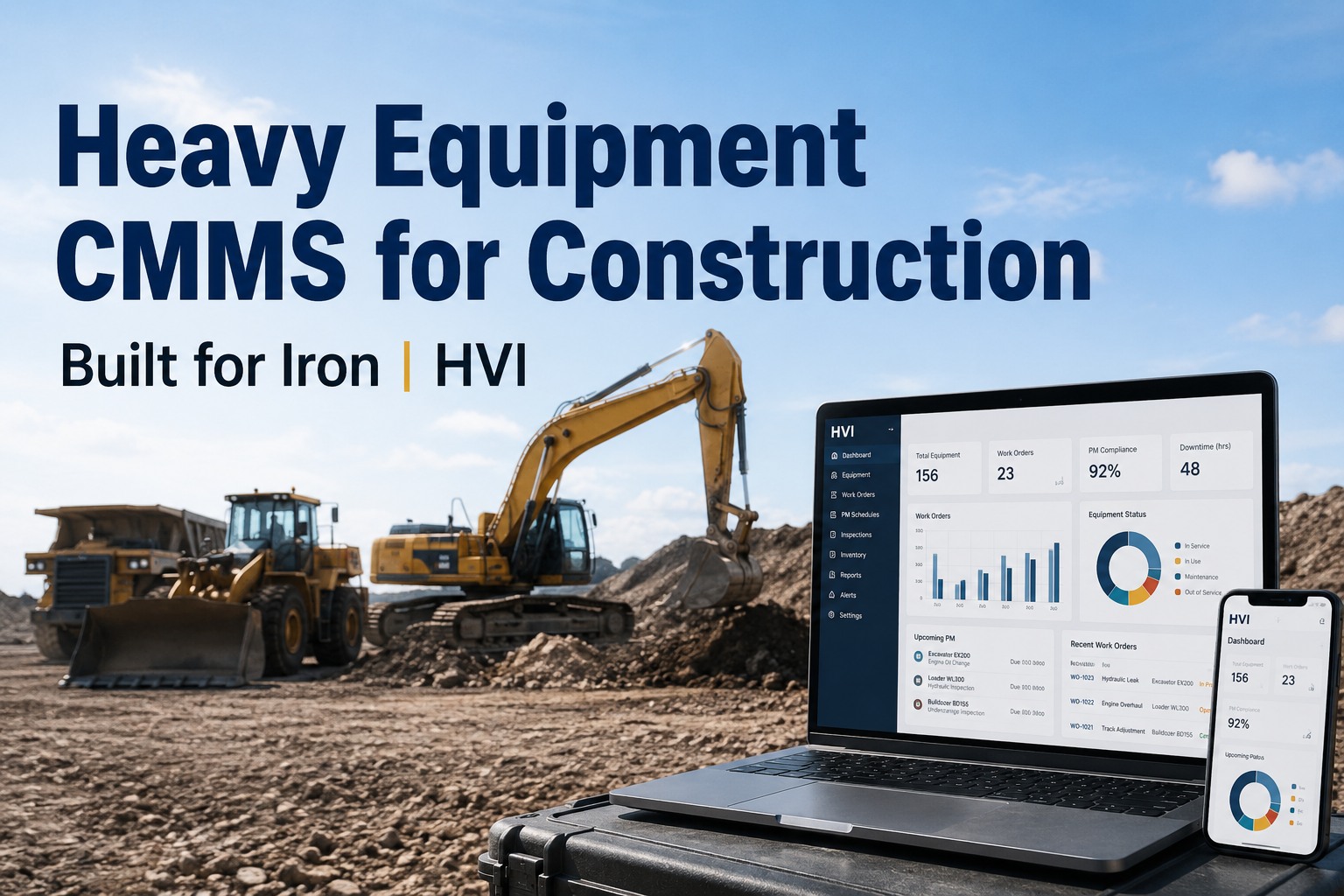
At 6 a.m. on a remote site, the excavator won't start because a hydraulic leak went unreported on a paper inspection form that is now sitting in a truck cab fifty miles away. Reactive maintenance is the single biggest controllable cost on a contractor balance sheet, and paper service logs make trend analysis impossible. Construction equipment maintenance software exists to fix exactly this: it moves your daily checks, hour-meter triggers, parts usage and work orders into one cloud record so a defect found at the dipstick becomes a repair the moment it is logged, not a week later. If your shop is still chasing down clipboards and deciphering grease-stained service notes, you can book a walkthrough with our team to see how quickly that changes.
Stop losing machine-hours to paper inspections and clipboard defects
HVI turns every jobsite inspection, hour-meter reading and parts pull into one digital thread. Defects become work orders automatically, PM triggers fire by date or by engine hours, and every event ties back to the asset.
What uncontrolled downtime is actually costing your jobsite
Reactive repairs cost three to five times more than planned maintenance, and on a construction site the bigger hit is the lost production day, not the parts invoice. Here is where the money leaks out of a typical mixed fleet.
Hour-meter versus calendar triggers: which one fits which machine?
Not every asset wears out the same way. A crawler crane working double shifts needs hour-based preventive maintenance; a backup generator that runs only for monthly tests is better served by a calendar trigger. Construction equipment maintenance software lets you set both, so the right PM fires at the right interval.
| Asset Type | Best Trigger | Why It Fits | Typical Interval |
|---|---|---|---|
| Excavators & Dozers | Hour-meter | Engine hours reflect actual wear under heavy load better than days on a calendar. | Every 250 / 500 / 1,000 hrs |
| Cranes & Hoists | Calendar | Statutory and safety inspections must happen on strict dates regardless of runtime. | Monthly / Quarterly / Annual |
| On-Road Dump Trucks | Mileage + Date | Combines DOT compliance dates with engine-driven wear for oil and filters. | 15,000 mi or 6 months |
| Compressors & Generators | Hour-meter | Sits idle for days then runs continuously; hours are the only accurate wear metric. | Every 250 hrs |
| Skid Steers & Loaders | Hour-meter | Variable jobsite duty cycles make calendar intervals unreliable for drivetrain service. | Every 500 hrs |
If you want to see these exact trigger types set up on your own mixed fleet, you can schedule a live configuration session and we will build the templates with you.
How a defect found at the dipstick should flow into a repair
The biggest failure of a paper DVIR system is that defects die on the clipboard. By the time a mechanic sees the note, the operator has already moved to another machine and the problem has compounded. Here is the closed loop you get with a construction maintenance app.
Operator logs defect on phone
A mechanic or operator spots a leaking hose during a pre-use inspection. They open the HVI app on any phone, select the asset, add a photo and a note, and submit. No paper, no text message to the foreman.
Work order auto-created
The software instantly generates a work order tied to that specific asset ID. The shop foreman gets a notification, the defect is categorised by priority, and the repair is queued without anyone retyping the fault description.
Parts pulled and tracked
When the mechanic completes the fix, they add the parts used directly to the work order. The inventory count updates in real time across all shops, so the parts manager never has to chase down what was used on a remote job.
History logged to the asset
On work order close, the entire event is time-stamped and permanently attached to the machine's Logbook. Months later, when you ask why that pump failed twice, the full photo-backed history is one click away.
See HVI running on your own equipment types
Book a 30-minute demo and we will configure your excavators, cranes and trucks live in the system.
How HVI helps contractors control equipment maintenance
Every feature in HVI ties back to a single asset record, so your fix-rebuild-replace decisions always have real history behind them. Here is how the core modules map to the problems you face on a jobsite every day.
Preventive Maintenance by Hours or Date
Set PM triggers by engine hours for off-road plant and by calendar for statutory crane inspections. HVI fires due and overdue alerts automatically, ending missed service intervals.
Outcome: Zero missed PM intervals across mixed fleetsInstant Defect-to-Work-Order
A defect captured during a digital DVIR generates a work order instantly. No retyping, no lost notes, no text-message photos. The shop is notified and the repair is queued in seconds.
Outcome: Cut unplanned downtime by 30-50 percentParts & Inventory Auto-Consumption
When a work order closes, the parts used are deducted from inventory automatically across multiple shops. No manual stock counts, no inventory drift, no surprise part-outs.
Outcome: End quarterly inventory drift and stockoutsCost Analysis per Machine
Every part, labour hour and fuel receipt is tracked against the asset. Run Expense Track reports to see exactly what each machine costs you per hour of operation.
Outcome: Data-driven fix-rebuild-replace decisionsThe math on one missed hydraulic leak
Consider a 40-machine contractor running a mix of excavators, loaders and dump trucks. A slow hydraulic leak on a tracked excavator is spotted by an operator but written on a paper DVIR that never reaches the shop until the pump fails completely.
Reactive repair path
- Lost production: 2 days at $1,200/day $2,400
- Expedited hydraulic pump and hoses $4,800
- Mechanic overtime and travel to remote site $1,100
- Rental machine to cover the job $1,500
Proactive repair path
- Planned production loss: 4 hours $300
- Standard hose replacement from stock $320
- Standard mechanic labour hours $280
- No rental needed $0
That is roughly $8,900 saved on a single machine by catching the defect early. Multiply that across a mixed fleet over a year and the payback is obvious. If you want to map this exact scenario to your own equipment, you can book a demo to see the math on your units.
Why contractors are moving off paper and spreadsheets
Every event ties to the asset
With a digital Logbook, every inspection, defect, work order and parts pull is permanently attached to the machine. Fix-rebuild-replace decisions finally have real history behind them instead of guesswork.
PM triggers match the machine
Hour-meter triggers for off-road plant and calendar triggers for statutory inspections mean the right service happens at the right time, automatically, across every jobsite.
Parts deduct on close
When parts consumption deducts automatically on work order close, inventory stays accurate across multiple shops and the parts manager stops chasing ghosts.
Data drives the decisions
McKinsey research shows predictive maintenance cuts unplanned downtime 30-50 percent and maintenance cost 10-40 percent. You cannot get there with paper logs in a binder.
Construction equipment maintenance software is not about going paperless for its own sake. It is about turning every inspection and repair into data that lowers your cost per machine-hour and keeps the jobsite moving. You can start logging inspections free and see the difference on your own fleet this week.
The hardest part used to be proving a machine was actually inspected. Paper DVIRs got lost, smeared, or filled out in the truck an hour later. Now a defect is a photo and a work order before the operator even leaves the seat. I track cost-per-hour on every excavator we own, and that number has dropped since we stopped guessing about service history.
Common questions about construction equipment maintenance software
What is construction equipment maintenance software?
Can it schedule preventive maintenance by engine hours?
How does the software handle parts inventory?
Does it work for mixed fleets with trucks and off-road equipment?
Is the inspection data audit-ready for clients and safety regulators?
Ready to see your equipment types configured in HVI?
Book a 30-minute demo and we will set up your excavators, cranes and jobsite fleet live in the system.
Free to start - Works on any phone - No card needed