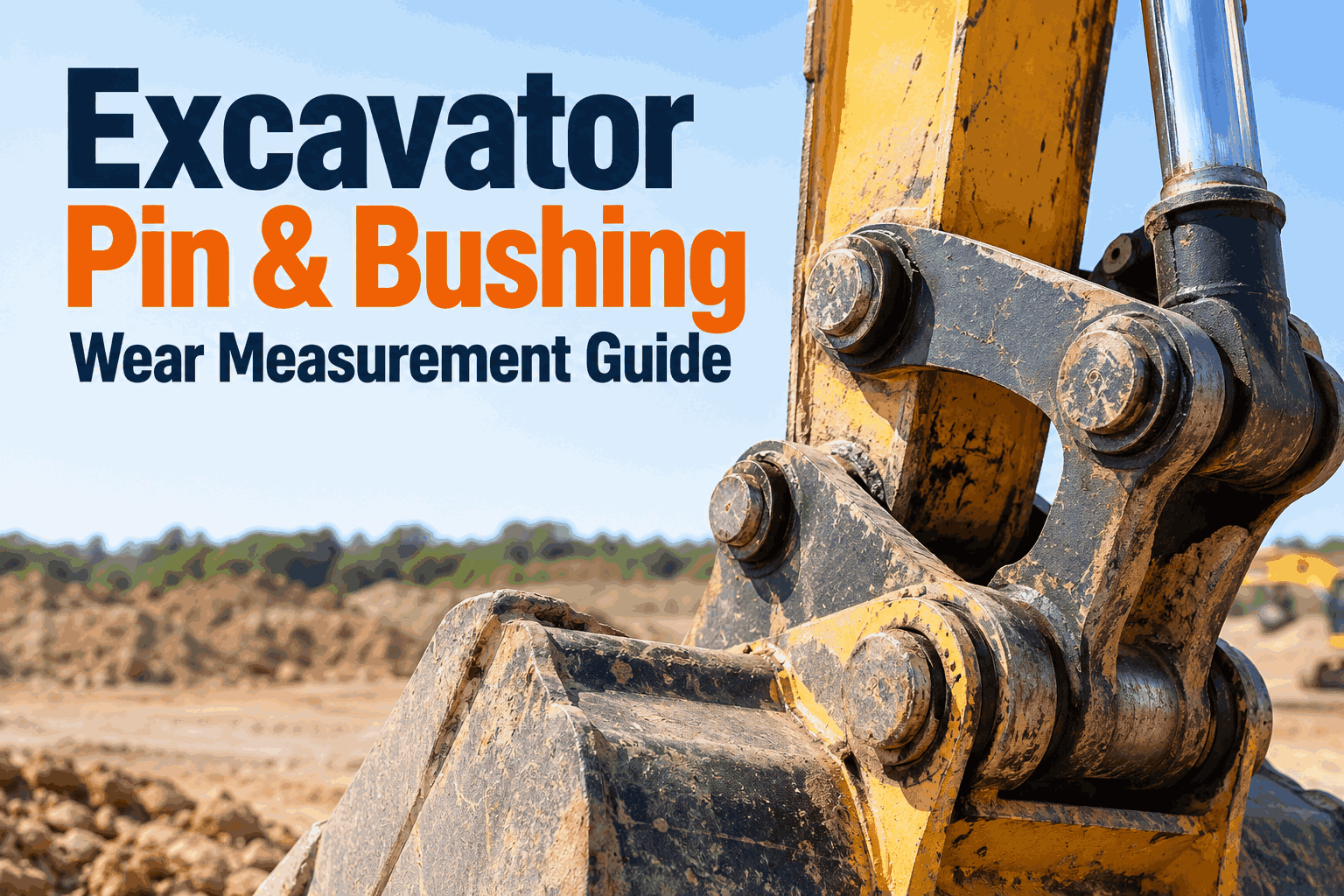
Crowd the bucket in and out and watch the joints — if the pin's knocking around in its eye or the bucket wanders off line, that slop is pin and bushing wear, and it's costing you in control and in the repair it's heading toward. Caught and measured early it's a bushing change; left to run, the pin eats the boss oval and now you're welding and line-boring. Here's how to measure pin and bushing wear before it gets that expensive — book a demo to track it in HVI.
Measure the play while it's still a bushing.
Every linkage joint wears, and the only question is whether you catch it as clearance or as a cracked, oval boss. HVI makes the measurement a logged reading per joint — trended over time, flagged at the limit, and raised as a work order before it turns structural.
An excavator does its work through a chain of pinned joints, and every one of them lives under enormous, reversing load — crowding, curling and prying against the ground thousands of times a day. Clearance between the pin and its bushing is inevitable; what matters is whether you measure it and act while it's still cheap. A worn bushing is a part you press out and replace. The same joint ignored long enough wears the pin, then elongates the boss in the boom or stick to an oval that needs welding and line-boring — a repair that can cost more than the hours of downtime around it. Measuring is how you stay on the cheap side of that line.
Where an excavator wears: the linkage pin jointsthe pin and bushing joints that take the dig force
Excavator pin and bushing wear concentrates at a handful of joints, and the further out toward the bucket, the higher the load per movement and the faster the clearance opens.
Boom foot pins
Where the boom pivots on the house. Huge load, slower movement — wears slowest, but a seized foot pin is a major job.
Boom-to-stick pin
The knuckle joint. Cycles constantly through the dig envelope; play here shows as boom "nod" and sloppy reach.
Stick-to-bucket pin
High load at full leverage. One of the fastest to wear, and the slop operators feel first in the bucket.
Bucket linkage & H-link pins
The power-link pins see the hardest, most reversing loads. Usually the first joints to show measurable play.
This is the linkage side of the machine — distinct from the swing bearing and slew ring and the undercarriage track wear, which have their own inspections. Catching linkage play belongs in the regular excavator inspection routine. Book a demo to track play at each joint →
How to measure pin and bushing wearfour ways to turn "it feels loose" into a number
"Looks worn" doesn't tell you whether to re-bush or keep running. Measurement does. Here's what's actually happening in the joint, and four ways to measure it — from a quick field check to a spec comparison.
Whatever the method, the reading only matters if it's written down and compared next time — one clearance number is data, a trend is a decision. Capturing it on the machine's record turns a gut feel into a scheduled re-bush. Start free and log a clearance reading per joint →
Reading the clearance: what the number meansfrom within spec to structural — when to act on pin and bushing wear
A measured clearance isn't useful until you know what band it falls in. Compare every reading to the OEM limit and act by the tier, not by feel.
The jump in cost between "approaching limit" and "structural" is enormous, and the only thing between them is whether someone measured and acted in time. A trended clearance per joint is what makes the re-bush a planned job instead of a boom-repair surprise. Book a demo to see wear trended against the limit →
Pin & bushing wear, tracked in HVIclearance logged, trended and actioned — per joint, per machine
Here's the payoff: every joint with its latest clearance, its trend and its open work orders — so excavator pin and bushing inspection becomes a measured program instead of a once-a-year surprise when something's already oval.
Every clearance reading stays on the joint's history, so you see which machines and joints wear fastest and prove the boss was saved by a timely re-bush. It feeds the reporting and analytics across your construction equipment fleet. Start free and build a wear trend per joint →
Excavator pin & bushing measurement checklistthe few-minute play check that saves a boom repair
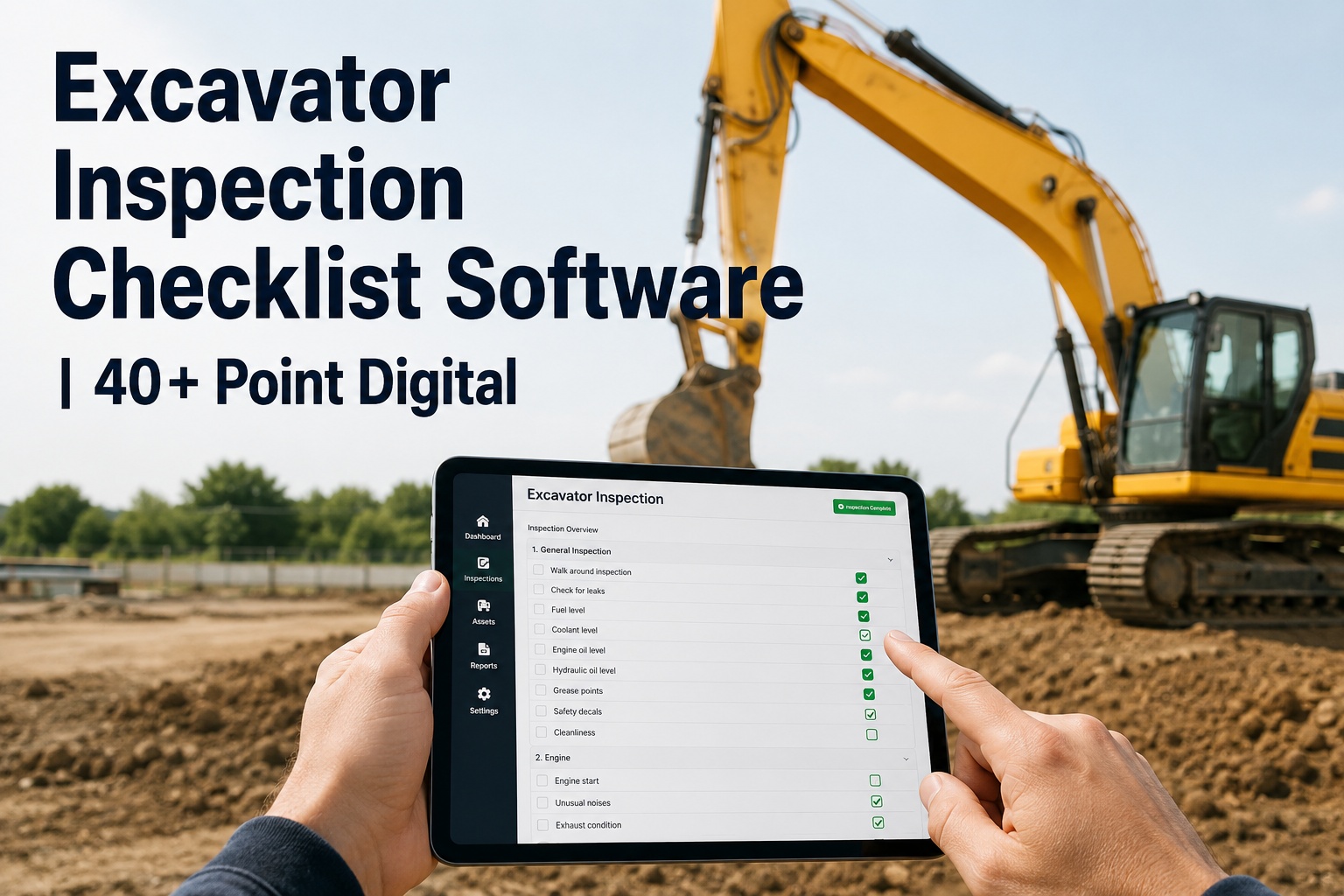
Here's a baseline pin and bushing inspection routine, grouped the way HVI loads it — each reading logged against the joint with the date and hour meter.
- Movement test under light load
- Clearance measured where play is felt
- Reading compared to the OEM limit
- Grease condition & fittings checked
- Bosses checked for oval / elongation
- Pin scoring or spin in the boss
- Retainers & keepers in place
- Weld cracks around the eyes
- Clearance logged against the trend
- Over-limit joints raised as work orders
- Re-bush parts ordered ahead
- Hours logged, next check scheduled
On paper the play check is a vague "a bit loose" and the trend never forms; in HVI the clearance is logged with the hour meter, an over-limit joint becomes a work order, and the re-bush is planned before the boss is damaged. It runs with the rest of your preventive maintenance. Book a demo to load your measurement checklist →
From a heavy equipment technician
We let a bucket pin go too long on a 30-tonne machine because nobody had ever measured it — it was always "a bit sloppy." By the time it came in, the pin had spun and ovalled the stick eye. What should've been a bushing and a pin turned into pulling the stick, welding and line-boring the boss. Thousands of dollars and a week down.
Now every linkage joint gets a clearance reading on a schedule, and the number goes on the machine's record. When a joint starts trending toward the limit, we re-bush it on our terms. We haven't line-bored a boss since we started actually measuring.
Pin and bushing wear — FAQs
How do you measure pin and bushing wear on an excavator?
Four ways, from quick to precise: a movement test (work the joint under light load and watch the pin rock in its eye), a feeler gauge in the gap to read clearance directly, a dial indicator to measure actual movement in thousandths, and — with the pin out — measuring pin OD and bushing ID with a micrometer and comparing the difference to the OEM clearance spec. The dial-indicator or micrometer reading is the number worth trending.
How much pin and bushing play is too much?
It's set by the OEM clearance limit for that joint, not a universal number — so compare your measured clearance to the manufacturer's spec. As a rule of thumb, play you can clearly feel and see means it's time to plan a bushing change; clearance over the limit, or a pin that's worn or spinning, means re-bush and replace the pin before the boss is damaged.
What happens if you ignore worn pins and bushings?
The clearance accelerates — a loose pin shock-loads the bushing, which opens the gap faster, which increases the shock. Left long enough the pin wears and spins, then elongates the boss in the boom or stick into an oval. At that point it's no longer a press-in bushing job but weld repair and line-boring, which costs far more in parts and downtime.
What causes excavator pins and bushings to wear fast?
Mainly inadequate greasing — missed grease cycles let metal contact and contamination grind the joint. High, reversing dig loads and abrasive conditions accelerate it, and the joints furthest out toward the bucket wear fastest because they carry the most load per movement. Consistent greasing and early measurement are the two biggest levers on joint life.
How does HVI help track pin and bushing wear?
HVI lets technicians log a clearance reading at each joint so wear trends over time, flags a joint that crosses the OEM limit, turns it into a work order to re-bush, and keeps the full history per machine. Instead of discovering an oval boss by surprise, you see the clearance climbing and plan the re-bush while it's still a cheap, scheduled job.
Catch the wear before it reaches the boss
HVI makes pin and bushing wear a measured program — a clearance reading per joint, trended against the OEM limit, flagged and raised as a work order before the pin ovals the boss. So linkage wear stays a planned bushing change instead of a boom repair. Live on your fleet in under two weeks.
See it on your own machines · Works offline in the field · Wear records from day one