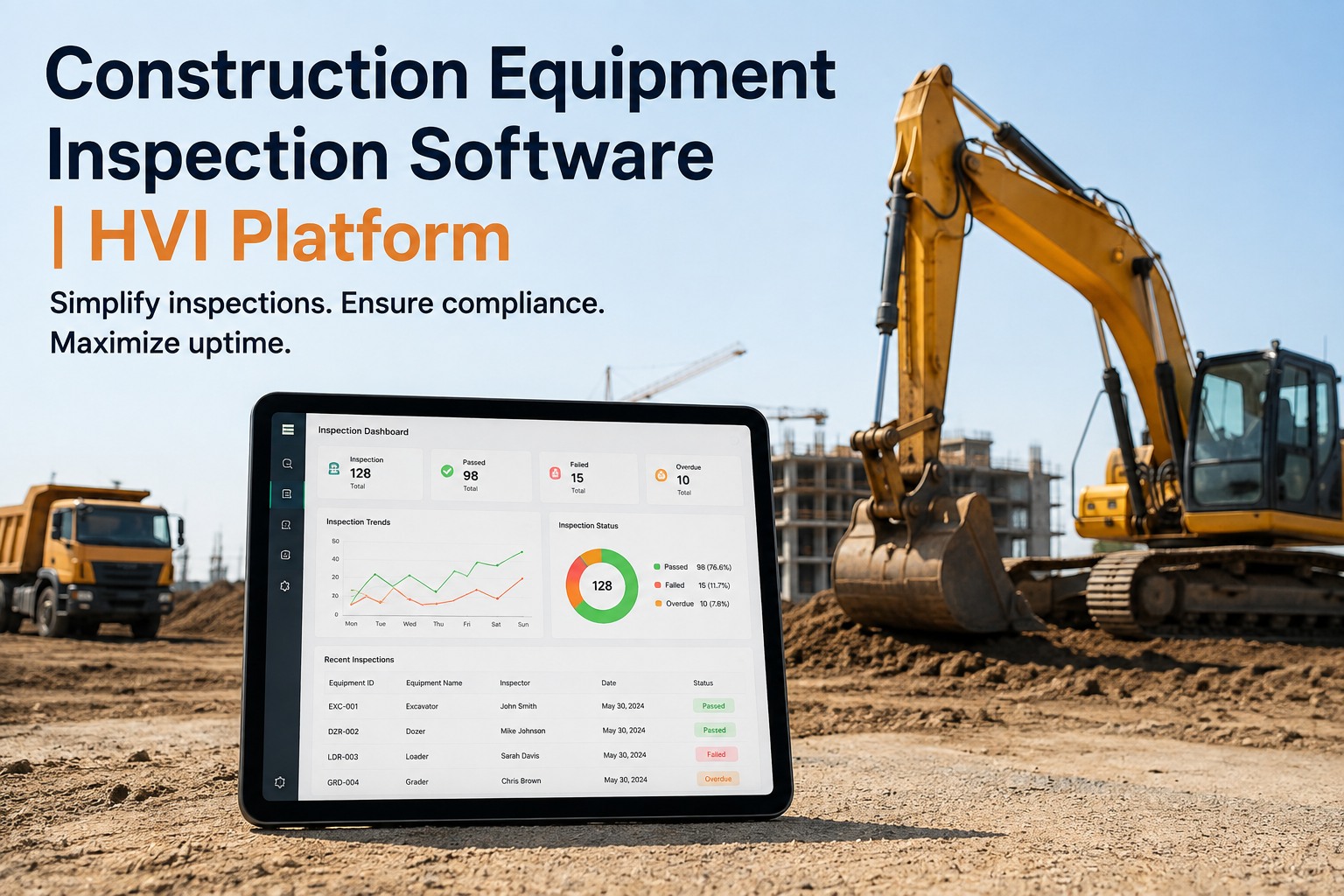
A mini excavator is small, cheap to rent, and run harder than almost anything on site — which is exactly why it fails. Neglect the tracks and hydraulics and a $6,800 pump or a chewed-up undercarriage shows up months early. Mini excavator inspection and maintenance software keeps that wear flagged and fixed before it sidelines the machine. See how it works, then book a demo to map it to your fleet .
Small Machine, Hard Life. Catch the Wear Before It Wins.
Compact-excavator-specific digital inspections for rubber tracks, hydraulics, boom and bucket — defects flow straight to a work order, and PM fires on real meter hours.
A mini excavator leads a brutal life. It's the machine that gets rented out, run by whoever's on site that day, worked in mud and demolition dust, idled half the shift, and parked wet without a wash. All of that compounds into early failure — and the pattern is remarkably consistent. Across compact-excavator fleets, hydraulics account for roughly 45% of failures and the undercarriage another 22%, so two systems drive about two-thirds of the downtime. The good news in that number is focus: if the inspection relentlessly covers tracks and hydraulics, it's catching most of what's going to put the machine down.
The rubber track is the whole ballgamewhy the undercarriage makes or breaks a mini excavator's economics
Nothing on a mini excavator rewards attention like the rubber tracks — and nothing punishes neglect faster. A track that's run loose, dirty, or on the wrong ground wears out in a fraction of its potential life. Three habits decide which one you get.
Tension checked weekly, undercarriage cleaned, matched to the ground — the tracks run most of their design life and the undercarriage underneath them lasts.
Run loose and packed with debris, tracks lose up to half their life — and a full undercarriage replacement runs $1,500–$3,000 plus two days down.
- Tension weekly — 10–30mm of sag at mid-span, per OEM spec. Too loose throws a track; too tight shreds the drive.
- Clean the undercarriage — packed mud and debris grind rollers and sprockets and accelerate every wear part.
- Replace before 15mm tread — run past it and you risk a blowout and damage to the undercarriage beneath.
Those three checks take minutes and decide whether you get 2,500 hours or 1,000. HVI's mini-excavator inspection puts track tension, tread depth, and undercarriage condition on the checklist with photo capture, so the trend is tracked, not guessed. Start a free trial and load your mini-ex template this week
The compact wear points that bitewhat a mini excavator inspection has to catch — and what skipping it costs
Beyond the tracks, a handful of systems do most of the damage to a mini excavator's budget. Each is cheap to catch on inspection and expensive to meet at failure.
Hydraulics
Leaks at hoses and cylinders, fluid and filter condition. The single biggest failure category — and a contaminated pump failure runs $4,500–$8,000, caused by the filter that would have prevented it.
Undercarriage
Rollers, sprockets, idlers, and track pins and bushings. Debris and loose tension grind them early; a full undercarriage replacement is $1,500–$3,000 plus two days down.
Boom, arm & pins
Pin and bushing wear, weld cracks at cylinder mounts, bucket teeth. An $80 pin replaced on time prevents a $2,500–$4,500 bore-machining job when it's run to the metal.
Swing & pivots
Swing bearing play, grease schedule, torque. A worn swing bearing is $4,000–$8,000 plus three to five days down — and it starts as play you can feel and log.
Cooling
Radiator and oil-cooler fins clog fast in dust. Overheating from a clogged cooler can mean $6,000–$12,000 in head or block damage — from a five-minute clean-out skipped.
DPF & engine
On Tier 4 Final units, regeneration and air-filter condition. Idle discipline and clean filters keep the DPF healthy; a replacement runs $2,500–$5,000 plus downtime.
Every one of these is a line a generic form skips and a mini-ex-specific one catches. HVI lets you configure the template per model — a Kubota KX isn't a Bobcat E, and demolition or wet-ground work tightens the intervals. Book a demo to see a mini-ex template built for your machines
From flagged defect to closed work orderwhy a digital mini-ex inspection beats a paper one — especially on rentals
Paper finds the leak and loses it on a clipboard. Digital turns the same flag into tracked work — and on a machine that gets rented, shared, and moved between sites, the photo-backed record is also your proof of condition at check-in and check-out.
-
1
Operator runs the pre-shift inspection
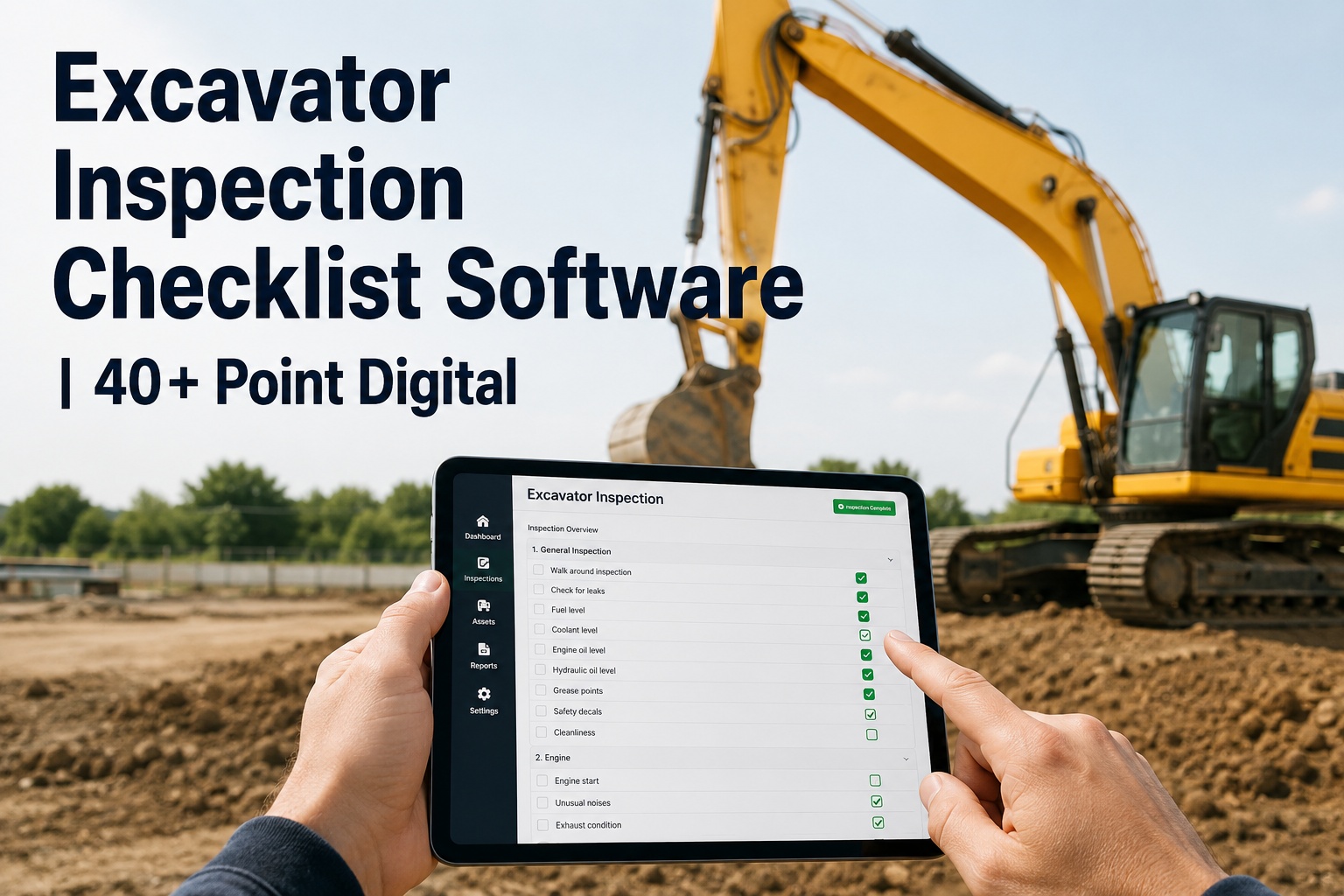
A mini-ex-specific checklist on a phone — tracks, hydraulics, boom and bucket, swing, cooling — in a quick walkaround, with photos, before the machine digs.
-
2
A defect is logged with photo & severity
A hydraulic weep, loose track, or cracked tooth gets flagged with a photo and severity, tied to that exact machine — and timestamped for a rental check-in record.
-
3
It becomes a work order in one tap
The fault converts to a work order with details and photos attached, assigned and visible immediately — so the filter gets changed before the pump is gone.
-
4
Parts, labor & sign-off recorded
Parts used deduct from inventory and link their cost to the job; labor logs against the machine; the tech closes it out on-site. The repair's real cost is captured.
-
5
It lands in the machine's history
Every inspection and repair writes to the machine's record and feeds cost-per-hour analytics — so you know which mini-ex earns and which one drains.
PM that fires on hours, not memorymeter-hour preventive maintenance tiers for mini excavators
A mini excavator wears by the hour, and its PM is a tight tiered schedule the meter drives — with intervals that pull in for demolition dust, heat, high idle, or wet ground. Tie each service to real hours and the break-in, filters, and undercarriage measurement all happen on time.
First engine-oil and hydraulic-filter change, fastener torque, plus the daily-style checks — track tension, leaks, greasing.
Engine oil and filter, fuel filter and water separator, air-filter inspection, grease and condition checks.
Hydraulic filter, air-filter replacement, undercarriage measurement, hydraulic-oil sample, pin and bushing check, diagnostic scan.
HVI auto-generates the work order when a machine's hours cross an interval, pulls the interval in for severe conditions, and alerts you before it's due. Meter-hour PM scheduling turns "we'll service it next week" into a service that actually fires. Book a demo to see tiered PM on your mini-ex models
The mini excavator pre-shift checklistwhat every compact-excavator inspection should cover before the machine digs
This is the daily walkaround that keeps a mini-ex earning and safe. In HVI it's a guided template — tick, flag, photo — so nothing gets skipped on a busy site and a defect flows straight to the shop.
A pre-shift inspection is also an OSHA expectation for powered construction equipment (29 CFR 1926.602) — run it on paper and the record scatters; run it in HVI and every walkaround is a signed, photo-backed record that doubles as rental-condition proof. Book a demo and see the mini-ex checklist live on one screen
From a rental fleet manager who lives on compacts
Mini excavators are my highest-utilization machines and my biggest headache, because they come back from rentals however the customer treated them. For years I found out a track was shot or a pump was going when the machine came in dead — not before it went out.
The photo check-in and check-out changed the whole game. Every machine gets a quick inspection with pictures when it leaves and when it's back, so track wear and hydraulic condition are documented, and anything flagged is a work order before it rents again. We stopped sending out machines with problems and stopped eating damage we couldn't prove. On a fleet of compacts, that's the difference between making money and chasing it.
What mini-ex-specific tracking pays backthe case for inspecting a compact excavator like it matters
Frequently asked questions
What is mini excavator inspection software?
It's a mobile-first digital checklist built around a compact excavator's systems — rubber tracks, undercarriage, hydraulics, boom and bucket, swing — that flags defects with photos and sends them straight to the maintenance team. Book a demo to see it on your fleet.
What are the PM intervals for a mini excavator?
Typically a 50-hour break-in service, 250-hour basic, and 500-hour intermediate (hydraulic filter, undercarriage measurement, oil sample), with intervals pulled in for dust, heat, or wet ground. HVI sets each per model. See it in a demo.
How long do rubber tracks last on a mini excavator?
Cared for — tensioned weekly, cleaned, matched to the ground — rubber tracks run 1,500–2,500 hours; neglected they manage 900–1,200. Replace before tread drops below 15mm. Book a demo to see track trending.
What fails most on mini excavators?
Hydraulics (around 45% of failures) and the undercarriage (around 22%) together drive about two-thirds of downtime, followed by DPF, cooling, and swing. A focused inspection on those catches most issues early. Book a demo to see the focus areas tracked.
Can it document rental check-in and check-out?
Yes. A timestamped, photo-backed inspection at check-out and check-in records each machine's condition, so track and hydraulic wear is documented and any damage is provable. Start a free trial or book a demo.
Keep your compacts earning, not sitting in the shop
HVI gives every operator a mini-excavator inspection, routes flagged defects straight to a work order with photos attached, fires PM on real meter hours, and keeps one cost-tracked history per machine — with photo proof for every rental in and out. Tracks, hydraulics, and undercarriage get caught on the walkaround, as cheap maintenance, not a five-figure rebuild. Live in under two weeks.
- Track & undercarriage wear tracking
- Defect → work order in one tap
- Meter-hour PM, pulled in for severe duty
- Photo proof for rental in & out