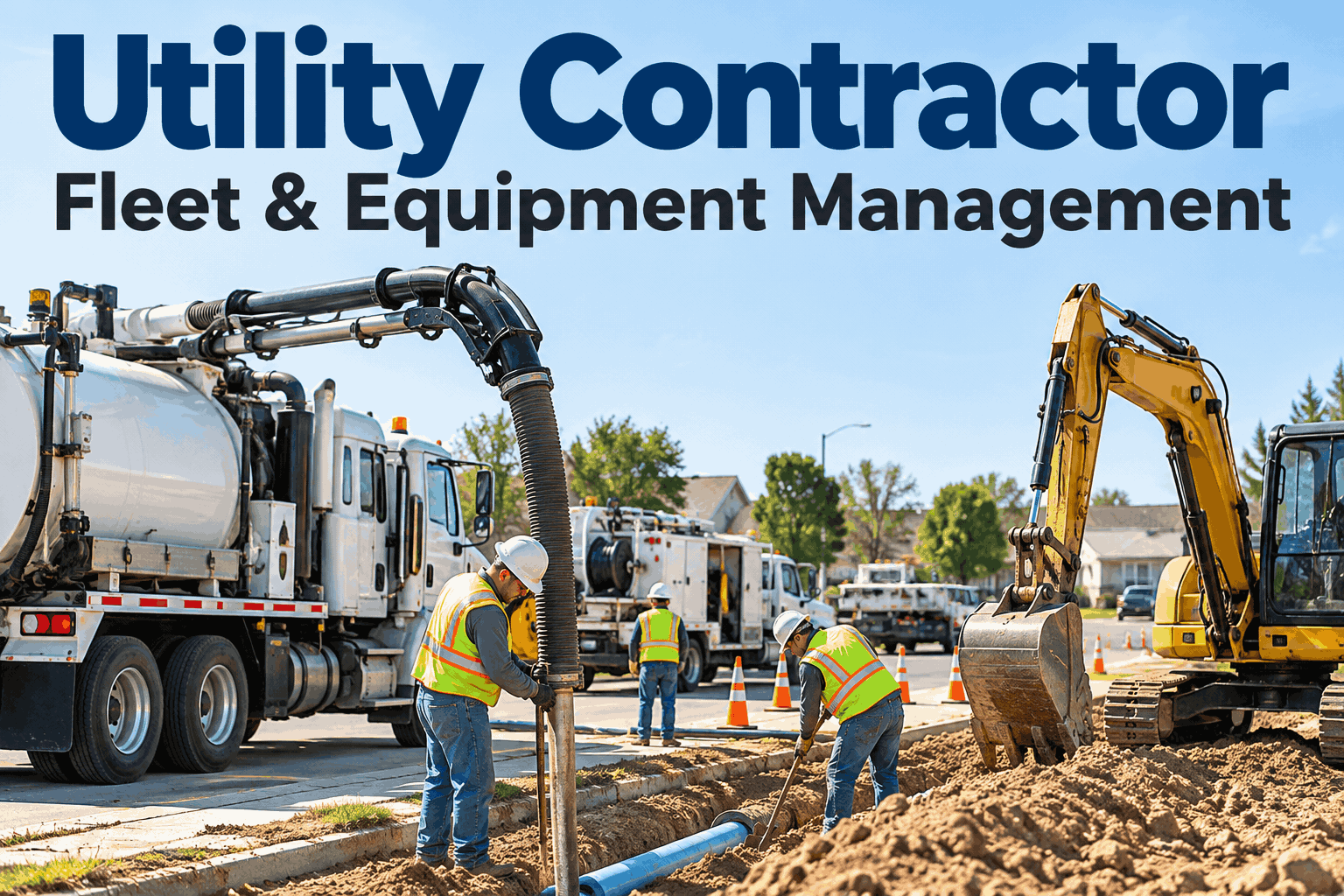
Utility contractor fleet management gets difficult when a crew needs a hydrovac at one site, a trencher at another, and a service truck that is already overdue for maintenance. The problem is not simply knowing which assets you own: it is knowing which are inspected, serviceable, assigned and ready for tomorrow’s work. This guide shows how to coordinate mixed utility fleets without losing defects, maintenance deadlines or jobsite accountability. Book a demo of HVI for utility contractor fleets to see how inspection and maintenance records can support that workflow.
One utility job. Five machine types. Zero room for missed maintenance.
Coordinate hydrovacs, trenchers, excavators, bucket trucks and service vehicles through a practical inspection-to-repair workflow.
Why utility contractor fleet management is different One contractor may operate road vehicles, off-road equipment and specialized utility rigs on the same job
A mixed utility fleet rarely fails in one neat category. A vacuum truck may be mechanically roadworthy but unable to excavate because of a blocked filter. A trencher can be running but have unacceptable tooth wear. An excavator can be available on the yard while its hydraulic leak remains unresolved. A fleet management process must distinguish asset location, operational readiness, safety condition and maintenance status rather than treating them as a single “available” field.
Start with one asset register containing the equipment ID, equipment type, current crew or yard, meter reading, inspection history and open maintenance work. For specialized systems, attach equipment-specific checks instead of forcing every machine into the same vehicle checklist.
The utility fleet readiness grid A better morning dispatch question: can this specific machine safely do this specific job?
Before dispatch, separate operational readiness into four checks. This is a practical management framework—not a substitute for site hazard assessments, utility locating, permits or manufacturer instructions.
Pre-use checklist completed for this asset and shift.
Open defects evaluated and unsafe equipment withheld.
Due PM and service limits checked against OEM guidance.
Right attachment, operator, access and site controls confirmed.
Equipment-specific inspection zones Four assets, four failure patterns—your checklist should reflect the machine
Utility equipment inspections are most valuable when the operator knows which components can stop the job. The examples below are starting points for a site-specific program; use OEM procedures and applicable regulations for exact checks and intervals.
Inspect the work system, not just the engine
A truck cab checklist will not catch a failed hydrovac blower guard or a trencher chain problem.
On applicable U.S. construction sites, OSHA requires vehicles used at the beginning of a shift to be inspected for safe condition, and defects that affect safe operation must be corrected before service. Road-vehicle inspection and DVIR obligations depend on vehicle and operating context. Do not treat a digital checklist as permission to bypass safety controls.
From jobsite defect to maintenance close-out The handoff that prevents “someone told the mechanic” from becoming the entire repair process
Imagine an operator discovers a hydraulic leak during an excavator walkaround. The critical question is not only whether the defect was noticed, but whether the right people received it, the machine was assessed, and the repair became part of the asset history.
Operator records leak and equipment ID.
Supervisor reviews safety and availability.
Maintenance team documents work performed.
Authorized personnel confirm readiness.
History informs future inspections and PM.
HVI can support the recordkeeping side of this handoff through inspections, defect reporting, work orders and maintenance history. Actual equipment release, lockout and restart decisions remain subject to the contractor’s procedures and qualified personnel.
Plan maintenance around utility project windows Road miles, engine hours and project commitments need different clocks
A service truck may accumulate road mileage while a trencher racks up engine hours on one site. A hydrovac may have truck-engine hours and separate subsystem service requirements. Organize preventive maintenance by the correct meter or time basis for each asset, using OEM schedules as the controlling source.
Plan service before dispatch commitments are locked. For a fleet spanning several crews, review upcoming PM, parts availability, open defects and backup equipment in the same weekly meeting. A practical next step is to book a demo of HVI preventive maintenance scheduling with your own mixed-fleet examples.
Where fleet visibility turns into financial value Track the costs of the missed job—not just the invoice from the repair shop
When a specialized unit goes down, the maintenance bill may be smaller than the disruption it causes. Build a simple event-level cost record: direct repair costs plus rental replacement, mobilization, idle crew time and verified schedule impacts. Avoid counting the same expense twice.
What one unavailable hydrovac can cost a crew
Hypothetical amounts for illustration only. Actual costs vary by market, contract, crew and machine.
Useful contractor metrics include PM completion rate (completed scheduled PM ÷ PM due), equipment availability (available scheduled hours ÷ required scheduled hours), repeat defects and maintenance cost per operating hour. Segment them by equipment type; a hydrovac and a pickup should not share one cost benchmark.
How HVI fits a mixed utility fleet Evaluate the software against field work, shop work and management reporting—not a generic feature list
One connected equipment record
Complete relevant checks and record defects against the right asset.
Review service requirements, work orders and previous repair history.
Monitor inspection completion, outstanding work and maintenance trends.
During an HVI demonstration, ask to see an excavator defect, a hydrovac PM schedule and a service-truck inspection in the same account. Confirm how your organization handles operator permissions, asset assignments, reporting exports and integrations before purchasing; do not assume every workflow is available without configuration.
A 30-day rollout plan for utility contractors Start with high-consequence equipment, then expand across crews
List assets, meters, ownership, crews and critical service requirements.
Create machine-specific pre-use checks and defect escalation rules.
Test inspections, shop handoffs, PM reminders and supervisor review.
Audit missed checks, unclear responsibilities and repeat defects.
This is an example implementation sequence, not a promised HVI deployment timeline. Start with one hydrovac, one trencher and one service truck to expose differences between road and off-road assets before expanding to the whole contractor fleet.
Utility contractor fleet management FAQs Answers to common software, inspection and maintenance questions
What is utility contractor fleet management?
It is the process of tracking and maintaining the trucks, specialized utility rigs and construction equipment that crews need for utility installation, repair and service work. It includes equipment records, inspections, preventive maintenance, defect handling, crew assignments and performance reporting.
How should utility contractors manage hydrovacs and trenchers together?
Keep both in one asset register while using equipment-specific inspections and PM schedules. Hydrovacs need checks of vacuum, water and boom systems; trenchers need digging-chain, tooth, guard and hydraulic checks. Follow each manufacturer’s maintenance instructions and track defects separately by asset.
Does every utility vehicle need a DVIR?
DVIR obligations depend on the vehicle, operation and applicable jurisdiction. U.S. commercial motor vehicle rules have specific requirements and exceptions. Do not assume every off-road machine or light-duty truck has the same DVIR duty; confirm requirements for your fleet and keep appropriate inspection records.
Which KPIs matter most for utility equipment fleets?
Start with equipment availability, scheduled PM completion, open safety-critical defects, repeat repairs and maintenance cost per operating hour. Track missed job commitments where data is reliable, and compare like equipment with like equipment.
How can HVI help a utility contractor manage equipment maintenance?
HVI supports fleet and equipment records, inspections, defect reporting, preventive maintenance, work orders and reporting. Book a demo of HVI utility fleet management to verify the workflows your operation needs, or sign up free for HVI equipment inspections.