An OSHA inspection can move quickly from an inspector arriving at the gate to records review, a physical walkaround and employee interviews. Contractors that understand the OSHA inspection process before a visit occurs are better positioned to identify the right company representative, locate requested safety records and maintain an accurate internal record of what happens during the inspection. The goal is not to control OSHA's inspection—it is to keep the jobsite organized, responsive and ready.
OSHA Inspection Process: What Happens When an Inspector Arrives?
From credential presentation to the closing conference, know the major stages of a federal OSHA inspection and what your site team should be prepared to handle at each step.
Employee interviews and investigative steps may occur during the inspection as applicable to its scope.
The major stages of an OSHA jobsite inspection
OSHA's inspection framework generally moves through an opening conference, physical inspection and closing conference, with records review and interviews incorporated where appropriate. The exact scope and duration depend on why OSHA is inspecting and what the compliance officer encounters.
Credentials
The Compliance Safety and Health Officer presents official credentials to the owner, operator or agent in charge.
Opening conference
OSHA explains the purpose and general scope of the inspection and discusses inspection procedures.
Records review
The compliance officer may request injury and illness records and other records relevant to the inspection.
Walkaround
The CSHO observes workplace conditions and may photograph, measure, sample or investigate relevant hazards.
Interviews
OSHA has authority to privately question employees and other appropriate individuals during an inspection.
Closing conference
OSHA discusses apparent violations, corrective considerations and what may happen after the inspection.
Want your jobsite inspections and compliance records organized before an inspector arrives? Book an HVI Demo →
The first minutes set up the inspection
Federal OSHA regulations require the CSHO to present credentials at the beginning of the inspection, explain its nature and purpose, indicate its general scope and identify records the officer wishes to review. Contractors should have a simple internal arrival protocol so the appropriate people are notified without unnecessarily delaying the inspection.
Verify the officer's credentials and follow the company's established inspection-response procedure.
Understand why OSHA is at the workplace.
Understand the anticipated scope and procedures.
Identify employer and employee representation for the walkaround.
Clarify which records OSHA is requesting for review.
Designate in advance who should receive an OSHA compliance officer, who contacts management or the safety team, and who is authorized to serve as the employer's walkaround representative.
Standardize jobsite inspection readiness with digital safety checklists and organized records. Book an HVI Demo →
Know where requested OSHA and safety records are stored
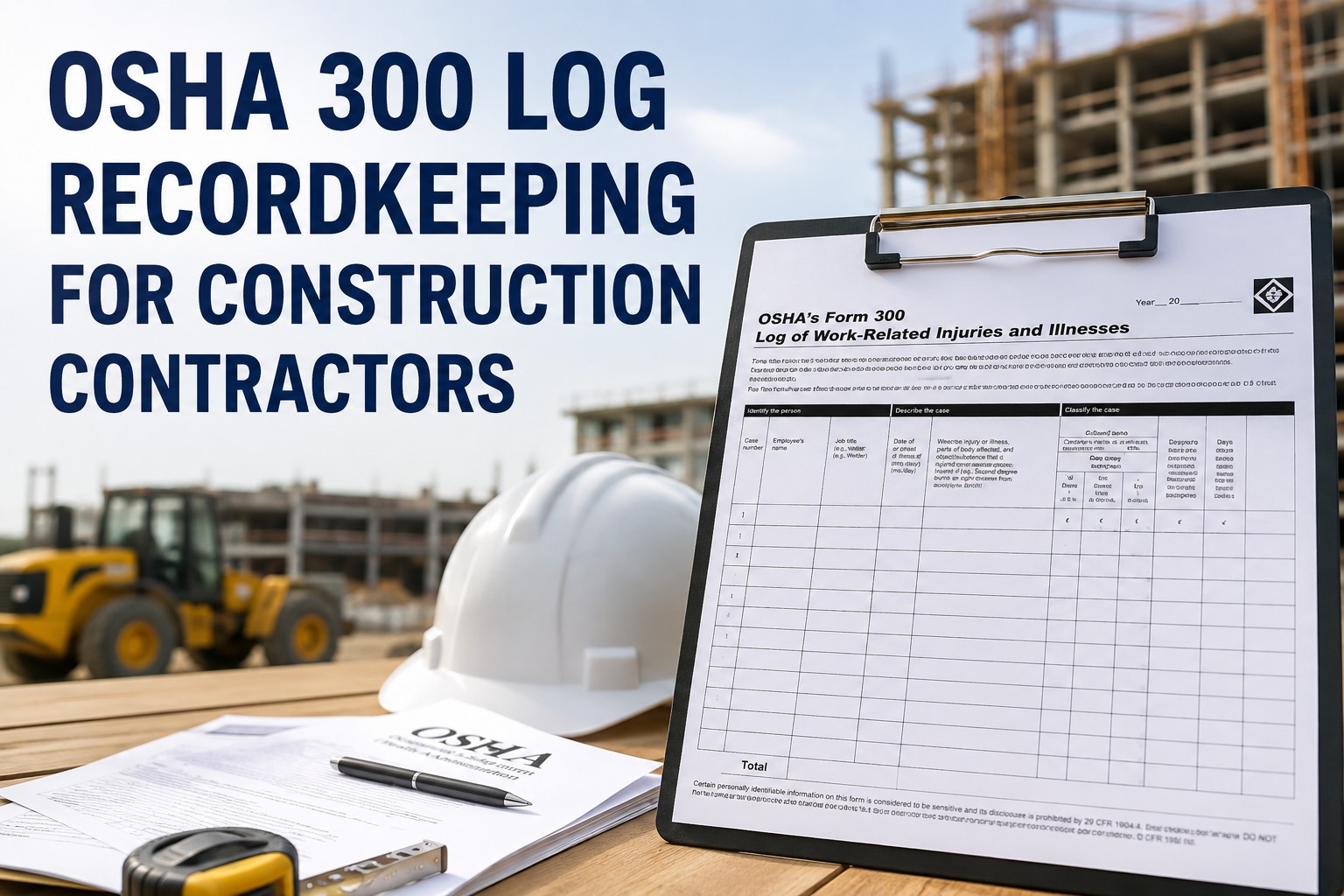
Records requests can become an important part of an OSHA inspection. Under 29 CFR 1904.40, when an authorized government representative requests records required under Part 1904, the employer must provide copies within four business hours. The CSHO does not have to wait for those records before beginning the walkaround.
for required records covered by the rule
Injury & illness records
Be prepared to locate applicable OSHA injury and illness records when requested.
Written safety programs
Relevant written programs, procedures and policies may be reviewed depending on the inspection.
Jobsite safety documentation
Keep applicable inspection, hazard-control and corrective-action records organized and retrievable.
Equipment records
Where equipment conditions are relevant, maintenance and inspection history can help reconstruct operational facts.
The OSHA Field Operations Manual states that the CSHO can begin the walkaround after the opening conference even while the employer is using the permitted period to produce required recordkeeping records.
Make inspection, equipment and corrective-action records easier to retrieve across active projects. Book an HVI Demo →
What happens when OSHA enters the work area?
During the physical inspection, the compliance officer evaluates conditions relevant to the inspection. Federal OSHA regulations authorize CSHOs to use reasonable investigative techniques, including photographs, environmental sampling, exposure measurements and private questioning.
Workplace conditions
The CSHO may inspect work areas, equipment, processes and conditions within the inspection.
Photos & video
OSHA may obtain photographs or other visual evidence related to the purpose of the inspection.
Exposure & conditions
Sampling and measurement equipment may be used where relevant to evaluate workplace exposures.
Employee interviews
The compliance officer may privately question employees and other individuals during the inspection.
The employer representative can keep an internal record of areas visited, documents requested, equipment observed and corrective actions identified. Keep notes factual and avoid interfering with OSHA's inspection or private employee interviews.
Capture routine jobsite findings digitally so your team has a clearer condition history before an OSHA walkaround occurs. Book an HVI Demo →
Who can accompany the OSHA compliance officer?
The OSH Act gives both employers and employees an opportunity for representation during the physical inspection. The employer can select a representative, while employees have separate representation rights under OSHA's walkaround rules.
Select someone who understands the project, safety procedures and site operations and who can help the CSHO navigate the workplace without unnecessarily disrupting work.
Representatives accompany the physical inspection for the purpose of aiding the inspection.
Employees have the right to an authorized representative who can aid OSHA's physical inspection, subject to applicable federal walkaround requirements.
OSHA may conduct private employee interviews. Employer and employee walkaround representatives generally are not present for private interviews unless circumstances recognized by OSHA's procedures apply.
Give supervisors better access to jobsite inspection and safety information before compliance questions arise. Book an HVI Demo →
Prepare supervisors without interfering with worker rights
OSHA's inspection authority includes privately questioning employees. Contractors should make sure managers understand that an inspection-response plan is about orderly coordination—not coaching employees on what to say or interfering with OSHA's ability to obtain information.
Respect private questioning
OSHA regulations authorize compliance officers to privately question employees during an inspection.
Do not obstruct the inspection
Site coordination should support an orderly inspection rather than delay or interfere with lawful investigative activity.
Maintain normal safety controls
Continue enforcing legitimate site safety requirements that apply during the inspection.
Build consistent inspection and corrective-action processes that workers and supervisors can use throughout normal operations. Book an HVI Demo →
The inspection ends with discussion—not necessarily a citation
At the conclusion of the inspection, the CSHO confers with the employer or representative and discusses apparent safety or health violations identified during the inspection. The employer can provide pertinent information about workplace conditions, and OSHA may discuss corrective measures and possible next steps.
Listen. Clarify. Document.
Use the discussion to understand apparent concerns and make sure your internal team has an accurate record of the issues OSHA raises.
Understand the conditions the CSHO identifies.
Discuss appropriate correction of identified hazards.
Provide pertinent facts the CSHO should consider.
Understand that citations, if any, follow OSHA's post-inspection process.
OSHA may later issue citations and proposed penalties if it determines that violations occurred. Contractors should preserve inspection records and continue correcting identified hazards rather than waiting for the enforcement process to conclude.
Keep observations and corrective actions connected after an inspection instead of losing follow-up across emails and spreadsheets. Book an HVI Demo →
What should your team do when an OSHA inspector arrives?
A short, predefined response checklist helps site personnel know whom to contact and what to organize without improvising under pressure. Adapt the process to your company, project and applicable legal requirements.
Verify CSHO credentials
Notify designated management and safety contacts
Select the employer representative
Listen to the reason for the inspection
Clarify the anticipated scope
Identify requested records
Have the employer representative participate
Keep factual internal notes
Record corrective actions identified internally
Document issues discussed at closing
Assign unresolved corrective actions
Preserve relevant inspection records
Turn everyday safety inspections into an organized record your team can access when compliance questions arise. Book an HVI Demo →
Inspection readiness is an everyday process
The most useful preparation happens before anyone knows an OSHA inspection will occur. Routine digital inspections, documented corrective actions and accessible equipment records can help contractors understand current conditions across projects and close safety issues as part of normal operations.
Digital inspections
Build consistent jobsite and equipment inspection records during routine operations.
Explore digital inspections →Corrective actions
Assign findings, follow progress and maintain evidence showing what was addressed.
Explore safety management →Equipment history
Connect equipment inspections, defects, maintenance and completed work in a usable history.
Explore maintenance records →Compliance visibility
Give safety teams a clearer view of inspection activity and unresolved operational findings.
Explore reporting →HVI can help organize safety inspections, corrective actions, equipment history and supporting compliance records. It does not determine inspection scope, replace required OSHA records, provide legal advice or determine whether OSHA will issue a citation.
See how HVI can help keep your jobsite safety documentation ready and accessible. Book an HVI Demo →
OSHA inspection process FAQs
These answers summarize general federal OSHA inspection procedures. Employers operating under an OSHA-approved State Plan should also verify procedures applicable in their jurisdiction.
What happens first when an OSHA inspector arrives?
At the beginning of a federal OSHA inspection, the Compliance Safety and Health Officer presents official credentials to the owner, operator or agent in charge. The CSHO then explains the nature and purpose of the inspection, indicates its general scope and identifies records the officer wishes to review.
What happens during an OSHA opening conference?
The opening conference is used to explain why the workplace is being inspected, the anticipated scope and inspection procedures. Representation for the physical inspection and relevant records may also be discussed before the walkaround begins.
How quickly must OSHA injury and illness records be provided when requested?
Under 29 CFR 1904.40, when an authorized government representative requests records that an employer is required to keep under Part 1904, copies must generally be provided within four business hours. The CSHO does not have to delay the walkaround while waiting for those records.
Can OSHA interview employees privately during an inspection?
Yes. Federal OSHA regulations authorize compliance officers to privately question employees, employers, owners, operators or agents as part of an inspection. Contractors should avoid interfering with lawful private employee interviews.
What happens during the OSHA closing conference?
At the conclusion of the inspection, the CSHO discusses apparent safety or health violations with the employer or representative and gives the employer an opportunity to provide pertinent information about workplace conditions. OSHA may also discuss hazard correction and possible post-inspection procedures. The closing conference itself is not the issuance of a citation.
Keep your everyday inspection records organized so your team is better prepared when compliance questions arise. Book an HVI Demo →