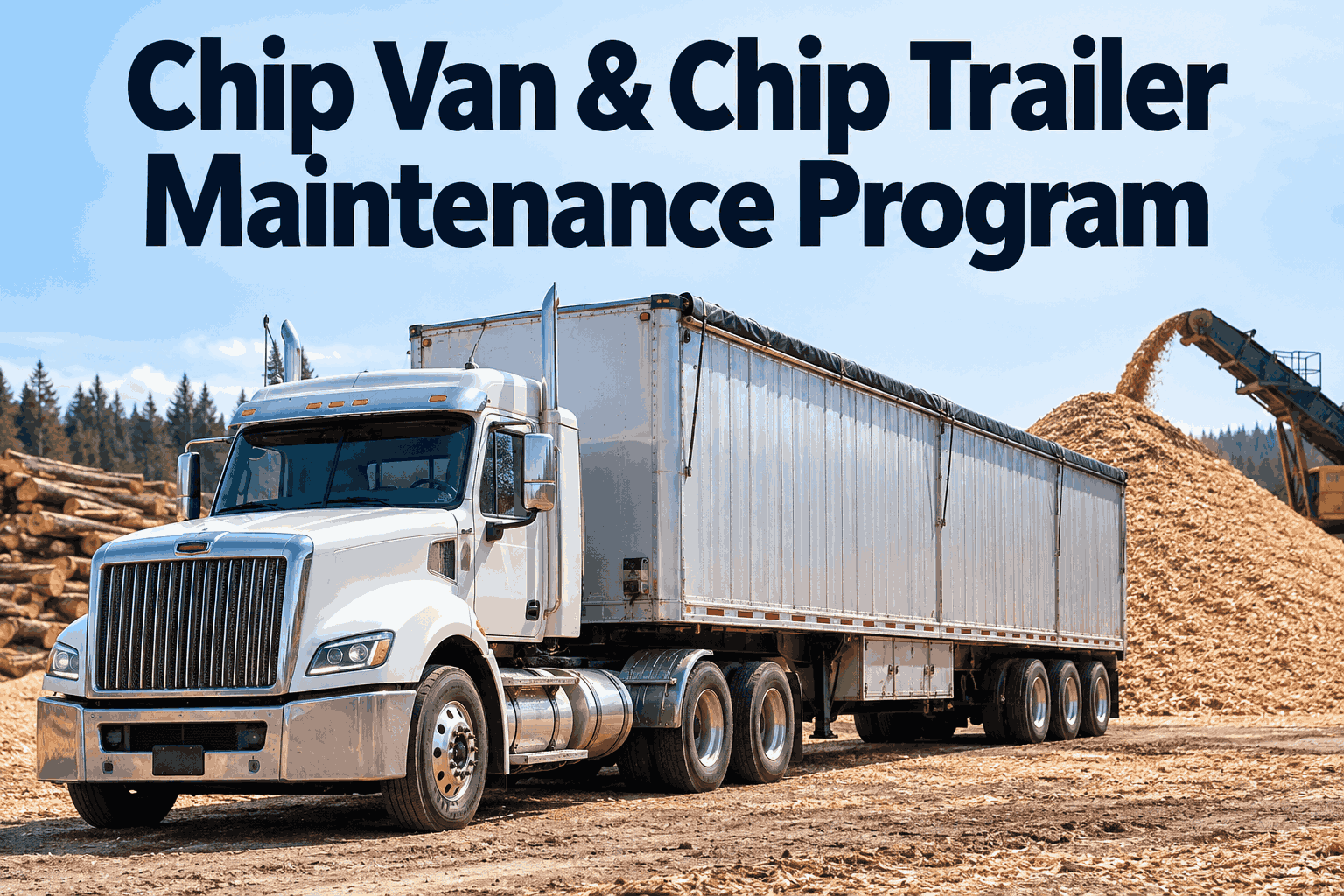
Chip van maintenance has to cover more than tyres, brakes and lights. Chip trailers work around loading debris, repeated unloading cycles, moving-floor components, tarps, rear doors and seals that can turn small defects into unloading delays or lost loads. A practical maintenance program combines chip-body inspections with running-gear checks, defect tracking and scheduled service history.
Maintain the Trailer Systems That Keep Chips Moving
Build chip van and chip trailer inspections around the systems operators actually depend on—from tarp and body condition to doors, seals, unloading equipment and running gear. HVI keeps findings, preventive maintenance and completed repairs connected to each trailer.
A chip trailer lives through two maintenance environments at once. Its chassis and running gear face normal road and forestry transport wear, while the body and unloading system repeatedly handle abrasive material, debris and loading cycles. A useful chip van maintenance program needs to treat both sides as one asset instead of maintaining the chassis while waiting for body-system problems to become obvious.
Chip Van Maintenance Starts Above the Axles
Generic trailer inspections are still important, but they do not fully address the systems that make a chip van useful. The tarp has to operate correctly, the body has to remain structurally serviceable, the rear closure has to secure the load and the unloading system has to move material consistently.
Each zone has a different failure path and should produce a specific maintenance response.
Inspect tarp material, attachment points, arms or cables, operating components and obvious damage that can prevent secure coverage.
Look for damaged panels, cracked or distorted areas, loose hardware and impact damage around loading and unloading zones.
Check hinges, latches, locking hardware, door alignment and sealing surfaces so the rear closure operates and secures correctly.
Inspect the installed system for visible damage, leaks, loose components, abnormal movement and debris that could interfere with operation.
The exact inspection points should follow the trailer and unloading-system manufacturer's requirements, because chip trailer configurations vary. HVI gives fleets a way to build equipment-specific inspection forms rather than forcing every trailer through the same generic checklist. See how a chip van inspection can be configured around your actual trailer systems in HVI.
Walking Floor Maintenance Should Follow the Way the Trailer Works
For chip trailers equipped with a moving or walking floor, the unloading system deserves its own maintenance routine. Floor slats, guides, hydraulic components and related hardware repeatedly cycle under load, while wood debris can collect around areas that need inspection.
Check for debris or visible damage that could interfere with normal floor movement.
Investigate abnormal movement, unusual noise or other changes from normal operation.
Review accessible hydraulic and mechanical components according to the installed system's service instructions.
Walking-floor designs and service requirements differ. Use the trailer and floor-system manufacturer's procedures for inspection, adjustment, lubrication and hydraulic service.
A digital maintenance record makes those manufacturer-defined tasks easier to schedule and verify across the trailer pool. HVI's preventive maintenance workflows can organize recurring trailer service by the interval your fleet specifies. See how HVI can keep chip trailer unloading-system checks on a repeatable maintenance schedule.
Turn Chip Trailer Inspections Into Repair Decisions
An inspection only creates value when a finding reaches the people who can act on it. A damaged tarp, leaking hydraulic component, door that no longer closes correctly or abnormal tyre condition should not disappear into a paper form or text-message thread.
Operator records the defect against the correct chip trailer.
Evaluate whether the trailer can securely contain the intended load.
Investigate conditions that could affect normal unloading operation.
Route roadworthiness findings through the fleet's required repair process.
HVI connects inspection findings with maintenance records and work management so the repair trail stays attached to the trailer. See how a chip trailer defect can move from field inspection to documented maintenance in HVI.
Chip Trailer Maintenance Still Depends on Running Gear
The chip-body systems make this trailer specialized, but the running gear still determines whether it can move reliably between the woods, yard and destination. Running-gear inspections should sit in the same trailer program rather than being managed as a completely separate process.
Check tyre condition, inflation requirements, wheel condition and visible hub concerns.
Include the applicable brake-system checks required for the trailer and operating environment.
Look for damaged, loose, leaking or worn suspension components during scheduled checks.
Inspect required lamps, wiring and trailer connections as part of the road-going check.
The key is to avoid two disconnected records—one for the chip body and another for the chassis. A single trailer history makes it easier to see whether repeated unloading-system work, door repairs, tyres or other maintenance is concentrating on the same unit. See how HVI keeps specialized chip-body maintenance and running-gear records together by trailer.
A Practical Chip Van Maintenance Program Uses More Than One Inspection
Not every maintenance item belongs on every inspection. Operators need a focused check they can complete around normal trailer use, while technicians need deeper scheduled access to components that require closer inspection or servicing.
Tarp, doors, obvious body damage, tyres, lights and visible unloading-system concerns.
Running gear, structural areas and unloading components according to fleet and manufacturer requirements.
Investigate reported damage, abnormal operation or recurring problems before closing the finding.
A short operator inspection should not become a technician teardown checklist, and a detailed PM should not rely only on what can be seen during a quick walk-around.
HVI can keep those inspection types, scheduled maintenance tasks and resulting repairs tied to the same asset record. That gives forestry maintenance managers a clearer picture of trailer condition without forcing every person to complete the same form.
Build a Maintenance Record Around the Whole Chip Trailer
A strong chip van maintenance program treats the trailer as more than a road-going chassis. Tarp systems, doors, seals, body structure and unloading equipment all need defined inspection and service attention alongside tyres, brakes, suspension and electrical systems.
HVI helps forestry fleets standardize those inspections, route defects into maintenance, schedule preventive work and retain service history against each chip van or chip trailer.
Chip Van Maintenance FAQs
What should a chip van maintenance program include?
A chip van maintenance program should cover the systems fitted to the specific trailer. Typical areas include tarp and containment equipment, body condition, rear doors and seals, the installed unloading or moving-floor system, tyres and wheels, brakes, suspension, lights and trailer connections. Inspection and service details should follow the applicable trailer, component and unloading-system manufacturer requirements.
What should be checked on a chip trailer walking floor?
Checks should follow the installed floor manufacturer's instructions. Maintenance teams may need to look for visible slat or floor damage, debris or obstruction, abnormal operation, leaks and concerns around accessible hydraulic or mechanical drive components. Adjustment, lubrication and component-service procedures should use the manufacturer's specifications rather than a generic walking-floor interval.
Why are tarp, door and seal inspections important on chip trailers?
These components form part of the trailer's load-containment and operating system. Damage, binding, worn hardware, poor door alignment or deteriorated sealing surfaces can affect normal loading, transport or unloading. Recording these findings during routine inspections gives the maintenance team a chance to evaluate and repair them before they develop further.
How often should chip trailers receive preventive maintenance?
There is no single maintenance interval that fits every chip trailer. Frequency should reflect manufacturer requirements, component specifications, operating conditions, fleet experience and applicable roadworthiness requirements. Fleets can combine routine operator inspections with deeper scheduled maintenance so frequently visible items and technician-level service tasks are checked at appropriate times.
How does HVI help manage chip trailer maintenance?
HVI can organize trailer-specific inspections, record field defects, schedule preventive maintenance and retain completed work against the trailer's asset history. This lets forestry fleets keep specialized chip-body maintenance and normal trailer running-gear records together instead of splitting information across paper forms, spreadsheets and separate repair notes.