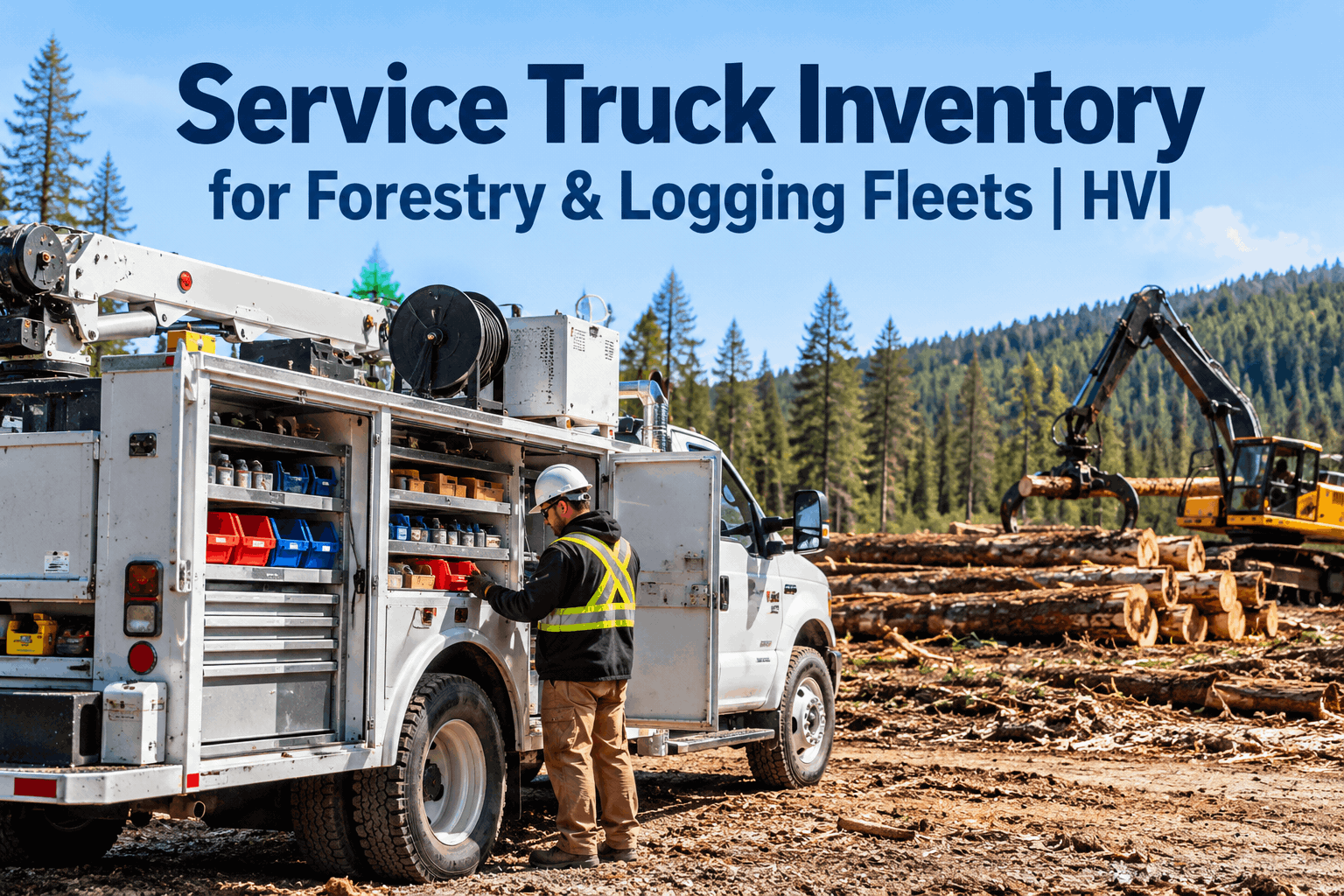
Service truck inventory determines whether a forestry mechanic can finish a repair at a remote landing or must drive back to the shop for a small fitting. In logging operations, the right stock is not simply more stock: it is a carefully selected mix of high-use consumables, machine-specific critical spares, and accountable replenishment. This guide explains how to build a practical service truck inventory system for harvesters, skidders, forwarders, loaders, and support equipment.
Service Truck Inventory for Logging Operations
Keep essential parts close to the cut block. Make every issue traceable, every shortage visible, and every truck ready for the next field repair.
Why Service Truck Inventory Needs Its Own Plan
A shop storeroom supports many repairs; a field truck must support the most likely repairs under limited space, weight, and travel constraints.
Design for repair completion, not shelf fullness
When a harvester develops a hydraulic leak or a skidder needs a replacement hose fitting, the mechanic needs the correct item at the machine. A truck filled with rarely used parts can still fail the repair if common consumables are missing.
Build the loadout from the last season's actual maintenance records. Review which jobs were completed on the first visit, which needed a second trip, and which parts repeatedly ran out. Use Book a demo to explore how HVI connects parts records with maintenance work.
- How often is this part used in the field?
- What happens if it is unavailable?
- Will it fit the machines this truck serves?
- Can it be stored safely within truck capacity?
Build a Critical-Spare Parts Stocking Matrix
Use a three-tier approach rather than stocking every truck identically. The example below is illustrative; quantities must come from fleet history and site conditions.
| Stock tier | Typical forestry items | Planning rule | Replenishment trigger |
|---|---|---|---|
| A · Critical | Common hydraulic fittings, repair hoses, seals, machine-specific filters | Stock where absence would extend equipment downtime | Reorder after issue or when minimum reached |
| B · Routine | Grease, lubricants, clamps, fasteners, electrical connectors | Set min/max by normal weekly consumption | Top up at daily or weekly truck check |
| C · Selective | Bulky, costly, rarely used machine components | Hold at depot or dispatch on demand | Reserve against planned repair orders |
Do not substitute a generic part for an OEM-specified safety-critical component. Confirm compatibility, pressure ratings, shelf life, and storage requirements.
Turn Every Part Issue Into a Traceable Movement
A reliable process follows the part from central stores to the truck, from the truck to a repair, and back into replenishment planning.
Make the truck a controlled inventory location
Give each service truck a unique identifier, named custodian, and defined stock list. Record transfers and part issues against the equipment being repaired. This reduces ambiguity when multiple mechanics share the same truck.
For remote sites, establish a documented offline fallback if connectivity is unavailable, then reconcile entries when the crew returns to coverage. Confirm which offline workflows your chosen software supports rather than assuming automatic synchronization.
- Truck and bin location
- Part number and quantity
- Machine or asset ID
- Work order or repair reference
- Technician and issue date
- Remaining balance or reorder flag
Connect Field Parts Usage to Equipment Repairs
See how HVI's parts inventory and maintenance workflows can help teams organize service records and improve visibility into field repair requirements.
Organize the Truck by Repair Frequency and Safety
Compartment design should make common items easy to identify and protect the mechanic from searching through loose or unsecured stock.
Fast-access bins
Label high-use filters, fittings, seals, connectors, and fasteners with consistent part numbers and locations.
Controlled supplies
Separate lubricants, fluids, chemicals, and spill-response materials according to storage and safety instructions.
Protected spares
Keep fragile electrical components and precision parts clean, dry, and protected from vibration or contamination.
Use a loading plan that respects axle limits, payload, restraint systems, and access to emergency equipment. A well-labeled truck also makes daily cycle counts faster and reduces accidental duplicate orders.
12-Point Service Truck Inventory Checklist
Use this before deployment, during weekly counts, and after major field repair jobs.
Truck identifier and stock custodian confirmed
Critical parts matched to assigned forestry machines
Bin labels and part numbers legible
Hydraulic fittings and hoses correctly specified
Filters and seals protected from contamination
Lubricants and fluids secured and identified
Fasteners and electrical supplies at minimum stock
Damaged, expired, or unsuitable items quarantined
Issued parts recorded against repair jobs
Reorder requests raised for low-stock items
Payload, restraints, and spill controls checked
Final inventory reconciliation signed off
Adapt the checklist to local mine/forest rules, equipment manuals, environmental controls, and company procedures.
Use a Simple Min/Max Reorder Method
For commonly used items, set a minimum that covers expected consumption until the next delivery and a maximum that fits the truck's space and carrying limits.
Suggested reorder point: 11 units
Reassess after changes in fleet mix, repair frequency, or access conditions.
This is a planning illustration, not a universal stocking benchmark. For slow-moving critical spares, consider shared site stock, supplier arrangements, and emergency delivery plans rather than automatically carrying one on every truck. Book a demo to review HVI's parts and inventory workflows for forestry maintenance.
Monitor Inventory Performance Without Adding Busywork
Review a small set of measures at the end of each harvest week, then adjust the stock list based on actual field conditions.
Share of field repairs finished without a return trip for missing parts.
Count of repair delays caused by unavailable truck inventory.
Difference between recorded balances and physical truck counts.
Track parts that repeatedly go unused as well as those that run out. Remove obsolete items only after confirming equipment coverage and emergency needs. Pair parts analysis with repair history so stocking decisions follow the fleet's actual failure patterns.
Where HVI Fits Into Forestry Service Truck Management
HVI can support the operational records around mobile maintenance: equipment inspections, maintenance jobs, service history, and parts inventory. A disciplined field process remains essential.
From equipment defect to parts demand
When a machine inspection identifies a defect, maintenance teams can use a repair workflow to document what needs attention and what parts were used. Historical maintenance and inventory records then inform future service truck stock planning.
Explore how to sign up for HVI to organize forestry equipment inspections and maintenance records, or book a demo to discuss parts inventory visibility for logging fleets.
- Parts & Inventory: stock and usage visibility
- Maintenance Management: repair work records
- Equipment Inspections: identify defects before breakdowns
- Service History: improve future stocking decisions
Make Logging Service Truck Inventory Easier to Control
Bring parts tracking, equipment inspections, and maintenance history into a more organized workflow before the next remote-site breakdown.
Service Truck Inventory FAQs
What should a logging service truck carry?
Carry common consumables, approved hydraulic fittings, filters, seals, electrical supplies, and selected critical spares based on the machines served and recent repair history. Confirm compatibility, safe storage, and payload limits.
How do you decide minimum stock levels?
Use average demand during replenishment lead time plus a justified safety buffer. Review levels when fleet composition, season, or remote-site delivery times change.
How often should service truck inventory be counted?
Check critical items before deployment, perform regular cycle counts on high-use bins, and complete a fuller reconciliation at an interval appropriate to the operation and usage volume.
How can remote logging crews avoid parts stockouts?
Assign clear stock ownership, record issues against repair work, use min/max replenishment, and maintain an agreed process for urgent or offline stock movements.
Can HVI help manage forestry parts and maintenance records?
HVI provides parts inventory and maintenance management capabilities that can support equipment repair records and stock visibility. Confirm specific service-truck location and offline requirements in a product demonstration.
Build a Field Inventory System That Supports Harvest Uptime
Effective service truck inventory combines the right critical spares, a clean issue record, safe truck storage, and replenishment before the next shift. Start with your most common forestry equipment failures, pilot the stock list on one truck, and refine it using repair and usage history. For a closer look at connecting parts and maintenance workflows, book an HVI demo for logging fleet inventory management.