The harvesting machines get all the attention, but the thing that actually ends a shift at a remote camp is usually the generator. When it quits 80 kilometres from the nearest town, there's no lights, no water pump, no charged radios, and no coffee at 5am — and a crew that can't be housed goes home. Logging camp logistics is the quiet discipline of keeping the support assets alive, the ones nobody thinks about until they stop. Start free and put your camp assets on record.
Logging Camp Logistics: Keeping the Assets That Keep the Camp Alive
Generators, water, fuel, waste — the support systems that never cut a log but shut everything down when they fail. Put them all on one asset record, before the breakdown finds you first.
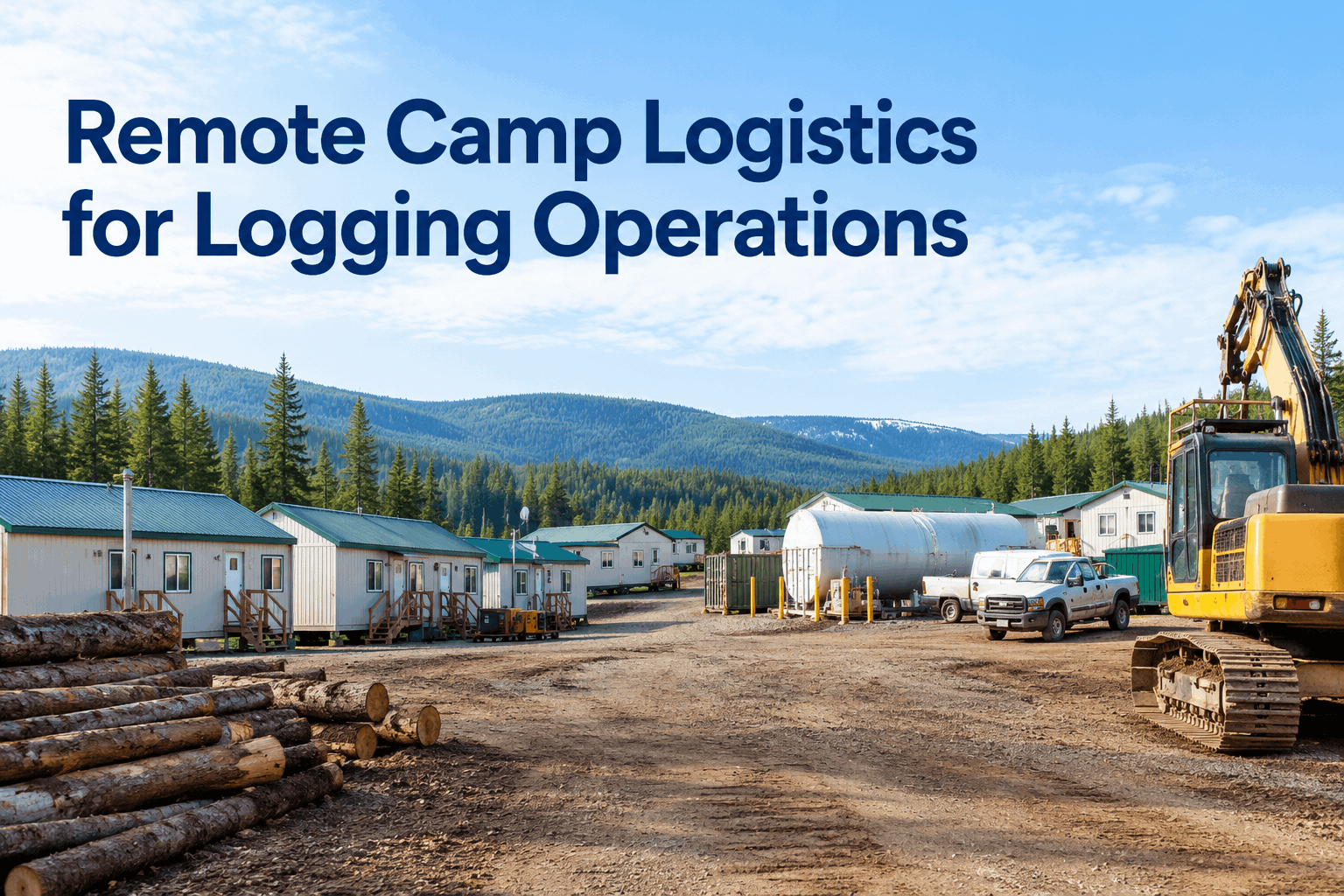
A remote logging camp isn't just a place crews sleep. It's a small, off-grid operation with its own power, water, fuel, and waste — every one of them a critical asset, and every one of them hours from help if it fails. Yet these are exactly the assets that never make it into a maintenance system, because they aren't "equipment" in the way a skidder is.
The assets nobody logswhy logging camp logistics lives in the blind spot
Ask a fleet manager for the service history on a feller-buncher and they'll pull it up. Ask for the last time the camp generator's coolant was changed, and you'll usually get a shrug and a guess. The machines are tracked because they earn money directly. The camp assets are assumed to just work — right up until the morning they don't, and a whole crew is standing around with no power and nowhere to be.
Prime and backup generators, fuel feed, transfer switches. Lose it and the camp goes dark, cold, and silent.
Pumps, tanks, filtration, treatment. A failed system means no potable water — and a camp you legally can't run.
Bulk tanks, pumps, bunding, dispensing. A leak is an environmental incident; an empty tank strands every machine.
Grey water, sewage, waste handling. Neglect it and you've got a health hazard and a compliance problem at once.
Every one of these is an asset with a service interval, a failure mode, and a record that should exist — the same way your rolling stock does. The fix isn't more work; it's putting them in the same place you already track machines, through HVI asset and inventory management. Start free and add your first camp asset.
Distance changes everythingwhy remote camp logistics punishes the unprepared
At a shop in town, a failed water pump is a two-hour errand. At a camp four hours down a logging road, it's a day lost if you have the part and a week lost if you don't. Distance turns every small failure into a big one, and the only defence is knowing what's coming before you're out there. The camp's remoteness doesn't just raise the stakes — it changes the whole maintenance math.
- Part on a shelf or a short drive away
- A failure is an interruption, not a crisis
- Service done whenever it's convenient
- Specialist help an hour away
- Part is a scheduled supply run away, or it isn't coming
- A failure can shut the whole camp down
- Service has to be planned around the supply window
- You are the specialist until one can get in
That's why camp logistics is really a planning discipline, not a repair one. If you know the generator's service is due before the next supply run, the part rides in with the groceries. If you don't, it rides in on a dedicated trip that costs a day and a small fortune. Scheduling that by run-hours is what HVI preventive maintenance scheduling is built for.
Camp asset registerwhat to capture for every system before the season starts
Getting a handle on logging camp logistics starts with an inventory. For each camp asset, these are the fields worth having on record — so a new site manager or a relief mechanic can walk in and know exactly where each system stands.
Once every camp asset has this on record, the whole operation gets calmer — because the next failure is usually one you already saw coming and planned around. Keeping that inventory and its service history in one place is the core of HVI maintenance management. Book a demo to see a camp register set up.
The supply-run rhythmplanning camp maintenance around the window you've got
Remote camps run on a supply cadence — a truck in every few days or once a week, and little in between. Good camp logistics means bending maintenance to fit that rhythm instead of fighting it, so parts and service land inside the window you already have.
Before each supply run, the asset register shows which camp systems have service or parts coming due.
The filters, fluids, and spares for those services get loaded on the same truck — no dedicated trips.
Work gets done while the resources are on site, and the register updates — ready for the next run.
Done this way, camp maintenance stops being a series of emergencies and becomes a quiet routine that rides along with the groceries. That's the whole promise of treating a camp as a set of tracked assets instead of a pile of things that occasionally break. Sign up free and plan your first supply-run service.
What a forestry maintenance manager says about camp assets
We tracked every machine down to the grease fitting and completely ignored the camp genset — until it dropped a cylinder on a Sunday and we flew a tech in on a chopper. That one failure cost more than a year of the camp's fuel. Now the generator, the water plant, all of it sits in the same system as the skidders, with service due dates I can actually see. The camp hasn't surprised us since.
Logging camp logistics — FAQs
What is logging camp logistics?
It's the planning and upkeep of a remote logging camp's support assets — power, water, fuel, and waste systems — so they keep running far from help. It treats camp infrastructure as tracked, serviceable assets, not things that just work until they don't. Start free and put yours on record.
Which camp assets should I be tracking?
At minimum the four critical systems: generators and power, water supply and treatment, bulk fuel storage, and waste and sanitation. Each has a service interval and a failure that can stop the camp. See HVI asset and inventory management, or sign up free.
How do I maintain camp equipment so far from a shop?
Plan maintenance around your supply-run schedule. Track each asset by run-hours so services are predictable, then stage the parts to ride in on the next truck instead of an emergency trip. See HVI preventive maintenance scheduling.
Can I track camp assets in the same system as my machines?
Yes — a generator or water pump is an asset like any other, with inspections, service intervals, and history. Keeping camp infrastructure and harvesting fleet in one place is the point. Explore HVI maintenance management, or book a demo.
Does it work at camps with no cell signal?
Yes — inspections and asset updates are captured offline on a phone and sync when the device next reaches coverage, so a remote camp with no signal still builds a full record. Start free and test it at your camp.
Keep the whole camp on record, not just the iron that cuts
Put every generator, pump, tank, and system on one asset register with service due dates you can see — so remote camp logistics becomes a quiet routine that rides in with the supply run, not a string of emergencies.
- Power, water, fuel & waste on one register
- Service scheduled by run-hours
- Parts staged for the supply run
- Offline capture, no signal needed