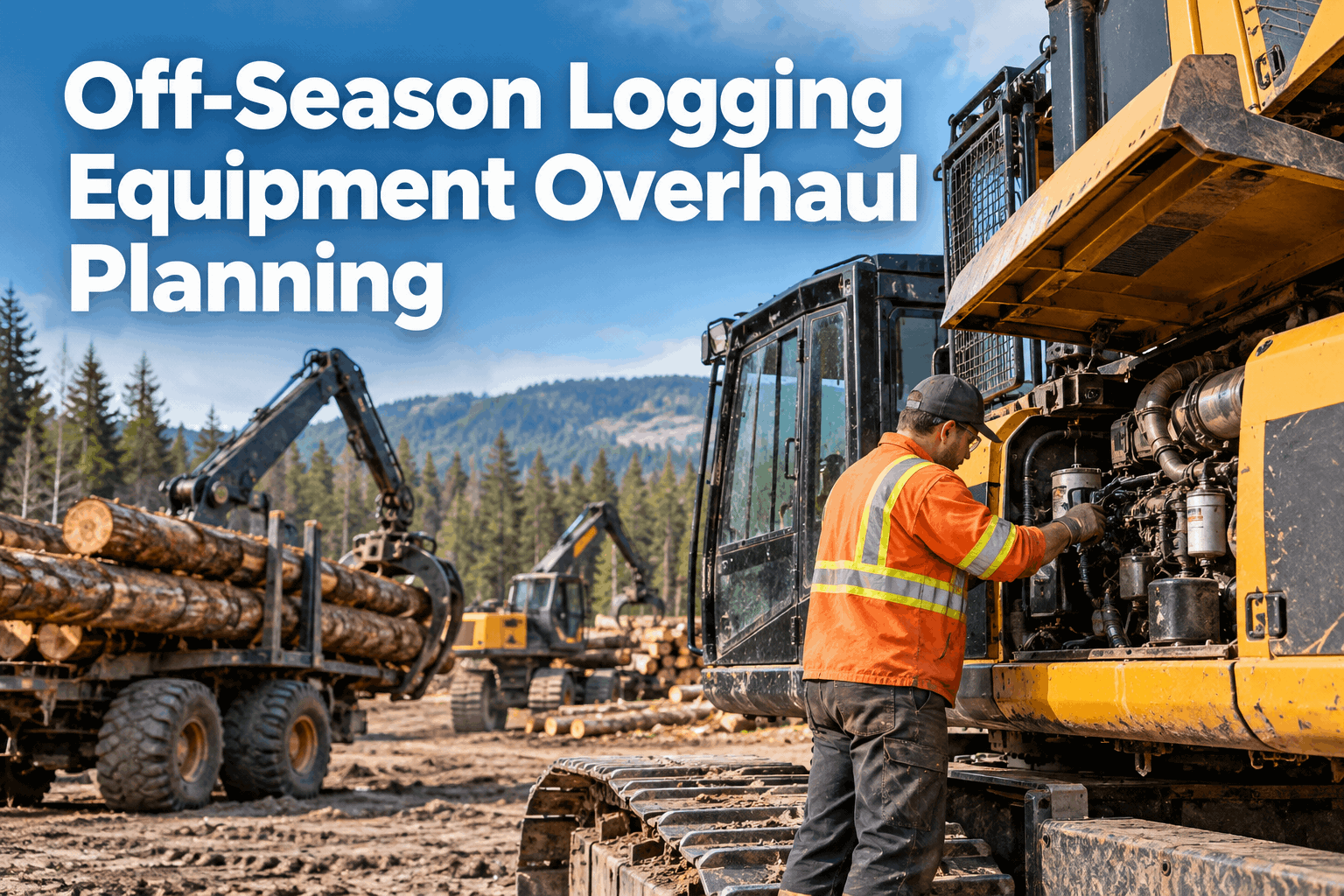
The last truck has left the harvest block, but the maintenance work is only beginning. A harvester has a recurring hydraulic leak, the skidder needs undercarriage attention, and a forwarder is waiting on a part with an uncertain lead time. Logging equipment maintenance during the off-season is your opportunity to fix these issues before they interrupt the next harvest. The challenge is deciding what to repair first, which parts to order, and when every machine must be ready.
Turn the off-season into a reliable start to harvest
Build a practical overhaul plan for harvesters, skidders, forwarders, and logging support equipment—without losing track of parts, repair priorities, or return-to-service checks.
Why off-season logging equipment maintenance needs a plan
A quiet machine is not necessarily a healthy machine. Repairs left until the first production week compete with operators, contractors, and haul schedules.
Forestry equipment faces abrasive debris, mud, steep grades, vibration, and demanding hydraulic duty cycles. Problems that appeared manageable during the final harvest shift can become costly once equipment is needed every day. A small hose leak may point to chafing or a damaged clamp; a persistent temperature alarm may need investigation rather than another fluid top-up.
Begin with the work already documented: operator inspection defects, previous work orders, breakdown history, service intervals, and open parts requests. Then walk every machine while it is parked safely and accessible. If records are scattered, the first off-season task is reconstructing what happened during the harvest.
Use Book a Demo — See HVI Forestry Inspection and Repair Records to explore how your team could bring inspection findings and maintenance history into a consistent workflow.
Build a four-phase forestry equipment overhaul schedule
The phases overlap. Parts procurement should begin while inspections are still underway, not after every diagnosis is finished.
Inspect and scope
Review machine hours, operator reports, fluid leaks, wear, service history, safety defects, and planned use next season.
Output: approved repair scopeReserve resources
Check parts availability, supplier lead times, technician capacity, lifting equipment, and contractor access.
Output: parts and labor planComplete the work
Sequence major repairs, planned services, component replacements, and follow-up inspections.
Output: documented maintenanceVerify and release
Carry out manufacturer-required checks, functional verification, and final pre-deployment inspection.
Output: readiness decisionFor a short off-season, prioritize safety and reliability work before cosmetic refurbishment. For a longer window, consider major component work that cannot be completed without extended downtime. The example phases are a planning framework, not fixed service intervals.
Prioritize logging fleet overhaul work by risk and harvest impact
The most expensive repair is not always the highest priority. Start with hazards and defects that could prevent a machine from returning to service.
Priorities should be confirmed against the machine manufacturer's instructions, observed condition, inspection findings, and applicable safety requirements. A leaking line near a hot surface, compromised brake, or damaged protective structure is not merely a budget-ranking issue.
When managers need to review the same defect across several machines, Book a Demo — Explore HVI Equipment Maintenance History to see how service records can support repair planning.
Make every off-season work order count
See how HVI helps forestry teams organize inspections, preventive maintenance, and equipment service records before harvest begins.
Prevent parts delays from consuming the maintenance window
A machine can be stripped and ready for repair while the required seal kit or cylinder remains weeks away. Parts planning must follow the critical path.
Build a parts-first repair sequence
Separate confirmed parts needs from suspected failures. Ask technicians to complete the diagnosis before placing expensive component orders whenever safe and practical. Record part number, machine ID, quantity, supplier status, expected arrival, and the work order that depends on it.
Group jobs by required skills and workshop resources. Two machines may need the same lifting equipment or hydraulic specialist, so booking them for the same day creates an avoidable queue. Keep a small capacity allowance for defects discovered during disassembly.
For consumables such as filters, fluids, hoses, and common service parts, compare planned maintenance demand with stock on hand. Use Book a Demo — Review HVI Parts and Maintenance Workflows to explore how parts records can support scheduled service.
Example repair dependency
Illustrative sequence only. Repairs, pressure testing, and commissioning must follow OEM procedures and be performed by qualified personnel.
Off-season forestry equipment maintenance checklist
Use this checklist to structure the planning review. It does not replace machine-specific inspection forms or qualified maintenance procedures.
Inspection and risk
- Review open safety defects and operator reports.
- Inspect leaks, hoses, guarding, and visible wear.
- Check brakes, steering, and emergency functions per OEM guidance.
- Review recurring faults and abnormal temperatures.
Maintenance and parts
- Verify hour-based and calendar-based PM due dates.
- Confirm repair scope and responsible technician.
- Order critical parts and check lead times.
- Reserve workshop bays, tools, and specialist support.
Release and deployment
- Record completed repairs and replaced components.
- Verify safety-critical repairs with qualified personnel.
- Complete final pre-deployment inspections.
- Confirm readiness status with harvest supervisors.
Managers can use Sign Up Free — Start Logging Equipment Inspection Records to begin organizing recurring inspection and service information.
Measure whether the logging fleet is actually harvest-ready
A list of closed work orders is useful, but a harvest supervisor needs a clear picture of what is available, restricted, or still in repair.
Maintenance completed
Required repairs documented; final checks still need the appropriate sign-off before release.
Parts or labor pending
Record the blocking item, owner, and revised expected completion date.
Unsafe or incomplete
Keep the machine out of service until required corrective action and verification are complete.
Track a few measures consistently: percentage of critical repairs closed, overdue PM tasks, open safety defects, parts-related delays, and machines released before their planned mobilization dates. Compare the figures by machine type and harvest block to find repeat problems.
A useful management question is not simply “Did we finish the overhaul?” but “Which machine could still delay day one, and what is the next action?” Book a Demo — See HVI Fleet Maintenance Reporting to explore a clearer view of equipment records.
How HVI supports off-season logging fleet maintenance
Digital inspections
Capture equipment condition and defects in a repeatable format instead of relying on loose paper notes.
Preventive maintenance
Keep upcoming scheduled service visible as machines move between the workshop and harvest blocks.
Maintenance history
Review prior repairs and recurring issues before deciding whether a component needs further attention.
Parts and inventory
Keep service parts information connected to the work that maintenance teams need to complete.
HVI helps organize maintenance information and follow-through. It does not diagnose faults independently, replace OEM repair instructions, or certify that equipment is safe for operation. To evaluate its fit for your logging fleet, Book a Demo — Explore HVI Logging Fleet Maintenance Management.
Keep overhaul plans, inspections, and service history together
Give your maintenance and harvest teams a clearer starting point before equipment returns to the field.
Off-season logging equipment maintenance FAQs
When should a logging fleet start off-season overhaul planning?
Begin before the final harvest shift when possible. Review service history, known defects, and parts lead times early so inspections and major repairs can start promptly when machines become available.
Which logging machines should be overhauled first?
Prioritize unsafe equipment and safety-critical defects first. Then consider critical-path machines, expected deployment dates, parts lead times, repair duration, and whether an alternative machine is available.
What should be included in a logging equipment overhaul checklist?
Include operator defect history, safety inspections, manufacturer-specified service tasks, hydraulic and drivetrain condition, parts requirements, work order ownership, repair verification, and final pre-deployment checks.
How do you prevent parts delays during an off-season overhaul?
Diagnose known failures early, identify long-lead components, verify part numbers, track order status, and reserve technician time only when parts and other prerequisites are likely to be ready.
How can HVI help with logging fleet overhaul planning?
HVI can support digital equipment inspections, preventive maintenance schedules, maintenance records, and parts tracking. Those records help teams plan and follow up on overhaul work; qualified personnel still perform and verify repairs.
Make logging equipment maintenance a pre-harvest advantage
Successful off-season planning starts with an honest assessment of machine condition and ends with documented, verified readiness. Prioritize safety-critical repairs, order parts against confirmed work, reserve workshop capacity, and keep harvest supervisors informed about release dates. If your team is still coordinating overhaul work through scattered notes, Sign Up Free — Organize Forestry Equipment Maintenance or book an HVI walkthrough to see how digital inspections and preventive maintenance records can support the next harvest.