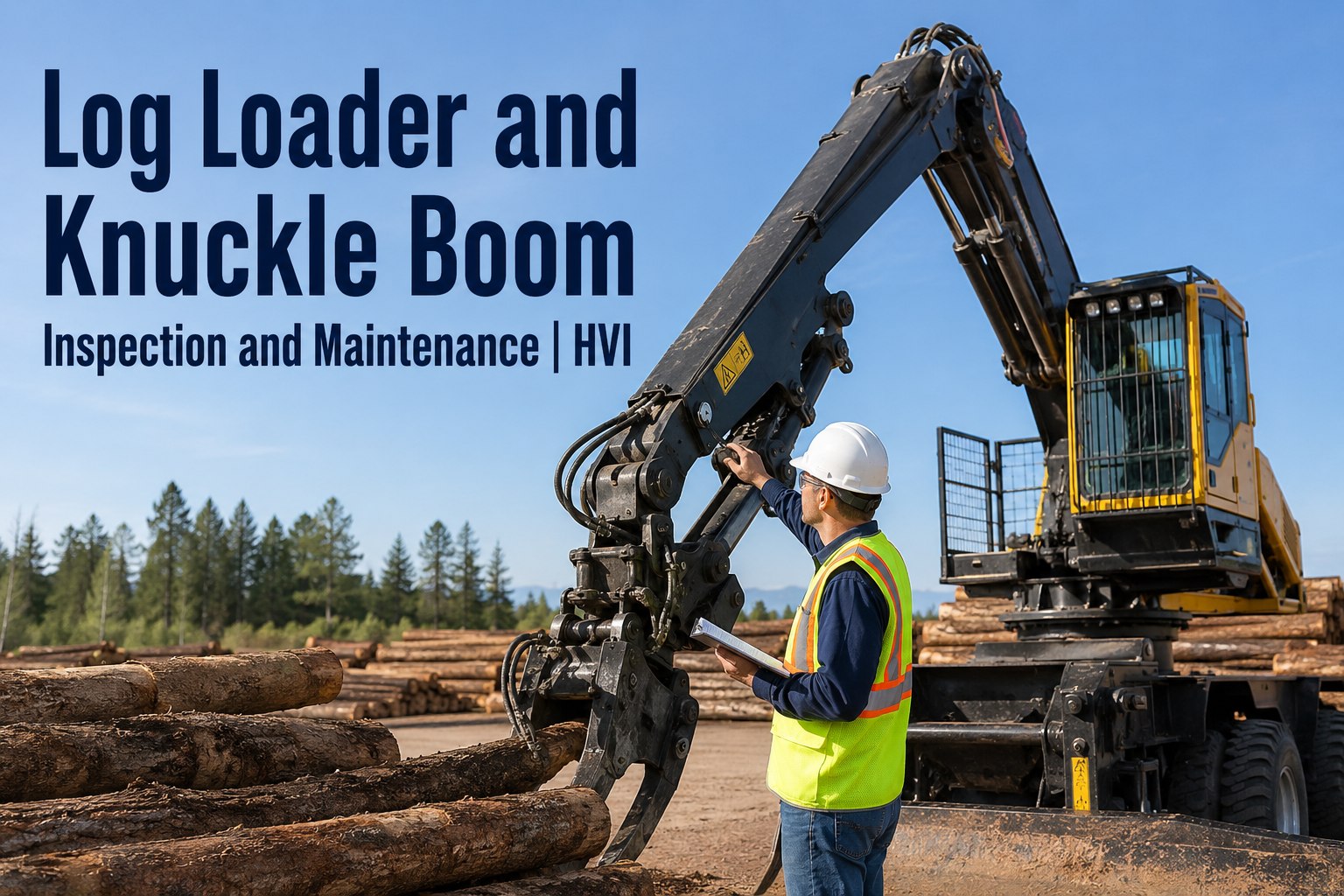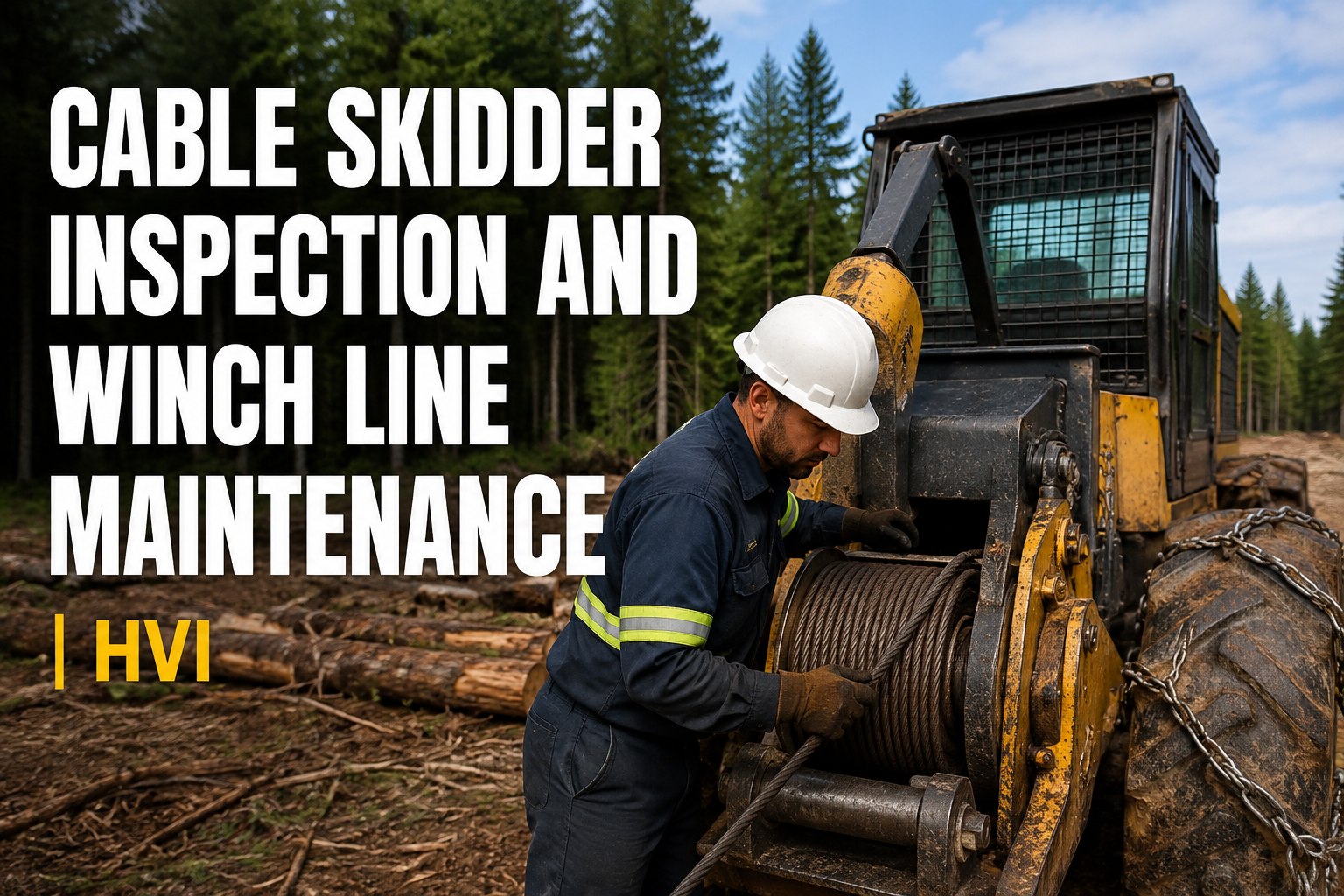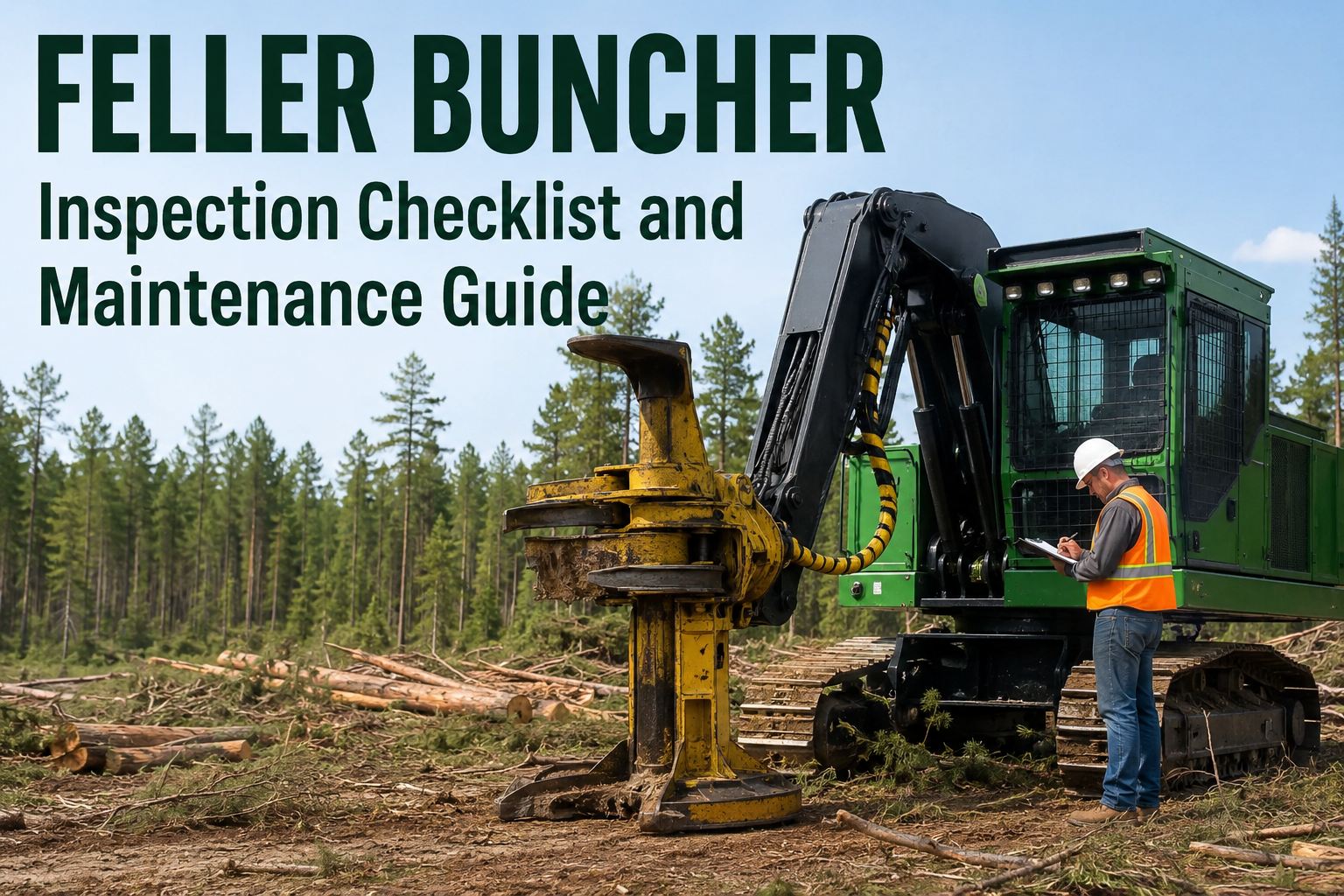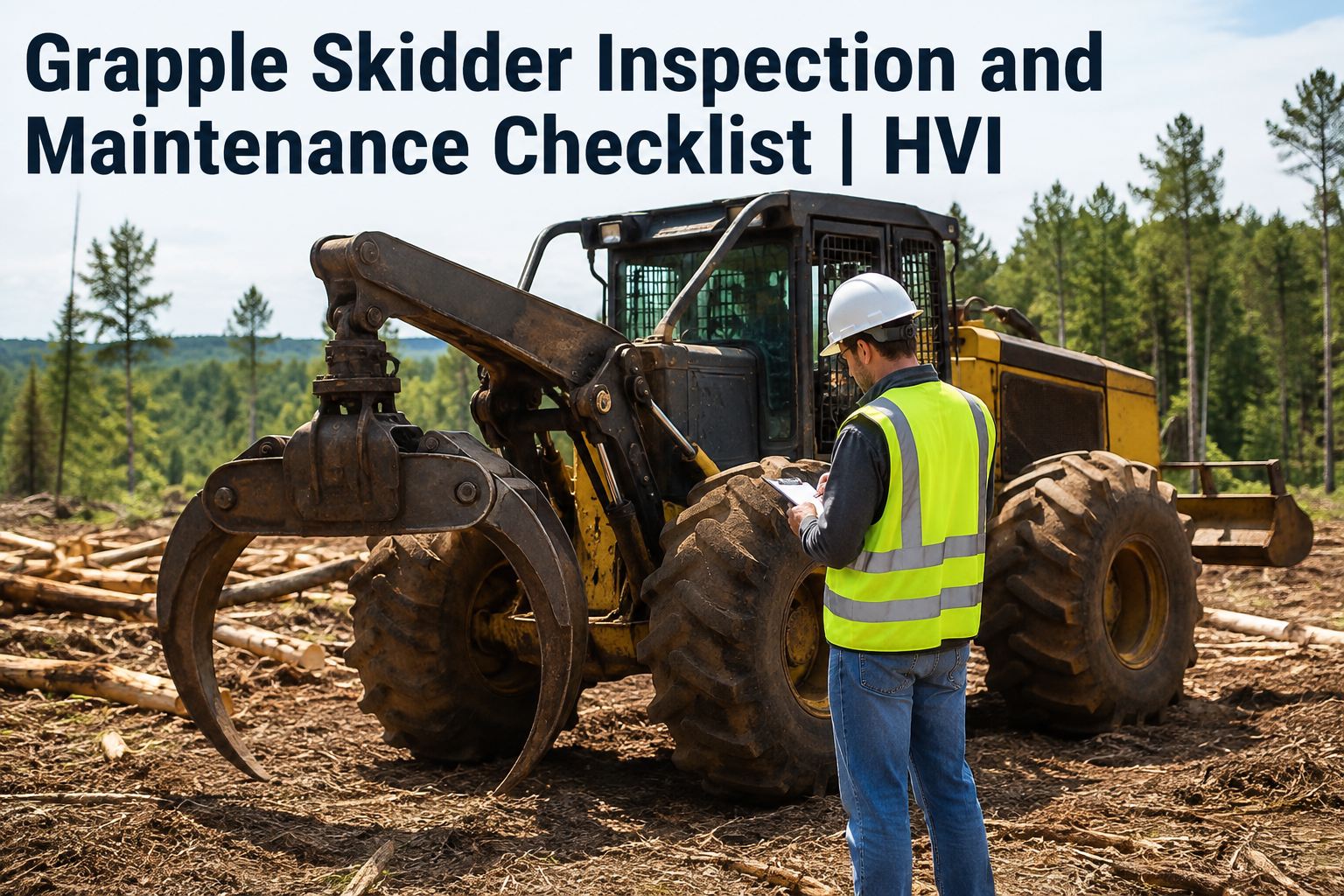
It is 5:40 in the morning, the landing is iced over, and your grapple skidder is about to drag its first turn of the day down a 30 percent grade with a full load behind it. Whether that machine comes back up the hill on its own wheels depends on things you cannot see from the cab: pin wear in the grapple head, play in the articulation joint, brake packs that have been heat-soaked all week, and tyre chains with half their cross-links worn through. A proper grapple skidder inspection and maintenance checklist is what turns those invisible risks into a checked, photographed and signed-off routine before the key ever turns. This guide walks through every system that matters on a log skidder, from grapple and arch to brakes, tyres and ROPS, and shows how crews running HVI replace grease-pencil clipboards with a skidder-specific digital pre-start that flags defects straight to the mechanic. If you want to see it running on your own ground, you can book a 30-minute walkthrough of the skidder workflow and judge it against your current paper process.
The Skidder Pre-Start That Actually Gets Done on the Landing
Grapple, arch, articulation, brakes, tyres and protective structure - the six systems that decide whether a loaded skidder comes down the hill safely, condensed into a check your operators can finish in under 10 minutes on any phone.
- Grapple and arch: pin wear, cylinder drift, structural cracks at high-stress points
- Articulation joint: the defining wear point on every articulated machine
- Brakes tested under load on grade, not assumed from the seat
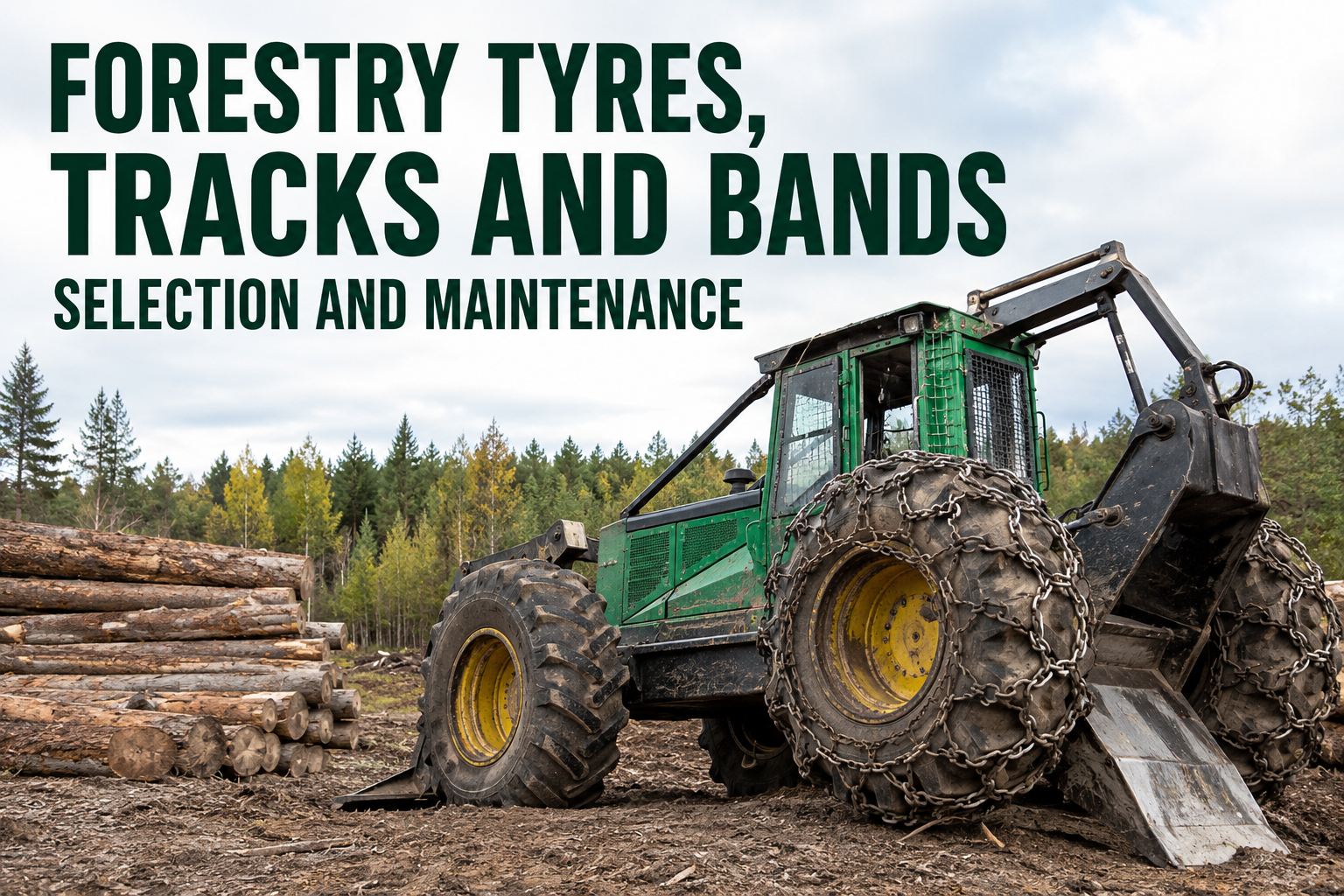
- Tyres, chains and bands: where steep terrain destroys rubber fastest
Four Numbers Every Forestry Fleet Manager Should Have in Front of Them
A downed skidder idles the whole side: the feller-buncher waits, trucks wait, and the landing goes quiet. At typical contract rates, one unplanned day down easily clears $850 in lost production before the repair bill lands.
Industry maintenance benchmarks consistently show an emergency field repair - callout, freight, overtime - runs roughly three times the cost of the same job caught at a scheduled PM in the shop.
A skidder-specific checklist on a phone takes under 10 minutes including defect photos. Paper versions get pencil-whipped in 90 seconds and prove nothing when an incident investigator asks for records.
Most skidder OEMs anchor service to 250-hour engine intervals, not calendar dates. Tracking hours by hand across a scattered crew is where PMs silently slip 80 to 100 hours past due.
Grapple Skidder Inspection Checklist: What to Check Before First Turn
Six zones, ordered the way an operator actually walks the machine. Each one lists the failure you are hunting for, not just the part name - because "check grapple" on a clipboard catches nothing.
Grapple and Arch Assembly
- Pin and bushing wear at grapple head and arch pivot - measure play, do not guess it
- Cylinder rods for scoring, pitting and weeping seals; watch for drift under a held load
- Cracks at welds on arch uprights and grapple tongs, the highest-stress points on the machine
- Hoses chafing where they flex over the arch; one burst line on grade is a lost load
Articulation Joint
- Centre hinge pin play - the defining wear point on any articulated machine
- Steering cylinders and stops for damage; joint oscillation bearings for noise
- Hydraulic lines routed through the joint for rub wear from constant flexing
- Grease evidence at zerks - a dry centre joint wears out in a single hard season
Brakes and Steering
- Service brake test under load on grade - OSHA logging rules give brakes specific attention for a reason
- Park brake holds on the steepest ground the machine works, tested not assumed
- Brake cooling and oil condition on wet-brake axles; heat-soaked packs fade fast on long descents
- Steering response left and right at idle - hesitation means air or low pressure
Tyres, Chains and Bands
- Cross-link wear on chains; half-worn links snap under load and flail into fenders and lines
- Tensioners and side chains tight - a loose chain beats the sidewall apart in hours
- Sidewall cuts and chunking from stumps and rock; steep ground destroys rubber quickly
- Pressure matched to load and terrain - underinflation on a sidehill is a rollover contributor
Blade and Winch
- Blade cutting edge and mounting bolts; a loose edge digs and pitches the machine
- Blade lift cylinders and pins for play - the blade takes constant shock loads
- Winch line condition, fairlead wear and drum anchoring where fitted
- Arch rollers and fairlead rollers turning freely, not flat-spotted and dragging cable
ROPS, FOPS and Cab
- ROPS and FOPS structure for cracks, bent members and unauthorised welding or drilling
- Seat belt present, retracting and actually used - it is what makes a rollover survivable
- Screens, guards and door latches intact against whipping limbs and chain shot
- Fire extinguisher charged, glass clean, steps and handholds free of mud and ice
Skidder Maintenance Schedule by Engine Hours: Drivetrain, Hydraulics and Structure
Daily checks catch what is about to fail; the hour-based schedule stops it getting there. Skidders live under constant load and shock, so axles, differentials and the articulation joint carry the schedule - not the calendar.
| Interval | System | Work | Skip It and Risk |
|---|---|---|---|
| Daily / 10 hr | Whole machine | Pre-start checklist above, fluid levels, grease articulation joint and grapple pins, chain tension | Dry centre joint, snapped chain, low oil - the three fastest skidder killers |
| 250 hr | Engine and fuel | Engine oil and filters, fuel filters, air cleaner service, belt and hose inspection | Dust ingestion in dry summer ground; injector wear from dirty fuel at remote tanks |
| 500 hr | Hydraulics | Hydraulic filters, oil sample, cylinder drift test, hose chafe audit across arch and joint | Pump failure from contaminated oil - a five-figure repair with weeks of lead time |
| 1,000 hr | Drivetrain | Axle and differential oils, transmission service, brake pack wear check, driveline U-joints | Brake fade on grade, diff failure under shock load - both safety events, not just repairs |
| 2,000 hr | Structure | Crack-test arch, grapple tongs and ROPS; measure articulation pin wear against OEM limits | Structural failure at the arch or centre joint under a full grapple on steep ground |
Intervals vary by OEM and duty cycle - a skidder working steep, rocky ground in the Pacific Northwest or the Scottish Highlands wears faster than one on flat plantation rows. Set your own thresholds once, and let a demo of engine-hour PM scheduling show you how alerts fire automatically as each machine approaches its next service.
See the Skidder Checklist Running on Your Own Fleet
Bring one machine and one operator. In 30 minutes we will load your skidder template, run a pre-start on a phone, and push a defect straight to a work order.
Four HVI Capabilities Built for Machines That Work Off the Beaten Road
Skidder-Specific Pre-Start Templates
Your grapple, arch, articulation and chain checks load as a native template - not a generic truck DVIR with fields that do not apply. Operators tap through on any phone at the landing, even with gloves off for two minutes, and the record is timestamped and stored.
Repair or Replace Flagging with Photo and Voice Note
An operator finds a cracked grapple tong or a weeping cylinder, photographs it, adds a voice note from the cab, and flags it Repair or Replace. No more text-message photos lost in a group chat, and no more arguing about how long a defect has been there.
One-Click Work Order to the Field Mechanic
The flagged defect converts to a work order in one click, assigned to your field mechanic with the photos attached. The fix, the parts used and the labour hours close the loop on the same record the inspection opened - audit-ready without anyone typing anything up.
Engine-Hour PM With Due and Overdue Alerts
Log hours at each pre-start or pull them from a telematics feed, and HVI fires alerts as each skidder approaches its 250, 500 or 1,000-hour service. No more discovering a machine is 90 hours past due when the diff starts making noise. You can start logging inspections free and have the first template live today.
Skidder Downtime Prevention: What Happens When an Operator Flags a Worn Centre Pin
The difference between a $400 bushing job and a $15,000 centre-joint rebuild is usually about three weeks of ignored play. Here is the workflow that closes that gap.
Operator Flags Play at the Articulation Joint
During the morning pre-start, the operator measures centre-pin play, photographs the grease condition and marks the item Repair or Replace with a voice note. Total time added: about 40 seconds.
Supervisor Sees It Before the Machine Leaves the Landing
The defect lands on the supervisor's dashboard in real time. The call gets made on the spot: machine runs light duty on the flat today, or it parks and waits for parts. Either way, the decision is documented.
Work Order and Parts Reserved the Same Morning
One click converts the defect to a work order. Pins and bushings are checked against parts inventory and reserved, so the field mechanic arrives with the right kit instead of diagnosing from a blurry photo and driving back empty-handed.
Repair Closes the Loop With Cost and Downtime Logged
The mechanic closes the work order with labour, parts and machine-hours down. That history builds the cost-per-asset picture you need when the repair-vs-replace question comes up at budget time. If you want to see this loop end to end, walk through it on your own units in a demo.
What One Caught Defect Is Worth: The Arithmetic of a Single Brake Finding
Without the Check
A brake pack fades on a long descent with a full grapple. Best case: the operator rides it out, the machine parks for a week waiting on a field callout, freight and overtime - roughly $6,000 to $9,000 all-in, plus five lost production days at $850 or more each. Worst case involves a runaway on grade, an OSHA reportable event, and an investigation that asks for brake inspection records you do not have.
$10,000+ and a safety investigationWith the Check
The operator logs a soft pedal and a photo of discoloured brake oil at the pre-start. The machine does a half day on the flat while parts ship, the field mechanic swaps the pack in an afternoon at the 1,000-hour service, and the whole event costs $1,200 to $1,800 with under one day of downtime - every step timestamped and photo-backed.
Under $1,800 and a clean audit trailMultiply that gap across a fleet of four skidders and a full season, and the checklist pays for itself several times over before you count the insurance and audit value. Crews that book a demo with their own machine list usually model this payback in the first call.
The Short Version: What a Skidder Maintenance Checklist Has to Cover
- Brakes, tyres and articulation are safety systems, not wear items. On steep ground under load, their condition decides whether the machine comes down the hill - test brakes on grade, never assume them.
- The grapple and arch fail at predictable points. Pins, cylinder seals and welds at the high-stress corners - check those exact spots every day and crack-test on the 2,000-hour structural service.
- Engine hours drive the schedule, not the calendar. A 250-hour interval tracked by hand slips silently; tracked in a CMMS it fires an alert before it costs you a drivetrain.
- Paper proves nothing. A pencil-whipped card cannot defend you after an incident. A timestamped, photo-backed grapple skidder inspection record can - and it takes less time than the paper it replaces.
None of this needs new staff or a shop full of software. It needs one checklist your operators will actually complete and a system that turns their findings into repairs before the hill finds them first. You can sign up free and build your first skidder template before tomorrow's shift.
The thing that used to drive me mad was finding a cracked grapple tong on a Friday that the operator swore appeared that morning - when the crack was full of rust and had clearly been there a month. Now every defect has a photo and a timestamp, so that argument is over. I track one number religiously: hours past PM due across the fleet. Before we digitised the skidder checks it sat around 70. Last quarter it was 6.
Dale Merrick - Maintenance Manager, contract logging and hauling operation running six skidders and a mixed support fleet
Grapple Skidder Inspection and Maintenance: Five Questions Fleet Managers Ask
How often should a grapple skidder be inspected?
What are the most common skidder maintenance problems?
Why do skidder brakes get so much regulatory attention in logging?
How do I track skidder maintenance by engine hours across a scattered crew?
Can a digital checklist really work at a remote landing with poor signal?
Put Every Skidder on a Checklist That Proves Itself
Skidder-specific pre-starts, photo-backed defect flagging, one-click work orders and engine-hour PM alerts - in one platform your crew can run from any phone at the landing.
Free to start - Works on any phone - No card needed