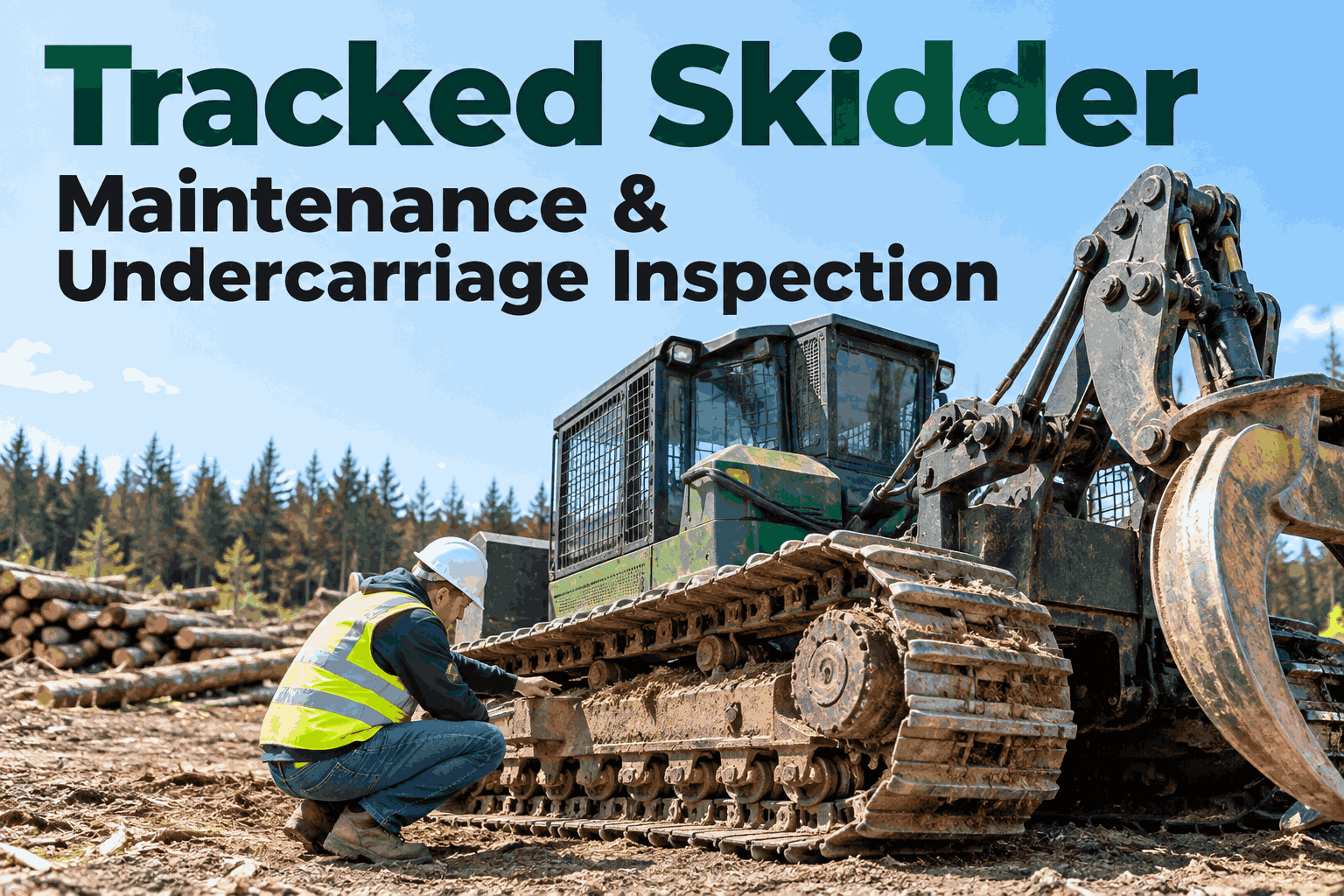
A tracked skidder doesn't just drive — it drags turn after turn of heavy timber out of the cut, clawing for traction on rough ground under a load that fights back. That brutal duty cycle lands hardest on the undercarriage, the drive and the grapple. Tracked skidder maintenance is what keeps the machine pulling. Book a demo to see component wear tracked by machine-hours.
Dragging the turn is what wears the machine out
Traction under a drag load is the hardest work a skidder does — and it falls on four systems. Watch them by the hour and the skidder keeps earning its keep.
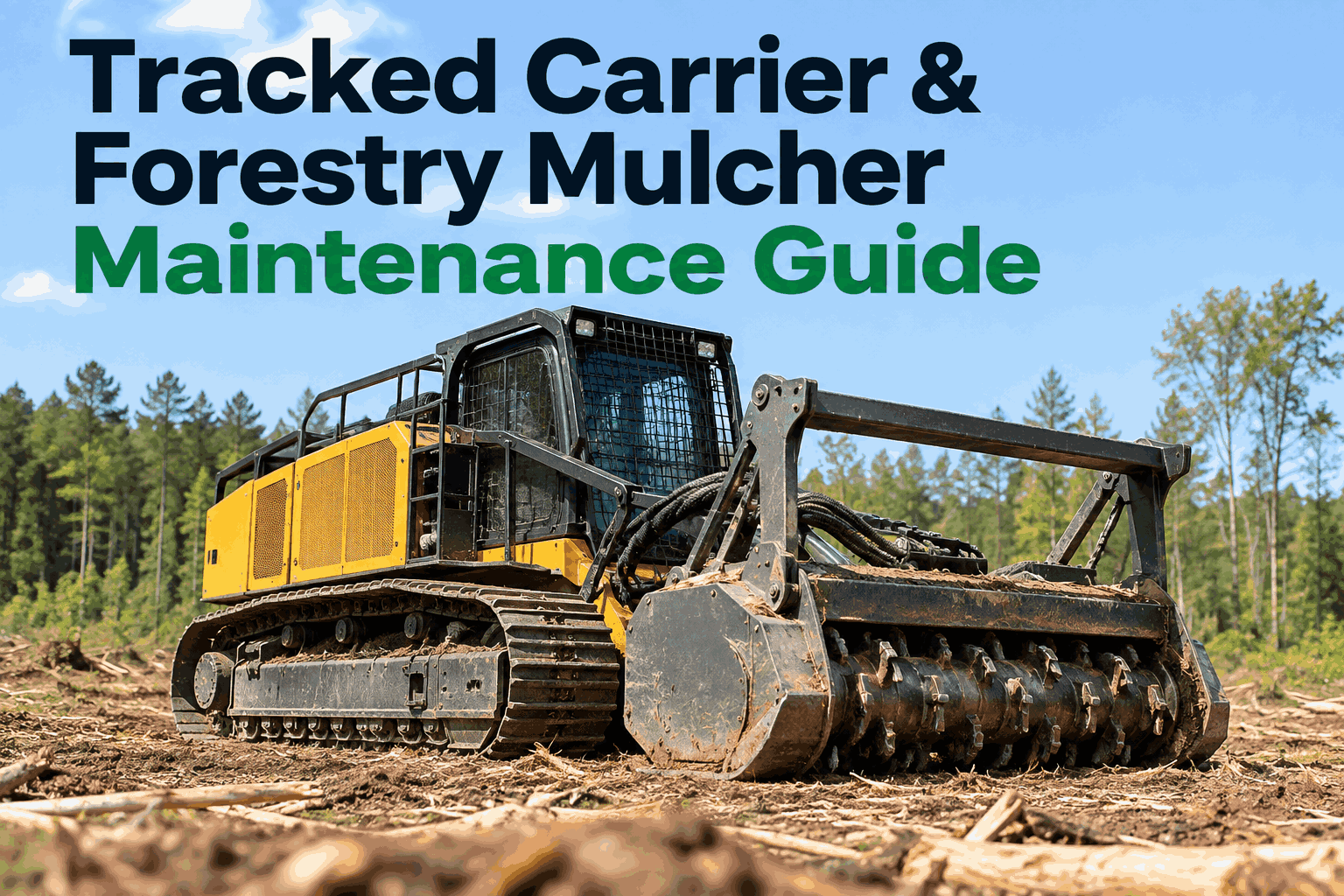
A tracked skidder is built to pull, and pulling is punishing. Every turn it drags loads the final drives and tracks under traction, not just rolling weight; the rough ground it works grinds the undercarriage; the grapple cycles under heavy, dirty loads; and the engine runs hard in a radiator-clogging environment. Treat it like a machine that merely travels and the wear sneaks up. Treat the drag cycle as the real driver and every system gets watched where it actually takes the beating.
What the drag cycle wears, and what to watch
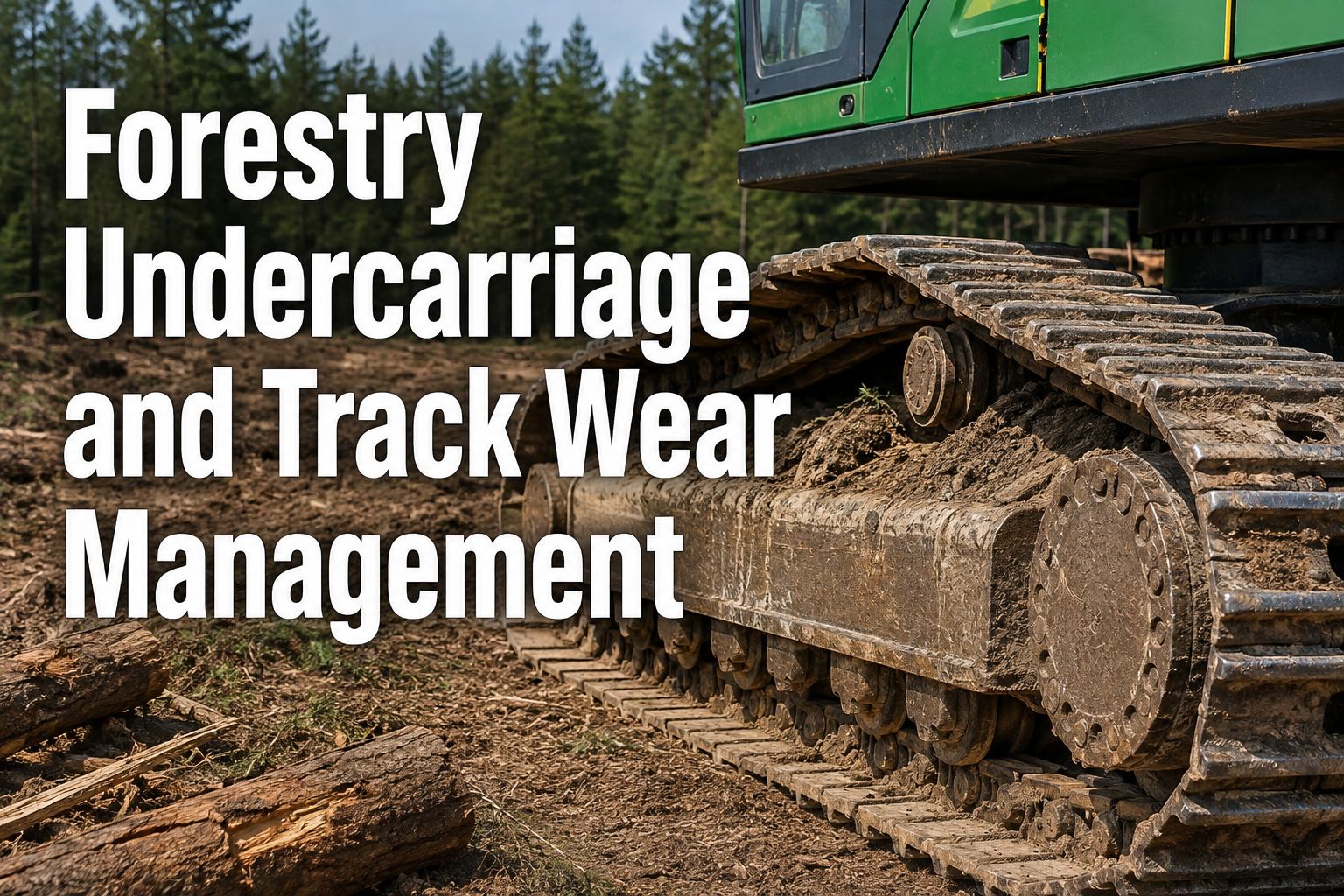
Four systems carry a skidder's workload, each with its own failure signs. The undercarriage is the biggest of them — we go deep on measuring it in our forestry undercarriage and track-wear guide; this is the machine-level program that ties all four together.
Undercarriage
Tracks, rollers, idlers and sprockets grind on rough ground under drag load — the single biggest wear bill on the machine, and the most controllable.
Drive & traction
Final drives, track motors and brakes take pulling force on every turn. Worn gears or low oil turn a pull into an expensive teardown.
Grapple & blade
The grapple grabs and the blade pushes under heavy, abrasive loads. Weeping cylinders and worn pins make every grab slower and sloppier.
Engine & cooling
The engine works hard in a chaff-and-bark storm. A packed radiator or plugged air filter is the quiet cause of a lot of heat-related downtime.
All four are spottable on a walkaround and recordable, so wear is a trend you watch rather than a pull that suddenly fails. Book a demo to see wear tracked across all four systems.
Most of the controllable cost is in the tracks
Here's the thing most owners underestimate: on a tracked machine, the undercarriage is one of the largest slices of lifetime owning-and-operating cost — and unlike fuel or the purchase price, it's the slice you can actually manage down with maintenance.
That's the real reason a skidder program pays: it targets the biggest cost you actually control. Proportions vary by machine and conditions — the point is the undercarriage is where the maintenance dollar moves the needle. Book a demo to see undercarriage wear trended by the hour.
Tracked skidder inspection checklist
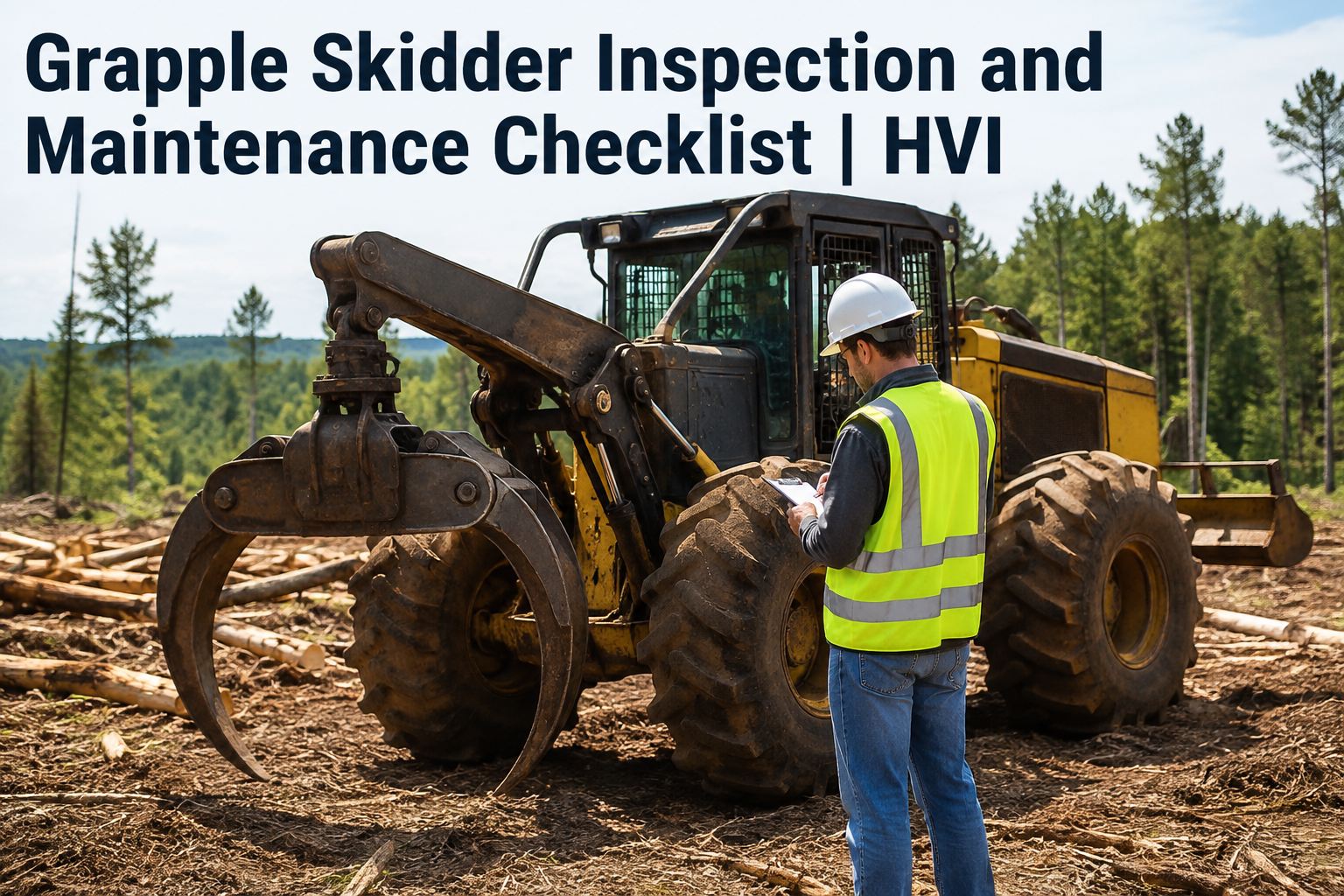
Here's the walkaround itself — grouped by system, the checks a tracked skidder needs through a working shift. Run it daily, log it so each check compares against the last.
On paper this gets filled once and filed where nobody looks again. In HVI it's the operator's daily inspection — each box dated, each flagged item a work order, each shift compared to the last. Book a demo to see this checklist live on a device.
A service rhythm that rides on working hours
A skidder earns in hard hours, so service rides on machine-hours, not calendar days. Confirm exact intervals against your OEM manual.
Tracks, grapple, leaks, radiator screens; lube per schedule before the first turn.
Track tension, chain stretch, roller condition logged against the machine.
Final-drive and hydraulic oil, filters and undercarriage checks at set hours.
Undercarriage or final-drive work scheduled into weather downtime, not a failure.
Tie it to hours and the biggest bills turn from mid-block breakdowns into planned, cheaper jobs. Start free and put the skidder on an hours-based plan.
An equipment manager on the undercarriage bill
For years the undercarriage was just a number that showed up when it was already too late — we'd replace a whole set because nobody tracked tension or caught a dry roller early. Now track tension, chain stretch and roller checks are on machine-hours and logged, and I can see a set wearing fast and fix the cause before it eats the rest. On a tracked skidder the undercarriage is the biggest money you control, and watching it is the cheapest thing I do.
Run the skidder program on HVI
Field inspection checklists
Digital inspections put the skidder walkaround in the operator's hand, signed and dated.
PM scheduled by machine-hours
Preventive maintenance ties undercarriage, drive and hydraulic service to run-time.
Undercarriage wear logged
Maintenance records track tension, chain stretch and roller condition over time.
Cost-per-hour reporting
Reporting shows what each machine costs per hour and which is trending toward trouble.
One record per machine, built on the walkaround the operator already does — so the biggest bill on the skidder stops arriving as a surprise. Start free and put your skidders on a program.
Tracked skidder maintenance questions
Q1What wears out fastest on a tracked skidder?
The undercarriage — tracks, rollers, idlers and sprockets — because it grinds on rough ground under drag load all day. It's usually the single biggest wear cost on the machine, and because wear is largely driven by how the machine is run and maintained, it's also the most controllable.
Q2How often should a tracked skidder be inspected?
A daily walkaround and grease, weekly measured wear on the undercarriage, and final-drive, hydraulic and filter service at set machine-hours. Tie it to working hours rather than the calendar, since a skidder accumulates wear fast under drag loads. Confirm intervals against your OEM manual.
Q3Why is track tension so important on a skidder?
Tension that's too loose or too tight accelerates wear across the whole undercarriage and wastes power. Correct tension is one of the cheapest, highest-impact things you can check — which is exactly why it belongs on a regular, logged inspection rather than left to chance.
Q4How can I reduce undercarriage cost on a tracked skidder?
Keep tension correct, catch leaks and dry rollers early, address alignment, and track wear over time so you replace on condition, not panic. Because undercarriage wear is largely operation-and-maintenance driven, a consistent logged program is what actually moves the cost down.
Q5How does HVI help with tracked skidder maintenance?
HVI runs the walkaround as a digital inspection, schedules undercarriage, drive and hydraulic service by machine-hours, and logs wear per component over time — so the costliest parts are caught early and service is planned, not forced. It's an inspection and maintenance layer, not an OEM service manual.
Put your tracked skidders on a maintenance program
Run the walkaround as a digital inspection, schedule undercarriage, drive and grapple service by machine-hours, and catch the costly wear before it parks the machine. Live in weeks, not quarters.
No credit card · Wear tracked by machine-hours · Built for forestry fleets