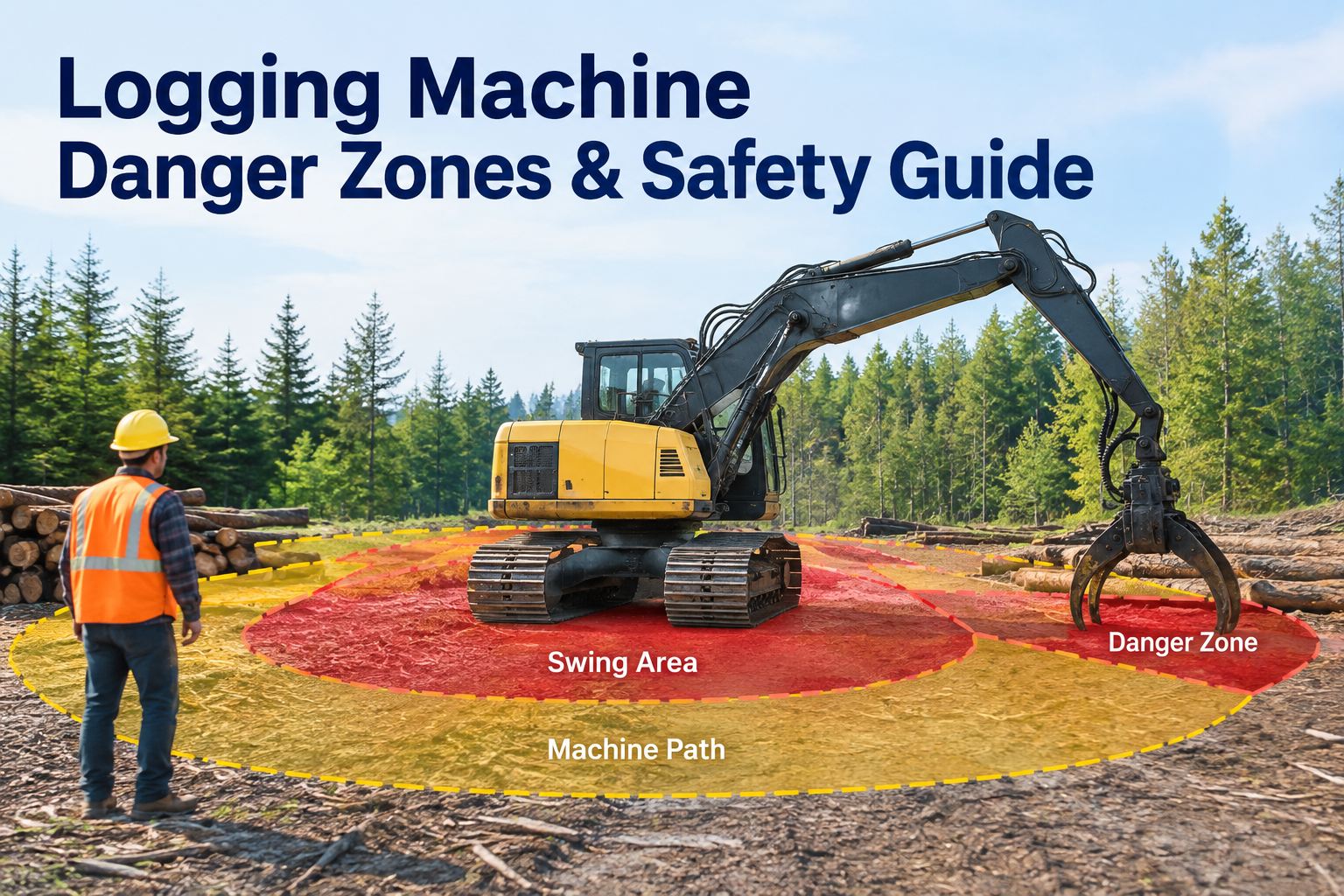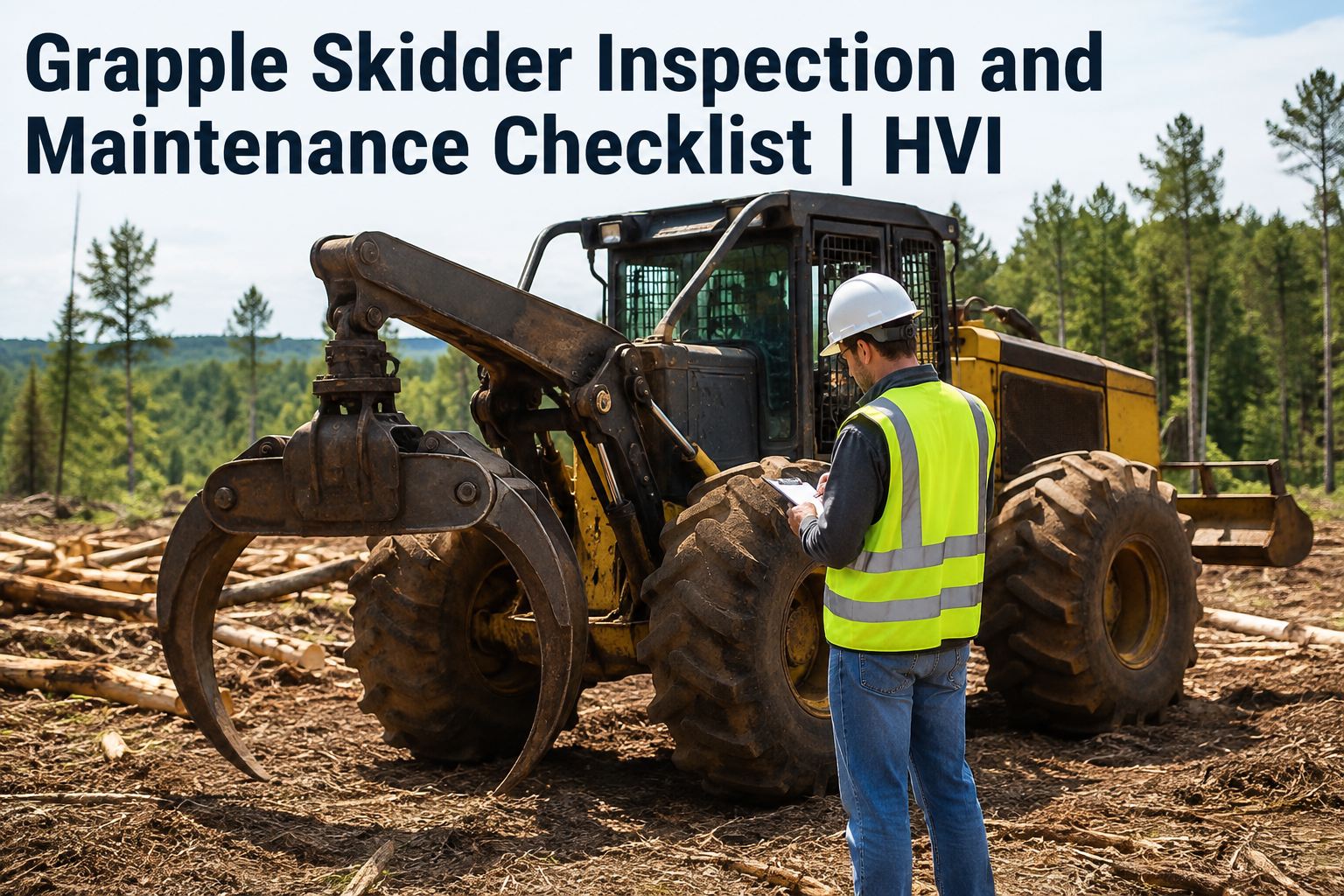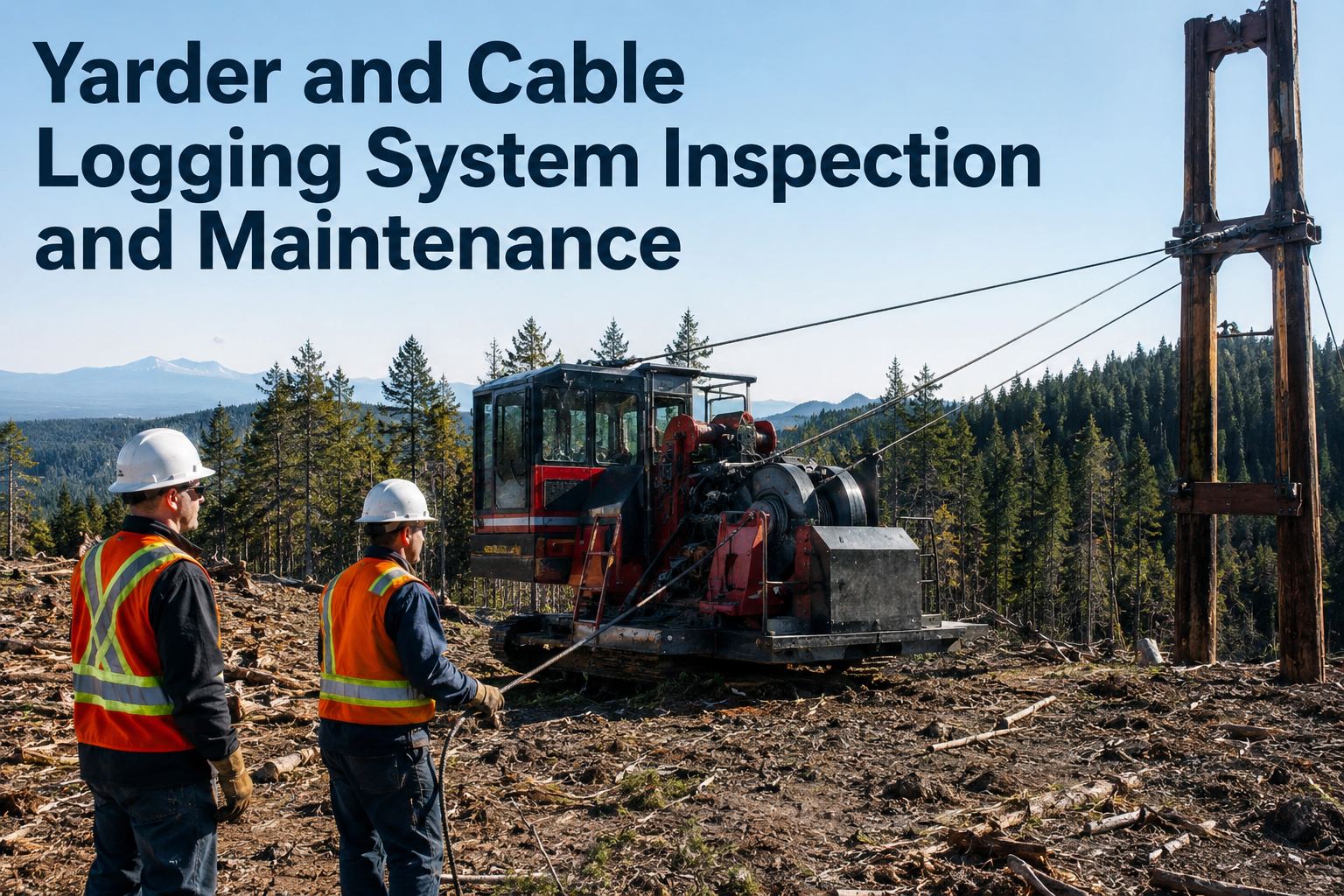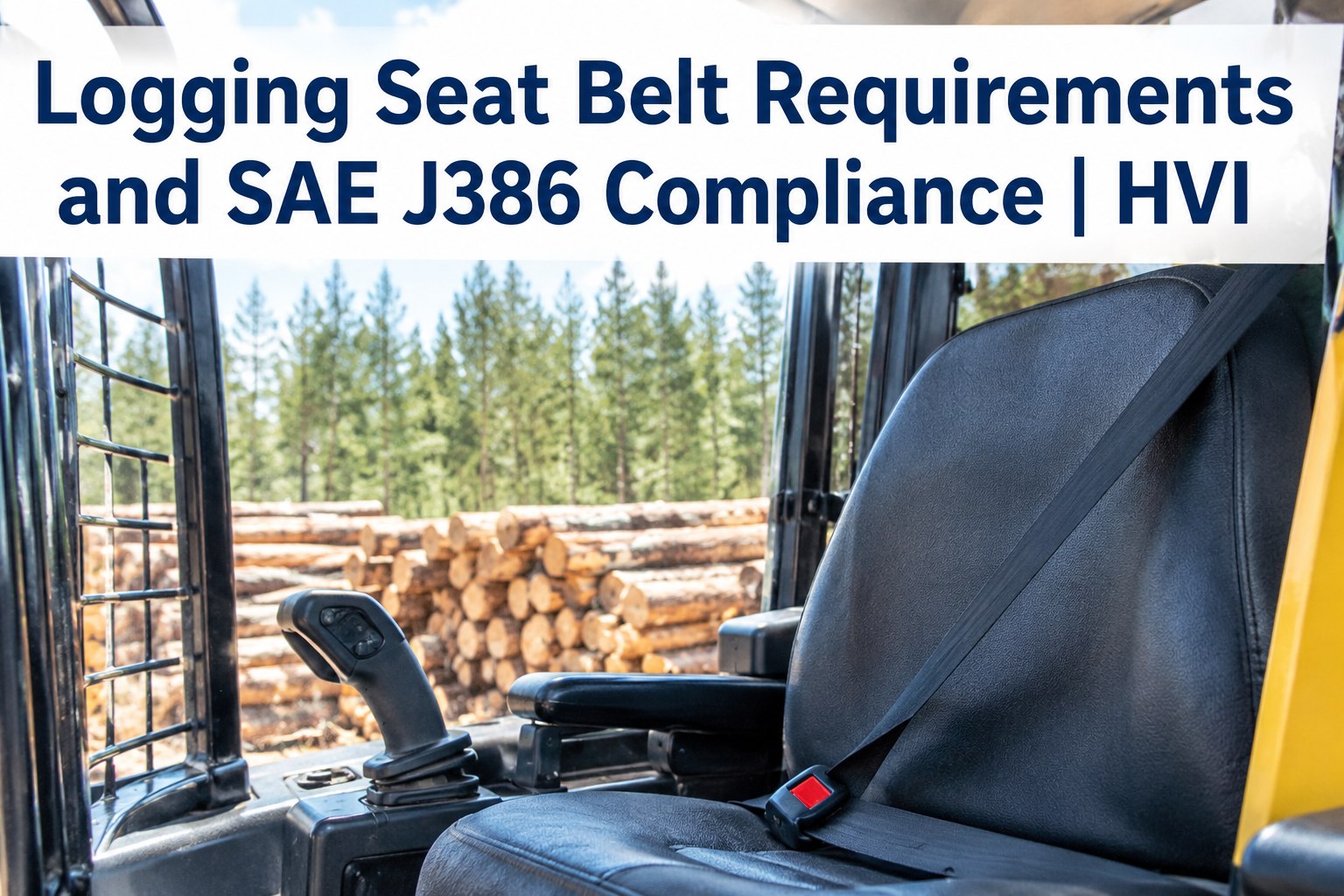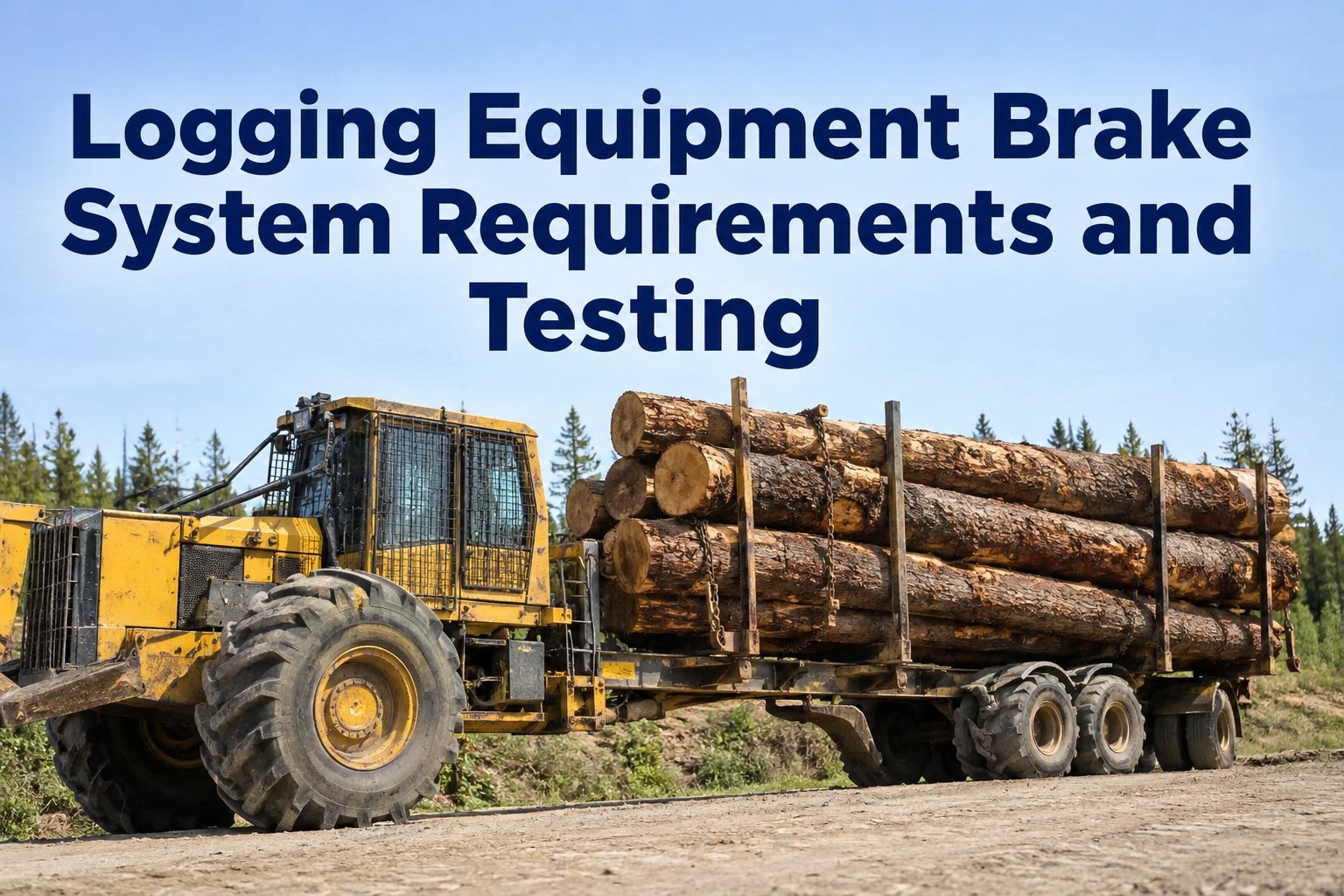
You are three quarters up the skid trail, loaded, and the machine in front of you slows. The question that runs through your head is not whether your service brake will hold — it is whether the last operator flagged the sponginess you felt at shift start. Logging brake requirements exist because steep ground and heavy loads leave no margin for guesswork, and brake condition on a forestry machine is closer to a survival system than a maintenance item. The general obligation is straightforward: every machine must be maintained in serviceable condition, confirmed by a shift-start inspection that captures brakes directly. OSHA has issued specific guidance on logging equipment brake systems, and the practical assessment covers service brake performance under load on grade, parking brake holding capability, and the hydraulic system supporting both. Before you roll another machine off the landing, book a walk-through on how HVI enforces those checks on your own units.
FORESTRY BRAKE SAFETY
A brake that holds on flat ground is not a brake that holds on a 35 percent skid trail.
Steep terrain braking demands a real functional check under load — not a pedal press in the yard. Logging equipment brake system requirements are about proving, every shift, that the service brake, parking brake and hydraulic support all work before the machine leaves the landing.
WHAT IS AT STAKE
The real numbers behind brake compliance in logging
Every figure below maps back to a machine that did not roll, a crew that stood idle, or a defect that turned into an incident report.
A service brake that feels fine on the landing can fail to hold a loaded machine on a 30 to 40 percent grade — the exact band where most runaway events happen.
Between the operator, the support crew, the lowboy to extract the machine and the lost production window, a single brake-related downtime day on a remote site burns thousands.
OSHA logging guidance is unambiguous: any brake defect means the machine comes out of service immediately. There is no "run it for one more turn" provision.
A proper test — service brake under load on grade, parking brake holding, hydraulic response — takes roughly fifteen minutes. Paper-only inspections that skip the grade test take less and prove less.
OSHA LOGGING BRAKE GUIDANCE
What logging equipment brake system requirements actually cover
The general duty to keep machines in serviceable condition is confirmed every shift by an inspection. For logging specifically, OSHA has issued targeted guidance on brake systems that goes beyond a generic walkaround.
| REQUIREMENT AREA | WHAT THE GUIDANCE EXPECTS | HOW YOU PROVE COMPLIANCE |
|---|---|---|
| Serviceable condition | Machine maintained in safe operating condition, confirmed at shift start. | Shift-start inspection record that explicitly captures brake function, dated and signed. |
| Service brake performance | Service brake must hold the machine under load on the grade it works. | Functional test on grade with load — not a pedal press on flat ground in the yard. |
| Parking brake holding | Parking brake must hold the machine stationary on the working slope. | Test with machine parked, loaded, on the steepest grade it will operate. |
| Hydraulic system integrity | Hydraulic pressure and fluid level supporting the brake system within spec. | Visual check for leaks, fluid level, hose condition, and pedal feel for air in system. |
| Defect handling | Any brake defect = immediate removal from service. No exceptions. | Lockout tag, defect record, work order opened before machine moves again. |
| Confirm with OSHA | Always confirm current requirements directly with OSHA for your operation. | Keep the citation or guidance reference attached to your inspection program. |
Always confirm current requirements directly with OSHA and your state plan. This table summarises the general direction of the guidance, not a substitute for the source.
TESTING DISCIPLINE
Brake testing for logging machines: a functional check, not a pedal press
The terrain factor is what separates logging from most other equipment operations. A brake that suffices on flat ground is inadequate on a steep skid trail — so the test has to happen on the grade, under load, with the machine configured the way it actually works.
Shift-start visual and hydraulic check
Before the machine moves, confirm fluid level, inspect hoses and fittings for seepage, check pedal travel and feel for sponginess that points to air in the system. A machine-specific pre-start template you can start free ensures the same hydraulic brake logging machine checks happen every shift, not just when someone remembers.
Service brake test under load on grade
With the machine loaded the way it will work, on the steepest grade of the tract, apply the service brake and confirm it holds without creep or fade. This is the test that actually tells you whether the skidder brake system will perform when it matters. A pedal press on flat ground tells you almost nothing.
Parking brake holding test on slope
Park the loaded machine on the working slope, apply the parking brake, release the service brake, and confirm it holds stationary. If the machine drifts, the parking brake forestry requirement is not met and the machine comes out of service.
Record the result with evidence
A pass or fail on paper is weak. A timestamped record with a photo of the machine on grade, the operator's confirmation, and the test result is what holds up in an audit and what actually changes behaviour. See how HVI captures that evidence in a 30-minute demo on your own inspection forms.
Defect triggers immediate lockout
Any brake defect — sponginess, creep, fade, low fluid, a hose weep — means the machine stops. No "one more turn." A Safety Defect lockout in your CMMS prevents the machine from being dispatched until the work order is closed and the brake retest is recorded.
DEFECT PATTERNS
Common brake defects that pull a forestry machine out of service
Most brake failures on logging equipment are not sudden. They are gradual defects that a functional test catches early and a paper-only inspection misses.
Hydraulic fluid leak or low level
A weep at a fitting or a slow drop in reservoir level is the most common precursor to brake failure on a forestry machine. Caught at shift start it is a hose clamp; missed, it is a runaway on the trail.
Spongy pedal — air in the system
Air trapped in the hydraulic line gives a pedal that travels too far before gripping. On a steep grade that extra travel is the difference between holding and sliding. Bleeding the system fixes it; ignoring it does not.
Brake fade under sustained load
Repeated hard stops on grade build heat. If friction surfaces are worn past spec or fluid is old, the brake fades and will not hold. A loaded test on the working slope exposes fade that a yard test never will.
Parking brake will not hold on grade
Worn parking brake friction, a stretched cable, or low actuator pressure means the machine drifts when parked on slope. If it moves even slightly during the test, the machine is out of service.
STOP PAPER-ONLY BRAKE CHECKS
See HVI running on your own fleet — book a 30-minute demo
Turn brake inspections from a paper checkbox into a timestamped, photo-backed record that holds up in an audit and actually keeps machines off the trail when they should not be there.
HOW HVI HELPS
How HVI enforces logging brake inspection and lockout
HVI is built for fleet-heavy operations where the cost of a missed inspection is not a paperwork problem — it is a machine on a grade that should never have left the landing.
Machine-specific pre-start templates
Each skidder, harvester or forwarder gets a pre-start template with brake function checks built in — service brake on grade, parking brake holding, hydraulic level and hose condition. Operators cannot submit the inspection without confirming each step.
Photo evidence on every brake check
Operators attach a photo of the machine on grade, the hydraulic reservoir level or a leaking fitting directly to the inspection record. No more text-message photos lost in a group chat — the evidence lives with the inspection, timestamped and audit-ready.
Safety Defect lockout
When an operator flags a brake defect — sponginess, creep, low fluid — HVI locks the machine out of service. A work order opens automatically. The machine cannot be dispatched again until the repair is closed and the brake retest is recorded.
Audit-ready brake compliance records
Every brake check, defect, lockout and retest is stored in a searchable, timestamped record. When OSHA, your client or your insurer asks for proof, you pull the machine's history in seconds — not a binder from the cab of a truck. Walk through the audit trail on a live demo with your own machines.
WORKED EXAMPLE
What a missed brake defect actually costs on a remote tract
Take a 12-machine logging crew running a remote tract two hours from the shop. One skidder develops a spongy pedal over a week. Nobody catches it because the inspection is paper-only and the operator presses the pedal in the yard each morning.
The scenario
Skidder brake hydraulic line develops a slow seep. Fluid drops over five shifts. Pedal feel changes but the operator adapts. Paper inspection says "brakes OK" every morning because there is no grade test and no photo evidence requirement.
What happens
On day six, loaded, on a 32 percent grade, the service brake fades and the machine slides. No injury — this time — but the machine is stuck on the trail, the crew is idle, and a lowboy is two hours out.
The cost
Crew idle for a full day: $4,200. Lowboy extract and return: $1,400. Hydraulic line repair and fluid: $380. Lost production window on the tract: $2,200. Total for one missed defect: roughly $8,180 — plus the incident report.
What HVI would have changed
A pre-start template with a hydraulic level photo and a grade-test confirmation would have caught the seep on day one or two. The defect would have locked the machine out, a work order would have opened, and the line would have been clamped for $40 in the yard. See that exact workflow on a demo before your next tract starts.
DO AND DO NOT
Brake maintenance for forestry machines: what works and what gets people hurt
DO
- Test the service brake under load on the steepest grade the machine will work.
- Test the parking brake on the same slope with the machine loaded.
- Check hydraulic fluid level and inspect every hose and fitting at shift start.
- Photograph the machine on grade as proof the functional test happened.
- Lock out the machine immediately on any brake defect, no matter how minor.
- Keep a timestamped, photo-backed record of every brake check and retest.
DO NOT
- Press the pedal on flat ground in the yard and call it a brake test.
- Let an operator "run one more turn" because the defect seems small.
- Accept a paper inspection with no photo evidence of the grade test.
- Assume a brake that held yesterday will hold today on the same slope.
- Wait for the scheduled PM to address sponginess, creep or low fluid.
- Rely on a group chat photo as your only record of a brake defect.
KEY TAKEAWAYS
Logging brake requirements come down to three things
Test on grade, under load, every shift
A brake that works on flat ground is not a brake that works on a 35 percent skid trail. The functional test has to match the terrain. Logging brake requirements exist because the terrain is steep, the loads are heavy and the consequences of a runaway are severe.
Any defect means immediate removal from service
OSHA logging guidance does not have a tolerance for brake defects. Sponginess, creep, fade, low fluid, a weeping hose — any of them pulls the machine out until the repair is closed and the retest is recorded.
If it is not recorded with evidence, it did not happen
A paper checkbox that says "brakes OK" proves nothing. A timestamped record with a photo of the machine on grade, the operator's confirmation and the test result is what holds up in an audit — and what actually changes operator behaviour.
If your current inspection process cannot show a photo of each machine on grade, with a timestamp and a brake test result, on demand, start logging inspections free with HVI and close that gap before the next tract opens.
The day we stopped trusting paper brake checks was the day a skidder slid fifteen feet on a grade with a full load. Nobody got hurt, but the operator had been writing "brakes OK" for a week. We switched to photo evidence on grade and a lockout on any defect. The first week we caught two machines with low hydraulic fluid that paper had missed. That is the number I track now — defects caught at shift start, not on the trail.
FREQUENTLY ASKED
Logging equipment brake inspection questions, answered
What does OSHA require for logging equipment brake systems?
How do you test a skidder brake system on steep terrain?
What brake defects require removing a forestry machine from service?
How often should logging machine brakes be inspected?
Can HVI enforce brake inspection and lockout for logging equipment?
GET BRAKE COMPLIANCE UNDER CONTROL
Book a 30-minute demo and see HVI on your own fleet
Walk through machine-specific brake inspection templates, photo evidence on grade, Safety Defect lockout and audit-ready records — all on your phones, all in one platform.
Free to start — Works on any phone — No card needed