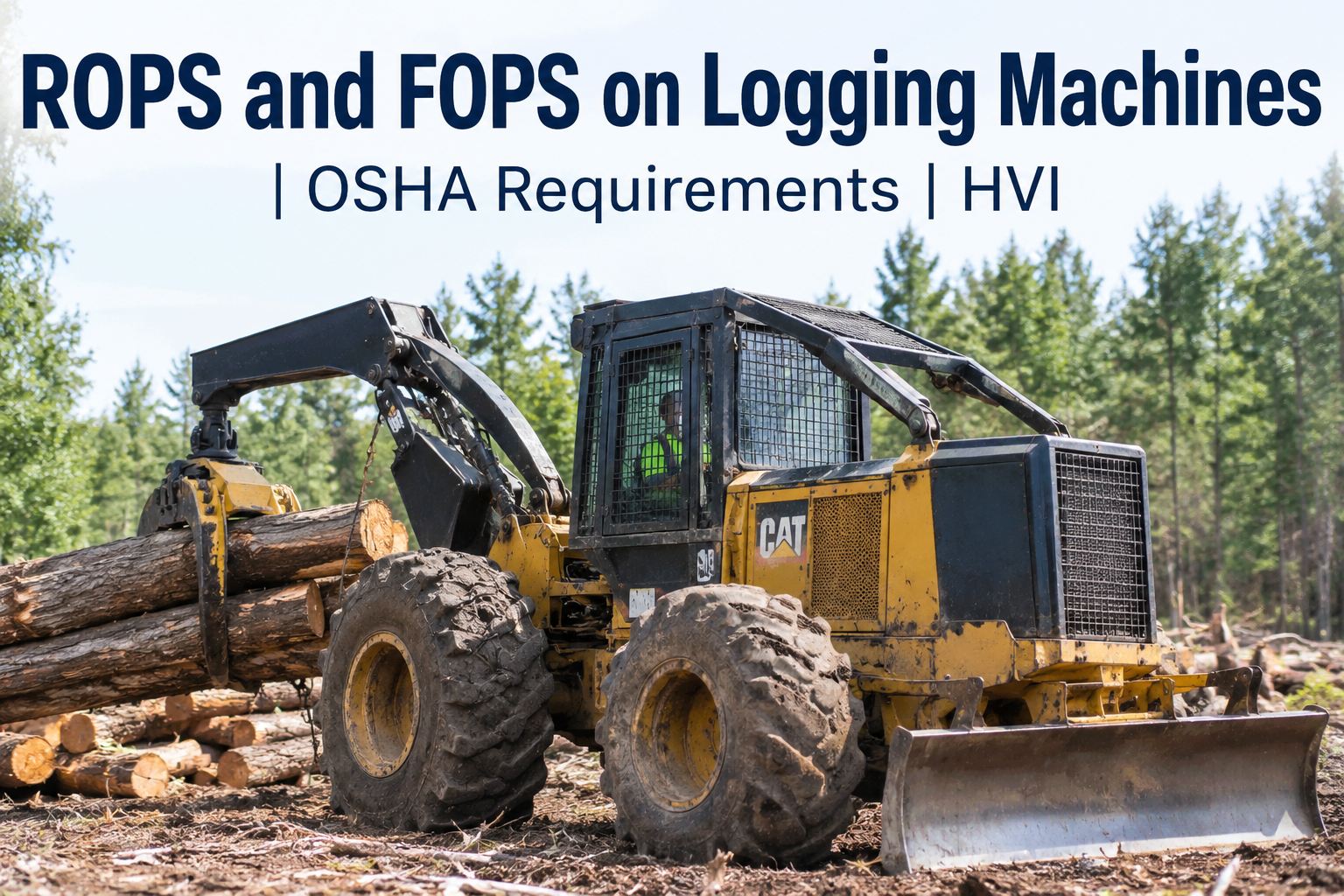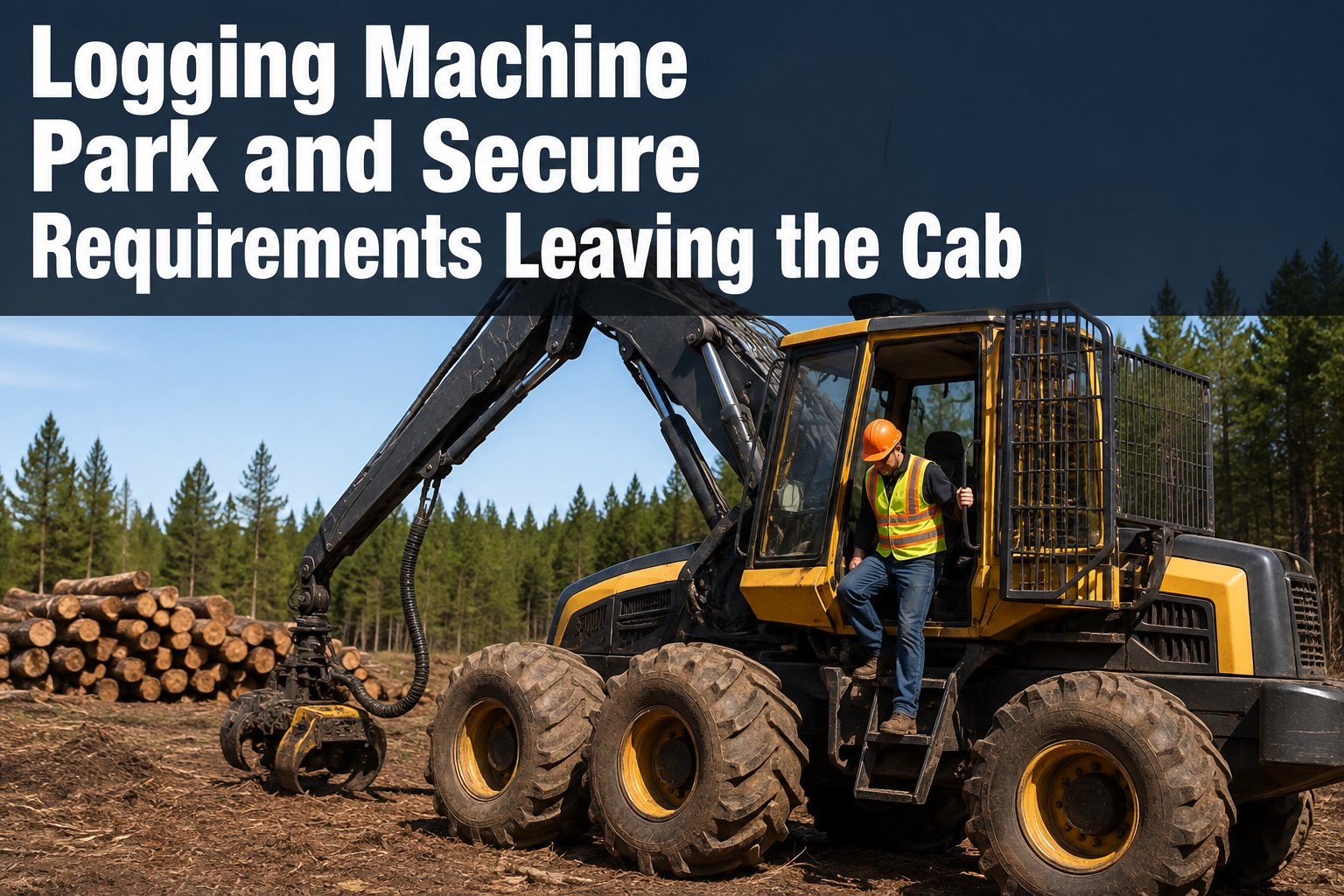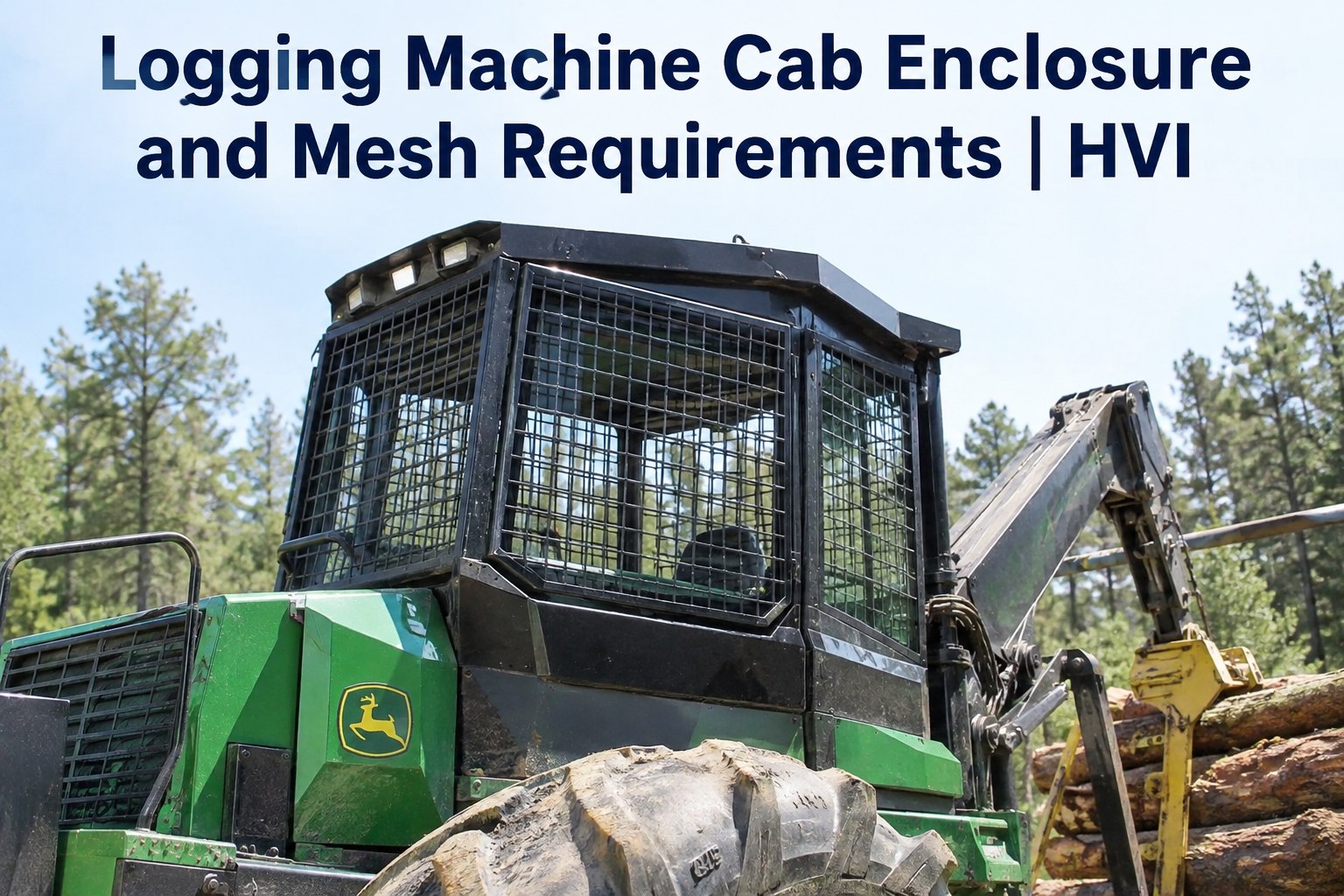
You walk the line at dawn and the first thing you see is a skidder with a busted cab screen — mesh peeled back, polycarbonate panel swapped for a sheet of plywood, and a gap wide enough to push a fist through. Logging cab guard requirements exist for exactly this moment. When machines manufactured after 1 August 1996 roll into the woods, the cab has to be fully enclosed with mesh openings no greater than 2 inches at the least dimension, or with another material the employer can prove gives equivalent protection and visibility. The rule is blunt, the consequences of ignoring it are sharper, and the fastest way to stay on the right side of it is to walk through your cab inspection workflow on a live call before the next compliance check lands on your desk.
Is your cab enclosure evidence-ready, or a roadside waiting game?
Every removed screen, replaced panel and modified aperture is a judgment call that can save ten minutes of visibility and cost you an operator. Confirm your enclosure standard before the next audit does.
What a non-compliant cab actually costs you
Cab integrity is not cosmetic. A missing or substituted panel turns a normal pre-start into a stopped machine, a repair order, and a paper trail that has to explain itself to a safety officer or a client auditor.
Cab enclosure logging requirements, decoded
The specification is short and unforgiving. Four conditions have to be met simultaneously, and missing any one of them is the difference between a compliant machine and a stopped one.
Full mesh enclosure
Machines manufactured after 1 August 1996 require a cab fully enclosed with mesh material with openings no greater than 2 inches at the least dimension. Any gap wider than that at its narrowest point is a failure, regardless of how the gap got there.
Maximum visibility provision
The upper portion of the cab has to allow maximum visibility. Control panels obstructing the lower portion are the only accepted exception — operators cannot be asked to trade sight lines for protection, and they cannot be asked to trade protection for sight lines either.
Solid overhead covering
The overhead covering must be solid material extending over the entire canopy. Mesh tops, partial covers, or material with gaps above the operator station do not satisfy the forestry cab safety requirement, regardless of machine age.
Unimpeded operator movement
Structures must not impede normal operator movement. A guard that fits the spec but blocks the operator from reaching controls, exiting the cab, or performing routine checks is a modification problem, not a compliance pass.
Equivalent material vs. a roadside fix: the modification problem
The rule allows other material where the employer can demonstrate equivalent protection and visibility. That word — demonstrate — is where most logging operations come unstuck. A polycarbonate cab guard fitted at the factory comes with paperwork. A sheet of Makrolon bolted over a broken window in the yard comes with hope.
Equivalent material, demonstrated
- Polycarbonate cab guard fitted with manufacturer documentation or engineered sign-off
- Cab screen forestry upgrade installed by a certified modifier with retained records
- Cab glass replacement forestry spec matched to the original impact rating
- Photo evidence of the installed guard retained against the asset record
Roadside fix, no proof
- Mesh removed for visibility and not replaced — open aperture into operator cab
- Plywood or perspex sheet substituted for damaged polycarbonate, no rating
- Window guard removed to fit a temporary mirror or camera bracket
- Modification done off-record, no photo, no work order, no sign-off
The delta between those two columns is documentation. If you cannot produce a photo, a work order, and a sign-off showing what was fitted, when, and by whom, you are carrying a roadside fix and calling it a cab modification. A short call to see how HVI captures this automatically is the difference between a defensible record and a verbal assurance.
Cab integrity inspection: what a compliant pre-start actually captures
A cab integrity inspection that survives an audit is not a tick on a clipboard. It is a timestamped, photo-backed record that proves every guard, screen, and panel was in place and undamaged before the machine moved.
| Inspection point | What the operator checks | Evidence captured | Defect routing |
|---|---|---|---|
| Mesh enclosure | Openings no greater than 2" at least dimension, no tears or separations | Photo of any damaged area, GPS and timestamp | Auto-creates work order if gap exceeds spec |
| Upper visibility | Upper portion allows maximum visibility, no unauthorised obstructions | Photo from operator seat, forward and sides | Flags for supervisor review if blocked |
| Overhead cover | Solid material over entire canopy, no gaps or partial covers | Upward photo from operator position | Immediate out-of-service if compromised |
| Operator space | No structure impeding normal movement or control access | Photo of cab interior, control reach | Routes to maintenance for adjustment |
| Window and glass | Cab glass replacement forestry spec, no cracks compromising integrity | Close-up photo of any damage | Work order with parts requirement |
| Modifications | Any cab modification logging record — fitted material, sign-off | Reference to attached modification record | Flags missing documentation |
That table is the minimum. If your current pre-start cannot produce that evidence on demand — for any machine, on any day, at any site — you are carrying compliance risk you do not need to carry. You can start logging inspections free and have that evidence live before the next shift.
Forestry cab safety: do this, never that
Do this
- Photograph every cab guard at pre-start and attach the image to the asset record
- Retain the manufacturer or engineer documentation for any polycarbonate cab guard
- Route any mesh damage to a work order the same shift it is found
- Confirm the 2-inch mesh requirement against the machine manufacture date at induction
- Train operators to report visibility changes, not just damage
Never that
- Remove mesh to improve visibility and leave it in the shop
- Fit unrated perspex or plywood as a temporary window guard
- Let a cab modification go unrecorded because it was done in a hurry
- Accept a verbal assurance that a screen is equivalent to the original
- Run a machine with a partial overhead cover because the full panel is on order
Cab guard checks built into every pre-start, not bolted on
HVI turns cab enclosure logging from a paper exercise into a live, photo-backed, audit-ready record. Every guard check lives inside the inspection template, every defect routes to a work order, and every photo carries a timestamp that holds up in any audit.
Photo-backed cab guard checks
Every pre-start template includes cab enclosure inspection points with mandatory photo capture. Operators photograph the mesh, the overhead cover, and the upper visibility area. The image, GPS location, and timestamp attach to the asset record automatically — no separate camera, no group chat photos, no lost evidence.
Instant defect-to-work-order routing
When an operator flags a torn mesh screen or a missing overhead panel, HVI creates a work order immediately — assigned to the right shop, with the photo attached and the parts requirement pre-filled. No phone calls, no text messages, no defect slipping through to the next shift. The machine stays down until the guard is reinstated and signed off.
Audit-ready modification records
Every cab modification — a polycarbonate cab guard, a cab glass replacement, a screen upgrade — lives against the asset with the fitter, the date, the material spec, and the sign-off. When a safety officer or client auditor asks for proof of equivalent protection, you pull it up in seconds, not days. You can see this record flow on a live demo with your own asset list.
Compliance analytics across the fleet
HVI rolls up cab integrity inspection results across every machine, every site, every shift. You see which assets have recurring mesh damage, which sites have the highest defect rates, and which operators are logging the most thorough checks. That is the difference between reacting to a failed audit and preventing one.
See HVI running on your own fleet — book a 30-minute demo
We will load your machine list, your cab guard check points, and your defect routing so you can see the full inspection-to-work-order flow before you commit.
Cab enclosure logging: what to remember, what to fix today
Confirm the manufacture date
Machines manufactured after 1 August 1996 fall under the full 2-inch mesh enclosure standard. If you do not know the date, find it before the next inspection finds it for you.
Keep the proof, not the promise
Equivalent material is allowed, but only where the employer can demonstrate it. If you cannot produce the documentation, the material does not count.
Inspect before you move
A cab integrity inspection with photo evidence at pre-start is the cheapest insurance you will ever buy. A torn mesh found at dawn costs hours; the same tear found by an auditor costs days.
Always confirm with OSHA
Requirements can shift with jurisdiction and machine type. Confirm the current cab enclosure standard with OSHA or your local regulator before relying on this or any summary.
A 40-machine forestry operation losing two skidders for half a day each to cab screen failures is burning four truck-days a month. At a loaded machine rate, that is real money left on the table — and it is preventable with a proper inspection-to-work-order workflow that catches the damage before the machine leaves the yard.
"The worst ones are the cabs that look fine until you walk around the back. Operator pulled the mesh off the rear window three weeks ago for a camera mount and never put it back. We were running an open cab in the woods and nobody caught it because the pre-start sheet just said 'cab — OK.' Now every guard check needs a photo or it does not close."
Cab enclosure and mesh questions, answered straight
What is the 2 inch mesh requirement for logging machine cabs?
Can I replace mesh with polycarbonate or another material?
Does the overhead covering need to be solid material?
Who enforces logging cab guard requirements?
How should cab modifications be documented?
Stop carrying cab compliance risk on paper
Move every cab guard check, defect photo, and modification record into one audit-ready platform. Your operators already carry the phone — give them the app.
Free to start — Works on any phone — No card needed