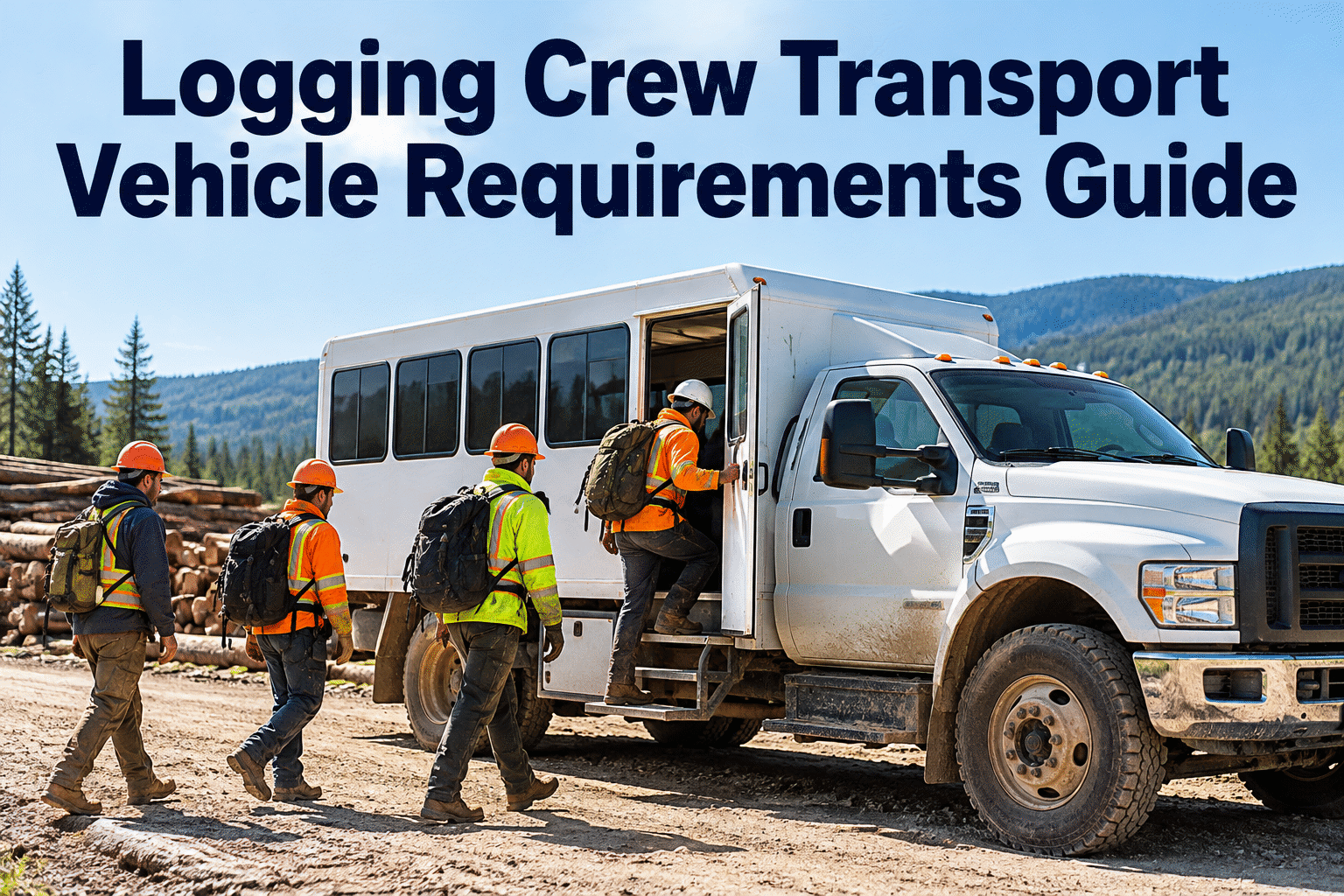
Crew transport vehicle safety starts before a logging crew leaves the yard. Rough access roads, changing weather, passengers, and loose tools create risks that a routine highway check may miss. This guide covers vehicle selection, seating and restraints, cargo separation, pre-trip inspections, and maintenance records—and how to start free with HVI to organize those checks.
The safest trip to the logging site starts with a vehicle that's ready.
Seats, restraints, tires, brakes and secured equipment all matter when transporting workers over forest access roads. Give every departure a repeatable inspection—and every defect a clear repair path.
What makes a crew transport vehicle suitable?
A logging crew vehicle must suit its passenger load, travel route and operating environment. A pickup, van, bus or purpose-built carrier may be appropriate in different circumstances—but capacity and configuration cannot be assumed from appearance alone.
Approved seating
Use designated passenger seats and stay within the vehicle's rated seating and loading limits.
Occupant protection
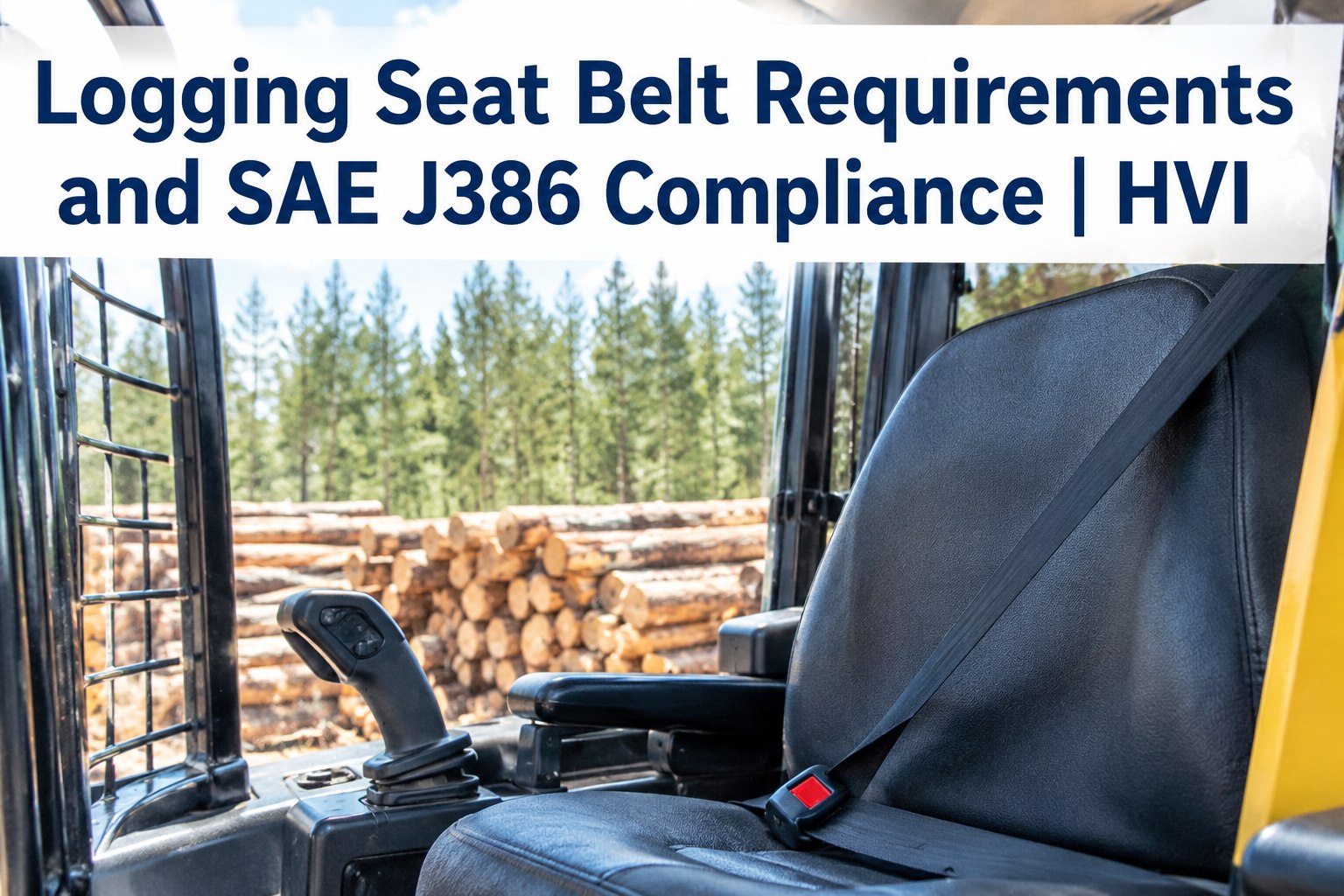
Check seat belts, latches, doors and other restraints appropriate to the vehicle and applicable rules.
Route suitability
Evaluate clearance, traction, road grade, turning space, weather and access-road restrictions.
Secure equipment
Keep tools, fuel and loose supplies restrained, with suitable separation from the passenger area.
Vehicle choice should be documented against actual site conditions. Book an HVI demo to see how to organize each vehicle's inspection and maintenance history.
A pre-trip checklist built for forest roads
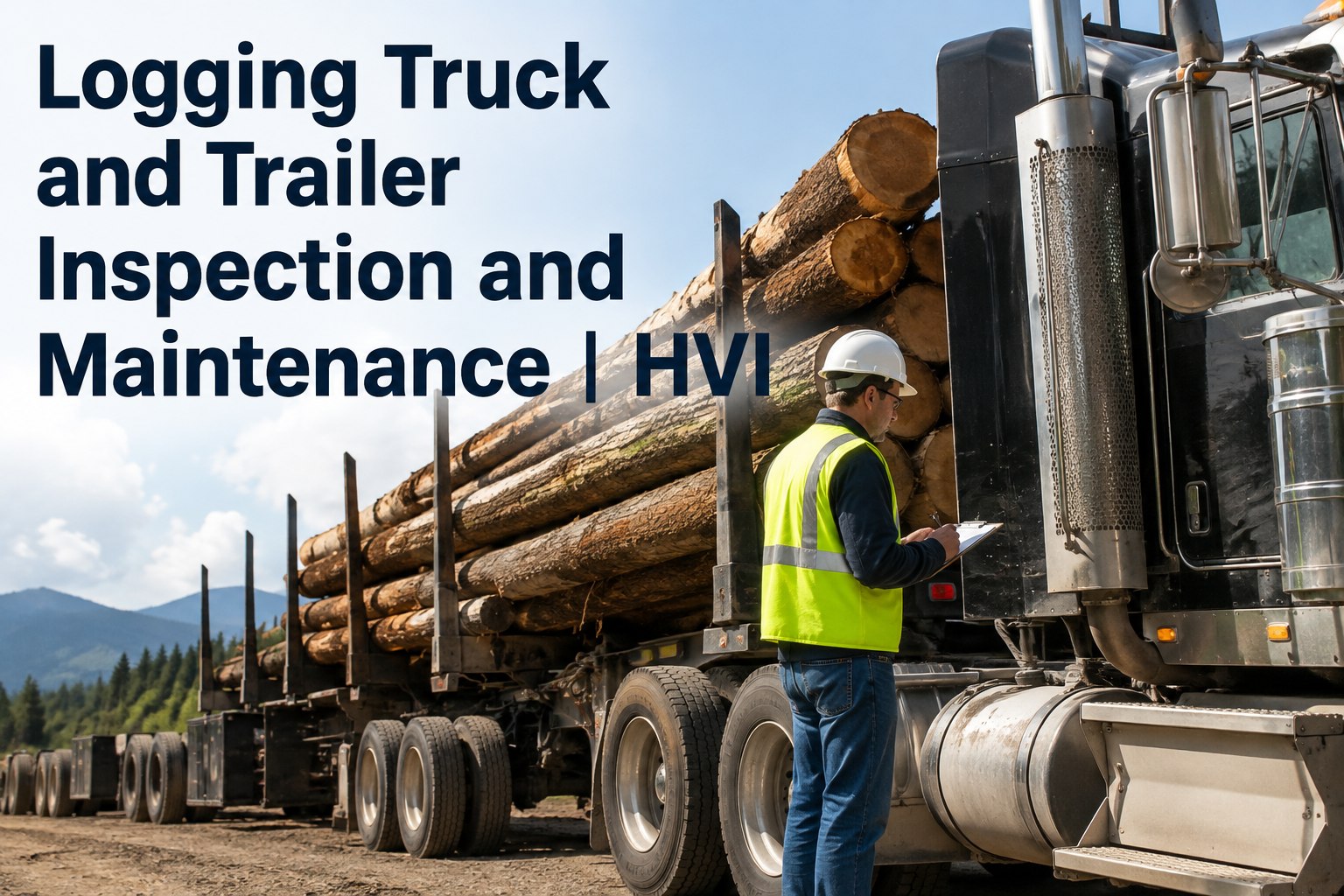
A crew transport vehicle inspection should combine normal roadworthiness checks with the hazards of forestry access routes. Inspect before departure, record defects and resolve safety-critical issues before transporting people.
Seats anchored; belts and buckles functional; doors, windows and emergency exits usable where fitted.
Inflation, tread, damage, wheel security, ground clearance and visible underbody concerns.
Service and parking brake response, steering feel, leaks and abnormal noises.
Headlights, brake lights, indicators, mirrors, wipers and windshield condition.
Secure boxes, saws and loose gear; check barriers and restraint points as applicable.
Fuel, fluids, communication arrangements, route hazards and emergency supplies suited to the site.
Know which crew vehicles are ready before the shift begins.
Build repeatable checks, record defects and keep inspection history tied to the right vehicle—even when crews move between jobsites.
Passenger safety and cargo securement must work together
The safest loading plan keeps passengers in designated seats and prevents tools from becoming projectiles during braking, cornering or a rollover. Review the arrangement whenever crew size or equipment load changes.
BELT ✓SEAT
BELT ✓SEAT
BELT ✓SEAT
BELT ✓
Designated seating, functioning restraints, clear access and no loose tools at occupants' feet.
Use suitable compartments, anchor points or barriers. Never exceed load ratings or rely on an unsecured pile of gear.
Supervisors should also review safe boarding, disembarking and parking locations. Book a demo to see how recurring vehicle checks can be documented in HVI.
Which regulations apply to logging crew transportation?
There is no single rule that covers every crew transport arrangement. Requirements depend on the country and state, vehicle type, public-road use, passenger capacity and whether the operation is covered by commercial motor vehicle rules.
Logging workplace safety
For U.S. logging operations, OSHA's logging standard, 29 CFR 1910.266, is an important starting point for covered work. Review its applicability and relevant employee transportation and safety provisions rather than treating it as a complete vehicle code.
Road and motor carrier rules
Depending on vehicle classification and use, applicable DOT/FMCSA rules may affect driver qualifications, inspections, maintenance and passenger transport. Public-road operation can introduce additional obligations.
State, local and site rules
Check state transportation requirements, local restrictions, insurer conditions, landowner access rules and your employer's site-specific transport plan.
Turn inspection findings into completed repairs
A recurring brake concern or damaged seat belt should not disappear into a text message. Crew transport vehicles need an accountable process from inspection to return-to-service.
Inspect
Operator checks the assigned vehicle before the shift.
Record
Defect is documented against the vehicle record.
Repair
Maintenance work is assigned, tracked and completed.
Verify
Qualified personnel confirm readiness before release.
Preventive maintenance priorities
- Brake system and parking brake checks
- Tire condition and wheel inspections
- Steering, suspension and underbody damage
- Seat belt, door and lighting repairs
- Cooling, fluids and manufacturer service intervals
Records worth keeping together
- Vehicle ID, configuration and assigned location
- Daily or pre-trip inspection results
- Defect reports and work order status
- Parts, repairs and service dates
- Return-to-service verification
HVI helps keep the vehicle's inspection, maintenance and work order history together. Book a demo of forestry vehicle maintenance workflows.
A practical four-week crew vehicle safety rollout
Start with the highest-use vehicles and expand only after supervisors and drivers are comfortable with the checks.
Inventory the fleet
List crew carriers, seat capacities, routes, assigned crews and maintenance status.
Standardize checks
Define the pre-trip checklist, defect categories and stop-use conditions.
Train & pilot
Run checks on one crew, test reporting and correct unclear instructions.
Review & expand
Audit missed inspections, repeat defects and overdue repairs before scaling.
Make crew transport readiness visible across sites
HVI supports the maintenance and inspection workflow around forestry crew vehicles—not the physical driving, repair or regulatory interpretation.
Digital inspections
Consistent vehicle checks with inspection records linked to assets.
DVIR records
Keep reported vehicle conditions available for follow-up.
Maintenance work orders
Organize repair tasks and document completed work.
Preventive maintenance
Plan service around usage and established maintenance intervals.
Vehicle service history
Review previous inspections, defects and repairs in context.
Ready to replace scattered inspection sheets? Sign up free and start organizing logging crew vehicle records.
Logging crew transport vehicle FAQs
What is a crew transport vehicle in logging?
A crew transport vehicle is a vehicle used to move logging workers between yards, staging areas and work sites. The vehicle may be a van, pickup, bus or other suitable carrier depending on passenger capacity, route and applicable rules. It should provide designated seating, appropriate occupant protection and secure storage for carried equipment.
Do logging crew vehicles need seat belts?
Applicable restraint requirements depend on the vehicle, its configuration and the jurisdiction. As a safety practice, use manufacturer-approved passenger seats with functioning occupant restraints and do not transport workers in unsuitable cargo areas. Verify the legal requirements for each vehicle and operating arrangement.
What should a logging crew transport pre-trip inspection include?
Check passenger seats and restraints, doors, tires, wheels, brakes, steering, lights, mirrors, wipers, leaks and tool securement. Include route-specific items such as underbody damage, communication readiness and emergency supplies. Follow the manufacturer, employer policy and applicable inspection rules.
Does OSHA 1910.266 cover every forestry crew vehicle?
No. OSHA 29 CFR 1910.266 addresses covered logging operations, but it is not a universal transport code. Other federal, state and local requirements may apply depending on vehicle classification, public-road travel and operating circumstances. Confirm which provisions govern your operation.
How does HVI help manage logging crew vehicle inspections?
HVI helps teams organize digital vehicle inspections, DVIR records, preventive maintenance, work orders and service history. It supports consistent documentation and repair follow-up, while drivers, supervisors and qualified technicians remain responsible for safe operation, assessment and repairs.
Get every crew vehicle checked before the next departure.
Give drivers a consistent pre-trip routine, give supervisors visibility into defects, and give maintenance teams a clearer repair history.