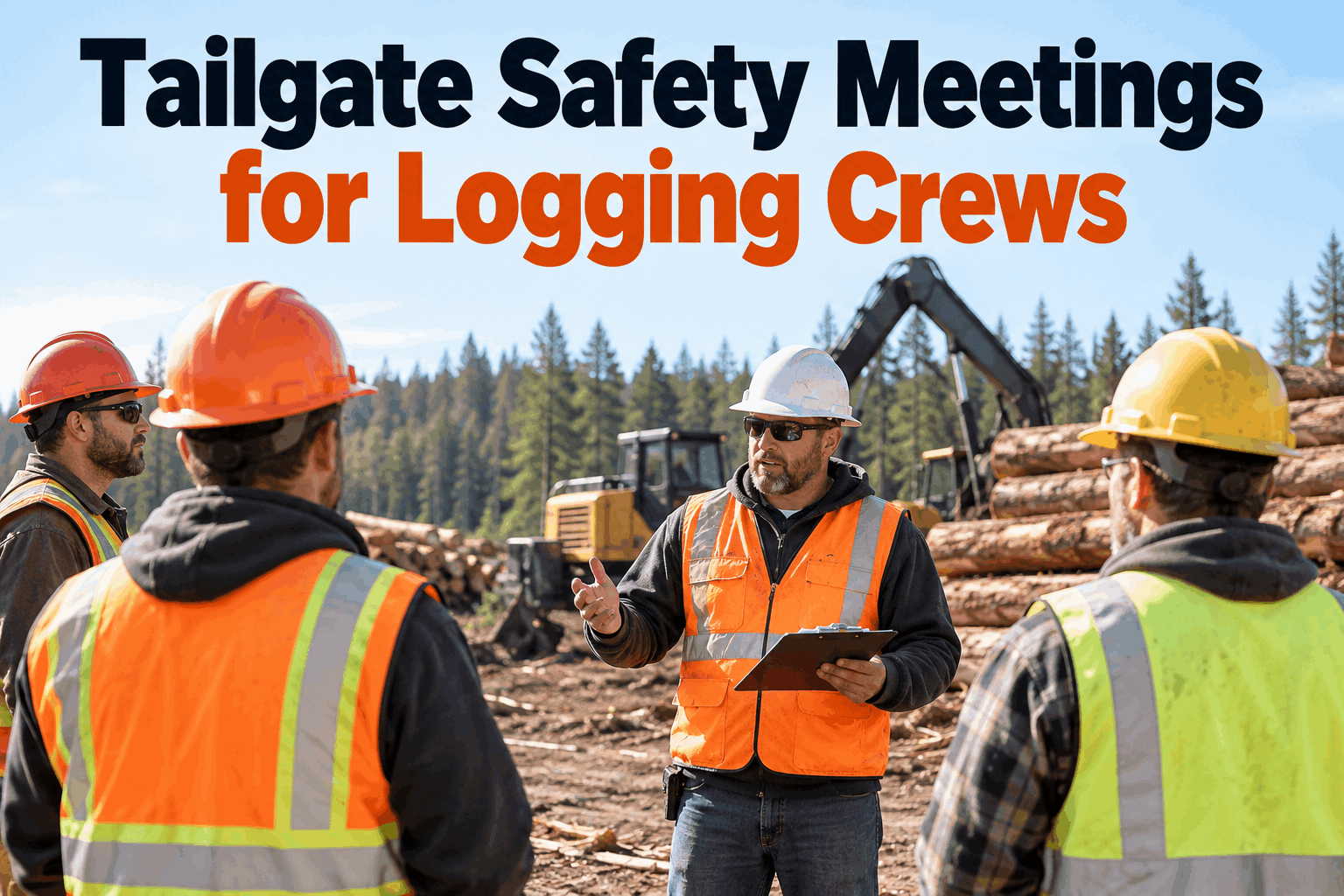
A tailgate safety meeting should prepare a logging crew for the hazards they are likely to face on that site and that shift. Instead of repeating a generic safety topic, supervisors can use current conditions, planned work, equipment activity and recent findings to focus the discussion, assign follow-up actions and preserve a useful record of what the crew reviewed.
Turn the Tailgate Meeting Into a Field Safety Workflow
Bring today's work plan, site hazards, crew discussion and corrective actions together before logging operations begin.
Under OSHA's logging standard, employees must attend a safety and health meeting at least monthly. That requirement should be understood alongside the standard's broader training obligations: workers need training for their assigned tasks and hazards, and additional training is required in circumstances such as new work assignments, new equipment or unsafe job performance.
A Tailgate Safety Meeting Is More Than a Sign-In Sheetuse the meeting to connect the crew with the conditions they are about to work in
The most useful logging safety meeting starts with the operation in front of the crew. What work is planned? What changed since the last shift? Which machines will be moving? Are there terrain, weather, tree, loading or access conditions that need attention before work proceeds?
Weather, terrain, access and changing site conditions.
Felling, yarding, loading and equipment activity.
Assignments, communication and safe positioning.
What must happen before or during the work.
A digital HVI safety management workflow can help supervisors use a consistent meeting structure without turning every meeting into the same generic talk. If your crews currently rely on paper attendance sheets, see how HVI can turn a logging tailgate meeting into a documented field safety record.
Choose Logging Safety Topics From the Jobsitethe strongest topic is often the hazard the crew is about to encounter
A topic library is useful, but it should not replace site awareness. Logging supervisors can select meeting topics from planned operations, observations, changing conditions, recent incidents or near misses, equipment findings and recurring unsafe practices.
Hazards Choose what matters now
Danger trees, escape paths and work positioning.
Movement, blind areas, safe approach and operator awareness.
Slopes, unstable ground, footing and access conditions.
Exclusion areas, log movement and transport activity.
Shift inspection findings and defects affecting safe operation.
Heat, cold, wind, visibility and changing weather.
The meeting can also reinforce safe use of tools, machines and vehicles, which OSHA includes within logging training requirements. Instead of searching for a random toolbox-talk topic each morning, see how HVI can help crews organize repeatable logging safety topics and site-specific meeting records.
Run the Logging Toolbox Talk as a Short Field Conversationbrief enough for the jobsite, specific enough to change what happens next
A tailgate meeting does not become better simply because it becomes longer. A practical format gives the supervisor enough structure to explain the work, surface hazards, confirm controls and let the crew raise concerns before everyone disperses.
Explain today's work, locations and assignments.
Discuss task and site-specific hazards.
Confirm work practices, separation and precautions.
Give crew members space to raise observations.
Assign unresolved issues before work proceeds.
A completed form has limited value if the crew does not understand the hazards, controls and worksite expectations being discussed.
OSHA requires logging training to be provided in a manner employees can understand, with content and vocabulary appropriate to their educational level, literacy and language skills. That same principle makes a forestry safety meeting more useful in the field.
When the Crew Finds a Hazard, Give It Somewhere to Goa safety discussion becomes operational when unresolved findings get an owner
Some meeting items can be resolved immediately. Others need maintenance, site changes, additional equipment, management review or another responsible person. Those findings should not disappear when the crew leaves the tailgate.
Crew identifies a condition requiring follow-up.
A responsible person is attached to the action.
Photos, notes and status remain with the finding.
Resolution is recorded instead of assumed.
Connecting meeting observations to HVI safety management makes it easier to track corrective actions and see whether identified safety issues were actually addressed. If your current tailgate forms record the discussion but lose the follow-up, see how HVI connects logging safety meetings with assigned corrective actions.
Document the Meeting Without Confusing It With OSHA Training Certificationmeeting records and required training records can support each other, but they are not automatically interchangeable
For a useful tailgate safety meeting record, capture enough information to reconstruct what occurred: meeting date, site or crew, supervisor, topics discussed, relevant hazards, participants and any actions generated. Photos or supporting documents can be attached where they add useful context.
OSHA's logging standard separately requires employers to maintain written certification of required employee training with specified information. Using HVI safety management can help teams organize meeting records, safety documentation and follow-up information while leaving the employer responsible for determining which regulatory requirements apply.
Use the Monthly Requirement as a Floor — Not the Topic CalendarOSHA sets a minimum meeting frequency while field conditions can justify additional discussions
OSHA 29 CFR 1910.266 requires each employee to attend a safety and health meeting at least monthly. That does not mean a logging contractor should wait for the monthly meeting when the work changes or a hazard needs immediate discussion.
Keep regulatory training requirements separate from voluntary additional briefings, but use both to build a stronger safety rhythm. For supervisors managing several crews or harvest sites, see how HVI can keep recurring logging safety meetings and follow-up records visible across operations.
Connect Tailgate Meetings With the Rest of the Logging Safety Programthe meeting becomes more useful when it can pull information from inspections, incidents and open actions
A forestry safety meeting should not live in isolation. Equipment inspections can reveal defects worth discussing. A near miss can become a future safety topic. An unresolved site observation can stay visible until corrected. Training records can show which workers need additional attention for assigned tasks.
Record
This is where HVI safety management can provide more value than a folder of completed forms by keeping safety records and follow-up work easier to organize. The goal is not simply to prove that meetings happened; it is to keep hazards, discussions and unresolved actions connected. See how HVI can connect logging safety meetings with inspections and corrective-action history.
Tailgate Safety Meetings for Logging Crews: Quick Answers
Does OSHA require safety meetings for logging crews?
Yes. Under 29 CFR 1910.266(i)(11), each employee must attend a safety and health meeting at least monthly. This requirement exists alongside separate OSHA logging training requirements that apply to initial assignments, new tasks or equipment, unsafe job performance and other specified circumstances.
What should be discussed in a logging tailgate safety meeting?
Useful topics include the day's work plan, site-specific hazards, felling conditions, machine movement, loading areas, terrain, weather, PPE, equipment findings, communication, emergency considerations and recent incidents or near misses. The discussion should reflect the work the crew is actually performing.
How often should a logging tailgate safety meeting be held?
OSHA's logging standard requires each employee to attend a safety and health meeting at least monthly. Employers may conduct additional meetings or briefings when operational conditions, hazards or company safety processes make them useful. Separate OSHA training triggers should still be evaluated independently.
What should a tailgate safety meeting record include?
A practical record can include the date, site, meeting lead, crew members, topics discussed, identified hazards and any follow-up actions. Where the meeting is being used as part of required training, employers should also make sure the applicable OSHA training and certification requirements are satisfied rather than assuming a meeting attendance record is sufficient.
Can HVI help with OSHA logging safety documentation?
HVI can help organize safety meeting records, digital checklists, corrective actions, training information and supporting documentation. It does not itself establish OSHA compliance; employers remain responsible for determining and meeting the requirements that apply to their logging operations.
Make Every Tailgate Safety Meeting Easier to Follow Through
Give supervisors a consistent way to record crew discussions, capture jobsite hazards, assign corrective actions and retain the supporting safety record across harvest sites.