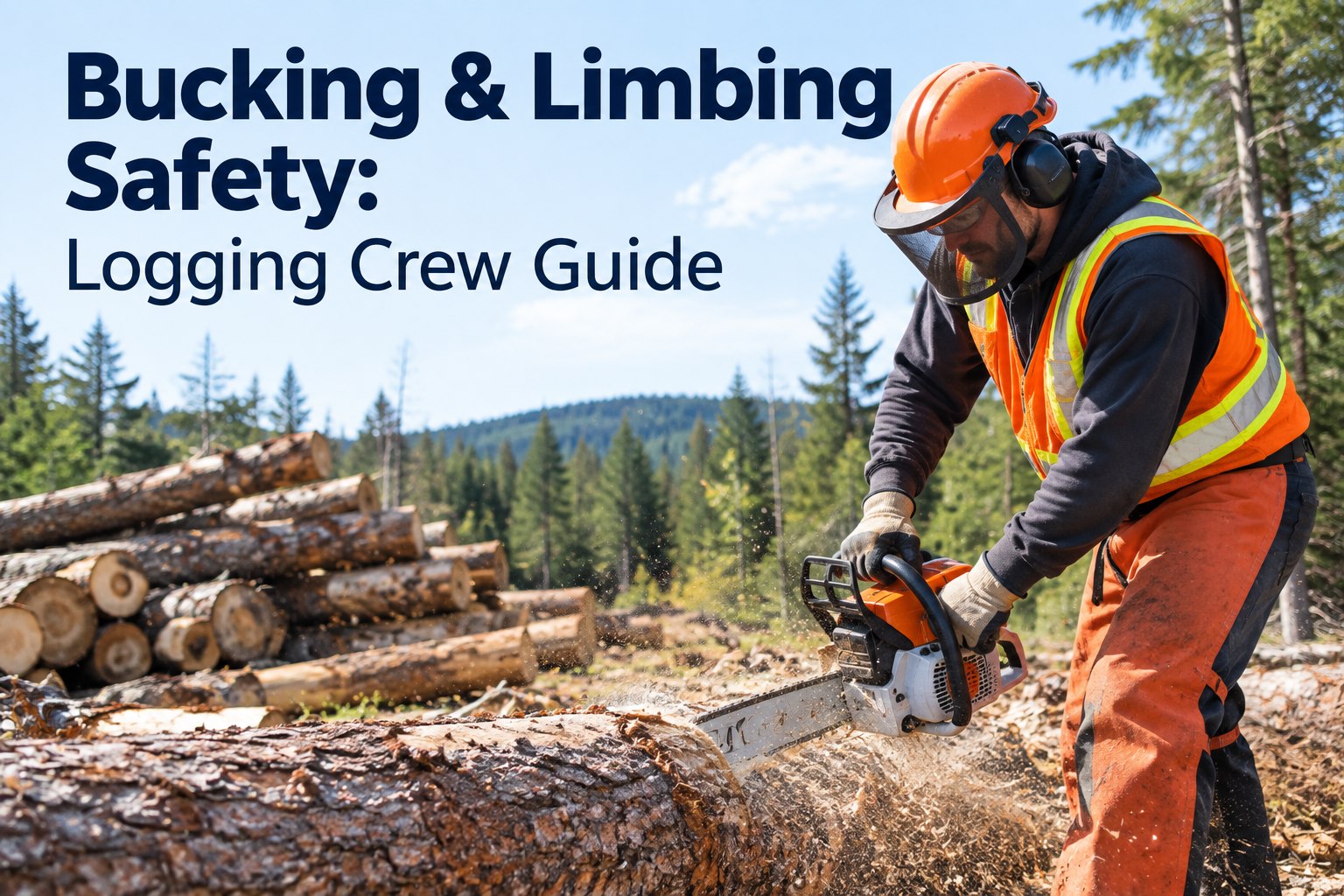
You have felt the saw bar shudder as a 34-inch Douglas fir stem settles onto a hidden rock berm, pinching the chain and transferring thousands of pounds of compressive energy directly into the powerhead. In timber production, bucking limbing safety is not an academic theory; it is an active discipline of reading internal wood stress, diagnosing complex multi-directional binds, and executing defensive cuts before stored kinetic energy violently kicks back. Controlling these lethal cutting hazards demands rigorous pre-cut evaluations, strict saw maintenance and mobile safety management across every active cutting face. Book a demo to see how HVI digitizes forestry tailboard hazard assessments and chainsaw pre-shift inspections
Bucking & Limbing Safety: Reactive Cutting vs. Systematic Bind Analysis
Stored tension turns felled timber into spring-loaded hazards. Switch below to see how systematic bind evaluations compare with uncalculated cuts on high-slope timber tracts.
A sawyer cuts into the compression side of a suspended log without assessing end pressure. The kerf clamps shut instantly, seizing the chain and catapulting the powerhead backward while the released butt rolls downhill over the cutter's escape path.
The faller inspects the entire stem, probes root mass stability, and cuts one-third through the compression zone before executing the finishing cut on the tension side. Plastic wedges hold the kerf open while the sawyer stays securely balanced on the uphill slope.
Bucking and limbing account for a substantial portion of all manual logging injuries. Once a tree hits the forest floor, it rests on uneven ground, stumps, and underbrush, storing tremendous mechanical energy across its length. A single saw cut alters the balance of the entire log. If an operator miscalculates whether wood fibers are under tension or compression, the log can snap, slab, or roll with fatal momentum before the chain can even clear the cut.
The 4 Primary Log Binds and Safe Cutting Techniquesmastering the physics of internal wood stress to prevent bar pinch and sudden stem release
Every bucking cut involves two opposing forces: compression (wood pushed together, which pinches saw bars) and tension (wood pulled apart, which splits and snaps). Executing a safe cut requires cutting the compression zone first to relieve pressure, followed by cutting the tension zone to sever the log cleanly.
Supported at Both Ends
Stress Profile: The log sags in the middle. The top of the log is under heavy compression, while the bottom is under tension.
Cutting Rule: Make a downward cut (overbuck) through the top compression side for about one-third of the log diameter. Complete the cut from the bottom upward (underbuck) through the tension side. Insert wedges into the top kerf to prevent bar pinching.
Cantilevered Over a Berm
Stress Profile: The suspended end hangs unsupported over a slope. The bottom fibers are under compression, and the top fibers are under extreme tension.
Cutting Rule: Make an upward cut (underbuck) through the bottom compression zone for one-third of the diameter. Finish with a downward cut (overbuck) through the top tension side. Expect the unsupported log end to drop rapidly upon release.
Bowed Against Stumps or Terrain
Stress Profile: The log bends horizontally against trees or rocks. The concave inside is compressed; the convex outside is under heavy tension.
Cutting Rule: Always stand on the inside of the bend (the safe side). Cut into the compressed inside curve first. Complete the cut on the outside tension curve while standing well clear of the arc of release, as the stem will whip violently sideways.
Steep Downhill Pitching Stems
Stress Profile: Gravity forces the entire mass of the log downhill against the cut. The entire cross-section behaves as a severe compression trap.
Cutting Rule: Shave several thin kerfs (relief scoring) or remove side-bark wood to release internal sliding pressure. Drive tough plastic wedges into both kerf cheeks early, and never stand directly downhill in the run path.
Do not leave log tension analysis to guess-and-cut habits. Book a demo to see how HVI structures digital forestry tailboards and mobile pre-cut safety audits
Limbing Safety: Protecting Against Kickback and Loss of Balanceessential footwork, body positioning, and saw management across cluttered slash piles
Limbing accounts for more chainsaw lacerations than felling. Sawyers work in close quarters around branches that conceal irregular footing, spring poles, and ground obstacles. Adhering to strict body positioning fundamentals protects operators when a guide bar snags an unseen branch.
Maintain the Log as a Physical Shield
Whenever possible, stand on the opposite side of the trunk from the branches you are cutting. Use the mass of the log as a physical barrier between your legs and the chainsaw guide bar.
Keep Firm, Staggered Footing
Never walk with the saw chain running. Clear away underbrush around your boots, maintain a broad base of support, and never cut while balancing directly on top of fallen logs or rolling root masses.
Beware the Kickback Danger Zone
The upper quadrant of the guide bar nose must never contact adjacent limbs, logs, or brush. Contact in this upper quadrant instantly kicks the saw upward and backward toward the operator's head and neck.
Identify Downward Weight-Supporting Limbs
Branches holding the weight of the tree off the ground are under extreme tension. Cutting them prematurely causes the tree to roll or drop abruptly. Leave supporting branches until the main stem is completely bucked and secured.
Pre-shift checks must verify chain catchers, throttle interlocks, and chain brakes are fully functional. Sign up for HVI to standardize mobile chainsaw and forestry equipment check-ins
Paper Logbooks vs. Digital Forestry Safety Managementhow digital safety tracking prevents catastrophic jobsite trauma and satisfies OSHA audits
Managing contract sawyers across steep timber sales makes paper safety records impractical. Relying on paper checklists leads to unverified PPE enforcement, skipped chain brake tests, and regulatory exposure during surprise OSHA inspections.
Paper Binders & Informal Tailgates
- Chainsaw chain brakes and catch pins go uninspected before sawyers enter the brush.
- No photo documentation of PPE compliance (cut-resistant chaps, eye/face screens, boots).
- Slope stability and bind hazard briefings left to unrecorded verbal discussions.
- Hours spent assembling paper training logs when OSHA compliance officers arrive on site.
HVI Connected Safety Platform
- Mobile pre-shift checklists mandate photo proof of chainsaw safety devices and PPE.
- One-click work order creation routes dull chains, cracked handles, or leaking oilers to mechanics.
- Digital tailboard briefings capture GPS coordinates, hazard assessments, and worker sign-offs.
- Signed PDF safety inspection reports provide tamper-proof records for forestry audits.
Operations implementing structured digital safety inspections experience up to a 25% reduction in annual maintenance costs and fast 3-month payback windows. Book a demo to see how HVI eliminates forestry safety blind spots
OSHA 1910.266 Chainsaw Safety and PPE Verification Matrixstatutory equipment features and personal protective equipment required for every cutting shift
OSHA enforces strict mechanical standards for chainsaws and mandatory PPE under 29 CFR 1910.266(d) and (e). Operating with defective chain brakes or worn ballistic chaps violates federal safety standards and compromises operator survival.
| Safety Component | OSHA Mandate | Inspection Checkpoint | Compliance Tier |
|---|---|---|---|
| Chain Brake System | Operating functional brake | Inertia and manual activation stop chain instantly at full throttle | Critical Mandatory |
| Chain Catcher Pin | Must be undamaged | Inspect aluminum/composite pin under sprocket for wear or breakage | Pre-Shift Audit |
| Throttle Lockout Lever | Automatic interlock | Verify throttle cannot activate without pressing top palm safety trigger | Critical Mandatory |
| Leg Protection (Chaps) | Cut-resistant ballistic nylon | Inspect for oil saturation, tears, or broken buckles; cover waistband to boot top | Critical Mandatory |
| Logging Hard Hat & Screen | ANSI Z89.1 approved + mesh | Check shell for sun fade and cracks; ensure ear muffs and mesh visor articulate freely | Pre-Shift Audit |
From a contract logging foreman who modernized field cutting protocols
We were logging second-growth fir on a 40% side-hill in the Oregon Cascades. One of our sawyers got his bar pinched in a heavy bottom-bind, and instead of taking the time to cut an underbuck relief or insert a wedge, he tried to muscle the powerhead free with the throttle pinned. The log broke loose, dropped two feet, and the bar kickback sliced clean through the outer layers of his left chap leg.
Those cut-resistant chaps saved his femoral artery, but it was an operational wake-up call for our entire crew. That evening, we instituted mandatory pre-shift chainsaw inspections and daily bind briefings using HVI on our crew tablets. Every cutter now inspects their chain brake, reviews slope tension maps, and logs wedges before leaving the landing. We haven't had a single pinch-bind incident or laceration since.
Frequently asked questions
What is the most dangerous hazard during bucking and limbing operations?
Rotational chainsaw kickback and uncontrolled log roll-offs represent the most lethal hazards. Kickback occurs in less than a tenth of a second when the upper quadrant of the guide bar tip contacts wood, driving the saw directly toward the cutter's face. Uncontrolled log rolls occur when sawyers cut the downhill side of a log resting on a slope, allowing the severed stem to crush the operator.
How does a logger determine whether a log has top bind or bottom bind?
Examine how the log contacts the ground. If the log is supported at both ends with air beneath the middle, it has top bind (compression on top, tension on bottom). If one end overhangs an embankment or rock unsupported, gravity pulls that end downward, creating bottom bind (compression on bottom, tension on top). Always cut into the compressed side first for approximately one-third of the log's diameter.
Which side of the log should a sawyer stand on when cutting on a slope?
Under OSHA 29 CFR 1910.266(h)(2)(ii), the sawyer must always stand on the uphill side of the log while bucking or limbing, unless it can be definitively proven that the log cannot roll downhill. Standing on the downhill side places the worker in the direct path of rolling, bouncing timber stems once the severance cut is completed.
What are the OSHA requirements for logging chainsaw maintenance?
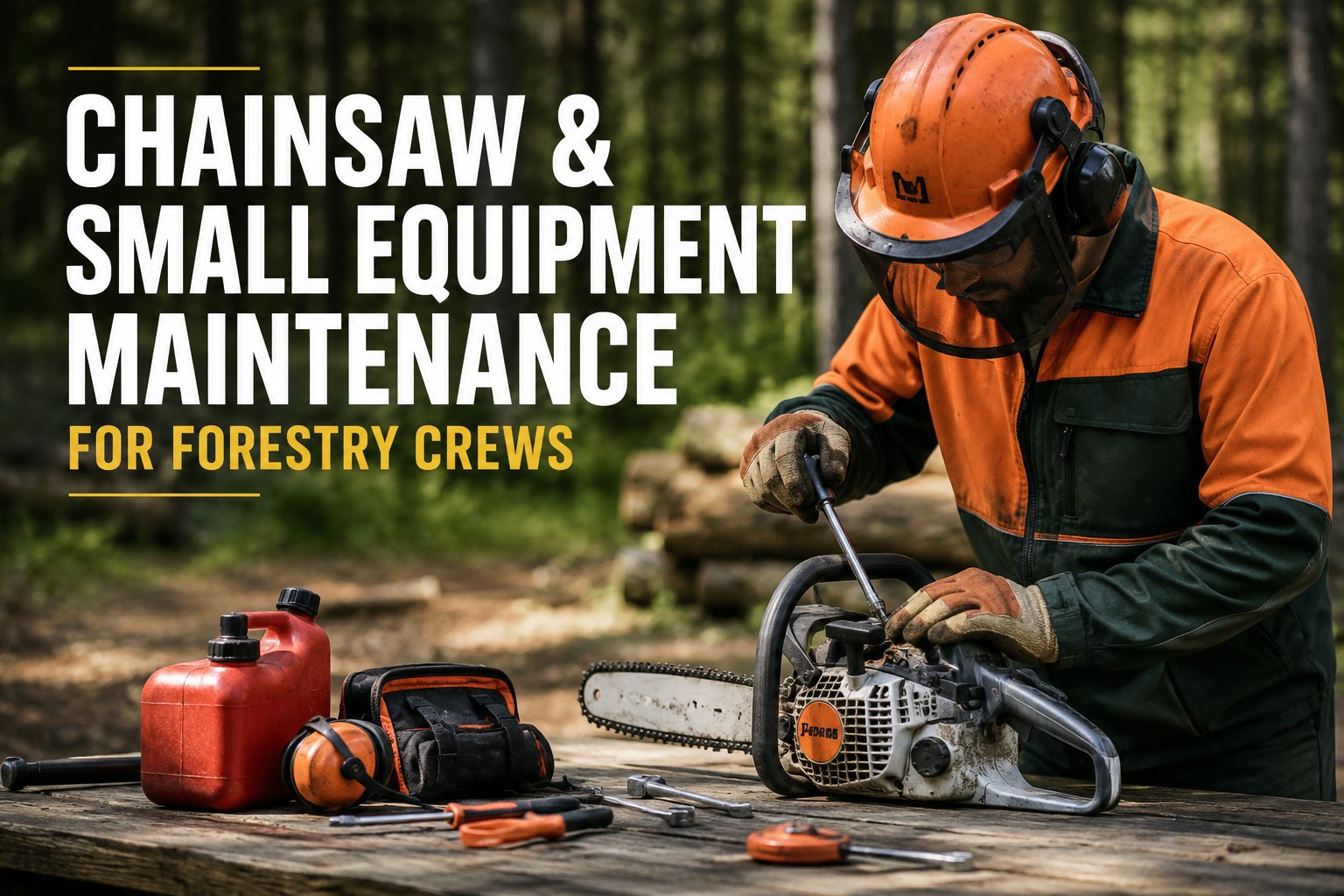
OSHA standard 1910.266(e)(2) mandates that chainsaws be inspected prior to each work shift. Chainsaw operators must verify that the chain brake stops the chain immediately, the throttle lockout functions properly, the chain catcher pin is present and undamaged, the chain is tensioned correctly, and all handles and guards are securely mounted without cracks.
How does HVI software improve bucking and limbing safety compliance?
HVI delivers an offline-capable mobile inspection platform allowing forestry supervisors to conduct pre-shift chainsaw inspections, mandate photo evidence of PPE and chain brake tests, and record tailgate safety hazard assessments directly from remote timber units. Flagged equipment defects automatically generate repair work orders, ensuring damaged saws are serviced before entering the cutting face.
Conclusion: Master the Cut with Disciplined Safety Oversightprotecting workforce lives through systematic bind diagnostics and audit-ready digital workflows
Full adherence to bucking limbing safety standards is an indispensable baseline for commercial timber harvesting. High-torque chainsaws, multi-ton timber stems, and steep terrain leave zero margin for error when cutting into stored mechanical tension without a calculated plan.
By implementing HVI's digital safety checklists, pre-shift equipment inspections, and mobile hazard management tools, forestry contractors eliminate communication gaps and establish audit-ready compliance across every logging side. Protect your sawyers, maintain clean equipment records, and ensure your timber tract operates safely and efficiently. Schedule an operational safety consultation today
Standardize Chainsaw Inspections & Crew Safety with HVI
Ensure every chainsaw pre-trip, tailboard bind review, and PPE audit is documented digitally across your fleet. Deploy mobile inspection checklists, automate work orders, and maintain audit-ready safety records across all timber sales.
No credit card required · Offline mobile capabilities · Comprehensive audit compliance