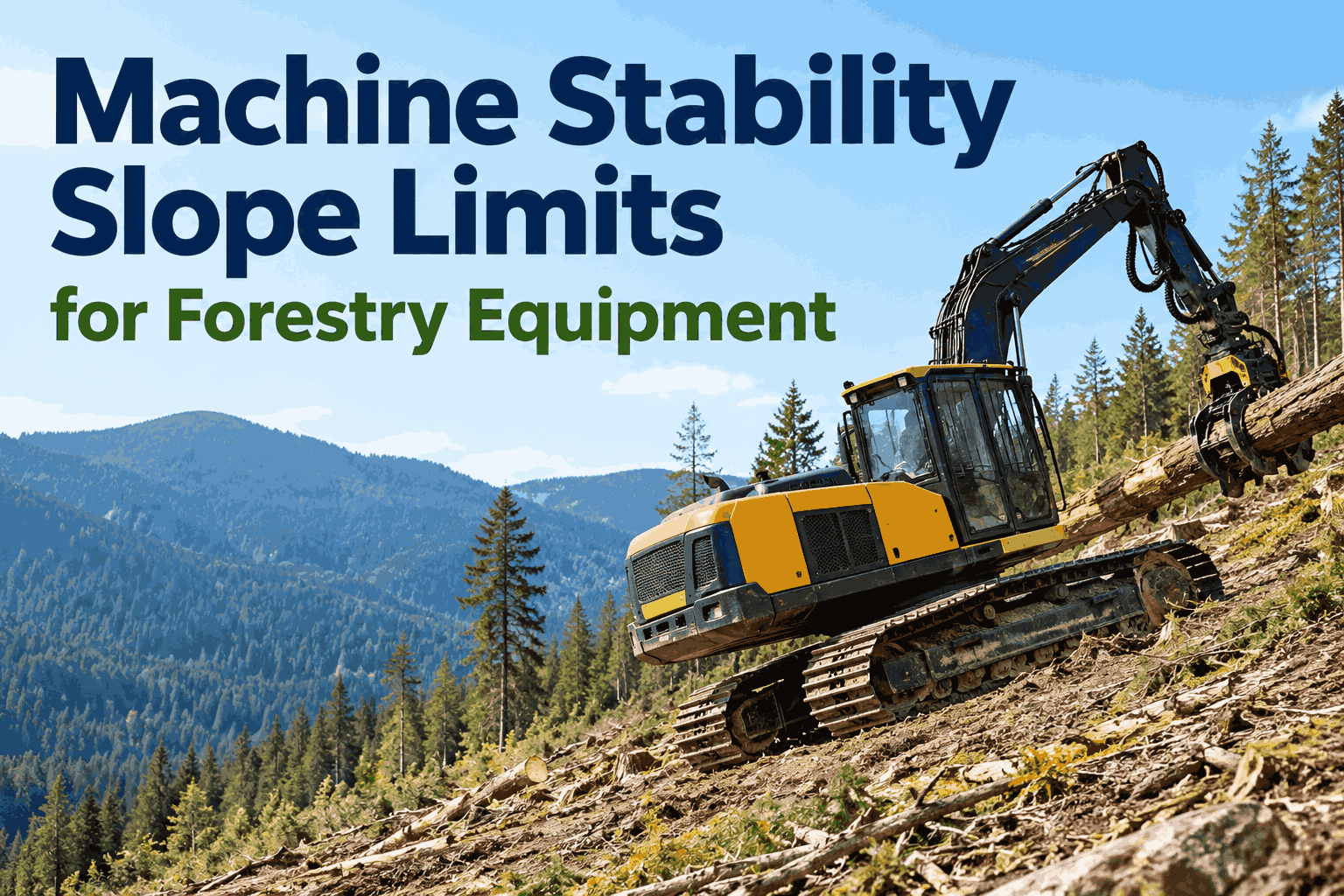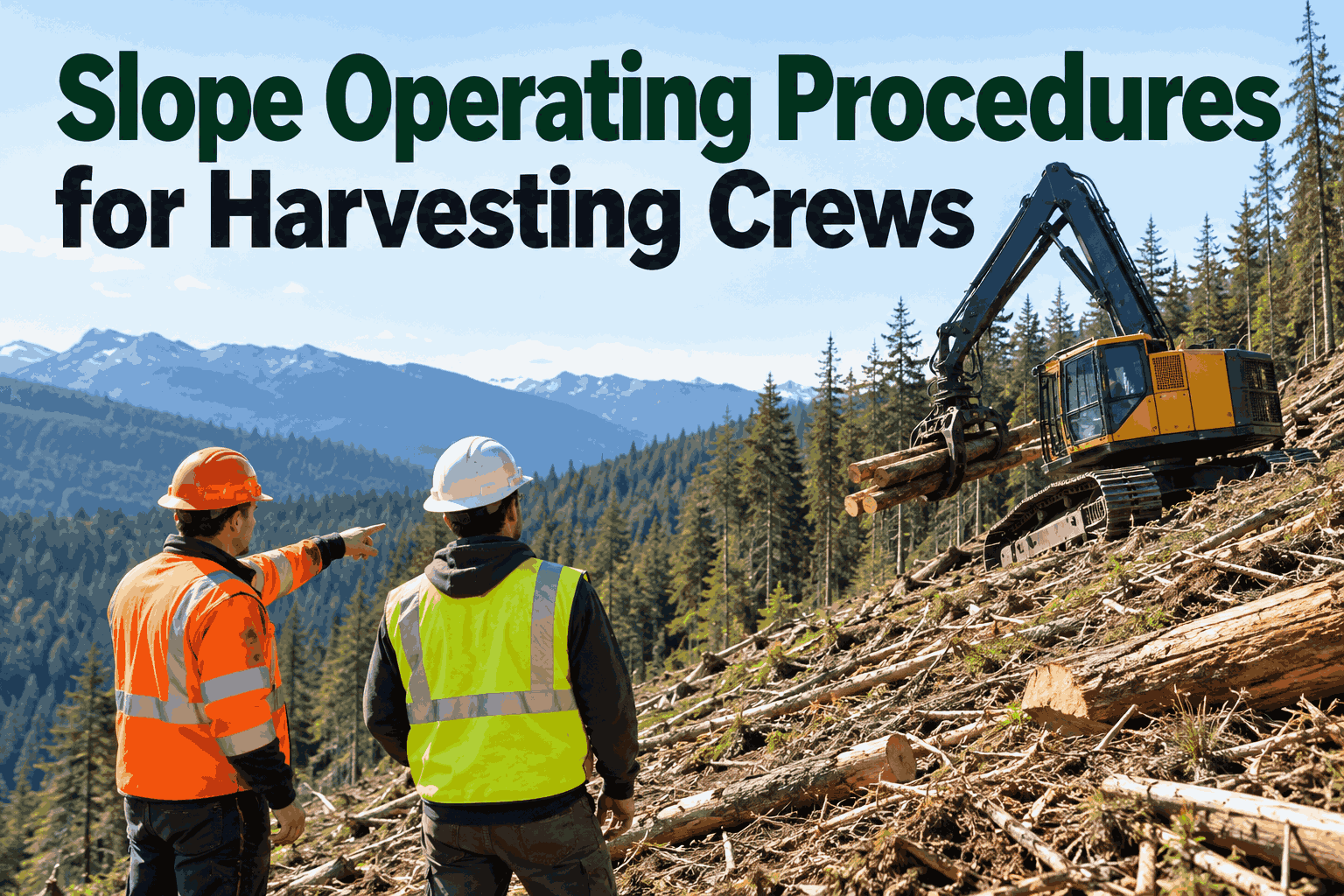
Slope operating procedures are the rules that decide whether a harvesting machine stays upright on steep ground or rolls. On a slope, a feller buncher or forwarder doesn't fail gradually — it reaches a tipping point and goes, often with the operator inside. A good procedure sets the slope limits, the ground conditions, the technique and when to winch-assist or stop. Here's what a slope operating procedure covers, and how to run it on a checklist — or start a free trial to document it.
The steeper the ground, the tighter the rules.
Every harvesting machine has a slope it works safely, a slope where technique is everything, and a slope it has no business being on. A slope operating procedure draws those lines — and a digital checklist makes sure the crew works to them, every setup, on the record.
The honest part first: HVI doesn't measure slope angle, map terrain, or set a machine's limits. The safe operating range comes from the manufacturer and a competent on-site assessment, and the decisions stay with your qualified people. What HVI does is turn the resulting slope operating procedure into a consistent checklist the crew completes before and during work, capture the terrain and equipment checks with photos, and keep every one as a signed safety record. It pairs with HVI's forestry work, like the log skidder inspection checklist. Start a free trial to document your slope SOP.
A slope procedure, step by stepwhat a steep-slope logging safety routine runs through, in order
A real procedure is more than "be careful on hills." It's a sequence of specific checks a crew works through before and during the job — each one a decision someone makes and records.
-
1
Assess the terrain
Walk and assess the slope, aspect, benches, gullies and hazards before any machine moves in. The ground sets everything that follows.
-
2
Apply the machine's slope limit
Use each machine's manufacturer limit for this task and load — not a single fleet-wide number, because a loaded feller buncher and an empty forwarder aren't the same machine on a hill.
-
3
Read the ground & season
Wet, frozen or loose ground changes traction and tip risk. The safe limit moves down with conditions — the procedure has to move with it.
-
4
Set the operating technique
Work up and down the fall line rather than across it, manage the boom and load on grade, and keep the centre of gravity low and over the tracks.
-
5
Deploy winch-assist if needed
On steep ground, a tethered or winch-assist system extends the safe range — with its own rope, anchor and system checks added to the routine.
-
6
Set exclusion zones & positions
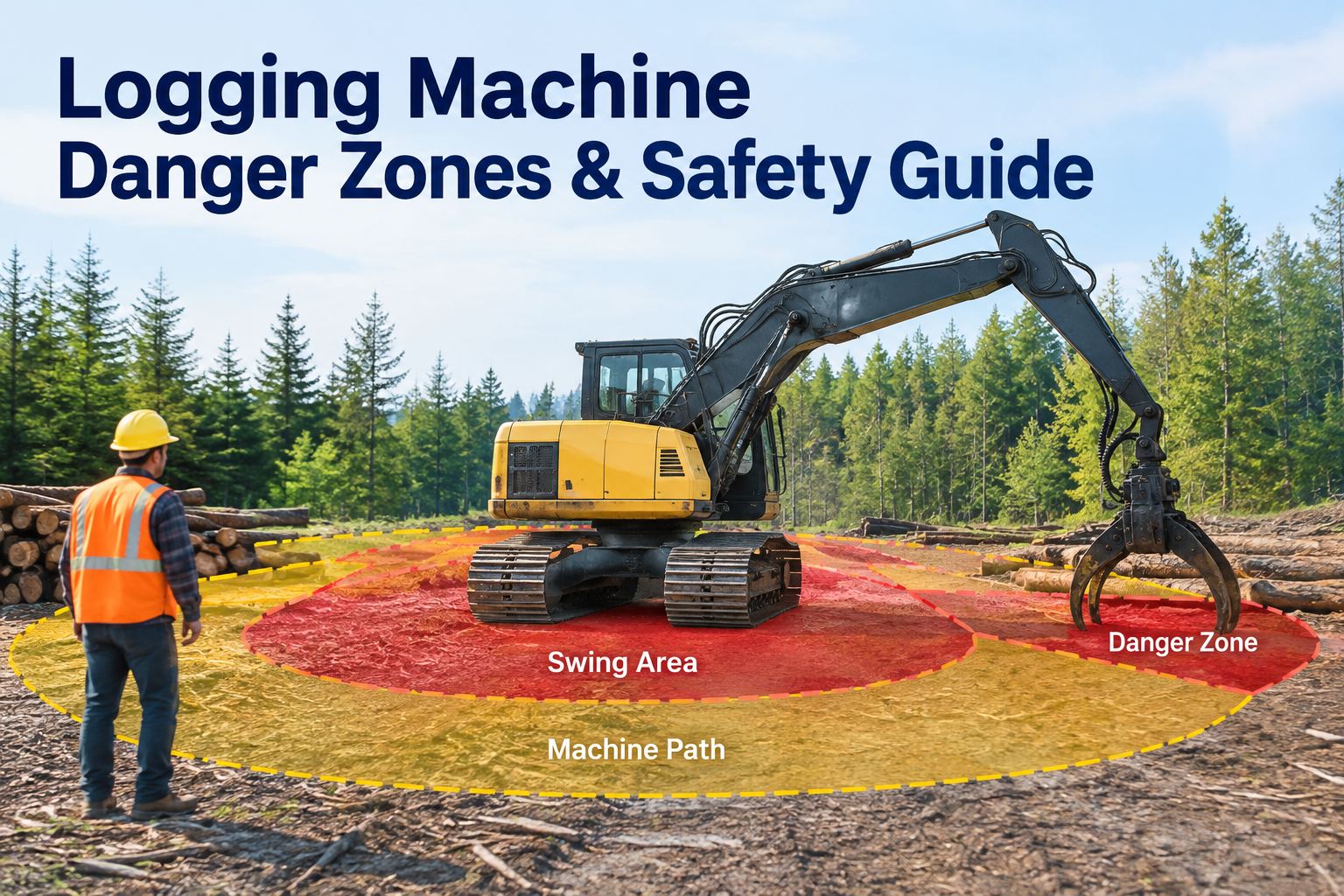
Keep crew and other machines clear below a working machine, and confirm everyone's position before work starts.
Each step is a check someone has to make and record — which is where a structured digital procedure beats a laminated card on the dash. Start a free trial and digitize the slope checklist.
Slope limits depend on the machinewhy steep-slope logging safety is machine-specific
There's no single safe slope number, because stability depends on the machine, how it's loaded, and what it's doing. A procedure has to account for each type — here's what drives the limit for the common ones.
A slope procedure that treats every machine the same is wrong before anyone starts the engine. Building the limit into the checklist per machine is how it stays right. Start a free trial to log equipment slope checks.
How HVI runs slope proceduresthe features behind a documented slope operating procedure
HVI doesn't make the slope call — it makes the procedure consistent and the record permanent. Five features turn a written SOP into a process the crew follows and you can prove.
Audit Checklist Manager
Build your slope SOP as a checklist, with machine-specific limits baked in, required on every setup — so the procedure is the same whether it's the A-crew or a new operator.
Digital safety checklists
Crews complete the terrain and machine checks on a phone, with photos, before work starts — the check happens and is captured instead of being assumed.
Equipment inspection records
ROPS, tracks, brakes and winch systems inspected and logged alongside the slope check — the machine that's rated for the grade is also fit for it.
Safety documentation
Every slope assessment becomes a signed, time-stamped record — the proof an auditor or an incident review asks for, without digging through a binder.
Asset management
Each machine carries its own slope limits and inspection history on one record, so the right limit is in front of the operator who needs it.
It's the same safety management and inspection backbone HVI runs across forestry operations. Book a demo of digital safety checklists.
The binder vs. the phonewhat changes when the slope procedure goes digital
- "Steep" means something different to each operator
- Limits don't move when the ground turns wet
- No proof the assessment actually happened
- The procedure lives in a folder nobody opens
- One agreed line the whole crew works to
- Conditions logged and the limit adjusted on record
- A signed, photo-backed assessment for every setup
- The procedure is the work, not a document beside it
Manage it alongside the rest of your forestry safety program. Book a demo of the audit checklist manager.
From a harvesting supervisor
Our slope procedure lived in a binder nobody opened. Operators knew the ground, but "steep" meant something different to each of them, and when conditions turned wet the limits should have moved and often didn't. After a forwarder slid on a descent we'd have called marginal, we put the slope check on a phone — terrain, the machine's own limit, the conditions, signed before work. It didn't replace the operator's judgment; it gave everyone the same line to work to, and a record that we actually held it.
Slope operating procedures — FAQs
What are slope operating procedures in forestry?
They're the documented rules for operating harvesting equipment safely on grade — covering terrain assessment, each machine's slope limits, ground and seasonal conditions, operating technique, when to use winch-assist or a tether, and exclusion zones for the crew. The goal is to keep every machine inside its stable envelope and to make sure the whole crew works to the same limits rather than each operator's own judgment of what's "too steep."
Does HVI measure slope or set the machine's limits?
No — and that's an important boundary. HVI doesn't measure slope angle, map terrain, or decide a machine's safe operating limit. Those come from the manufacturer's specifications and a competent on-site assessment by your qualified people. What HVI does is turn the resulting procedure into a consistent checklist, capture the terrain and equipment checks with photos, and keep every assessment as a signed record — it documents the procedure, it doesn't make the engineering call.
Why isn't there one safe slope number for all machines?
Because stability depends on the machine, its load and its task. A feller buncher with a loaded head sits high and tips easily across the slope; a harvester's boom reach shifts its centre of gravity; a loaded forwarder is least stable on descent. Ground conditions change it again. A good procedure applies each machine's own manufacturer limit and adjusts for conditions, rather than a single figure for the whole fleet.
How does winch-assist fit into a slope procedure?
Winch-assist and tethered systems extend the range a machine can safely work by supporting it on the slope. They don't remove the procedure — they add to it. The slope assessment still applies, plus the rope, anchor and system checks the tethered equipment needs. A digital checklist can include those extra steps so the winch-assist setup is inspected and recorded alongside the terrain and machine assessment.
What does running it digitally actually change?
It moves the procedure off the binder and into the work. A digital checklist is completed before the machine starts, with the machine-specific limit built in, photos of the ground, and a sign-off — so the check actually happens and is recorded rather than assumed. It also gives you a complete history: a signed slope assessment for every setup, which is exactly what a regulator or an incident review asks for.
Put your slope operating procedures into practice
Keep the slope call with the people and the machine specs that set it — and give the procedure a consistent checklist, built-in machine limits, photos and a signed record for every setup. On steep ground, "we knew it was steep" becomes "here's the assessment we made."
Machine-specific limits · Checklist before work · Signed, time-stamped records