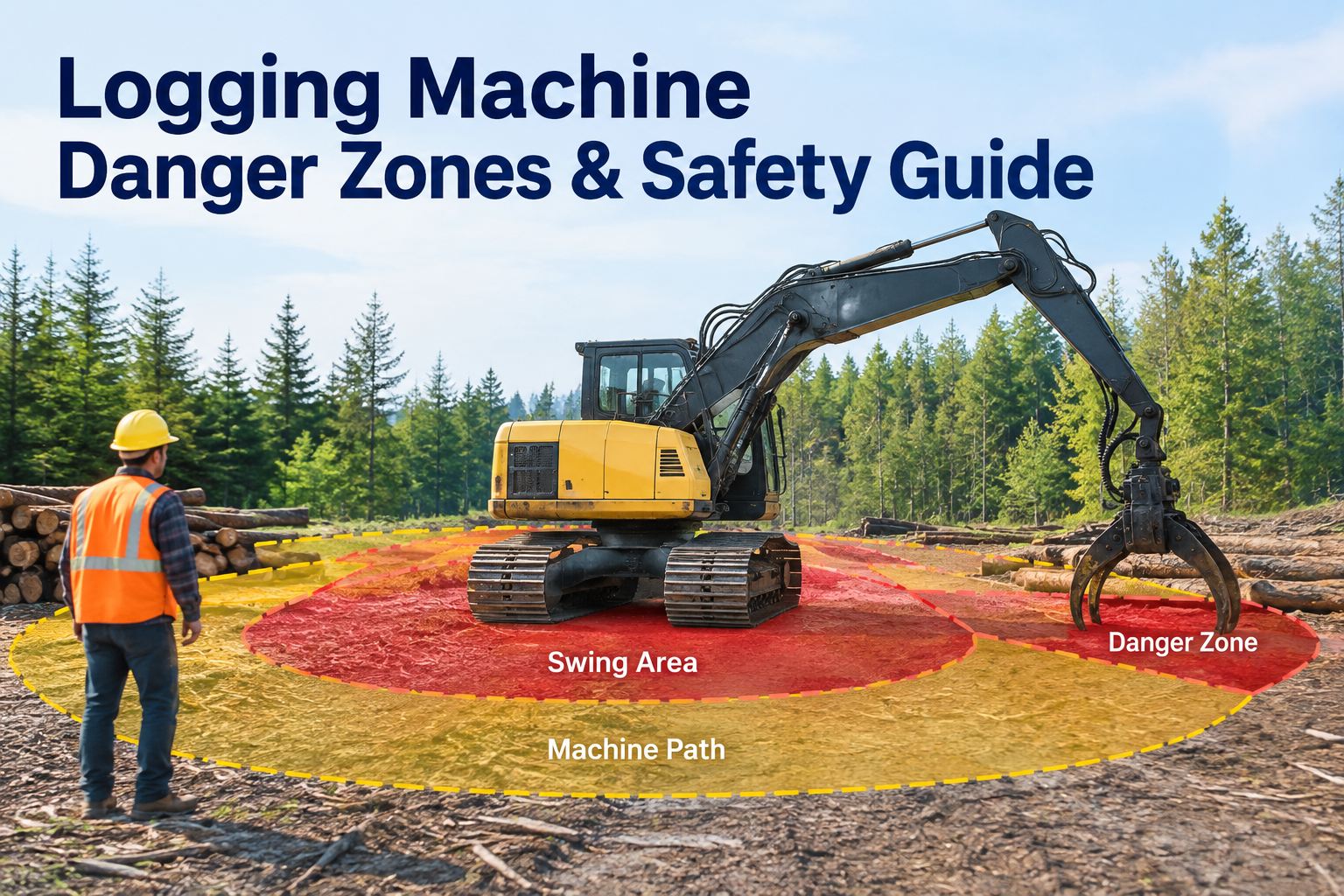
A track feller buncher pivots across a 35-degree mountain cut, its high-speed disc saw spinning at 1,200 RPM when a thrown tooth ricochets 180 feet through dense brush toward an unannounced timber cruiser. In heavy harvesting, a logging machine danger zone is not a theoretical line drawn on paper; it is an active perimeter where blind quadrants, log roll-offs and high-velocity debris make unannounced entries fatal. Establishing defensible exclusion zones requires verified radio protocols, visual perimeter buffers, and daily digital safety management. Book a demo to see how HVI standardizes logging hazard perimeters and digital crew checklists
Logging Machine Danger Zones: 360° Perimeter Control Dashboard
OSHA mandates strict minimum approach distances around working forestry equipment. Switch below to see how active exclusion buffers compare with informal ground-crew habits.
Ground workers walk directly into the operator's blind quarter behind the counterweight, assuming the cab sees their high-vis vest. A grapple skidder reverses over a slash pile, pivots blindly and causes a catastrophic crush injury.
Zero ground workers cross the danger perimeter until positive two-way radio contact is made. The operator drops the head to the deck, pulls hydraulic lock levers, idles down, and delivers direct eye-contact approval before any approach begins.
Modern forestry machines—feller bunchers, grapple skidders, stroke delimbers, and shovel loggers—wield massive kinetic energy across unpredictable mountain cuts. Between counterweight tail swings, whipping stems, bouncing winches, and thrown circular saw teeth, the physical hazard zone extends far beyond the reach of the machine's tracks. When ground workers step inside these dynamic radii without positive operator control, severe struck-by and caught-between incidents happen within fractions of a second.
The 4 Deadly Logging Machine Danger Zonescritical mechanical hazard boundaries that demand strict exclusion on harvest sites
OSHA standard 29 CFR 1910.266(f) mandates that machinery must be operated with absolute regard for ground personnel. Safety managers must establish clear, non-negotiable boundaries around every piece of iron working the tract.
Feller Buncher & Harvester Zone
Radius: Twice the height of the tallest timber being cut, or a minimum of 300 feet (91 m) around high-speed disc saw heads.
Primary Hazard: Thrown saw teeth, shattered carbide tips, unpredicted tree kickbacks, and barber-chairing stems during the cut.
Loader & Shovel Swing Radius
Radius: The full extension of the boom, grapple, and log length plus a 30-foot safety buffer, combined with the rear counterweight arc.
Primary Hazard: Pinch-point crushing between the revolving counterweight and roadside log decks, or impact from shifting log ends.
Skidder Winch & Travel Corridor
Radius: 1.5 times the length of the log turn being pulled, along with the entire center-articulation hinge area.
Primary Hazard: Uncontrolled log rollovers on side slopes, whipping cable snaps, and center-joint articulation crush points.
Landing & Processing Chute
Radius: The active delimbing throw zone, log trailer bunk loading zone, and log sorting alleys.
Primary Hazard: Log roll-off from decks, high-pressure hydraulic hose burst spray, and delimbing knife kick-outs.
Do not let ground crews gamble with blind-spot machine swings. Book a demo to see how HVI structures digital forestry safety inspections and pre-shift site hazard assessments
The 6-Step Safe Approach Protocol for Logging Machinerystandardized communication procedure for mechanics, chasers, and supervisors approaching iron
Approaching an active forestry machine requires an ironclad, systematic routine. Ground workers must never assume an operator sees them, even when wearing fluorescent PPE. Adhering to this six-step protocol prevents caught-between tragedies.
Stop Outside the Danger Perimeter
Halt outside the machine's maximum swing, throw, or fall radius. Never enter an uncleared corridor while hydraulic components or booms are in motion.
Initiate Direct Radio or Visual Contact
Call the operator via dedicated two-way VHF radio. If radios are unavailable, position yourself clearly in the operator's primary sightline and signal for attention.
Wait for Positive Acknowledgment
Do not move forward until the operator responds verbally over the radio or delivers a clear, standardized hand gesture acknowledging your presence.
Machine Neutralization (Grounding)
The operator must lower all attachments (felling head, grapple, blade) completely to the ground, set track/wheel brakes, and disengage hydraulic pilot levers.
Engine Idle & Hydraulic Pilot Lockout
The operator idles the machine down and engages the mechanical safety lockout lever, ensuring zero accidental control activation can occur while workers are near.
Execute Approach in Clear Operator View
Approach the cab from the front-quarter profile where the operator maintains continuous visual tracking. Never approach from the rear counterweight blind spot.
Pre-shift walkarounds must confirm backup cameras, horn circuits, and travel alarms are fully operational. Sign up for HVI to automate pre-use heavy equipment safety checklists
Unverified Verbal Habits vs. Digital Safety Verificationhow systematic safety documentation prevents jobsite collisions and satisfies OSHA audits
Informal agreements and unwritten ground rules break down when harvest production pressure peaks. Implementing digital safety platforms bridges communication gaps between operators and ground contractors across isolated timber tracts.
Unrecorded Verbal Assumptions
- Ground personnel enter working radii assuming backup cameras give 100% visibility.
- Broken horn circuits or cracked mirrors go unflagged across multiple operational shifts.
- No written record of daily tailboard hazard briefings or designated spotter roles.
- High liability exposure and audit penalties during OSHA 1910.266 inspections.
HVI Digital Safety Platform
- Mobile pre-trips mandate functional testing of travel alarms, mirrors, and safety glass.
- One-click work order creation routes broken warning horns and lights to mechanics immediately.
- Digital tailboards log verified machine danger zones and spotter sign-offs before work begins.
- Signed PDF inspection records provide clear, tamper-proof proof for regulatory audits.
Operations implementing structured digital safety inspections experience up to a 25% reduction in annual maintenance costs and fast 3-month payback windows. Book a demo to see how HVI eliminates safety blind spots
Forestry Machine Blind-Spot Mapping & Mechanical Controlsengineering safeguards that protect personnel outside the operator cab line-of-sight
Modern forestry equipment cabins provide heavy ROPS/FOPS/OPS structural protection, but thick steel corner posts, high engine cowlings, and exhaust stacks create severe blind quadrants. Understanding machine-specific blind spots is mandatory for every ground rigger.
| Machine Type | Primary Blind Quadrants | High-Risk Operational Movement | Mandatory Control |
|---|---|---|---|
| Track Feller Buncher | Direct rear counterweight (180° arc); right-side boom pillar | Rapid house swinging; tree felling on side slopes | 300-Ft Buffer |
| Grapple Skidder | Direct rear beyond loaded arch; right-rear wheel assembly | Reversing up skid trails; pivoting articulation frame | Travel Alarms |
| Log Loader / Shovel | Right rear behind hydraulic tank; direct deck drop-off | Swinging stems onto trailer bunks; sorting log decks | Dedicated Spotter |
| Stroke Delimber | Rear boom overhang sweep; knife discharge alley | Fast carriage stroke; log butt ejector cycle | Grounded Knife Entry |
From a logging safety supervisor who eliminated landing close-calls
We had two near-misses in three months where chasers walked behind our shovel loader while it was sorting logs. Both times, the operator had zero visibility because of the counterweight angle. The ground workers just assumed the operator knew where they were. That complacency will kill someone in our business.
We implemented HVI's digital safety checklists and mandated the 6-step machine approach protocol across all three harvest sides. Our operators now run daily pre-trip checks verifying their backup cameras and horns on their tablets, and no ground hand touches the landing without radio contact. It replaced guesswork with accountability.
Frequently asked questions
What is the OSHA minimum safe distance around a working feller buncher?
Under OSHA 29 CFR 1910.266(d)(1)(iv), the minimum safe distance around any active timber falling operation is at least two tree lengths of the trees being felled. Furthermore, for mechanical feller bunchers equipped with high-speed disc saw heads, manufacturers and industry safety associations recommend an exclusion zone of at least 300 feet (91 meters) due to the hazard of thrown saw teeth or flying rock shrapnel.
Why are heavy logging machines prone to severe blind spots?
Forestry equipment cabins are armored with heavy Rollover Protective Structures (ROPS) and Falling Object Protective Structures (FOPS), creating wide corner posts. Additionally, large elevated engine cowlings, hydraulic cooling packages, rear counterweights, and boom lift cylinders obstruct direct sightlines, creating significant blind zones—particularly to the rear and right side of the machine.
What should a ground worker do before entering a machine's swing radius?
A ground worker must never enter a machine's swing radius without establishing direct two-way radio or visual contact and receiving clear acknowledgment from the operator. The operator must bring the machine to a complete stop, ground all attachments (booms, grapples, blades), engage hydraulic safety locks, and idle down the engine before the ground worker initiates an approach from the front.
What is the purpose of a machine danger zone perimeter on a logging landing?
The machine danger zone perimeter isolates active operational areas where falling logs, rotating machine counterweights, moving tracks, and high-pressure hydraulic lines pose lethal risks. Defining clear perimeters prevents unauthorized personnel, truck drivers, and unassigned chasers from entering high-hazard pinch points during log sorting and loading.
How does HVI software improve heavy forestry equipment safety?
HVI provides mobile-first inspection and safety management software that enables logging crews to conduct daily pre-trip walkarounds, document functional tests of backup alarms, cameras, and safety interlocks, and log morning safety briefings offline on remote timber tracts. Equipment defects automatically trigger work orders, ensuring safety-critical repairs are completed promptly.
Conclusion: Total Perimeter Control Prevents Logging Casualtiesbuilding a culture of disciplined machine approach and verifiable safety compliance
Understanding and respecting every logging machine danger zone is an indispensable requirement on modern timber tracts. High-horsepower equipment, rapid machine swinging, and massive timber stems offer zero margin for error when ground personnel enter active operating zones without positive operator acknowledgment.
By implementing HVI's digital inspection tools, pre-shift safety checklists, and team management workflows, forestry contractors replace unverified assumptions with audit-ready safety accountability. Protect your ground crews, safeguard your equipment, and maintain full compliance with OSHA forestry standards. Schedule an operational safety consultation today
Standardize Heavy Machine Safety & Compliance Across Your Fleet
Ensure every machine pre-trip, blind-spot camera verification, and ground approach protocol is documented digitally. Deploy mobile inspection checklists, automate work orders, and maintain audit-ready safety logs across all timber tracts.
No credit card required · Offline mobile capabilities · Comprehensive audit compliance