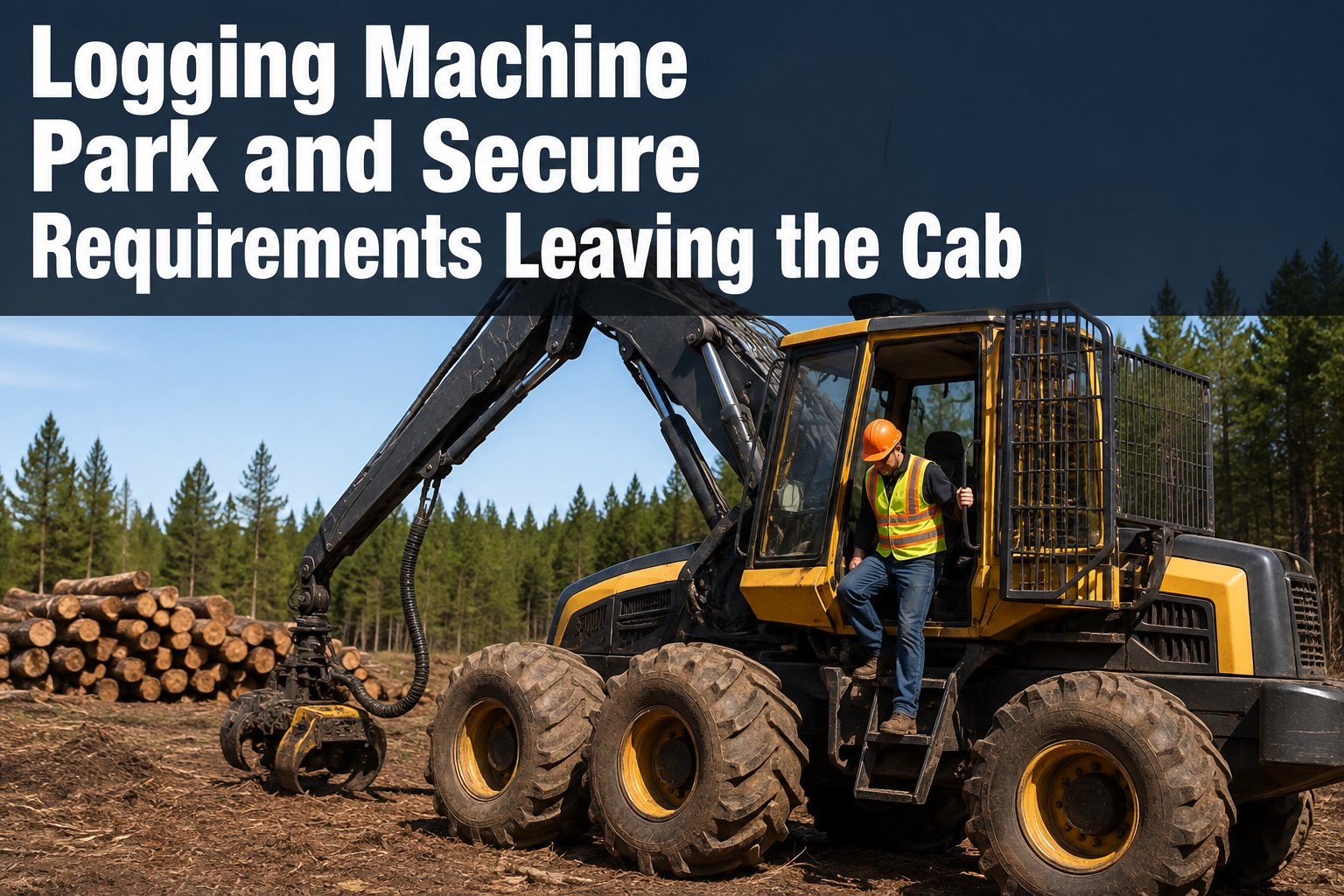
The skidder sits on a 15 percent slope, engine off, boom raised three feet off the ground, no chock, transmission in neutral. The operator walked 20 yards to the fuel cache and came back to a machine that had rolled six feet into a stump and snapped a hydraulic fitting. Nobody got hurt that day. The next week, on a flatter block, a feller-buncher head dropped while a mechanic reached underneath it to check a sensor. That one did not end as well. The leaving machine cab requirement exists for exactly these moments: whenever the operator steps out, brakes must be applied, every moving element grounded or mechanically secured, and the transmission placed in the manufacturer's specified park position. On most logging jobs that rule is broken dozens of times a shift, without consequence, until it isn't. If you want to see how a digital shutdown checklist stops that drift on your own crew, you can walk through it on your own units in about 30 minutes.
Why the one time you skip park discipline is the one that costs a limb or a life?
Three steps — brakes applied, moving elements grounded, transmission in park — separate a routine cab exit from a rollback, a dropped boom, or an unintended movement that reshapes a career. Most crews know the rule. Most crews break it daily. The fix is not louder posters; it is a shutdown sequence the operator cannot close out without completing.
What the logging machine park and secure requirement actually says
The rule is short and the same across OSHA-aligned forestry operations, Safe Work Australia, and most provincial Canadian regulators: before the operator leaves the seat of a logging machine, three things must happen, in sequence, every time — no exceptions for a quick fuel check, a radio call, or a bathroom break.
Brakes fully applied
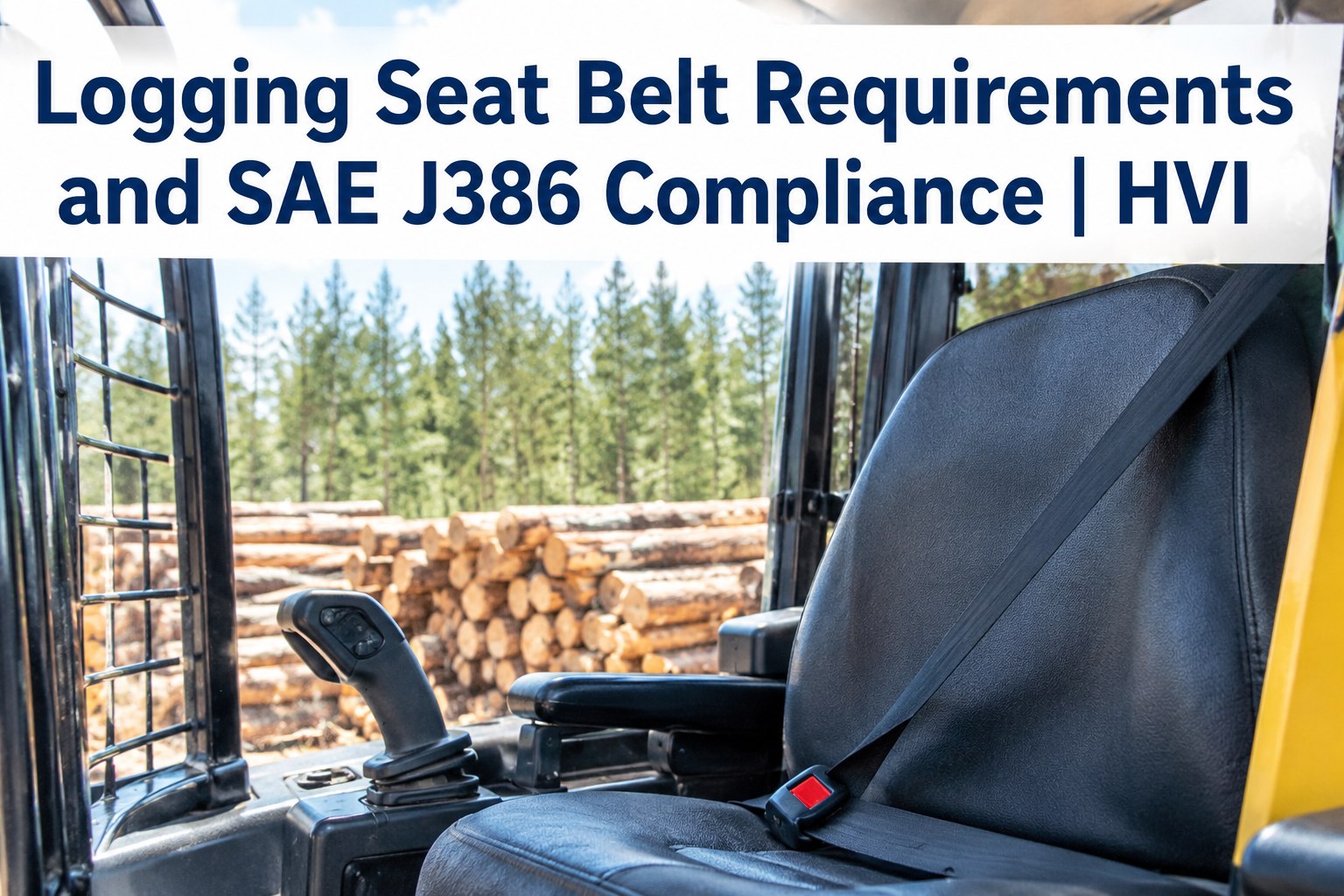
Service brake engaged and parking brake set. Not "resting" on the hydraulics, not held by a boom jammed into the ground — mechanical park brake on, wheels or tracks locked. On a slope this is the single step that stops the machine from becoming a projectile.
Moving elements grounded or secured
Boom lowered to the ground or onto a cradle, processing head or harvester head lowered, saw chain or disc brake applied, attachments folded or rested. If it can drop, swing, or drift under gravity or residual hydraulic pressure, it must be grounded or mechanically blocked.
Transmission in manufacturer park position
Not neutral. Not "N with the brake on." The specific park detent the OEM defines in the operator's manual — Park, P, or the locked position for hydrostatic drives. If the machine has no park detent, chocks go under the tracks or wheels and the engine is shut down per the OEM shutdown procedure.
Always confirm the exact wording applicable to your operation with OSHA (or your provincial, state, or national regulator) and your prime contractor's site-specific safety plan. OEM manuals override general guidance where the manufacturer specifies a stricter or model-specific shutdown sequence.
Three ways an unsecured logging machine hurts people
Every logging operator has seen all three of these near-misses. The problem is not ignorance; it is frequency fatigue. When a shortcut works 999 times, the 1,000th time feels impossible — until it happens on a steeper block, with a tired operator, with a mechanic under the boom.
Boom or head left raised drops under gravity
A processor boom left at half-height bleeds down overnight, or a harvester head held by trapped hydraulic pressure drops the instant a seal lets go. If a mechanic is underneath checking a valve or a sensor, the weight of the head assembly — often 1,500 to 4,000 lb — comes down with no warning. Grounded means grounded: boom flat, head resting, no stored energy.
Machine rolls on a slope with no park brake
A forwarder parked on a 15 percent grade with the transmission in neutral and the park brake not fully engaged will roll. Tracks dig in, then break loose. The machine accelerates fast enough to cross a road, hit another unit, or pin a worker walking to the fuel trailer in under five seconds. Slope does not forgive a skipped brake step.
Hydraulic pressure releases during maintenance
A tech cracks a hydraulic line on a raised attachment to check flow, and the residual pressure in the cylinder spits fluid and drops the boom at the same time. Proper shutdown includes relieving trapped hydraulic pressure after grounding — but that only happens if the shutdown procedure is followed, documented, and not rushed.
Securing before any work under a raised attachment is a separate discipline
The shutdown rule for an operator leaving for a break and the lockout rule for a mechanic crawling underneath are not the same procedure, but the first one gates the second. If the operator did not ground the boom and relieve the hydraulic pressure, the mechanic is now working under a suspended load with 2,000-plus psi behind it. Shops that have eliminated near-misses treat the securing step as a hard handoff, not a hope.
Operator shutdown — every cab exit
- Park on the flattest available ground within reach of the task
- Service brake on, park brake fully set, transmission in OEM park detent
- Boom grounded, head grounded, saw brake applied
- Engine at low idle, then shutdown per OEM sequence
- Chocks placed if no park detent exists or slope exceeds OEM limit
Mechanic lockout — before going under
- Confirm visually that boom and head are grounded, not hovering
- Install mechanical boom support block or stand per OEM manual
- Relieve hydraulic pressure at the valve bank, verify gauge reads zero
- Lock out and tag the machine at the battery disconnect or master switch
- Test that controls are dead before any contact with the attachment
If you want to see how those two procedures link inside a single work order so the mechanic sees the operator's shutdown sign-off before they start, you can book a quick walkthrough and we will set it up on one of your real machines.
Steep ground makes parking discipline more consequential, not optional
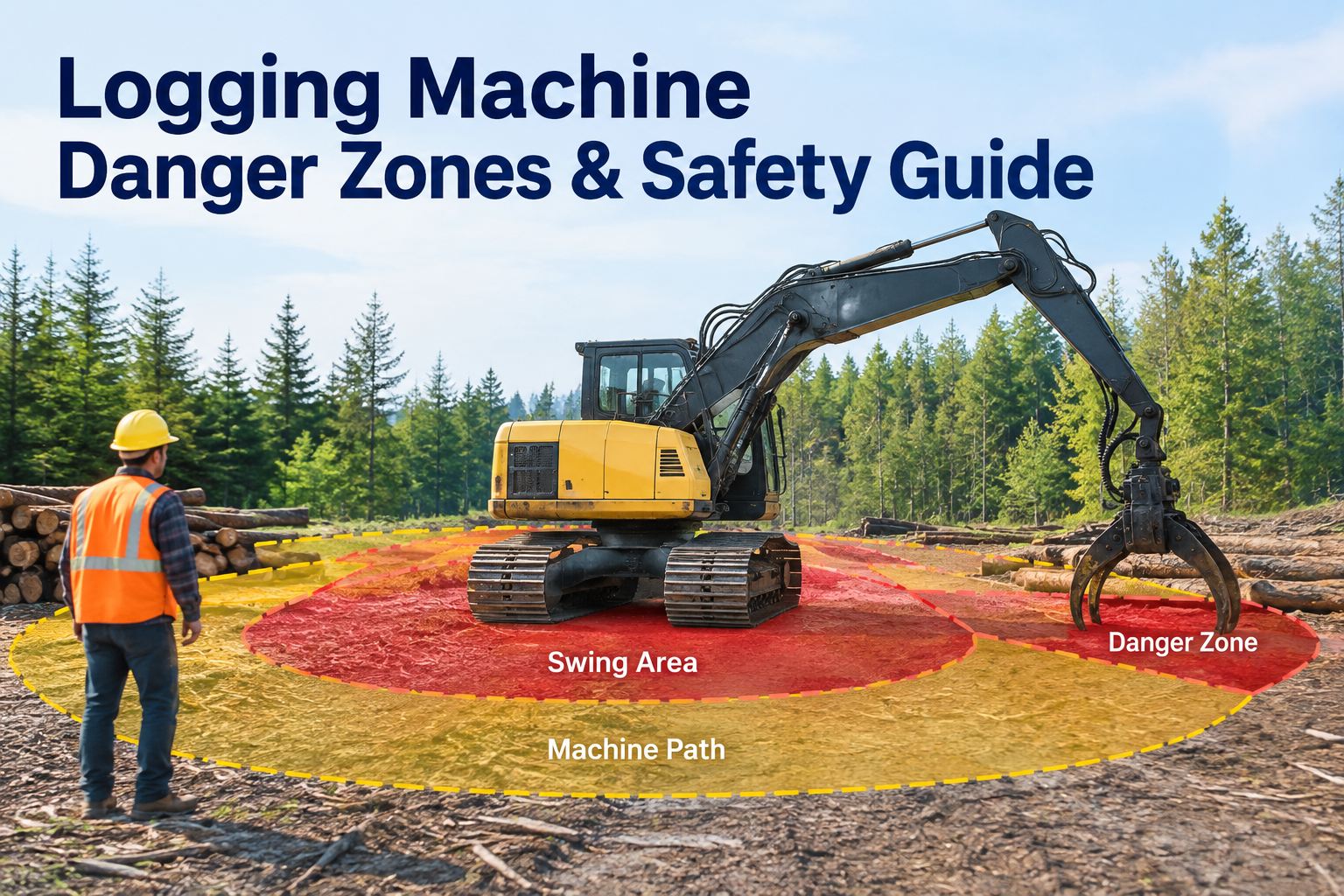
A 5 percent grade hides mistakes. A 25 percent grade punishes them. On steep ground the three securing steps are not a formality — they are the only thing between a parked machine and a rollback that crosses a haul road or reaches the landing. Training and supervision have to account for that, not treat "park it" as the same instruction everywhere.
| Slope band | Risk if unsecured | Minimum additional control |
|---|---|---|
| 0–8% (flat to gentle) | Slow drift, usually stopped by a stump or rut | Standard shutdown — brakes, grounded, park |
| 9–18% (rolling ground) | Machine can roll several feet and build momentum | Park across slope where possible, chocks at downhill track |
| 19–30% (steep) | Uncontrolled rollback in seconds, high injury potential | Chocks both tracks, boom into cut bank, no maintenance without stand |
| Over 30% (extreme) | Machine may exceed brake-hold capacity even when secured | Do not leave cab on slope; reposition to flatter ground first |
Supervisors who run clean steep-ground crews do not rely on memory. They build the terrain-specific chock and stand steps into the shutdown checklist the operator signs on their phone, and they pull the data weekly. If that sounds like it would fit your operation, see it mapped to your block types in a short call.
Stop relying on memory for a rule that saves lives
Build the three securing steps into a mobile shutdown checklist every operator signs off in the cab, before they step out. Paper posters do not do that.
How HVI turns the securing rule into a signed, timestamped record
HVI is cloud and mobile inspection and maintenance software built for fleet-heavy operations, including off-road forestry plant. The securing steps live inside the shutdown template for each machine, so the operator cannot close the inspection without confirming brakes applied, elements grounded, and transmission in park — and the record is timestamped, photo-backed, and ready for any audit.
Securing steps in pre-start and shutdown templates
Each machine's shutdown checklist includes the three securing steps as mandatory fields. The operator taps through them on their phone before leaving the cab; a missed step blocks completion and flags the record for the supervisor.
Procedures held per machine, not per binder
A forwarder, a processor, and a skidder each carry their own park position, boom grounding method, and chock requirement. HVI stores the correct procedure against the asset, so the operator sees the right steps for the machine they are sitting in.
Defect to work order, instantly
If the operator flags a leaking park brake cylinder or a boom that will not hold, that defect becomes a work order the moment it is logged. No text message, no radio call lost in the noise — the shop sees it before the machine is parked overnight with a fault.
Audit-ready, photo-backed records
Every shutdown sign-off carries a timestamp, the operator's name, and optional photos of the grounded boom and placed chocks. When a regulator, client, or insurer asks for proof of securing discipline, you pull it in seconds, not by digging through a glovebox of paper DVIRs.
If you want to start logging inspections free and see how fast a shutdown template deploys across a mixed fleet, the setup takes under an hour and works on any phone already in the cab.
What it costs when securing steps are skipped
A single rollback or dropped boom on a logging block is not just a safety incident — it is a downtime event, an insurance event, and often a contract event. The math is uncomfortable because it is so avoidable.
Worked example: a 12-machine logging crew
A contractor running 12 machines loses, on average, two shutdown-related incidents a year — one rollback on a slope, one dropped boom during a rushed maintenance check. Direct repair and downtime cost runs about $96,000 annually. Building the three securing steps into a mobile shutdown template that operators must complete before leaving the cab typically cuts that to zero or one near-miss a year. The software pays for itself the first time it stops a boom from dropping on a mechanic — and if you want to run the numbers on your own fleet, we can do that in 20 minutes.
Logging machine park and secure requirements, in summary
The rule is three steps, every cab exit. Brakes applied, moving elements grounded or secured, transmission in the manufacturer's specified park position. No shortcuts for a quick break.
Steep ground raises the stakes, not the optionality. On slopes over about 18 percent, chocks, cut-bank parking, and repositioning to flat ground become the control, not a suggestion.
Maintenance lockout is a separate handoff. The operator's shutdown gates the mechanic's lockout. If the boom is not grounded and pressure relieved, the tech is under a suspended load.
Memory is not a control. A mobile shutdown template that blocks completion until the three steps are confirmed is what actually changes behavior shift after shift.
Always confirm with OSHA and your OEM. The general rule is a floor; manufacturer manuals and site-specific safety plans can add stricter, machine-specific steps.
The record is the proof. Timestamped, photo-backed shutdown sign-offs are what you hand a regulator, client, or insurer when they ask how you manage unattended machine safety.
"I can stand at the fuel trailer and watch three operators park three different ways. One grounds the boom, one drops it halfway, one leaves the head up and walks off. Posters did not fix it. What fixed it was making the shutdown a checklist on the phone they have to sign before they leave the seat. Compliance went from maybe to measured overnight."
Logging machine park and secure requirements: common questions
What are the OSHA requirements for leaving a logging machine cab?
Do I need to chock a logging machine every time I leave the cab?
Why does the boom need to be grounded before leaving the machine?
Is neutral with the park brake on enough to secure a forestry machine?
How do I prove operators are following the securing procedure during an audit?
See HVI running on your own fleet — book a 30-minute demo
We will load your machine list, build a shutdown template with the three securing steps, and show you the audit record. No slide deck, no generic pitch — just your fleet on the app.
Free to start — Works on any phone — No card needed